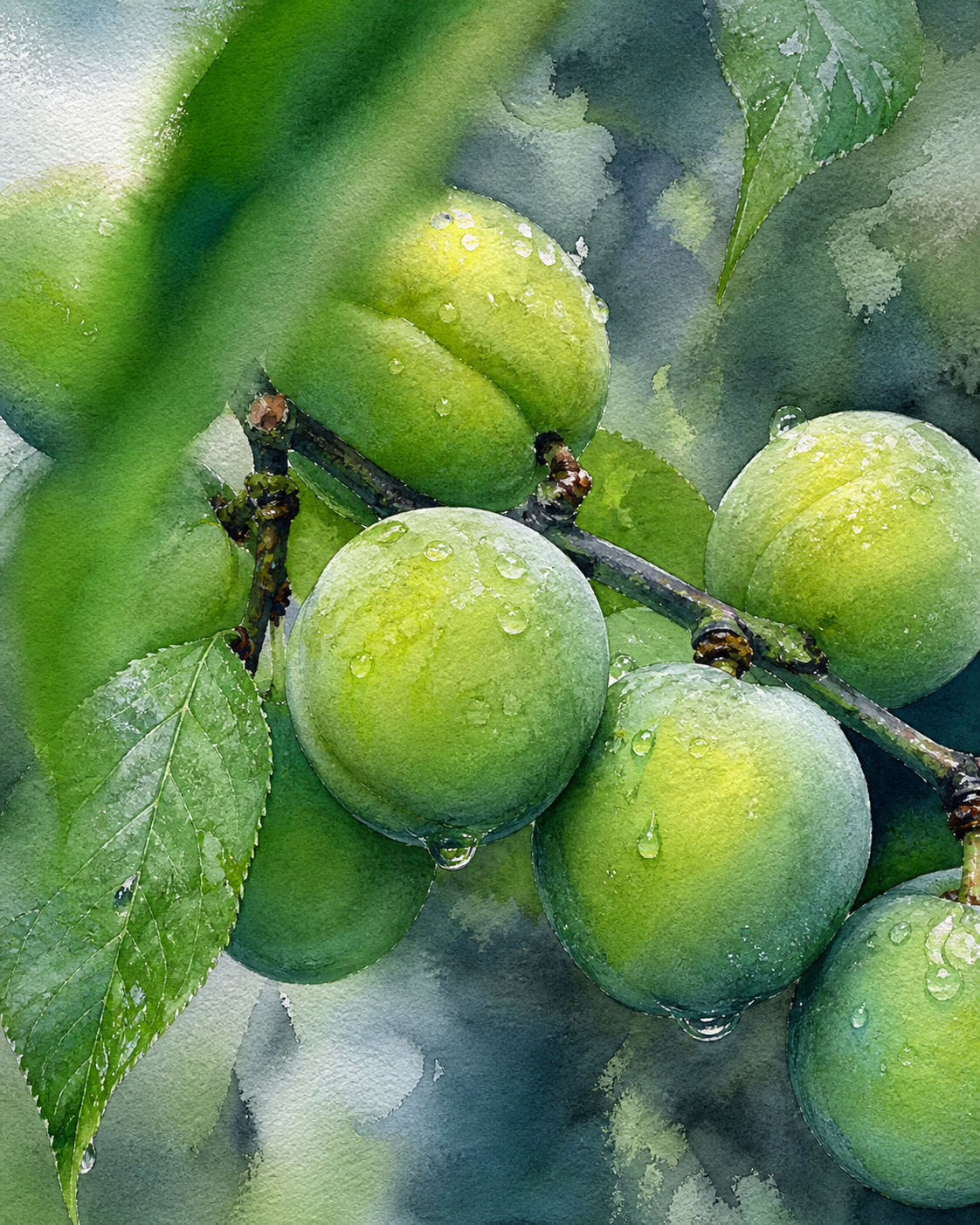
Summer Rain's Crystal Breath
Critique
1. Introduction This watercolor painting depicts a group of unripe green plums clinging to a slender branch, adorned with glistening water droplets. The work captures a moment of natural freshness, utilizing the translucent qualities of the medium to convey light and moisture. By focusing on the subtle variations within a monochromatic green palette, the composition highlights the delicate beauty of fruit in its early stages of growth, presented with a refined and observational approach. 2. Description The central subjects are several round, green plums distributed along a dark, textured branch that cuts diagonally across the frame. Each fruit is rendered with soft gradients of lime and forest green, punctuated by bright yellow highlights that suggest a gentle external light source. Most striking are the numerous water droplets scattered across the fruit and a prominent leaf on the left; these droplets are painted with precise detail, including tiny reflections and refractive light. The background consists of diffused, atmospheric washes of blue, gray, and green, creating a sense of depth and a moist, shaded environment. 3. Analysis The artist demonstrates a sophisticated command of watercolor techniques, particularly the balance between controlled detail and fluid abstraction. The "wet-on-wet" method used in the background provides a soft, out-of-focus effect that pushes the sharply defined fruit into the foreground. The transparency of the paint is exploited to create the luminous quality of the fruit's skin and the crystalline clarity of the water. Linear elements, such as the branch and the veins of the leaf, provide a structural contrast to the soft, rounded forms of the plums. 4. Interpretation and Evaluation The painting is an exceptional example of how watercolor can be used to evoke sensory experiences, specifically the coolness and humidity of a garden after rain. The meticulous rendering of the water droplets serves as a testament to the artist's technical skill and keen eye for detail, adding a layer of hyper-realism to the otherwise ethereal style. The composition is dynamic yet balanced, with the diagonal branch providing a strong visual path through the cluster. This work successfully elevates a simple botanical subject through its mastery of light, texture, and medium-specific properties. 5. Conclusion By marrying technical precision with the characteristic fluidity of watercolor, the artist creates a piece that feels both realistic and poetic. The initial focus on the sparkling droplets leads to an appreciation of the subtle color shifts and the expert handling of the background. It is a harmonious composition that celebrates the quiet vitality of nature. Ultimately, the work stands as a compelling study of organic form and the transformative power of light on wet surfaces, leaving the viewer with a sense of refreshment and tranquility.
Same Subcategory
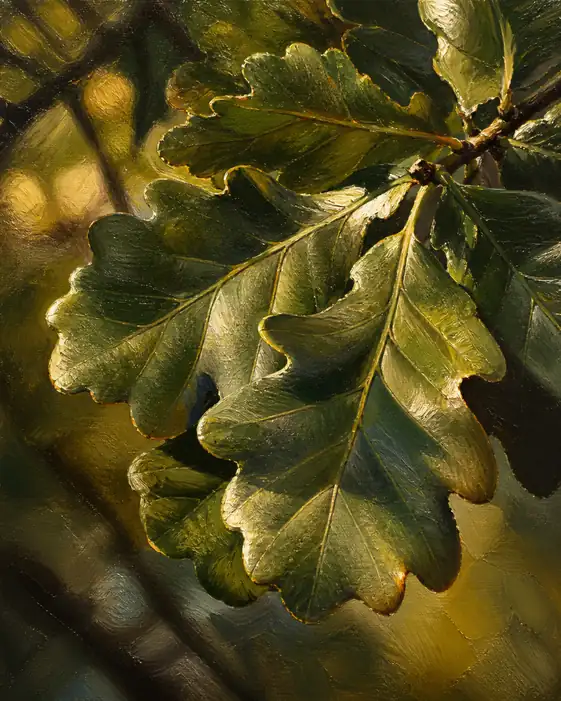 The Golden Weight of Time
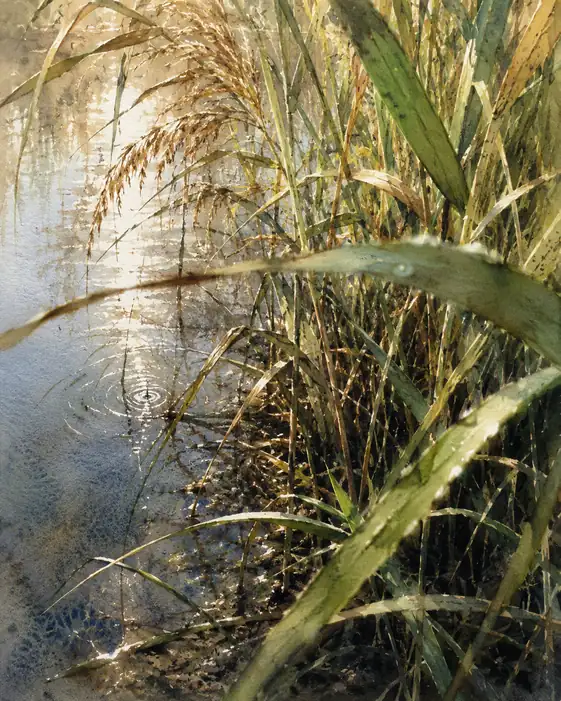 Ripples of Silence
Similar Artworks
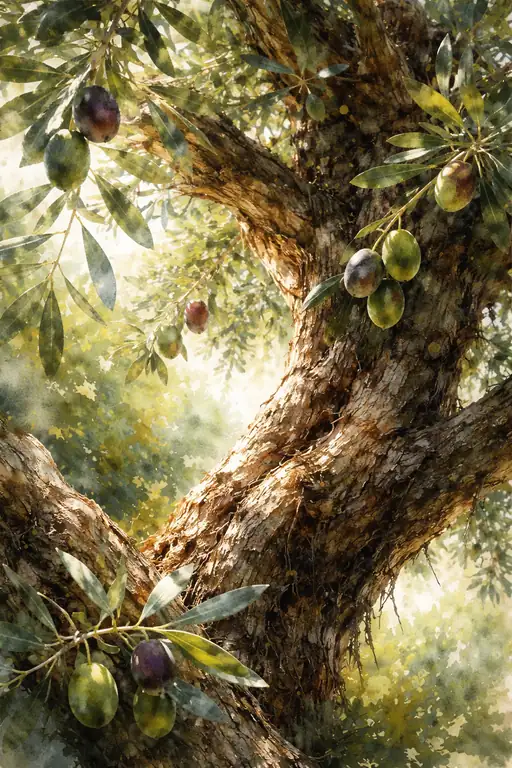 Wisdom of the Ancient Silver Leaves
 Constellation of the Forest Floor
 Crystalline Whispers of Stillness
 Golden Memories of the Oak
 Sun-Kissed Emerald Dew
 Verdant Portal to Summer Light
 Emerald Tears of the Bamboo Forest
 Crimson Jewels in the Rain
 Whispers of the Dew-Laden Bloom
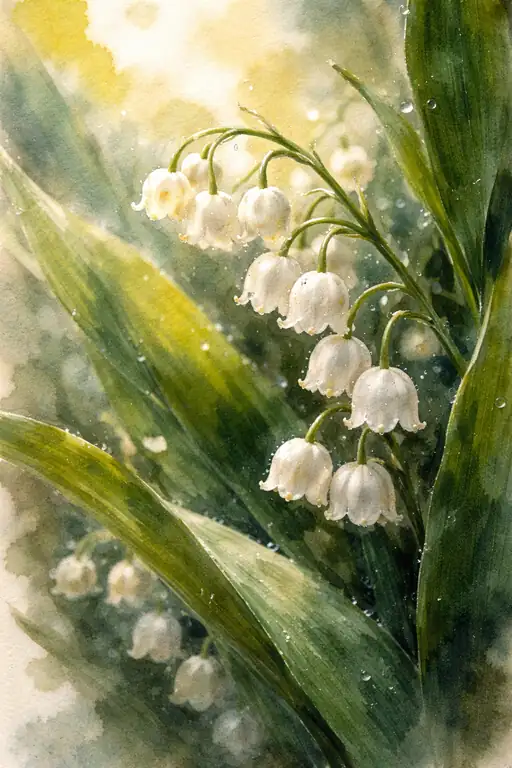 Quiet Elegance of the Forest Bells