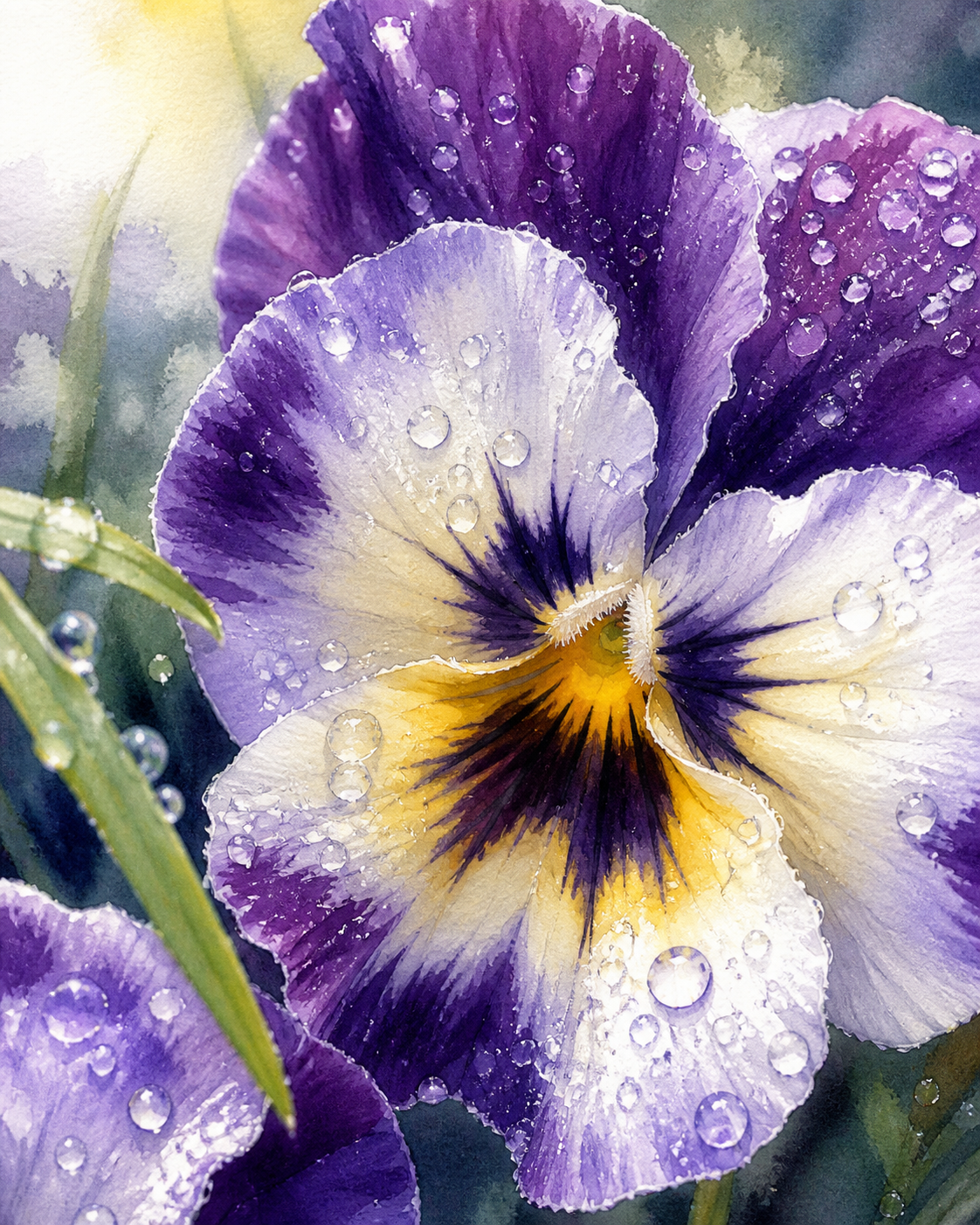
The Morning's Velvet Tears
Critique
1. Introduction This watercolor painting presents a vivid and detailed close-up of a pansy flower, capturing the delicate beauty of nature. The composition focuses on the intricate patterns and vibrant colors of the petals, enhanced by the presence of numerous glistening water droplets. The artist employs a masterful combination of watercolor techniques to create a sense of freshness and vitality that defines the entire scene. 2. Description The central flower displays a striking palette of deep violet, bright yellow, and pristine white, with dark, radiating veins at its core. Each petal is covered in transparent droplets of varying sizes, which reflect the surrounding light with remarkable clarity. The background consists of soft, blurred washes of green and gray, providing a subtle contrast that makes the primary subject stand out prominently. 3. Analysis The composition is tightly cropped, emphasizing the texture of the petals and the refractive quality of the water. The artist uses the wet-on-wet technique for the background and base layers, while the fine details of the veins and droplets are rendered with precise, dry brushwork. The light source appears to be coming from the upper left, creating soft highlights and shadows that give the petals a three-dimensional, velvety appearance. 4. Interpretation and Evaluation This work demonstrates exceptional technical skill in managing the unpredictable nature of watercolor to achieve high levels of realism. The portrayal of the water droplets is particularly impressive, as they appear to sit naturally on the surface without feeling disconnected from the flower. The choice of colors and the focus on a single, moisture-laden bloom evoke a serene atmosphere, suggesting a quiet moment after a light rain. 5. Conclusion In conclusion, the painting effectively bridges the gap between botanical illustration and fine art through its careful attention to detail and expressive use of color. The initial impact of the vibrant hues is matched by the intricate beauty found upon closer inspection of the smaller elements. It serves as a testament to the artist's ability to transform a common natural subject into a compelling visual experience.
Same Subcategory
 Radiant Layers of Vitality
Similar Artworks
 Echoes of Purity: The Morning's Sacred Tear
 Jewel of the Desert Sun
 Journey Beyond the Horizon
 Embrace of the Gentle Rain
 Iris and the Seaside Chapel
 Sparkling Canola and Porcelain Vase
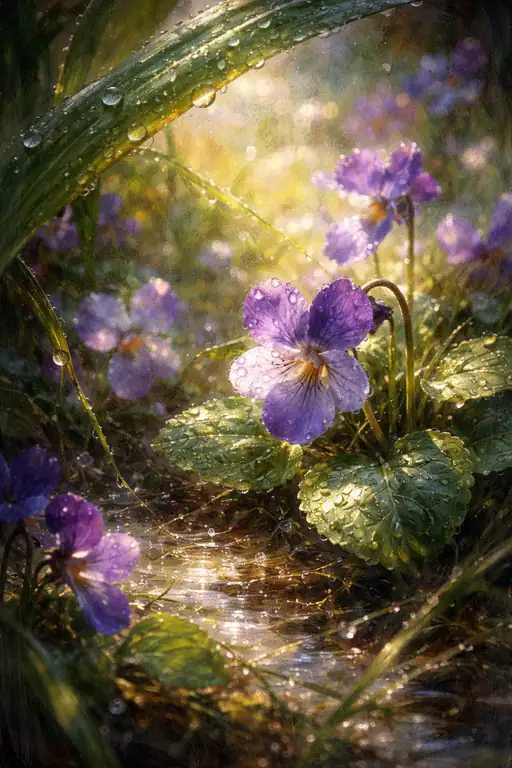 Whispers of the Violet Rain
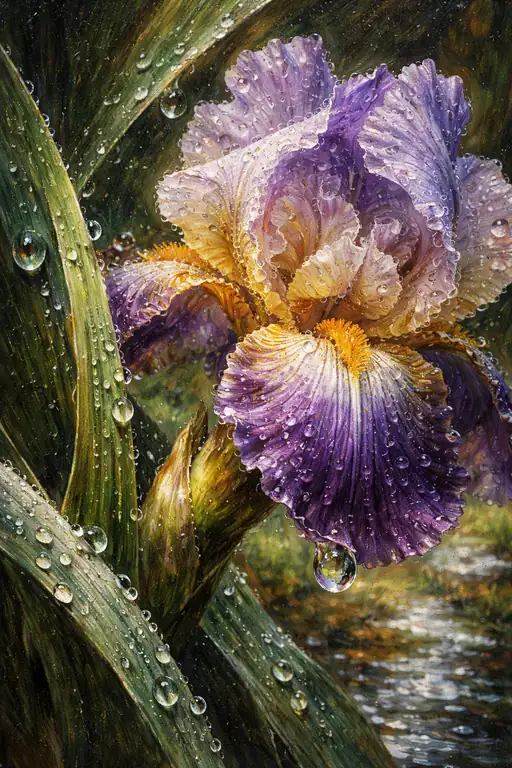 The Silent Jewel of the Spring
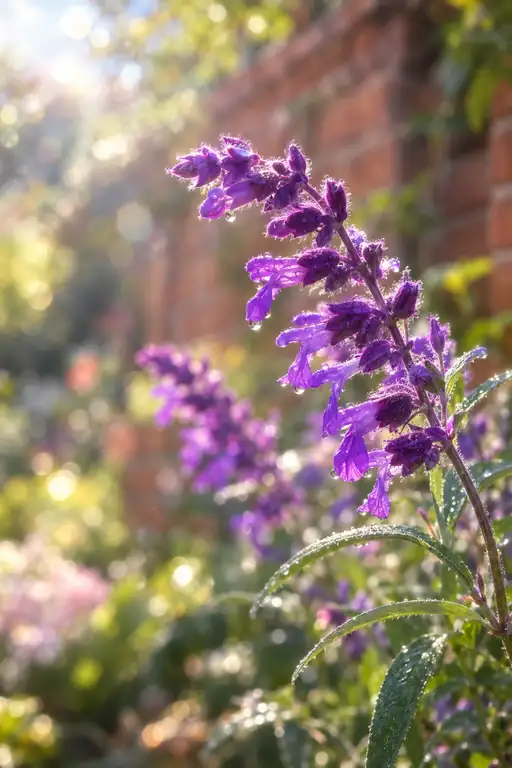 Amethyst Drops in the Morning Garden
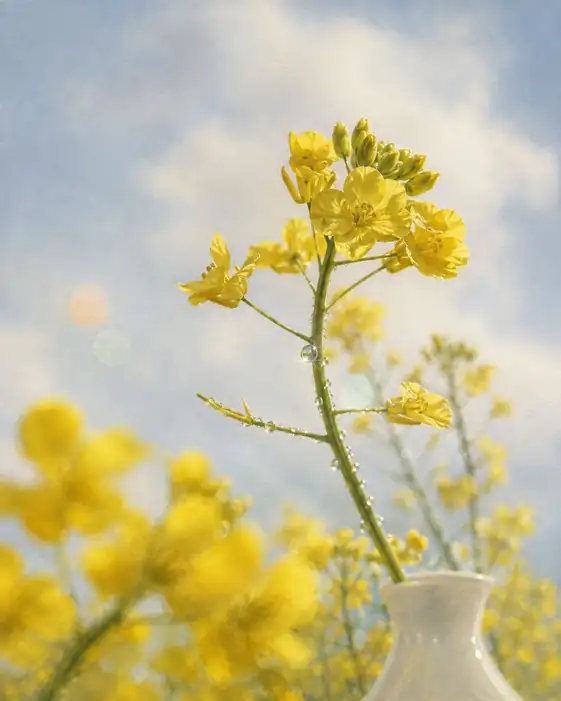 Dew-Dappled Blossom in White Vase