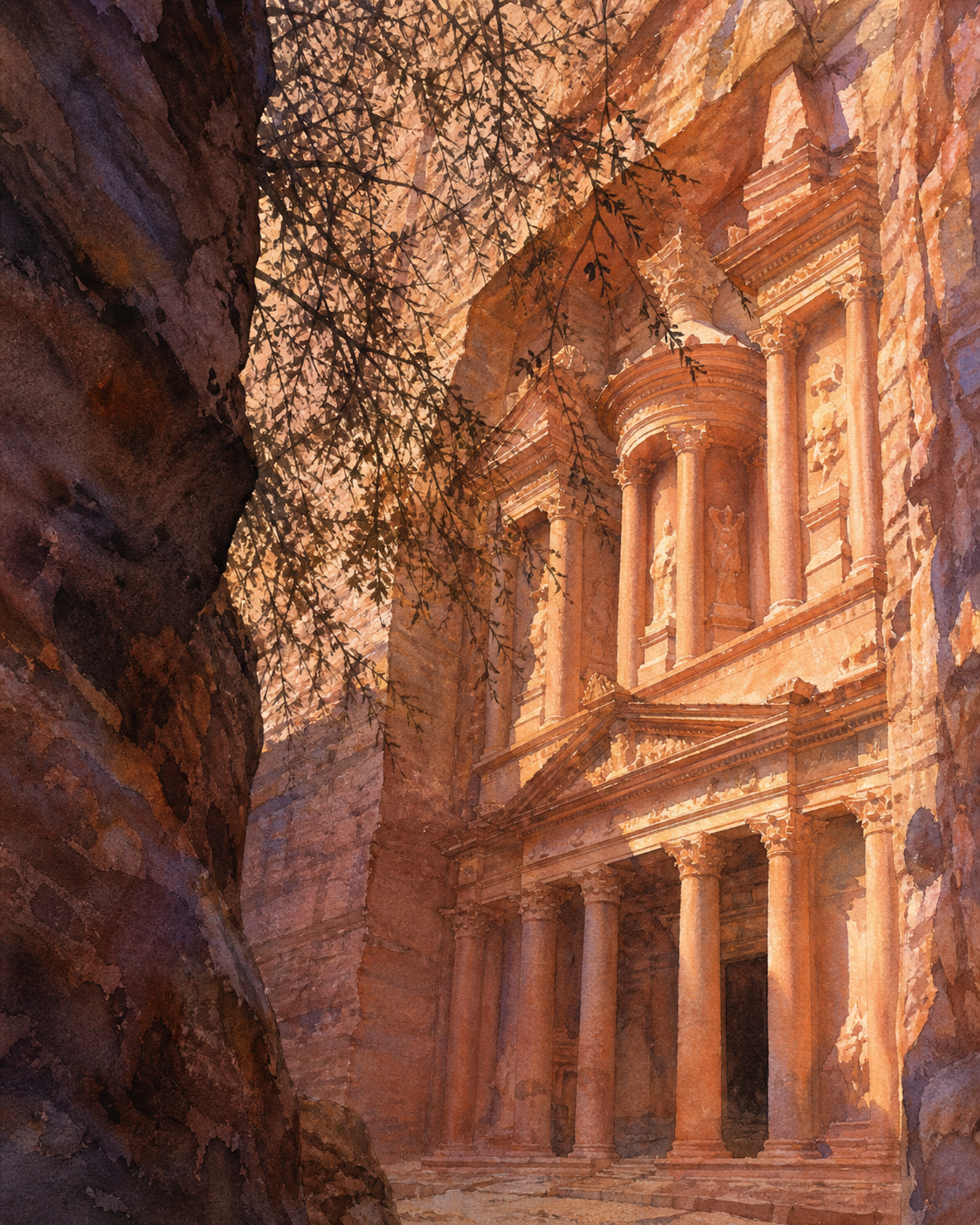
Light at the End of Time
Critique
1. Introduction This watercolor painting presents a compelling architectural study of the Treasury in Petra, captured from the perspective of a visitor emerging from the narrow Siq. The artwork employs a delicate yet deliberate medium to interpret one of the world's most iconic archaeological sites. By focusing on the interplay between natural rock formations and human-engineered classical architecture, the artist establishes a profound dialogue between nature and history. 2. Description The composition is dominated by the ornate facade of the Treasury, which is partially framed by the dark, textured walls of the canyon on the left. Intricate Corinthian columns and weathered sculptures are visible on the monument, bathed in a warm, golden sunlight that suggests late afternoon. In the upper center, thin branches of a tree reach across the frame, casting skeletal shadows upon the sunlit stone surfaces. The ground leading to the entrance is rendered with subtle washes of pale ochre and grey. 3. Analysis Technically, the work excels in its handling of light and shadow, using deep purples and earthy browns to define the cavernous depth of the canyon. The contrast between the shaded foreground and the luminous background creates a strong sense of atmospheric perspective and three-dimensional space. The watercolor technique is evident in the soft transitions of color on the sandstone walls, where wet-on-wet applications mimic the natural variegated patterns of the rock. The verticality of the columns provides a rhythmic stability against the irregular contours of the surrounding cliffs. 4. Interpretation and Evaluation The choice to view the monument through the narrow opening of the Siq evokes a powerful sense of discovery and awe. This framing device emphasizes the monumental scale of the Treasury while grounding the viewer in a specific, experiential moment. The artist’s ability to capture the translucency of desert light is particularly noteworthy, imbuing the ancient stone with a lifelike warmth. While the depiction of the sculptures is somewhat abstracted, this level of detail effectively conveys the passage of time and the erosive forces of nature. 5. Conclusion In conclusion, this artwork successfully transcends mere documentation by capturing the emotional resonance of the site through a masterful application of watercolor. The balance of architectural precision and organic texture results in a harmonious representation of Petra's unique landscape. This piece serves as a testament to the enduring beauty of classical forms when viewed through a sensitive and contemporary artistic lens.
Same Subcategory
 Guardian of the Sunlit Shore
 Eternal Slumber in the Golden Light
Similar Artworks
 Sanctuary of the Sunlit Sands
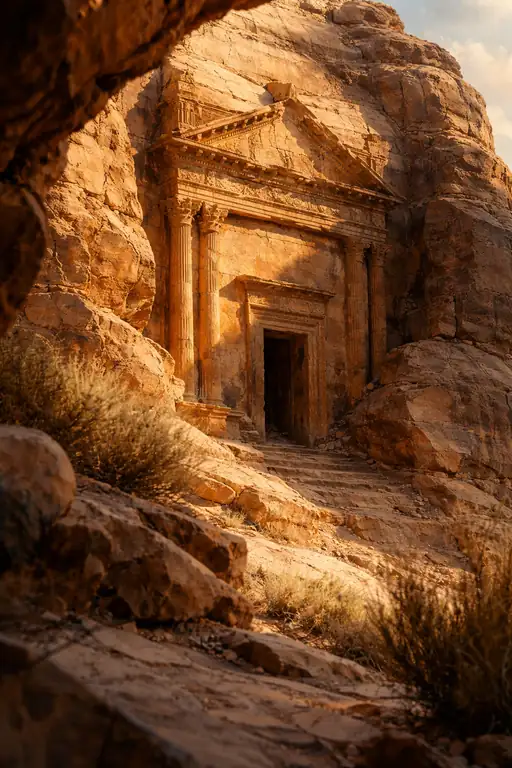 Golden Glory of the Forgotten
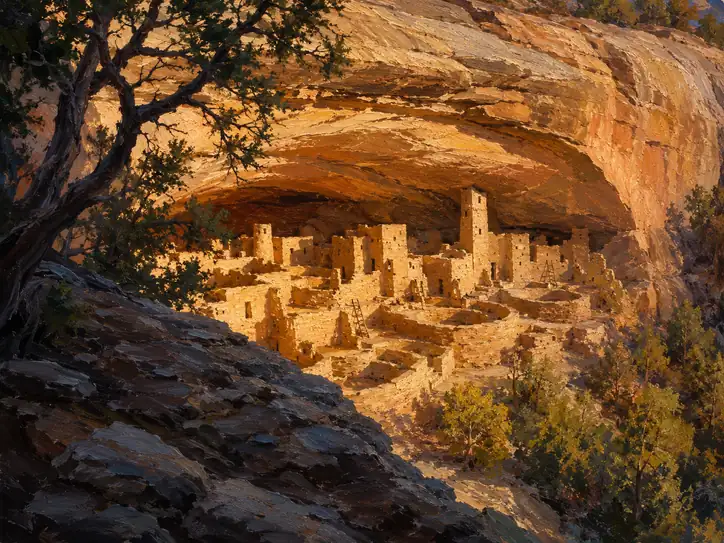 Where Time Slumbers in Stone
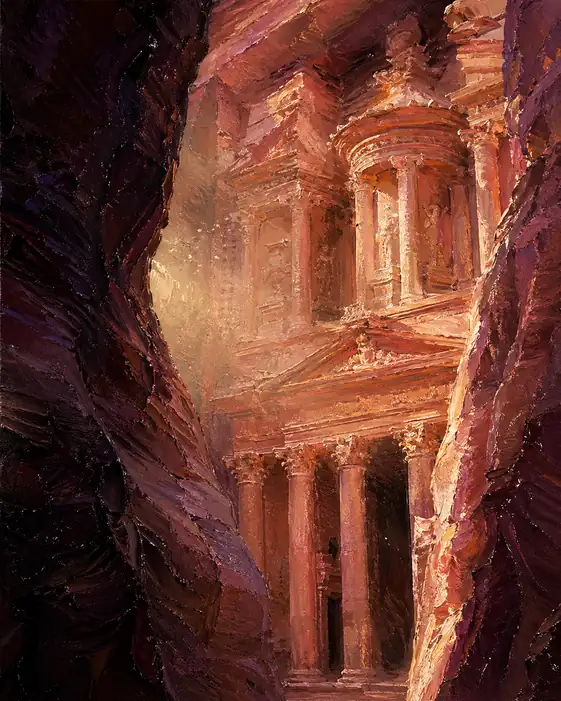 Threshold of Eternity: The Golden Secret of the Canyon
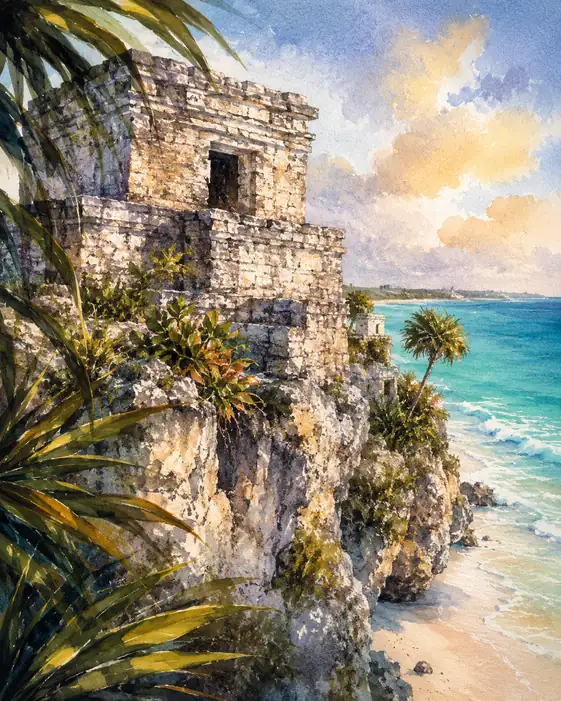 The Eternal Watcher of the Emerald Sea
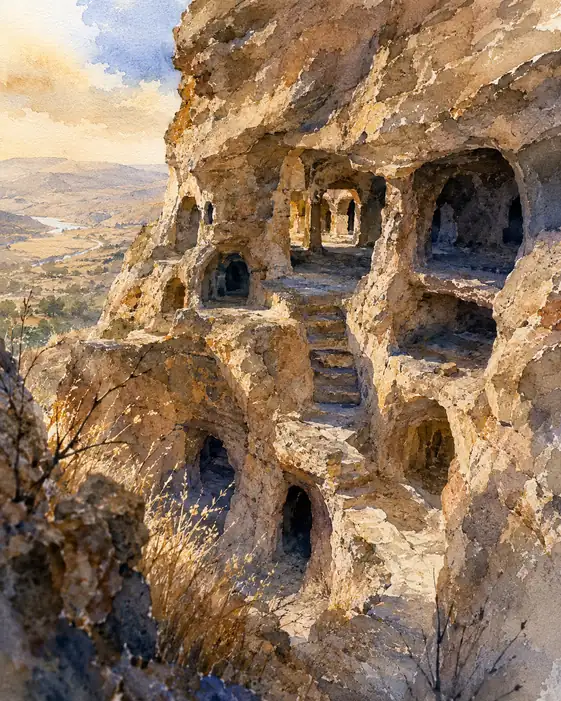 The Vertical Sanctuary of Rock and Wind
 Echoes of the Sunlit Silence
 The Sun's Gaze on Ancient Stones
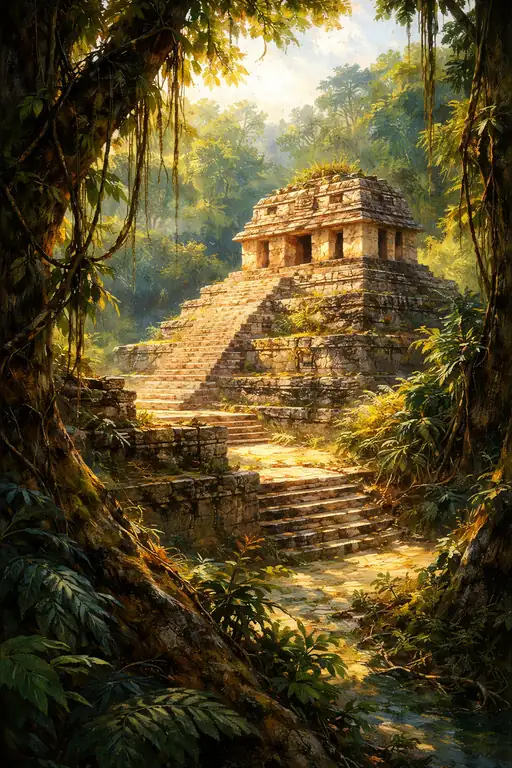 Sunlight Through the Canopy: The Temple's Awakening
 Echoes in the Golden Alcove