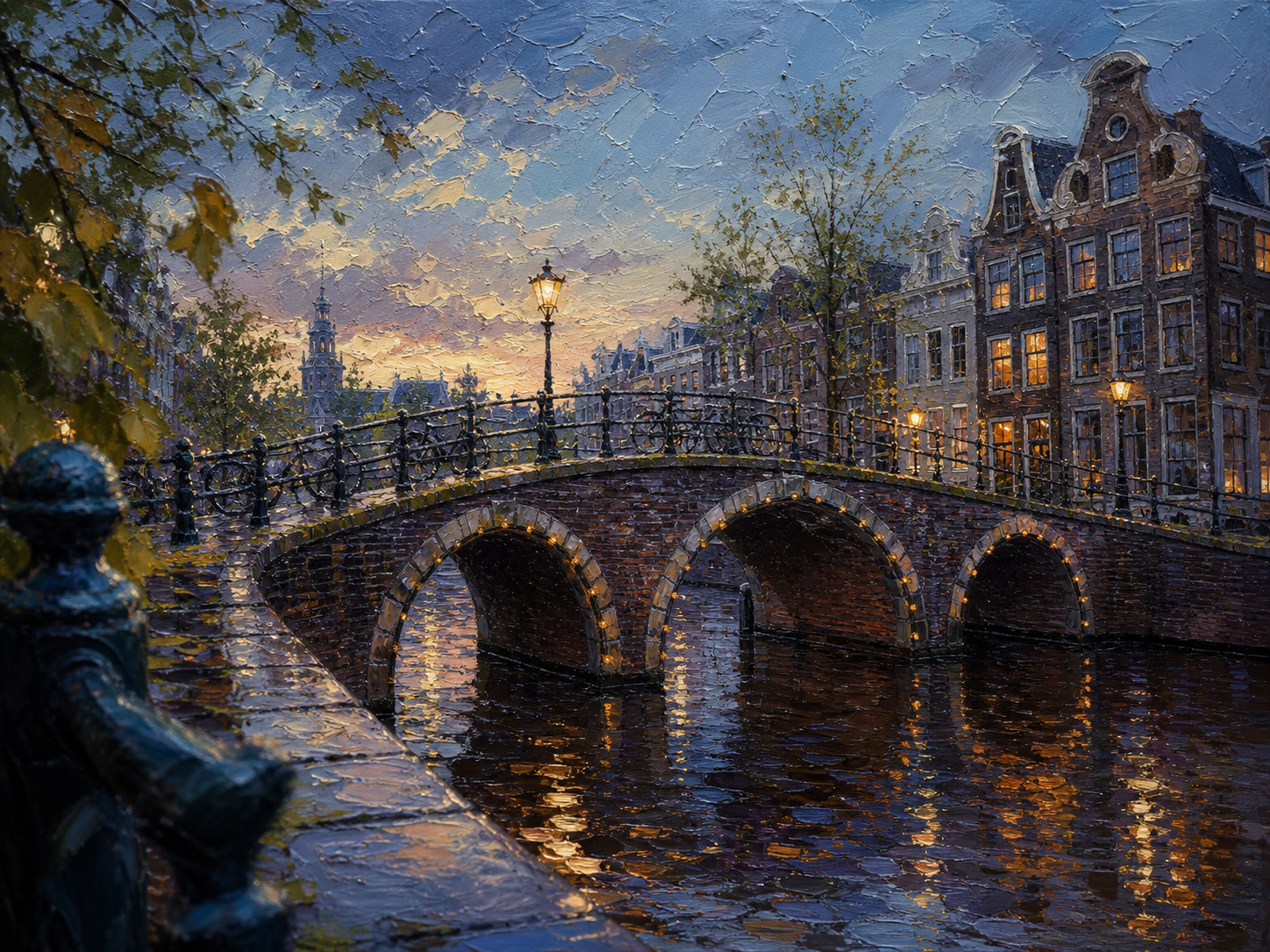
A Symphony of Twilight Lights
Critique
1. Introduction This oil-style landscape painting captures the romantic atmosphere of an urban canal at dusk, characterized by its striking impasto technique. The central focus is a sturdy multi-arched bridge, which, along with the surrounding historic architecture, conveys a sense of quiet vitality amidst the gathering darkness. The bold application of paint with a palette knife gives the entire surface a tactile quality, heightening the drama of light and shadow. 2. Description The stone bridge dominates the center, its three arches lined with the warm glow of street lamps. Beyond the bridge, tall, narrow houses with gabled roofs—reminiscent of Amsterdam—line the canal, their windows emitting soft light that suggests a cozy interior life. In the distance, a church spire rises as a silhouette against a dramatic sky transitioning from deep blue to the vibrant orange of a setting sun. The dark water of the canal reflects these artificial lights and the twilight sky in shimmering golden streaks. 3. Analysis The defining feature of this work is the three-dimensional texture created through thick layers of paint. Each brick, ripple, and cloud is rendered with palpable physical depth, providing the piece with a sculptural quality. Color-wise, the contrast between the cool tones of the evening sky and the warm radiance of the lamps is executed with great effectiveness. The composition uses a diagonal flow from the foreground post to the distant spire, emphasizing the layered spatial structure of the city. 4. Interpretation and Evaluation The painting presents the cityscape not merely as a physical location but as a vessel for poetic emotion and the passage of time. The heavy texture grants a sense of permanence to the fleeting phenomena of light, leaving a powerful impression on the viewer. This strategic use of illumination evokes the peace and subtle excitement of a city transitioning into night, achieving a high degree of lyricism. The artist’s expressive knife work breathes modern life into a traditional landscape subject. 5. Conclusion By fusing physical materiality with optical brilliance, the work offers a fresh perspective on the universal theme of twilight in the city. Viewers are invited into a multi-layered experience, where the raw substance of the paint up close transforms into a luminous, atmospheric scene from a distance. It stands as a powerful and sensitive achievement, successfully combining rigorous technical skill with a deep, evocative sense of mood and place.
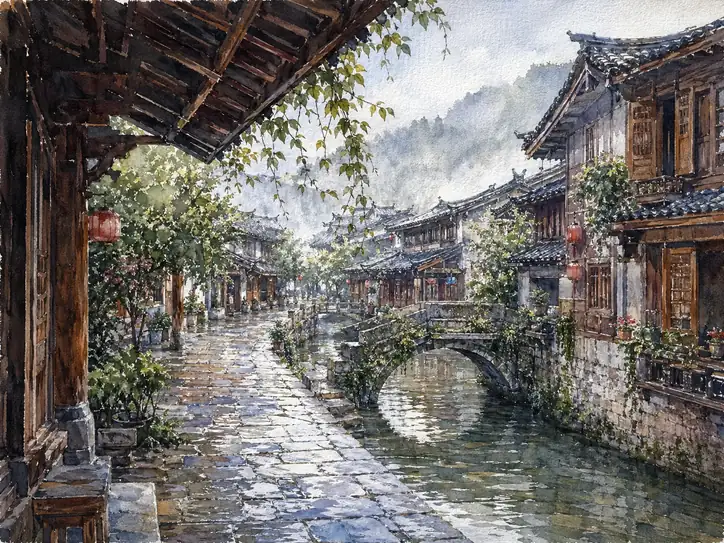 Reflections on the Timeless Path
 Autumn Whispers by the River Seine
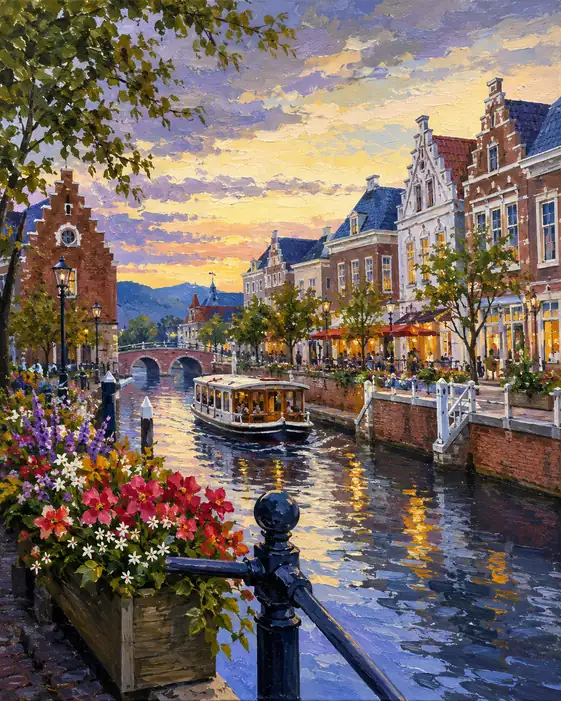 Twilight Glow along the Amsterdam Canal
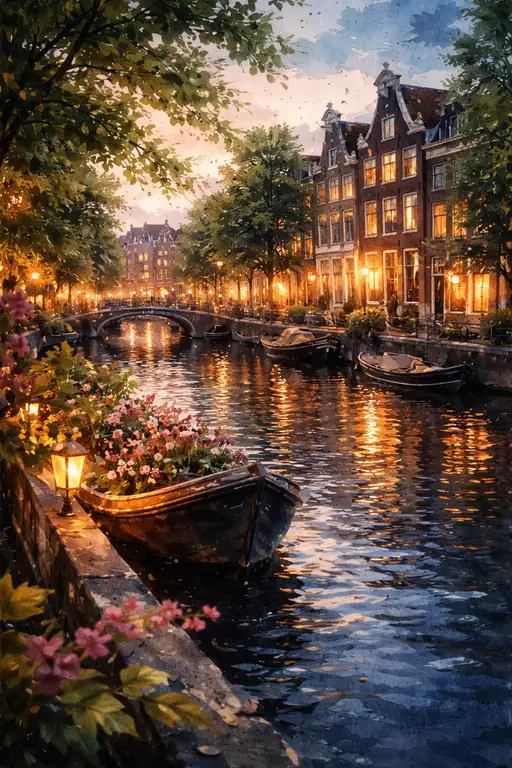 Embrace of the Evening
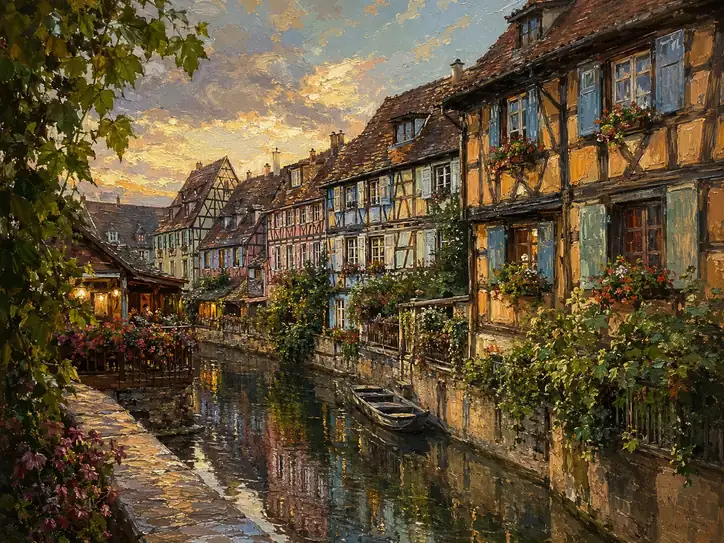 Sunset Serenade on the Canal
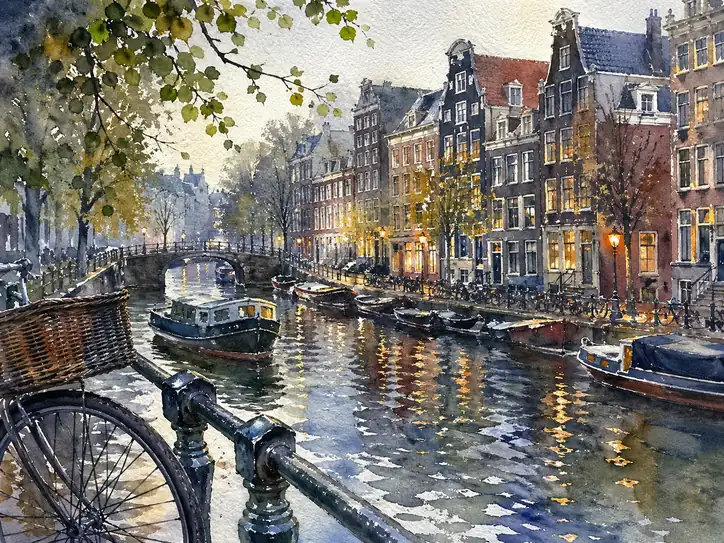 Twilight Echoes on the Canal
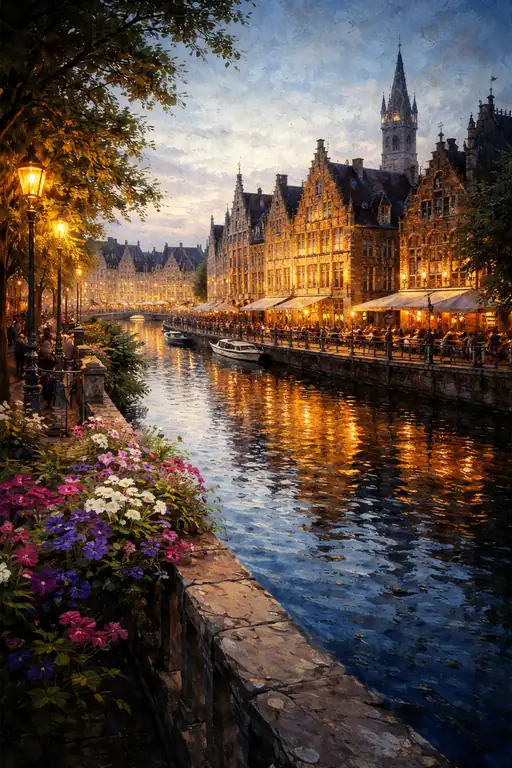 Twilight Echoes of Ghent
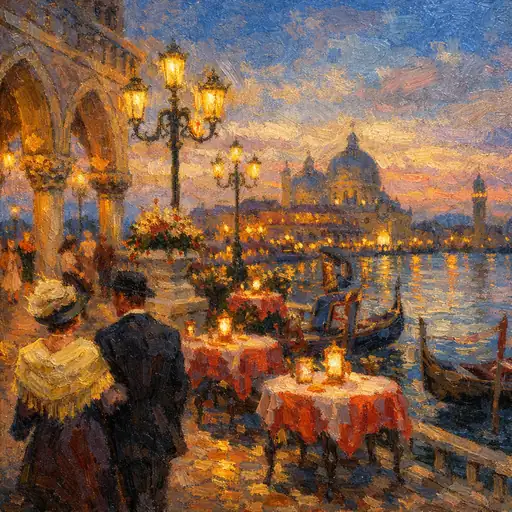 Golden Glow of the Grand Canal
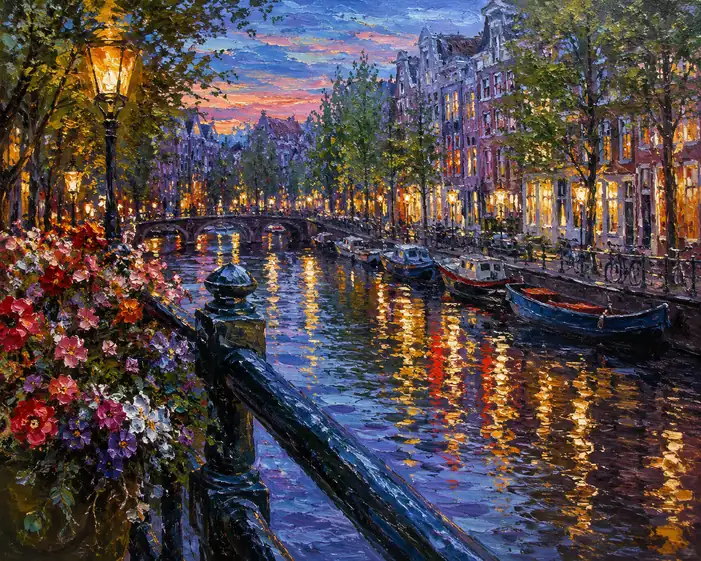 Canal of Lost Dreams
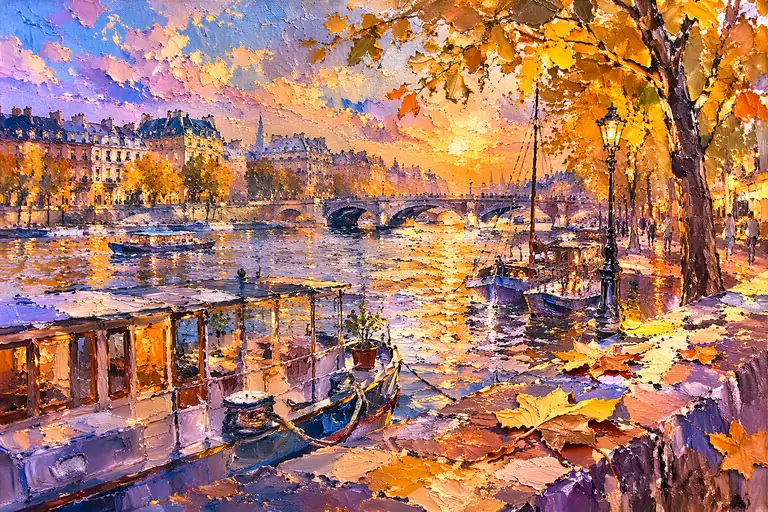 Autumn Sunset on the Seine
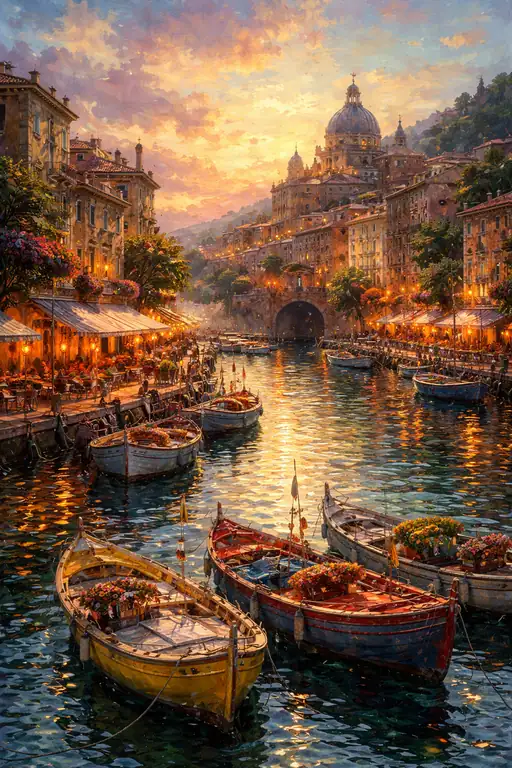 Golden Echoes of the Grand Canal
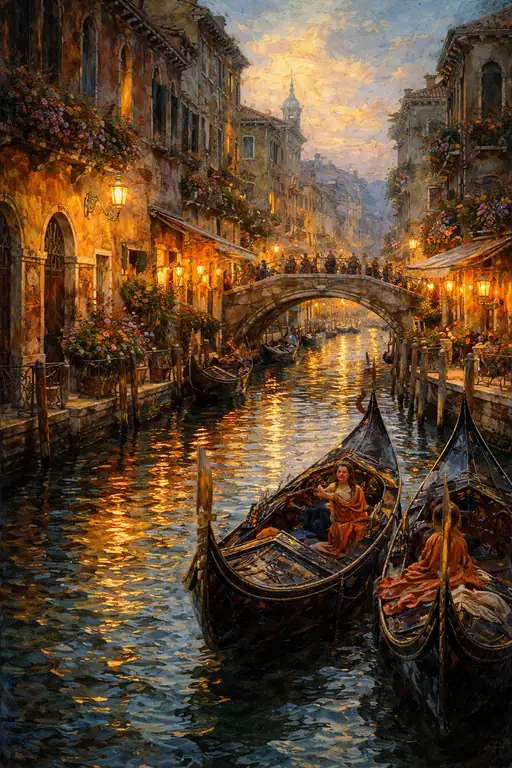 Golden Sighs of the Drowning City