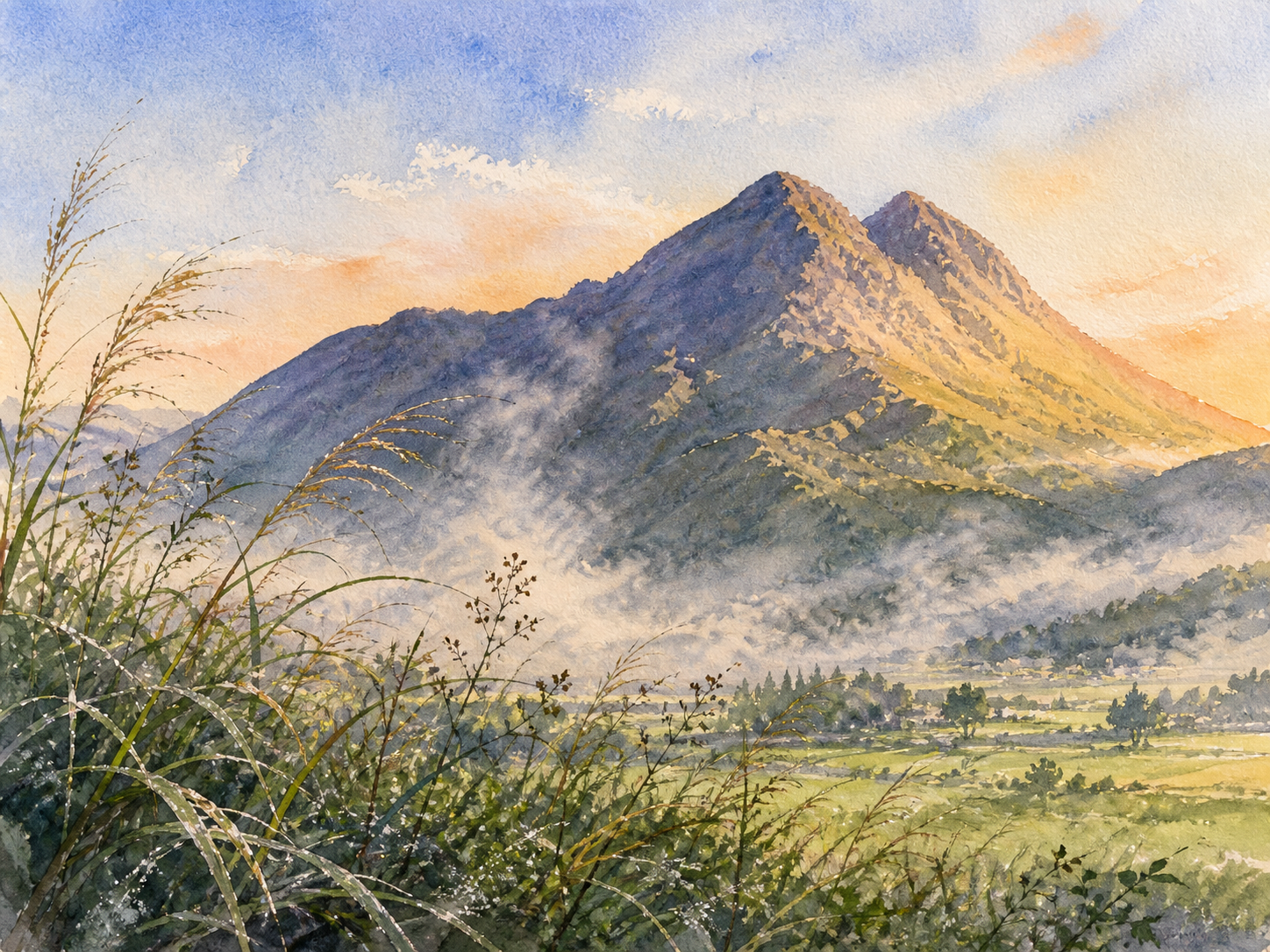
The Golden Requiem of Twin Summits
Critique
1. Introduction This watercolor painting presents a lyrical depiction of a twin-peaked mountain illuminated by the soft light of sunrise or sunset, overlooking a rural valley. In the foreground, meticulously rendered grasses sway in the breeze, while morning mist drifts along the mountain's base, creating an ethereal and dreamlike atmosphere. The initial impression is one of warm, radiant light harmonizing perfectly with the majestic stillness of nature. Viewers are invited to experience the quiet passage of time and a profound sense of affection for the natural world within this evocative vista. 2. Description The central mountain features slopes glowing in shades of gold and orange where the light hits, contrasted with deep purples and blues in the shadowed ravines. The rugged textures of the rock faces and forest clusters are built up through a delicate accumulation of fine brushstrokes. At the mountain's foot, a layer of fog softly envelops the fields and scattered houses of a village below. In the lower-left foreground, the grasses are backlit, their stalks and seed heads defined by sharp, luminous lines. The sky displays a beautiful gradient, transitioning from pale blue to a warm, hazy orange. 3. Analysis The composition utilizes the diagonal lines of the foreground grasses and the mountain ridges to create a dynamic sense of depth and visual stability. By positioning the peaks slightly to the right of center, the artist allows for a sense of openness on the left side of the frame. Regarding color, the use of near-complementary orange and blue tones throughout the piece creates both visual vibrancy and a pleasing sense of tension. The technique balances watercolor's characteristic washes and "blooms" for the mist with precise detailing in the foreground flora and mountain features, resulting in a rich and varied surface. 4. Interpretation and Evaluation The work contrasts the unchanging presence of the mountain with the fleeting phenomena of light and mist, expressing both the eternal and the momentary beauty of nature. The artist's descriptive power is evident in the skillful use of directional lighting to enhance the mountain's three-dimensionality. Furthermore, the rendering of the landscape peeking through the fog demonstrates a sophisticated mastery of atmospheric perspective. In terms of originality, while the theme is a classic mountain scene, the lyrical color palette and sensitive capture of light elevate it into a unique expression that deeply resonates with the viewer's sense of nostalgia. 5. Conclusion While the painting initially impresses with its vivid and beautiful colors, a more profound examination reveals a warm, compassionate perspective that envelops the entire scene. The delicate gradations of light, shadow, and mist push the expressive potential of the watercolor medium to its limits. By capturing the quiet yet powerful beauty of the Japanese landscape with such exceptional sensitivity and skill, the artist has created a masterpiece of high artistic merit that leaves a lasting impression.
Same Subcategory
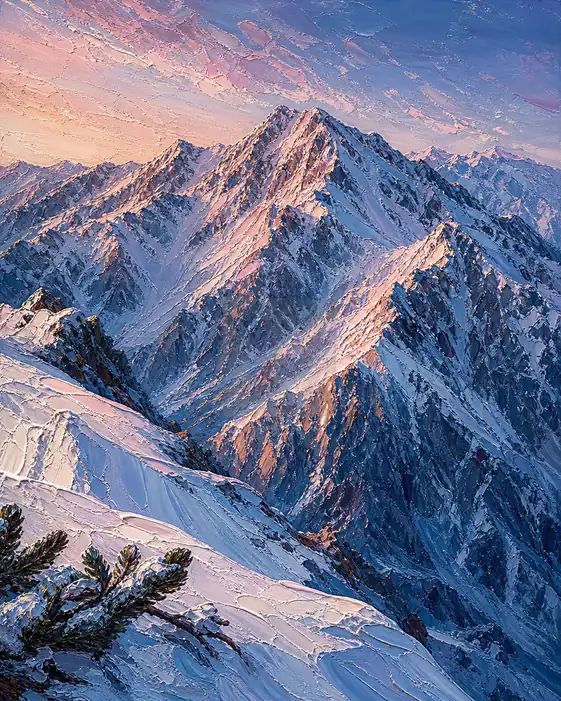 The Chiseled Summit of Rosy Dawn
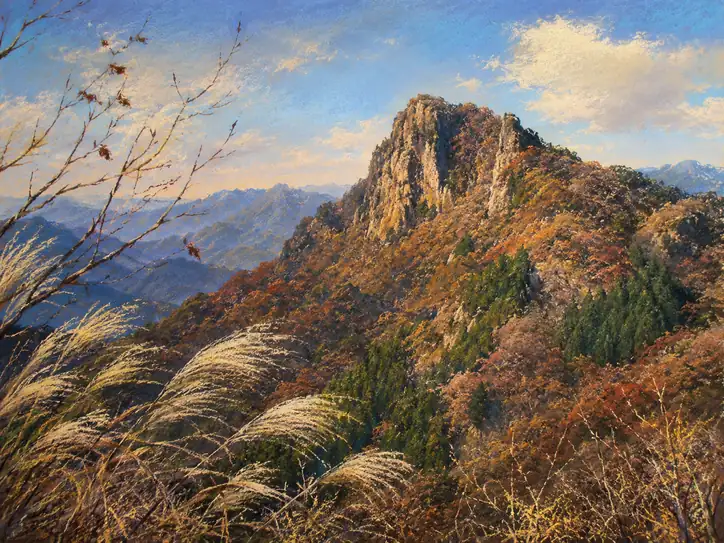 Eternal Heights, Fleeting Grace
Similar Artworks
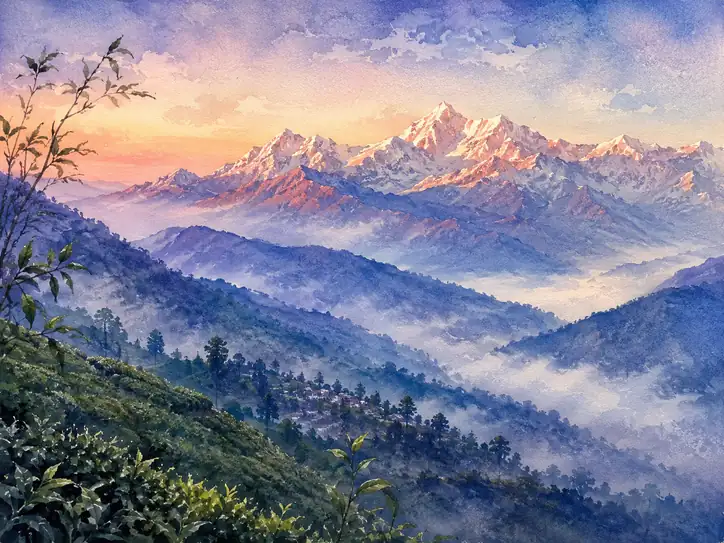 Where Earth Touches the Heavens
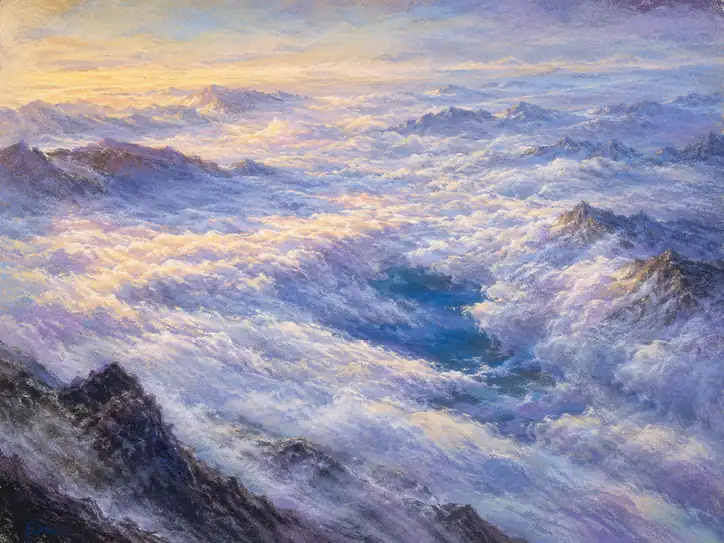 Serenade of the Violet Mist
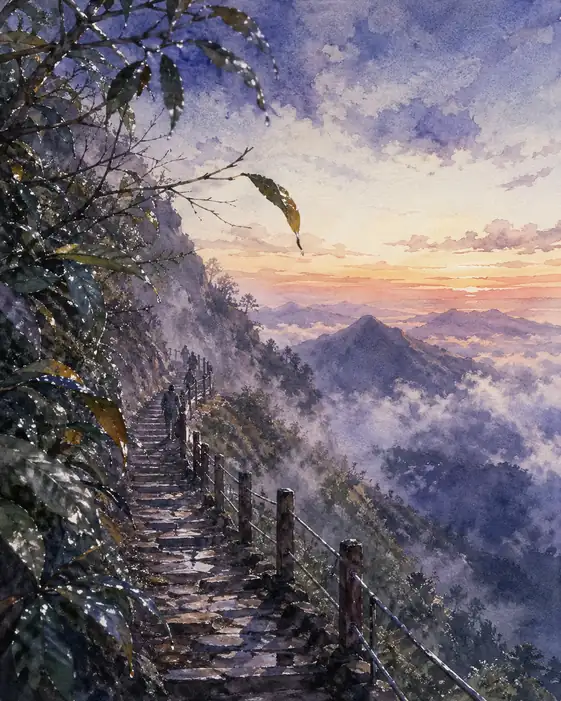 Ascent Toward the Heavenly Dawn
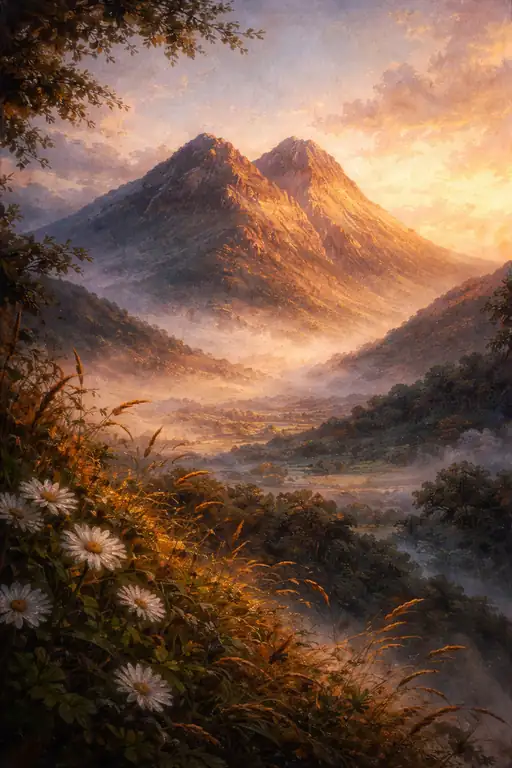 Daisies' Dream: Under the Twin Peaks
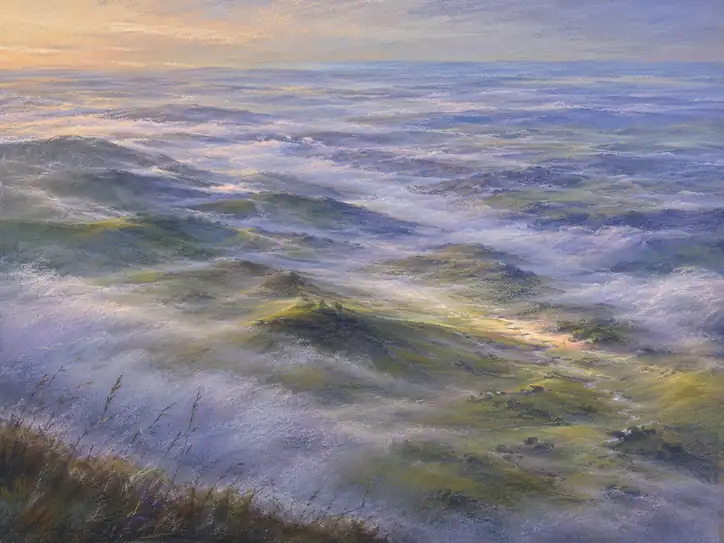 Veil of the Whispering Grass
 Dawn of the Serene Peaks
 A Glimpse of the Mortal Shore
 The Titan's Golden Crest
 Above the Sea of Clouds
 Where Time Dissolves in the Golden Mist