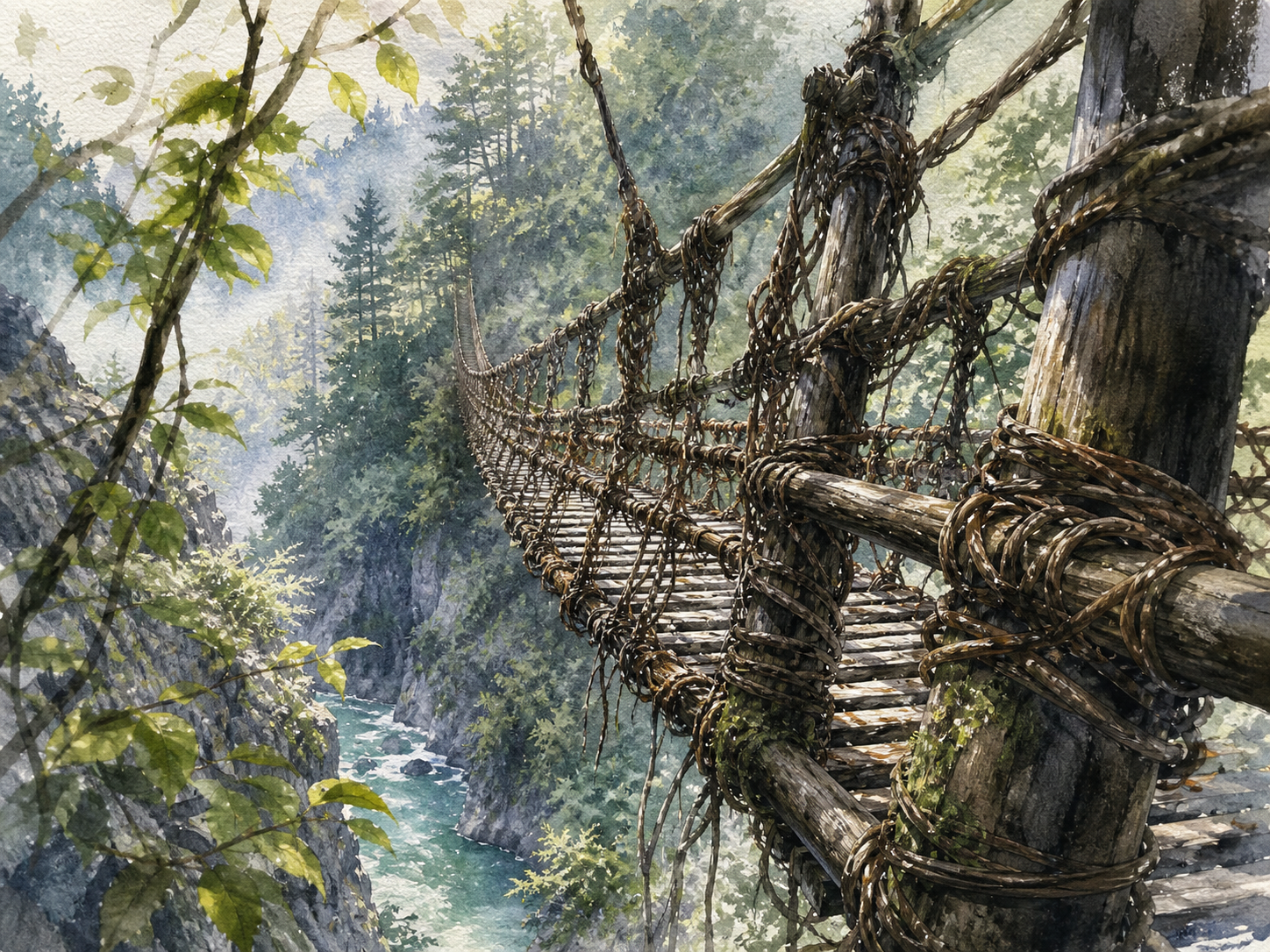
The Woven Threshold of the Misty Gorge
Critique
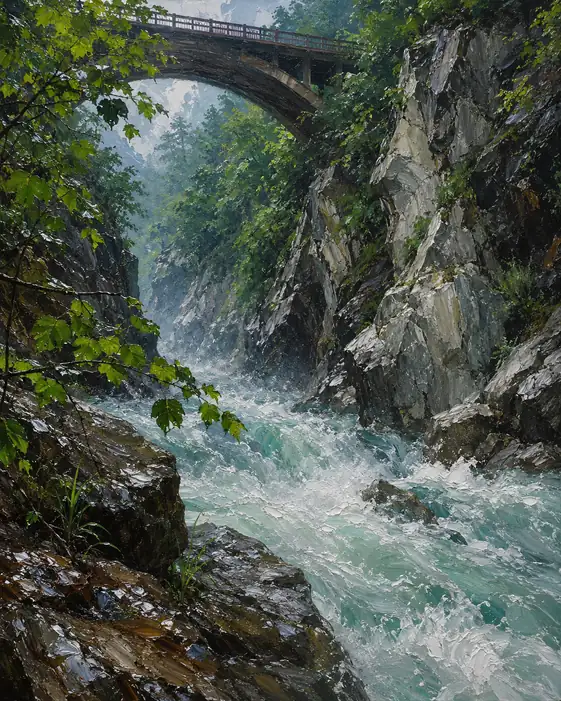
1. Introduction This watercolor landscape presents a breathtaking depiction of a traditional vine bridge, known as a "Kazurabashi," spanning a deep gorge. The composition is anchored by the massive, intricately twisted vines and timber in the immediate foreground, from which the bridge recedes at a sharp angle into a misty forest. The initial impression is one of intense tactile realism, capturing both the sturdiness and the inherent fragility of the structure. Viewers are almost made to hear the rushing water below and feel the cool, mountain air flowing through the steep valley. 2. Description The vine bridge dominates the frame, with every individual strand of vine and splinter of wood rendered with extraordinary detail. The rough texture of the bark, the cracks in the timber, and the patches of moss are depicted with lifelike precision. Below the bridge, an emerald-green river surges between rocky banks, its white foam indicating a swift current. In the background, steep slopes covered with coniferous trees rise toward a misty sky, where the distant landscape fades into soft bluish-gray tones, emphasizing the immense depth of the ravine. 3. Analysis The composition employs a bold diagonal perspective, with the bridge cutting from the lower right to the upper left, creating a powerful sense of spatial recession. The inclusion of leaves in the upper left corner adds another layer of depth, providing a frame that enhances the immersive "looking-in" feeling. Regarding color, the earthy browns of the bridge and rocks harmonize with the vibrant greens and blues of the forest and water, accurately reflecting the complex palette of the natural world. The artist skillfully alternates between dry-brush techniques for textures and wet-in-wet washes for atmospheric effects. Soft light filters from above, casting subtle shadows across the complex lattice of vines. 4. Interpretation and Evaluation The work contrasts human ingenuity—the creation of a bridge from purely natural materials—with the overwhelming power of the environment it inhabits. The artist's descriptive power is exceptional, particularly in the anatomical accuracy with which the interwoven vines are portrayed, revealing a dedicated study of the subject. The chosen perspective places the viewer directly onto the bridge, heightening the narrative quality of the piece. In terms of originality, the painting elevates a scene of remote natural beauty by blending craft-like precision with profound painterly lyricism. 5. Conclusion While the initial impact of the painting comes from the structural beauty and material texture of the bridge, a deeper study reveals the weight of tradition and the stillness of time embedded in the scene. The obsessive attention to detail creates a spiritual depth that transcends simple realism. This is an unparalleled landscape work that captures the solemn beauty of Japan’s rugged wilderness through masterful technique and artistic passion, leaving a profound impression on the observer.
Same Subcategory
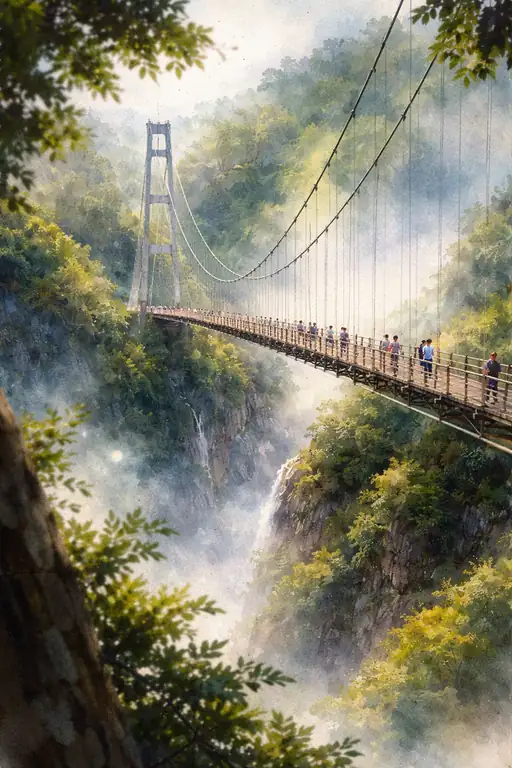 Echoes of the Mist: A Passage Through the Sky
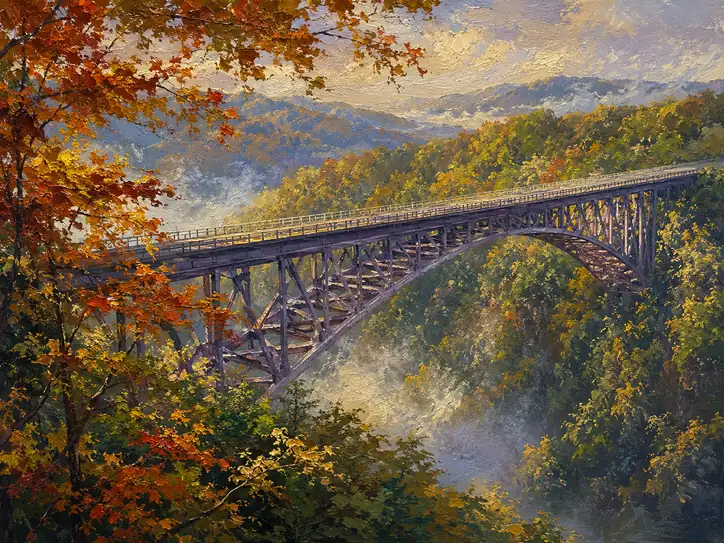 Arching Over the Golden Abyss
Similar Artworks
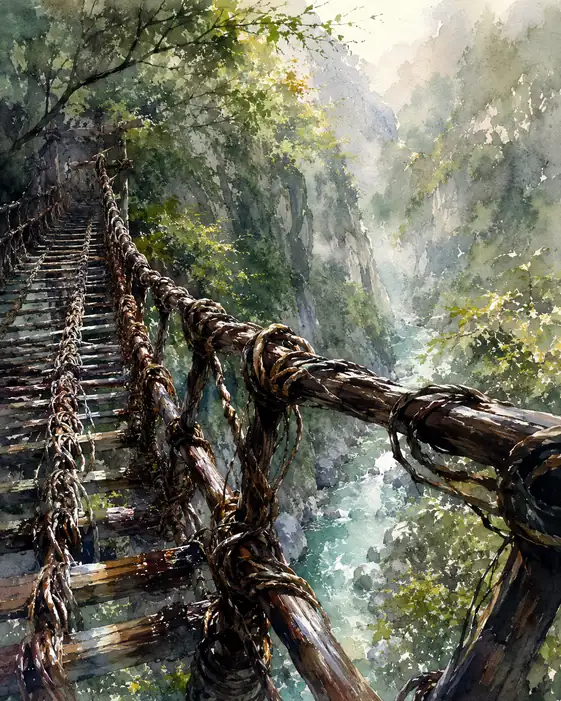 Where the Soul Crosses the Canyon
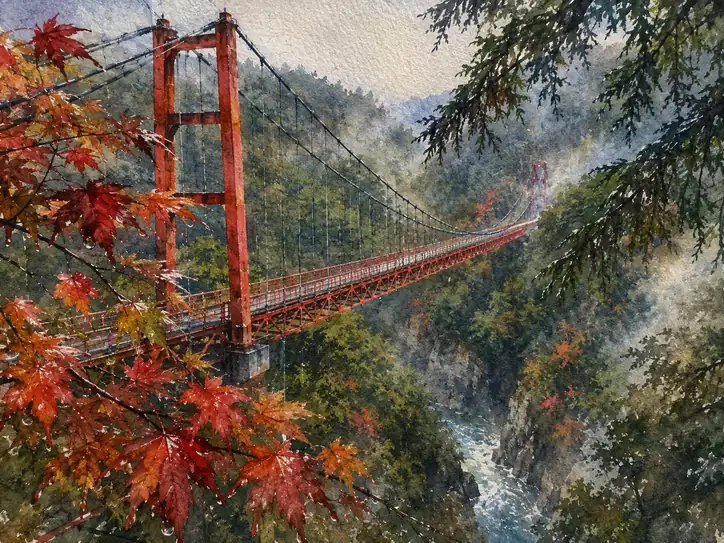 Echoes in Vermilion: A Bridge Through the Mist
 The Golden Passage: A Bridge Between Silence and Light
 Suspended in Silence
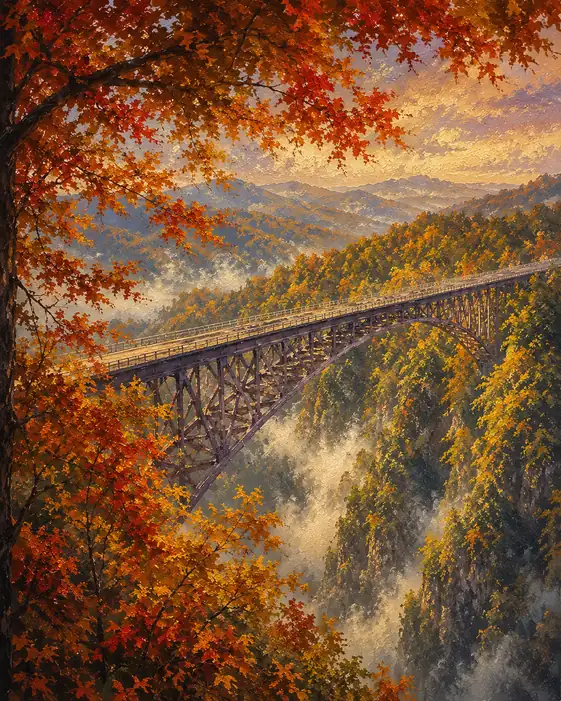 Autumn Leans Into the Crossing
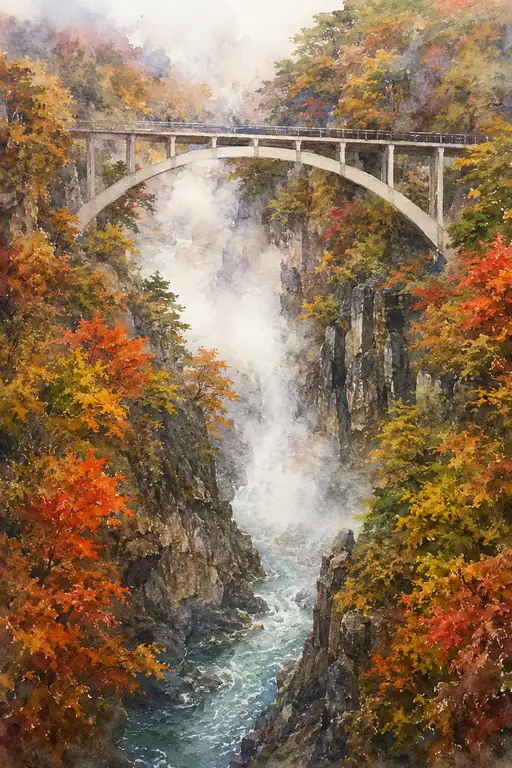 The White Arch Holds the Mist
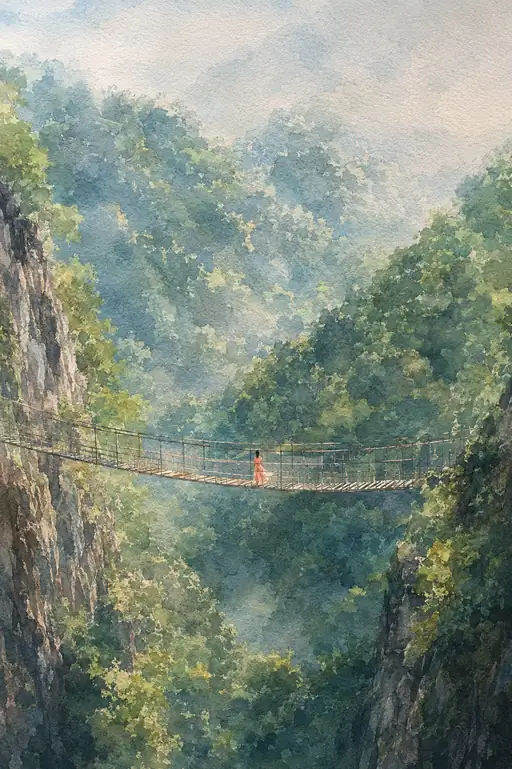 Suspended Silence
 The Silent Will Bridging the Torrent
 The Vines of Eternity
 Under the Bridge, Water Awakens