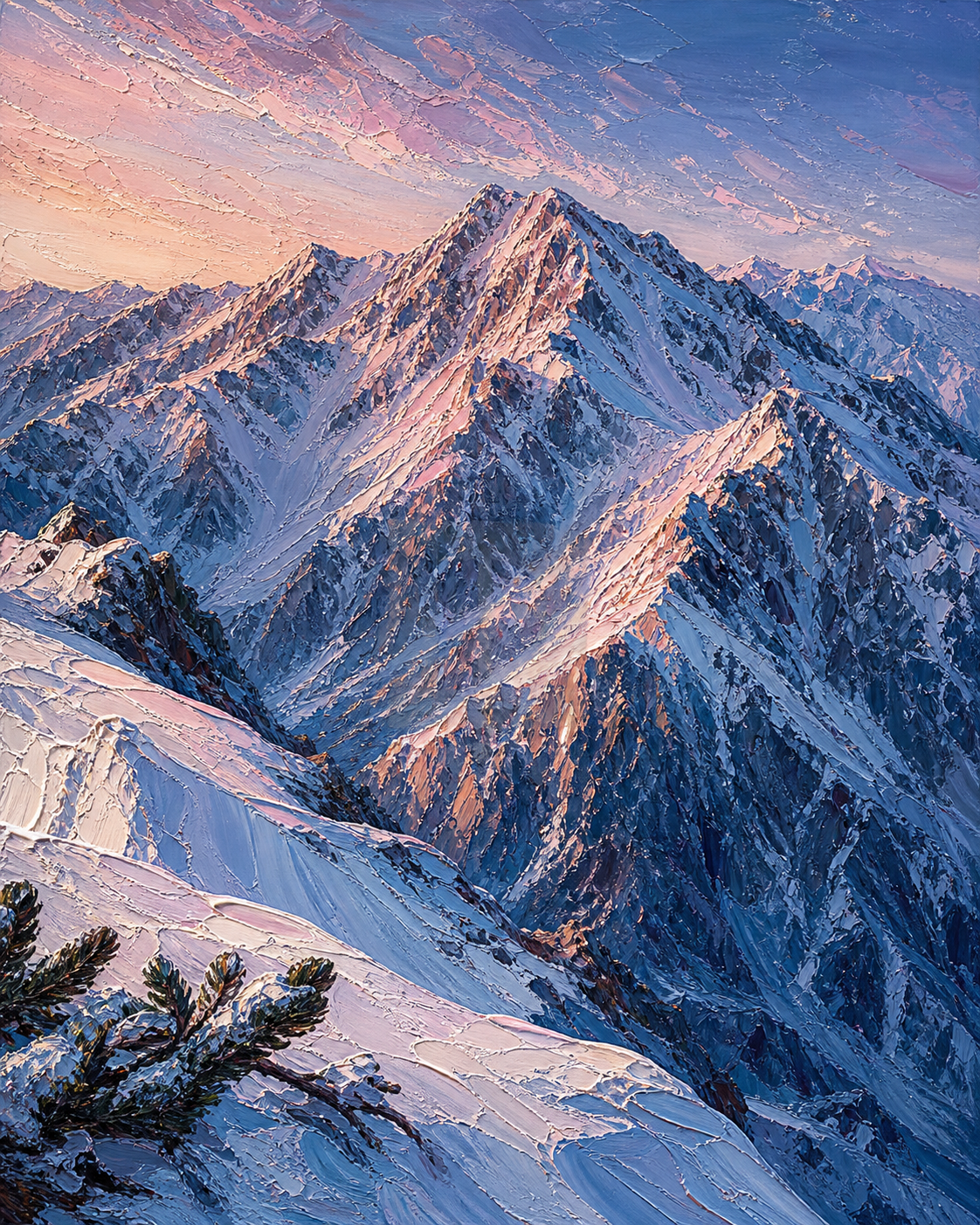
The Chiseled Summit of Rosy Dawn
Critique
1. Introduction This oil painting presents a majestic mountain peak covered in snow, rendered with dynamic brushwork and a powerful sense of presence. The central summit stands tall, bathed in the soft pink and orange hues of a rising or setting sun. The artist employs a heavy impasto technique, using a palette knife to create a sculptural surface that mimics the ruggedness of the terrain. The vertical orientation emphasizes the immense height and grandeur of the mountain, drawing the viewer into the sublime landscape. 2. Description The composition is structured in three distinct layers: a snowy foreground slope, a midground of deep valleys and ridges, and the prominent main peak in the distance. The sky features a soft gradient from pale orange to lavender, contrasting sharply with the jagged silhouette of the mountain. In the bottom left corner, a few snow-covered evergreen branches provide a sense of scale and depth. Warm whites and pinks illuminate the highlights, while deep blues and purples define the shadows, creating a strong chiaroscuro effect. 3. Analysis The most striking visual element is the heavy impasto, which provides a physical mass to the image. Each stroke of the palette knife acts like a chisel, carving out the facets of the rock and the drifts of snow. These rhythmic, diagonal marks create a sense of movement and energy across the canvas. The color palette relies on the interaction between complementary warm and cool tones, which not only enhances the luminosity of the light but also conveys the crisp, biting air of the high-altitude environment. 4. Interpretation and Evaluation This work transcends mere landscape representation to express a profound reverence for the vitality and stillness of nature. The draftsmanship is exceptional, capturing the essential form of the mountain through bold, gestural marks. While the composition follows traditional mountain art conventions, the tactile execution offers a fresh and original perspective. The sophisticated use of color brilliantly suggests the thin, clear atmosphere of the peaks. Technically, the artist’s mastery over the material properties of oil paint results in a compelling and highly valuable piece. 5. Conclusion While the initial impression is one of raw, elemental power due to the heavy texture, further observation reveals a delicate sensitivity to light and atmospheric color. This ambitious painting successfully navigates the balance between the physical weight of the mountains and the ephemeral quality of light. By capturing the moment when nature’s severity meets its beauty, the artist has created a lasting testament to the grandeur of the high peaks through a vigorous and expressive visual language.
Same Subcategory
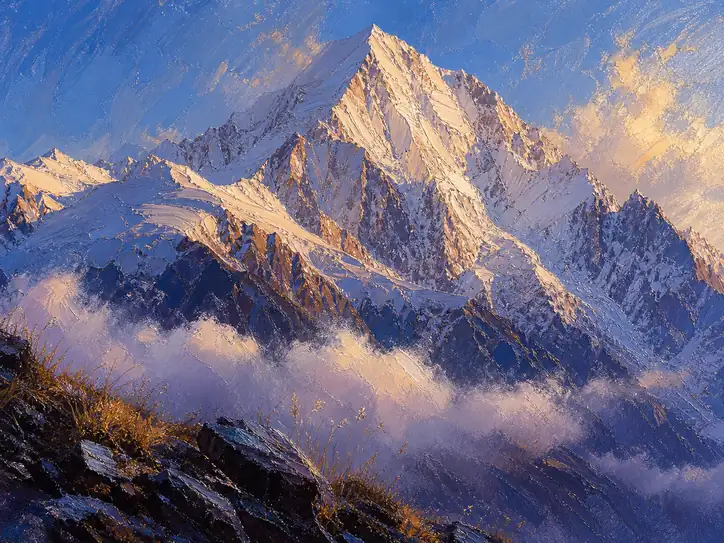 Summit of Golden Solitude
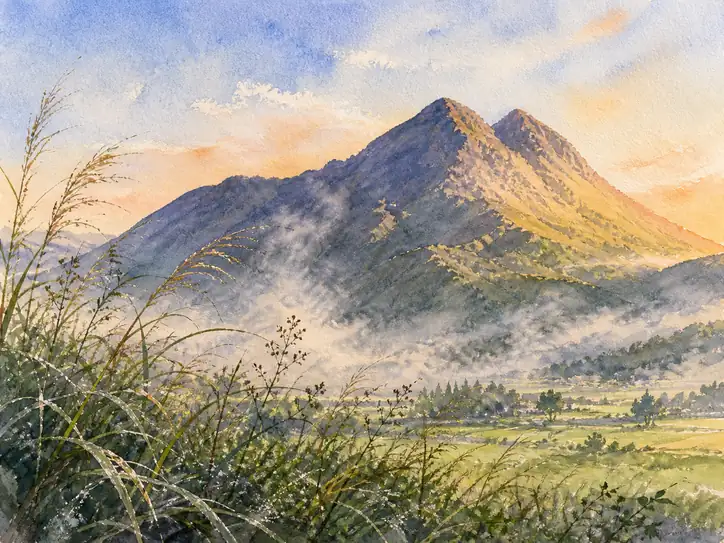 The Golden Requiem of Twin Summits
Similar Artworks
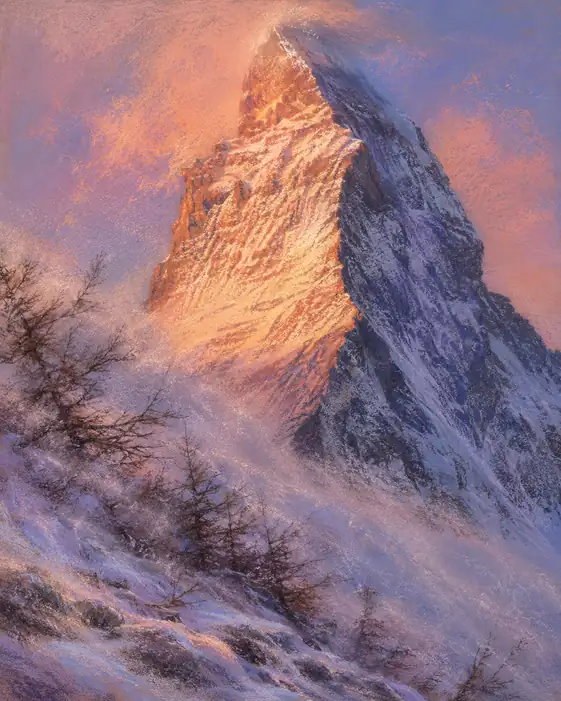 Silent Cry of the Wind-Swept Summit
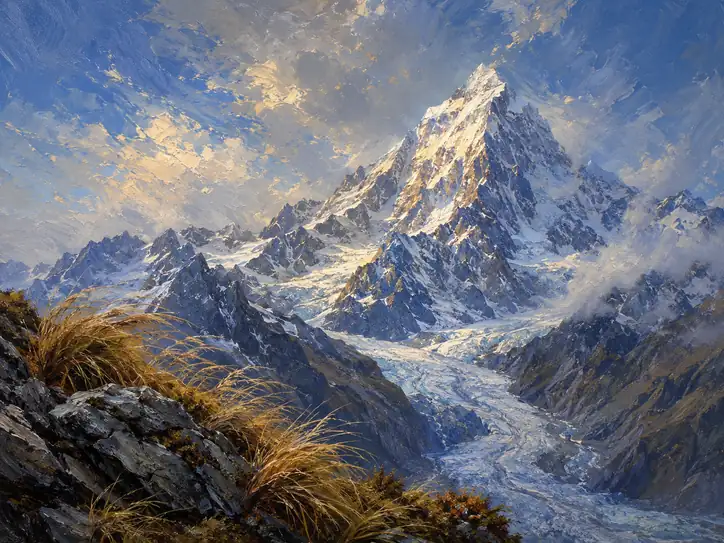 Eternal Crown of Gold and Ice
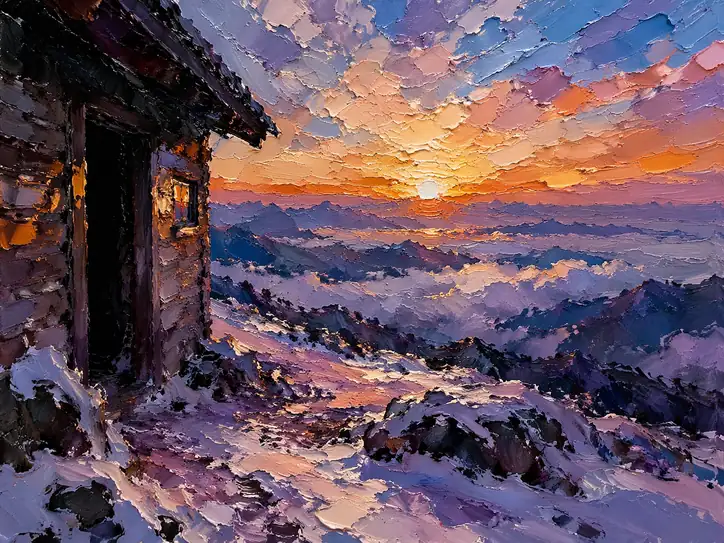 Sanctuary Above the Clouds
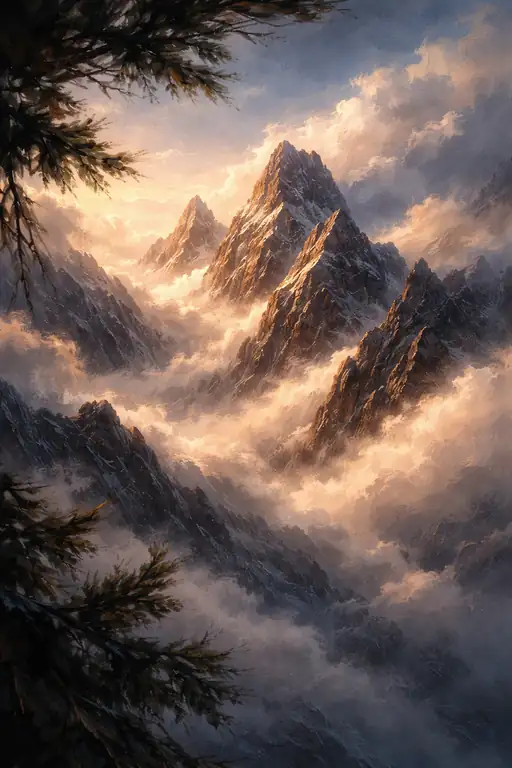 Eternity Above the Mist
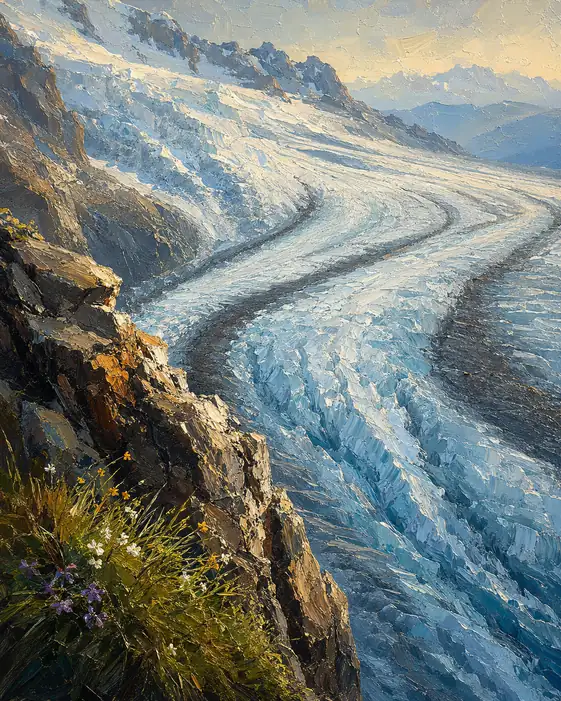 Spring Whispering on the Glacier's Edge
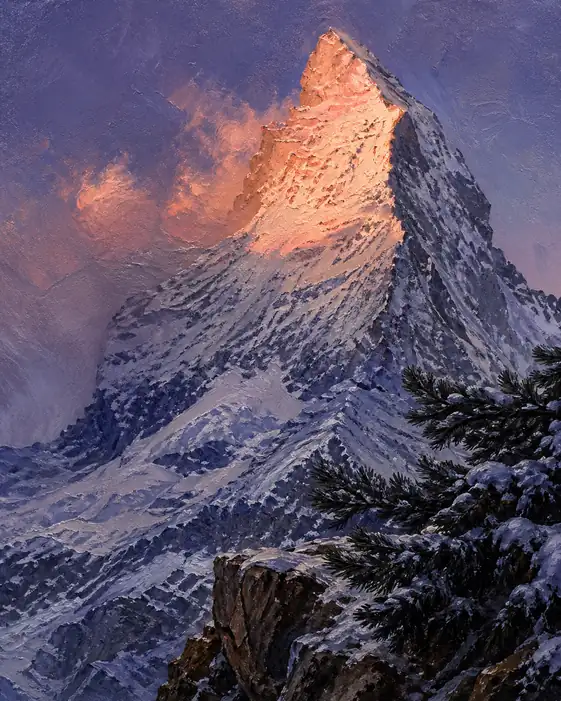 Dawn's Fiery Crown
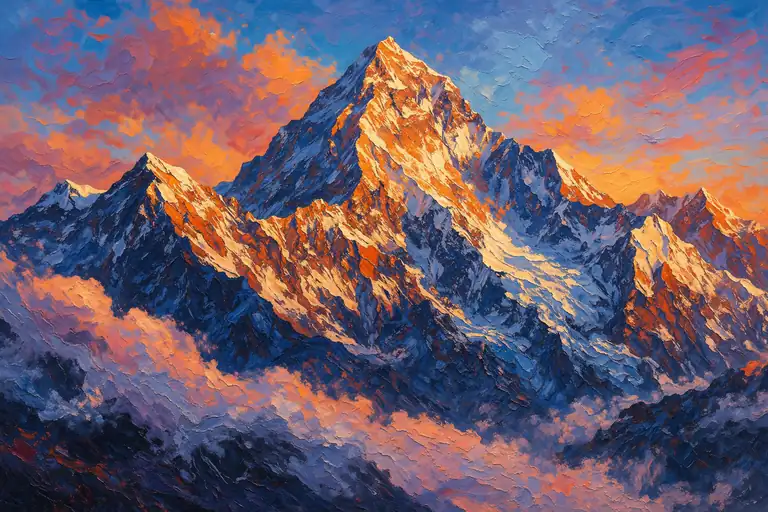 Golden Summit Above the Clouds
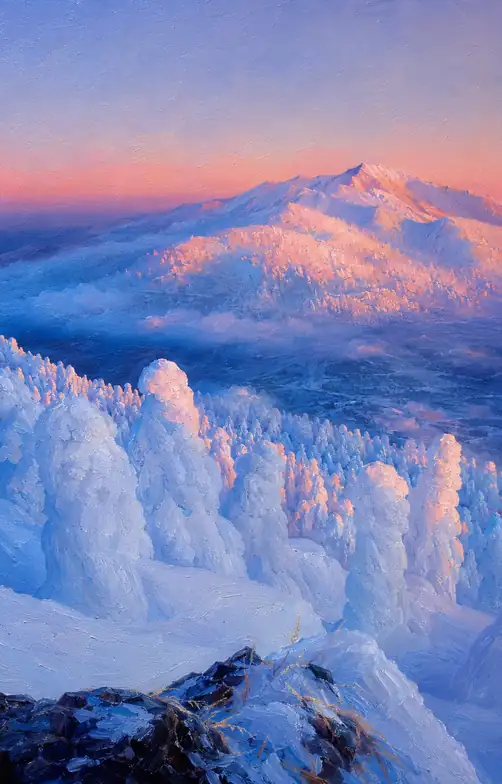 When the Frozen Forest Wears the Dawn
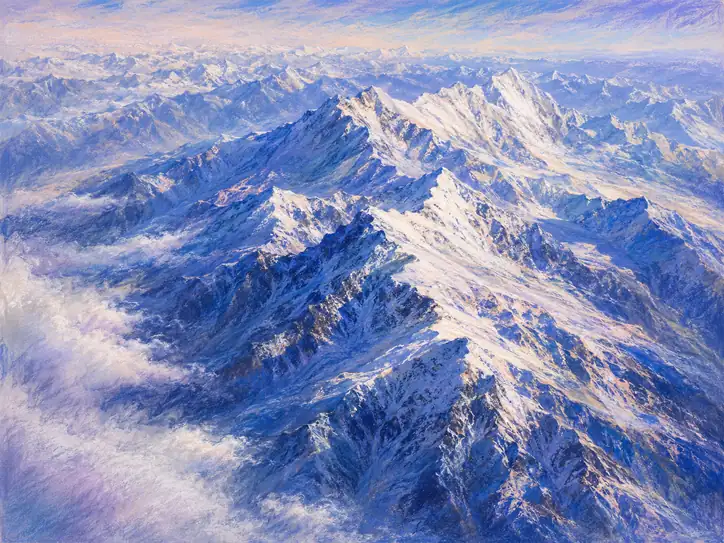 Soaring Over the Eternal Silence
 Above the Sea of Clouds