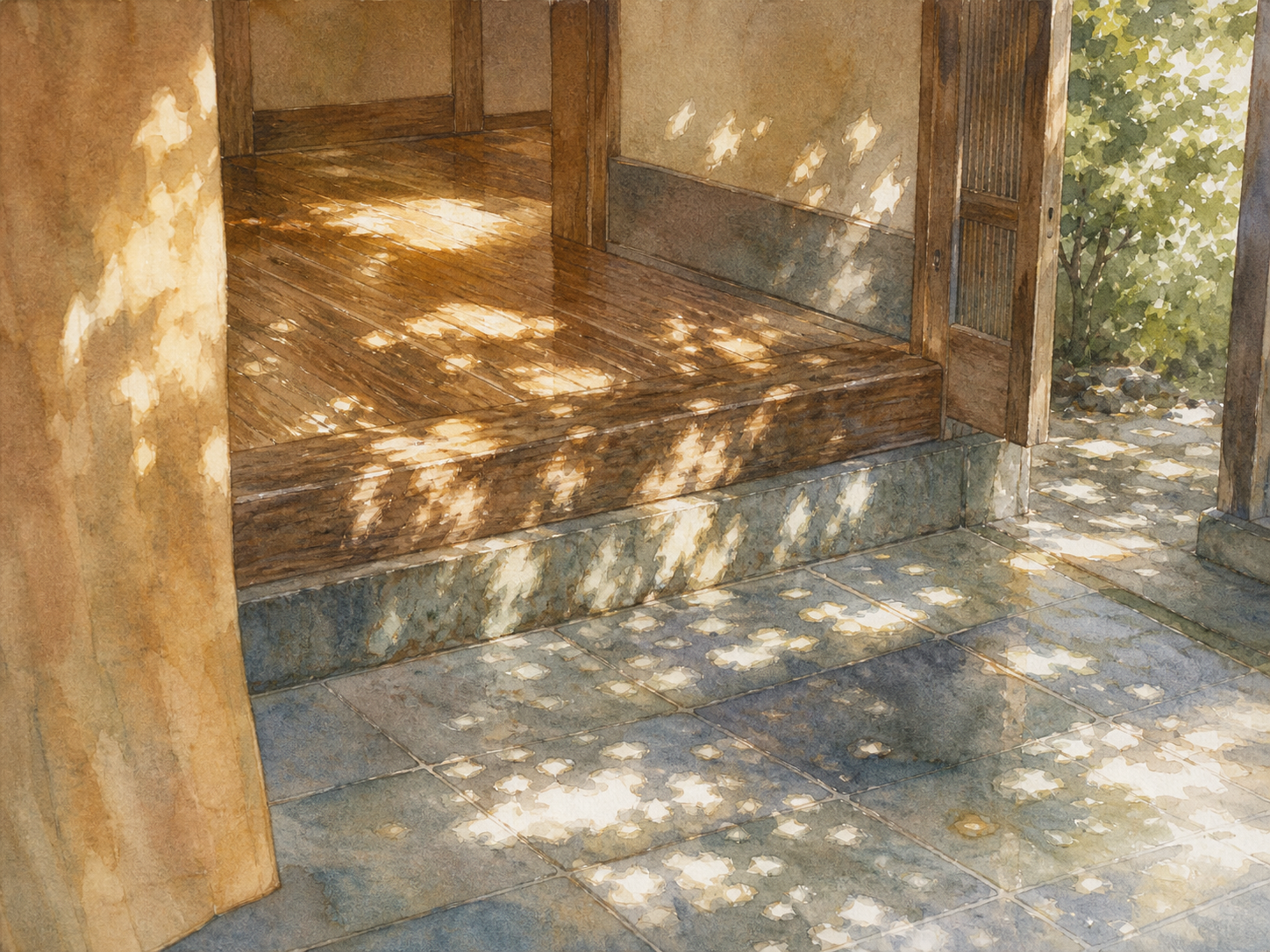
The Starry Threshold of Sunlit Memories
Critique
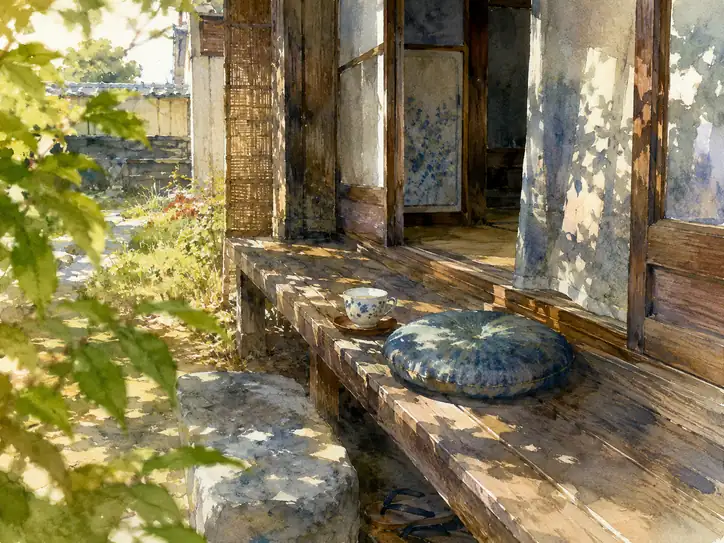
1. Introduction This watercolor-style painting captures a tranquil scene at a traditional Japanese-style entrance or veranda, where the focus is entirely on the play of light. Dappled sunlight filters through unseen foliage, casting intricate patterns across the architectural surfaces. By harmonizing the rigid lines of the structure with the ethereal qualities of light, the work evokes a nostalgic yet fresh emotional response. The artist masterfully translates a fleeting atmospheric moment into a lasting visual experience that resonates with quiet contemplation. 2. Description The composition features a polished wooden floor extending toward the background, flanked by a sturdy pillar and an open sliding door on the right. In the foreground, cool-toned stone tiles meet the wooden threshold, marking the boundary between interior and exterior spaces. Vibrant light spots, shaped like delicate stars or blossoms, are scattered liberally over the floors, walls, and timber surfaces. A glimpse of green foliage in the upper right corner suggests the natural source of this luminous phenomenon. 3. Analysis The color scheme relies on a sophisticated contrast between the warm golden-browns of the wood and the cool bluish-grays of the stone masonry. Transparent washes and subtle layering techniques characteristic of watercolor effectively convey the shimmering quality of light and the surrounding air. An angled perspective creates a dynamic sense of depth, guiding the viewer’s eye through the sun-drenched space. The stylized rendering of the light patterns adds a decorative and almost magical quality to the otherwise realistic setting. 4. Interpretation and Evaluation By making the intangible element of light the central protagonist, the work succeeds in depicting the very passage of time within a silent space. The depiction of the sunbeams suggests a specific time of day and a seasonal atmosphere, imbuing the scene with profound lyricism. Technically, the artist’s ability to differentiate how light interacts with varying textures like timber and stone is highly commendable. This creative approach transforms a simple architectural study into a poetic reflection on the beauty of ephemeral natural events. 5. Conclusion While initially attracted by the geometric rhythm of the light spots, the viewer gradually becomes aware of the subtle temperature and stillness of the room. The blend of traditional motifs with a modern sensibility toward light provides both visual stimulation and a deep sense of peace. Through exceptional watercolor technique and a unique vision, the artist has elevated a universal theme into a highly evocative and successful landscape painting.
Same Subcategory
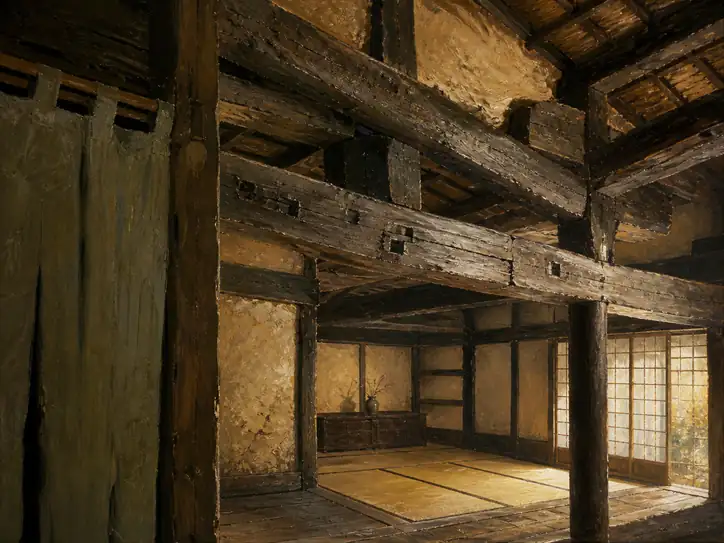 The Breath of Ancient Beams
 Resonance of a Timeless Afternoon
Similar Artworks
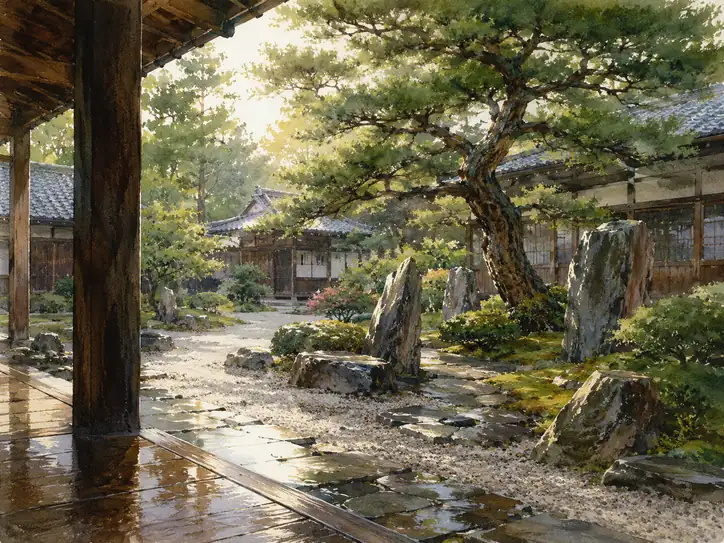 Reflections of Tranquility: Sunlight on the Wet Engawa
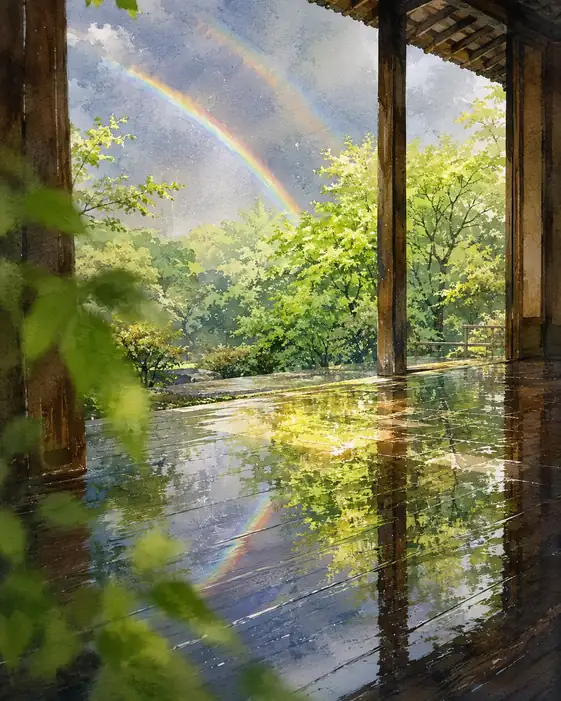 Rainbows Resting on the Engawa Floor
 Memory of the Sun-Drenched Leaves
 Morning Mist on the Stone Steps
 Through Indigo, the Light of Home
 A Glimmer of Home on the Wet Stone
 Whispering Sunbeams on the Veranda
 Memory Reflected in the Post-Rain Stone
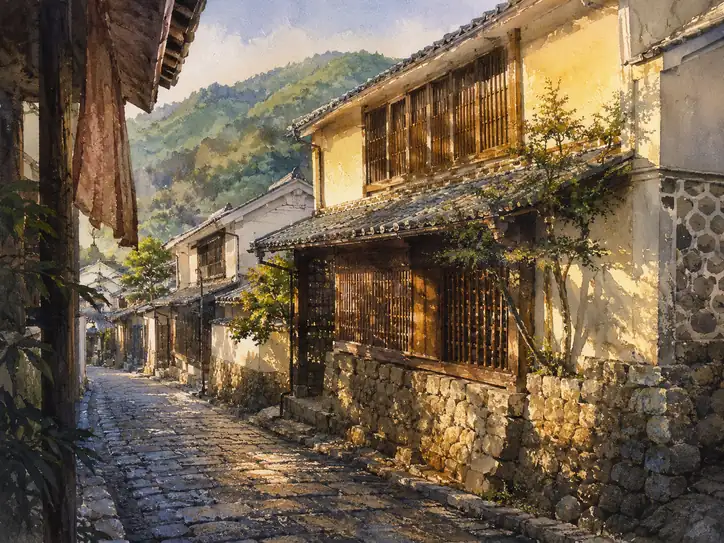 Sun-Drenched Memories of the Old Street
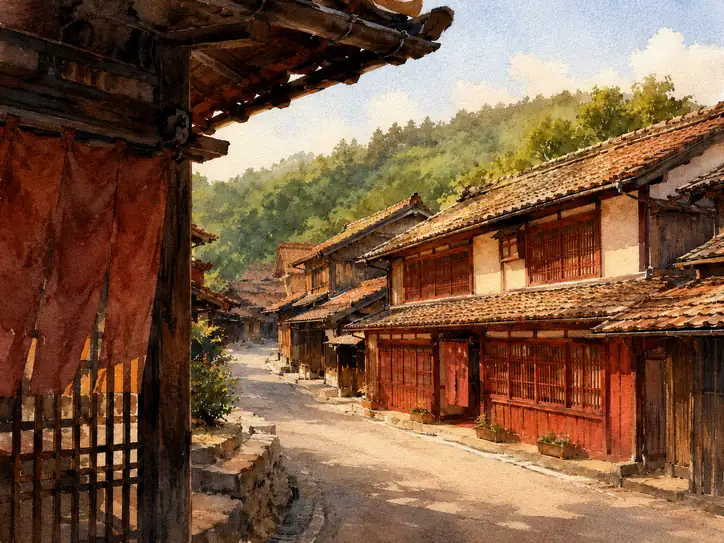 Golden Shadows on the Post Town