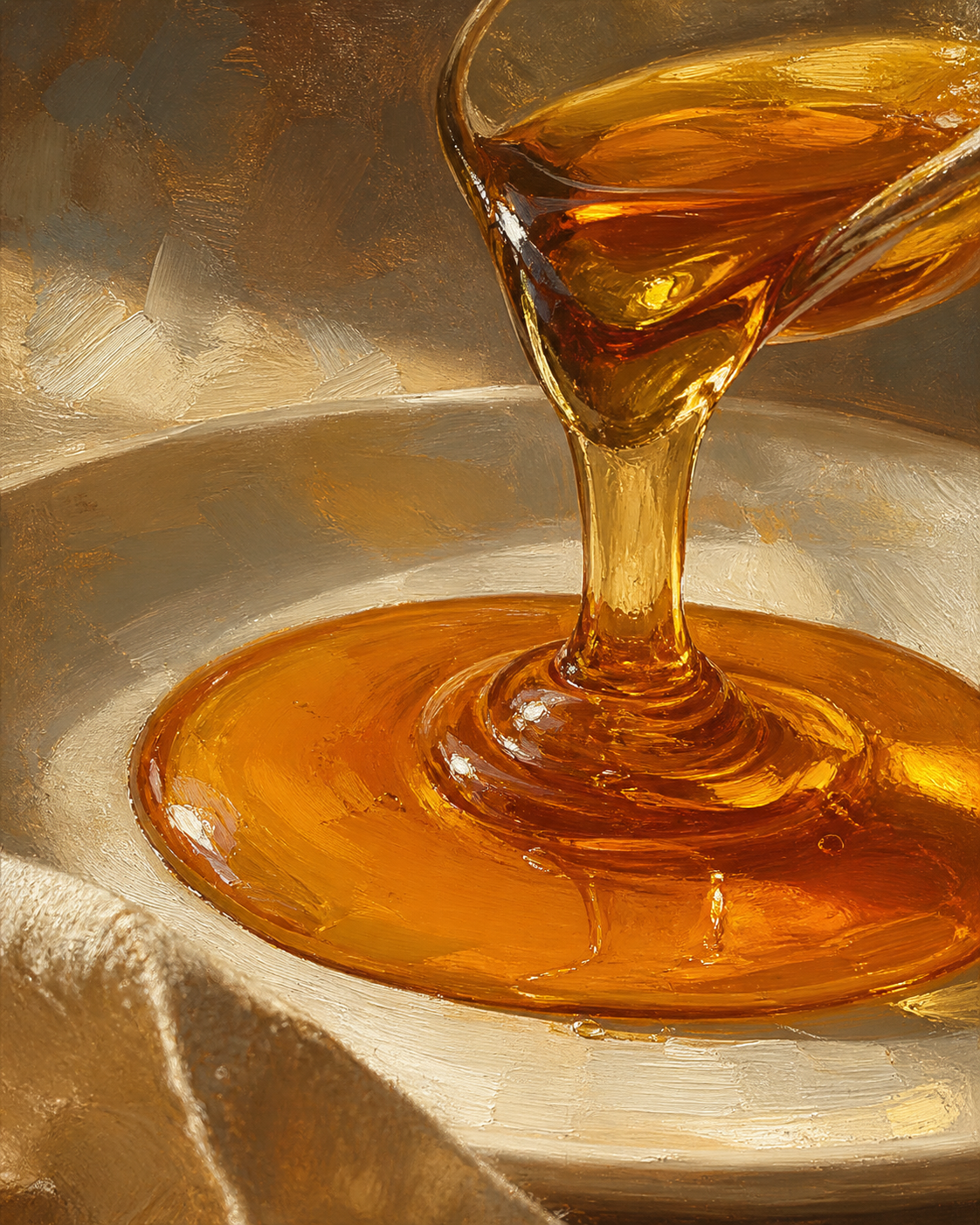
The Honeyed Flow of Ancient Sunlight
Critique
1. Introduction This evocative oil painting captures the rich, amber-hued essence of honey as it pours from a glass vessel onto a white plate. The artwork explores the physical properties of the liquid, emphasizing its viscosity, translucency, and the warm light permeating its golden depths. Through a masterful use of texture and color, the scene transforms a simple culinary moment into a celebration of material beauty. It establishes an atmosphere of indulgence and quiet grandeur that engages the viewer's senses. 2. Description A thick stream of honey descends vertically from the upper right, creating rhythmic ripples as it pools on a ceramic surface. The liquid exhibits a complex gradient of color, ranging from deep molasses tones to brilliant golden highlights where the light strikes. In the foreground, a corner of a textured cloth adds a rustic element, contrasting with the smooth, reflective qualities of the honey and plate. The background is rendered in muted earthy tones, ensuring the luminous honey remains the focus. 3. Analysis The color palette is dominated by a warm spectrum of golds, oranges, and ambers, providing the work with a glowing energy. Lighting is used strategically to simulate light refracting through a semi-transparent medium, creating an internal radiance within the pour. Bold brushstrokes and impasto techniques enhance the tactile sensation of the honey's thickness and the plate's solidity. The composition balances the vertical movement of the stream with the expanding horizontal circles of the pool. 4. Interpretation and Evaluation The painting can be interpreted as an homage to the slow accumulation of nature's bounty and the inherent dignity of natural substances. The deliberate flow suggests a suspension of time, inviting the viewer to appreciate the steady pace of the organic world. The artist's technical skill is remarkable, particularly in capturing tension and surface reflections without losing the painterly quality. This work succeeds in elevating a mundane subject to aesthetic importance through its rich materiality. 5. Conclusion The depiction of pouring honey serves as a poignant reminder of the beauty found in simple physical phenomena. What begins as a study of a common substance evolves into a meditation on light, time, and the sensory richness of life. The seamless integration of realistic detail and expressive brushwork results in a unified vision that resonates with quiet power. Ultimately, the piece leaves a lasting impact by revealing the hidden splendor contained within a single golden drop of nature's labor.
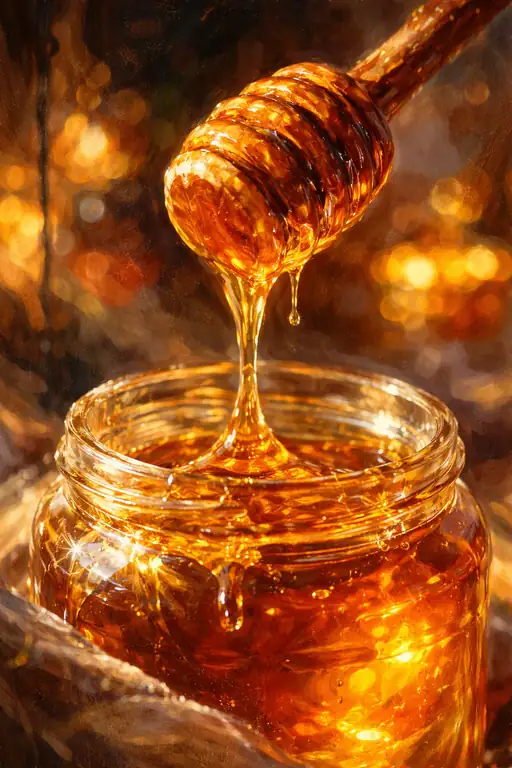 Golden Amber Honey Flow
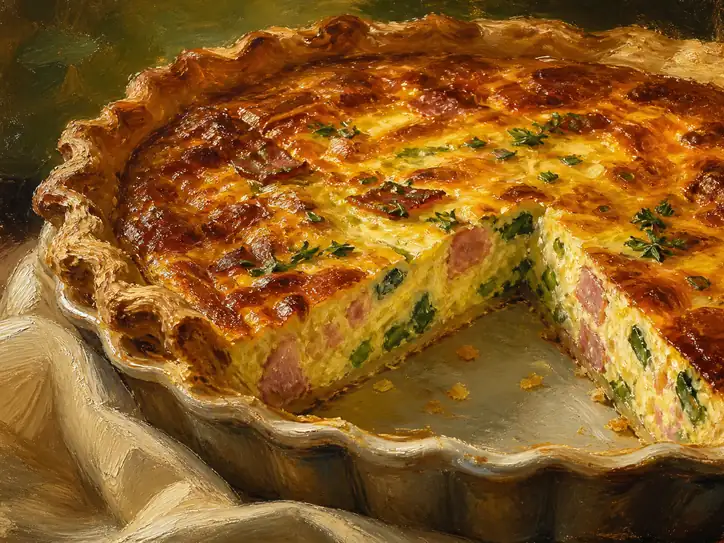 Eternal Warmth on a White Plate
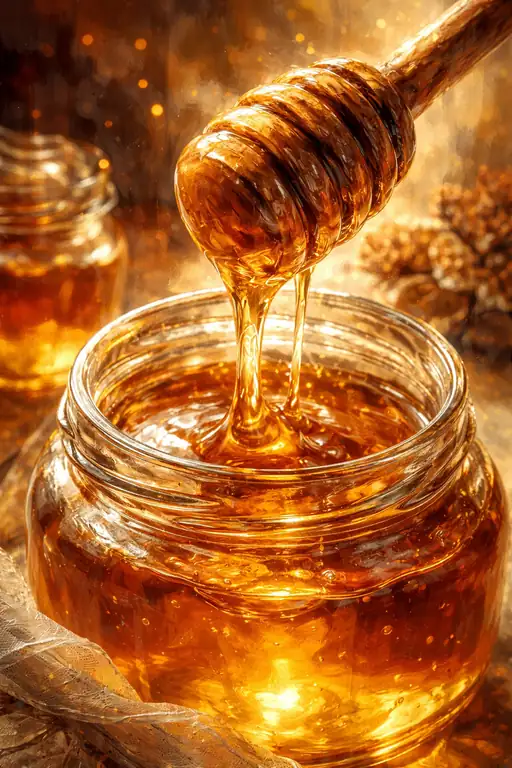 Golden Pulse, Eternal Amber
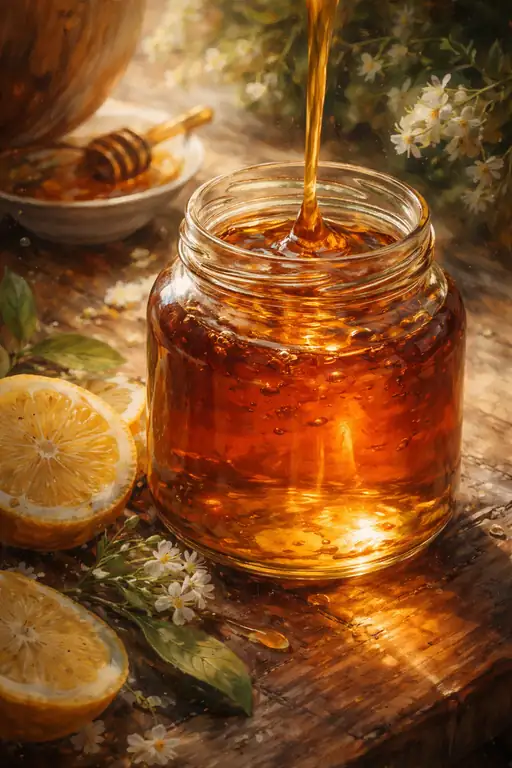 Amber cascade into clarity
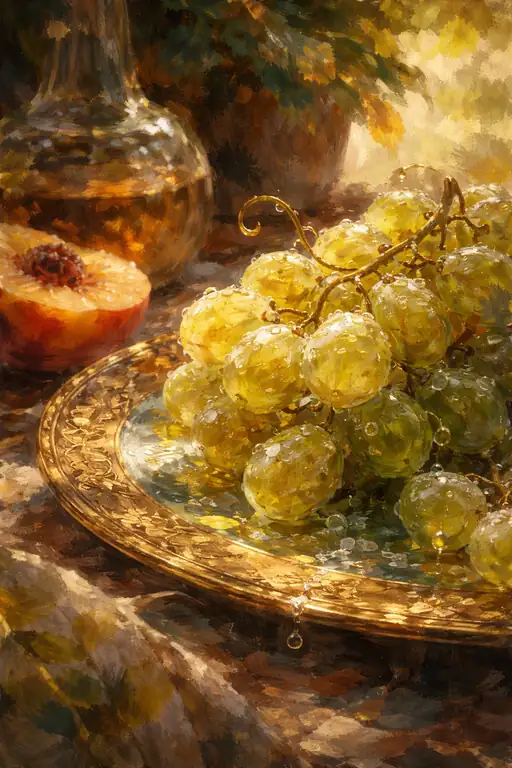 Amber Dreams of the Harvest
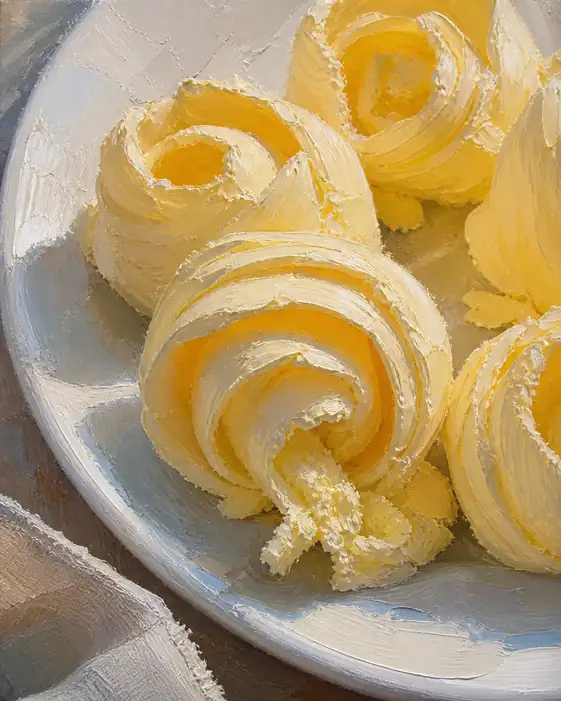 Creamy Roses of the Morning Light
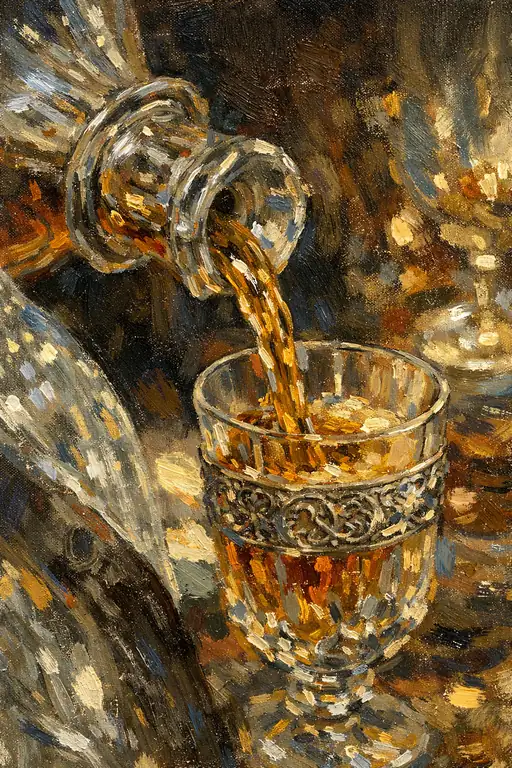 The Golden Pour of Twilight
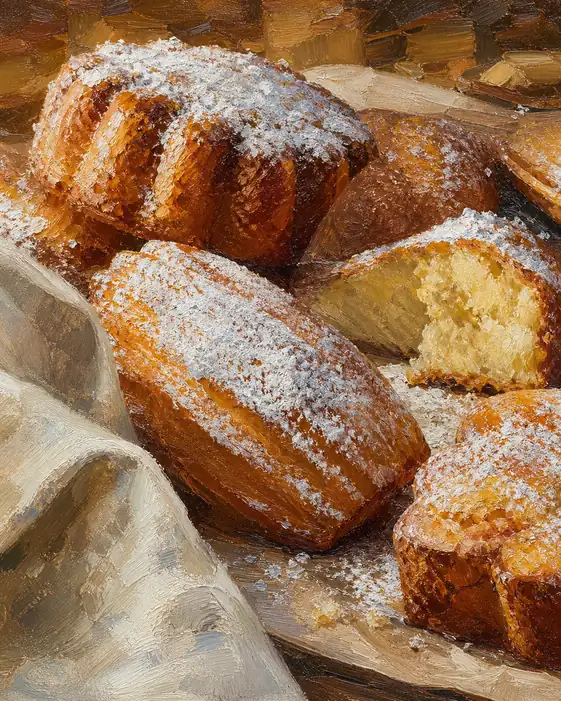 Benediction of the Golden Crust
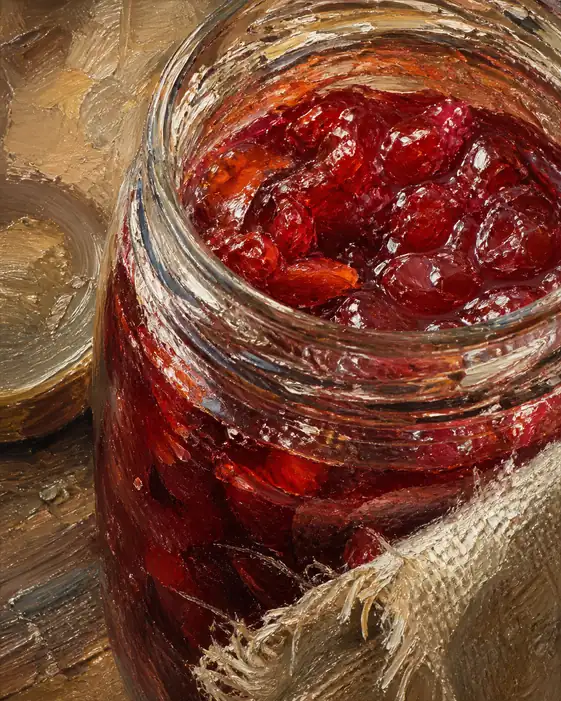 Glow of Preserved Summer
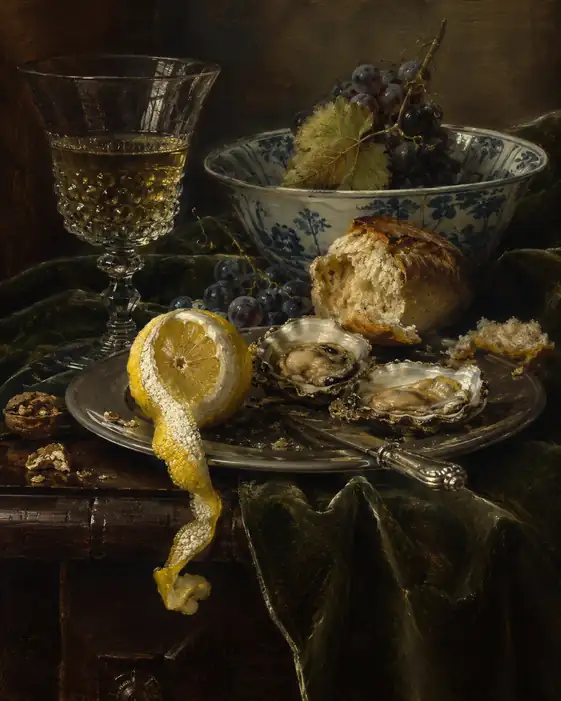 Fragile Pleasures on Pewter