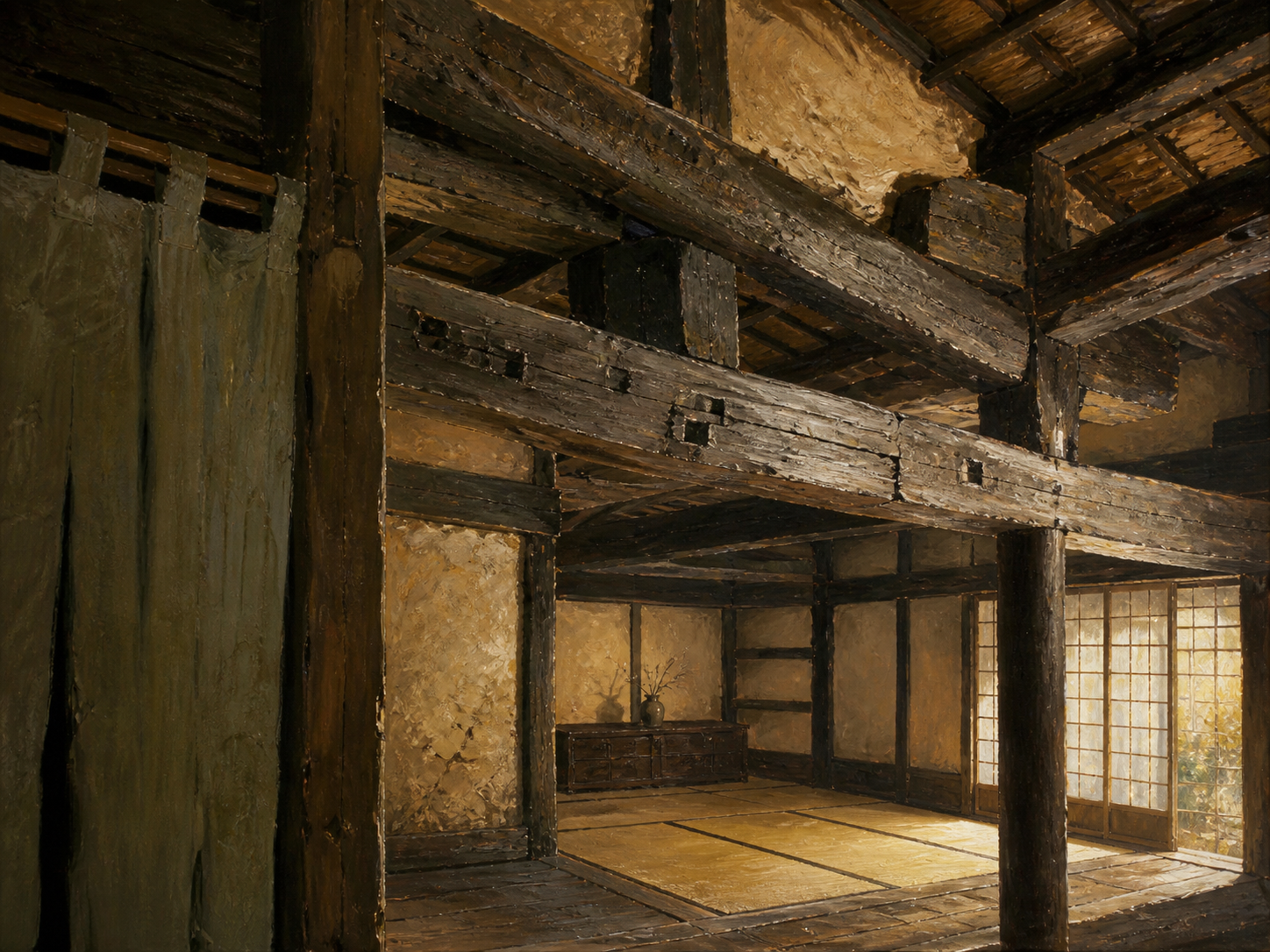
The Breath of Ancient Beams
Critique
1. Introduction This work captures the interior of a traditional Japanese house, focusing on the robust structural elements of the building's timber frame. The composition emphasizes the grandeur of historical architecture through a perspective that highlights the massive wooden beams supporting the ceiling. This painting serves as a silent documentation of a living space that has withstood the passage of time. 2. Description The foreground is dominated by thick, dark-stained wooden pillars and crossbeams that crisscross the upper portion of the frame. To the left, a heavy fabric curtain hangs, while the background reveals a tatami room with a low chest and a single vase. On the right side, light filters through a grid-patterned sliding paper door, casting a warm glow onto the straw-matted floor and the textured plaster walls. 3. Analysis The artist utilizes a heavy impasto technique, where thick layers of paint create a tactile quality on the surface of the wooden beams and the earthen walls. The color palette is restricted to earthy tones, primarily deep browns, ochre, and warm grays, which enhance the rustic atmosphere of the setting. The strong horizontal and vertical lines of the architecture provide a sense of stability and rhythmic order within the space. 4. Interpretation and Evaluation The depiction of the massive beams suggests the enduring strength and resilience of traditional craftsmanship. The interplay between the dark, heavy timber and the soft, diffused light from the shoji screen creates a balance between weight and weightlessness. This work successfully evokes a feeling of nostalgic tranquility, inviting the viewer to appreciate the functional beauty found in Japanese vernacular design and its harmonious relationship with natural materials. 5. Conclusion While the viewer is initially overwhelmed by the physical presence of the structural beams, a deeper sense of spatial peace gradually emerges. The painting effectively bridge the gap between architectural documentation and emotional expression through its rich textures. It concludes as a powerful tribute to the quiet dignity of ancestral homes and the enduring spirit of their construction.
Same Subcategory
 The Starry Threshold of Sunlit Memories
Similar Artworks
 Shadows Dancing on the Lattice
 Where the Light Comes to Rest
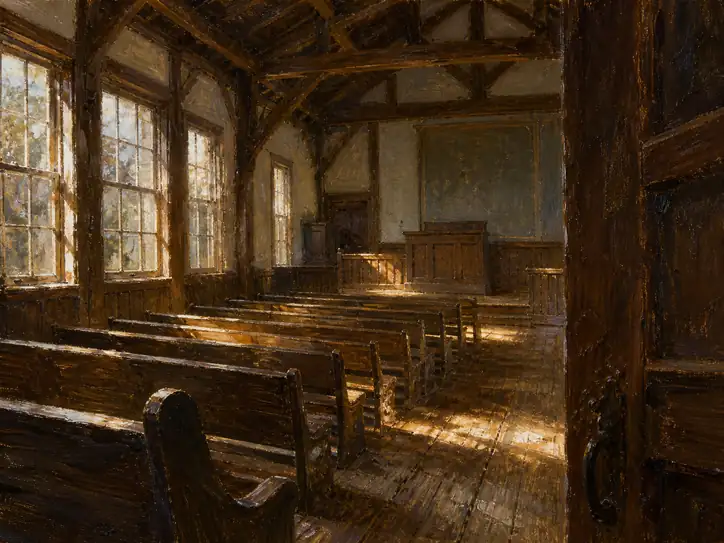 The Eternal Light of Learning
 Where the Snow Whispers Warmth
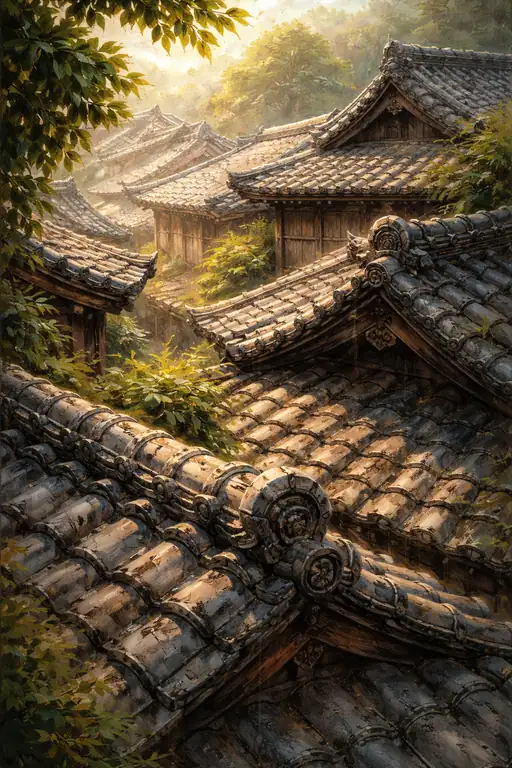 Gentle Time Woven by Tiled Roofs
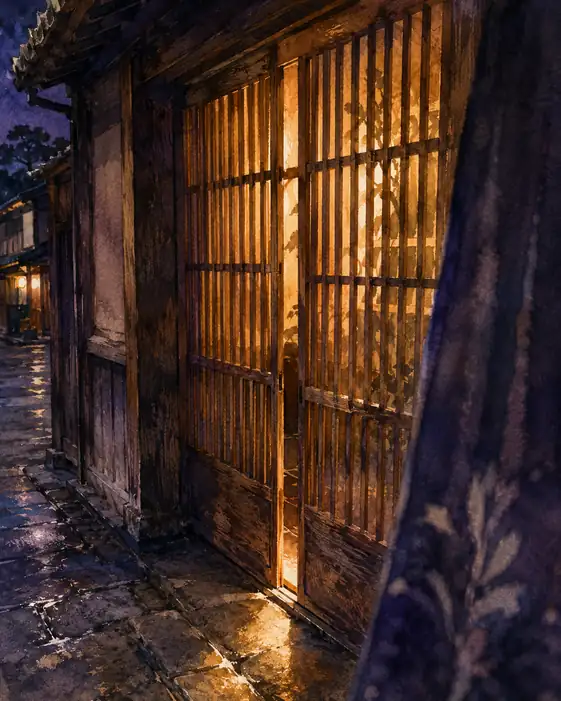 A Glimmer of Home on the Wet Stone
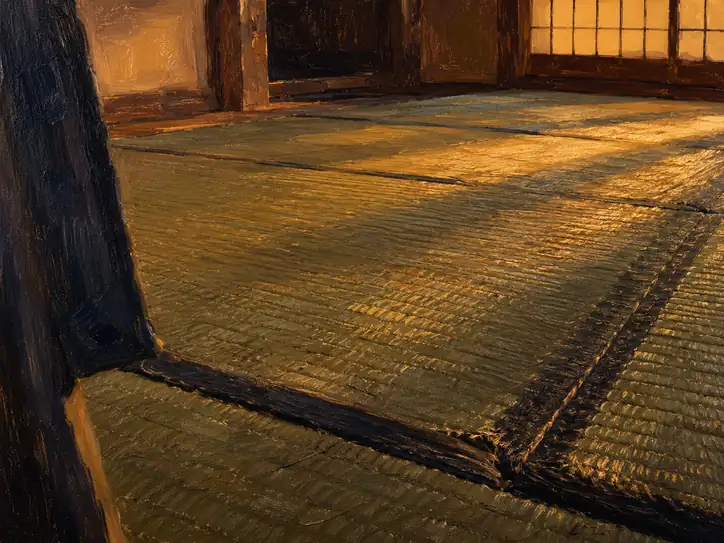 Nostalgia in Gold
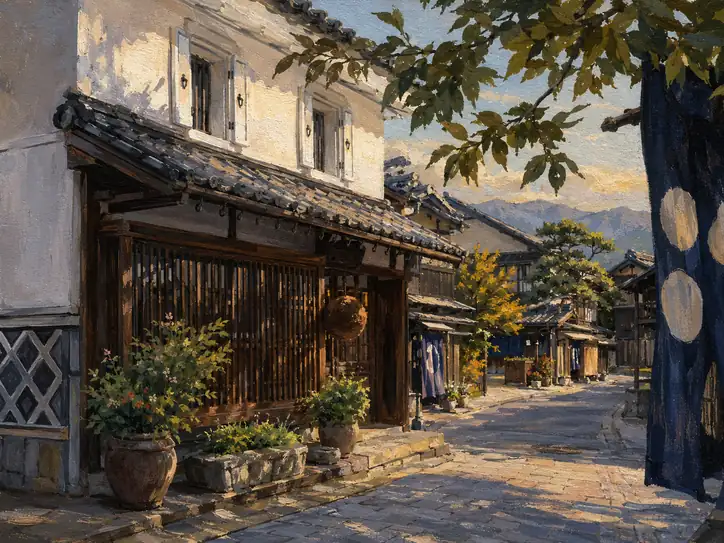 The Golden Hour in a Hidden Village
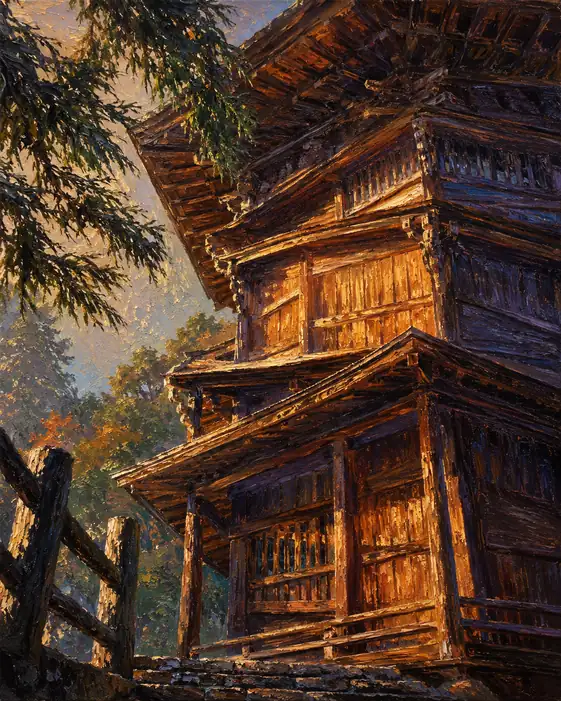 Echoes of the Ancient Wood in Sunset
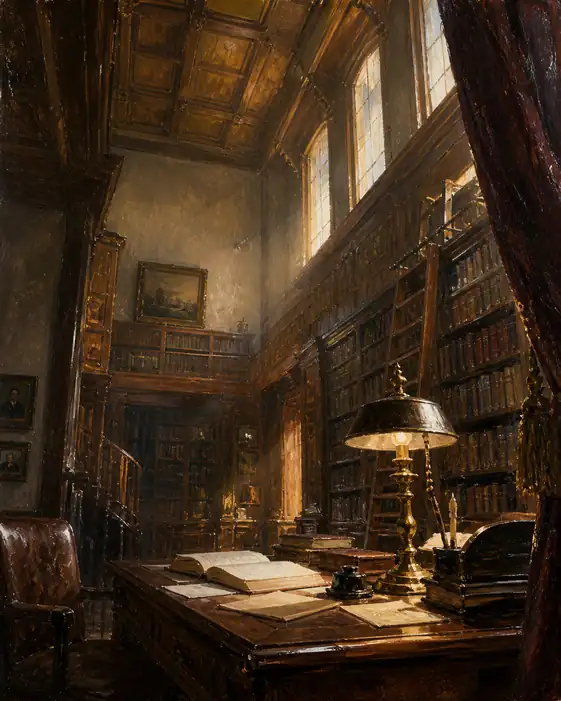 Where the Silent Ages Speak