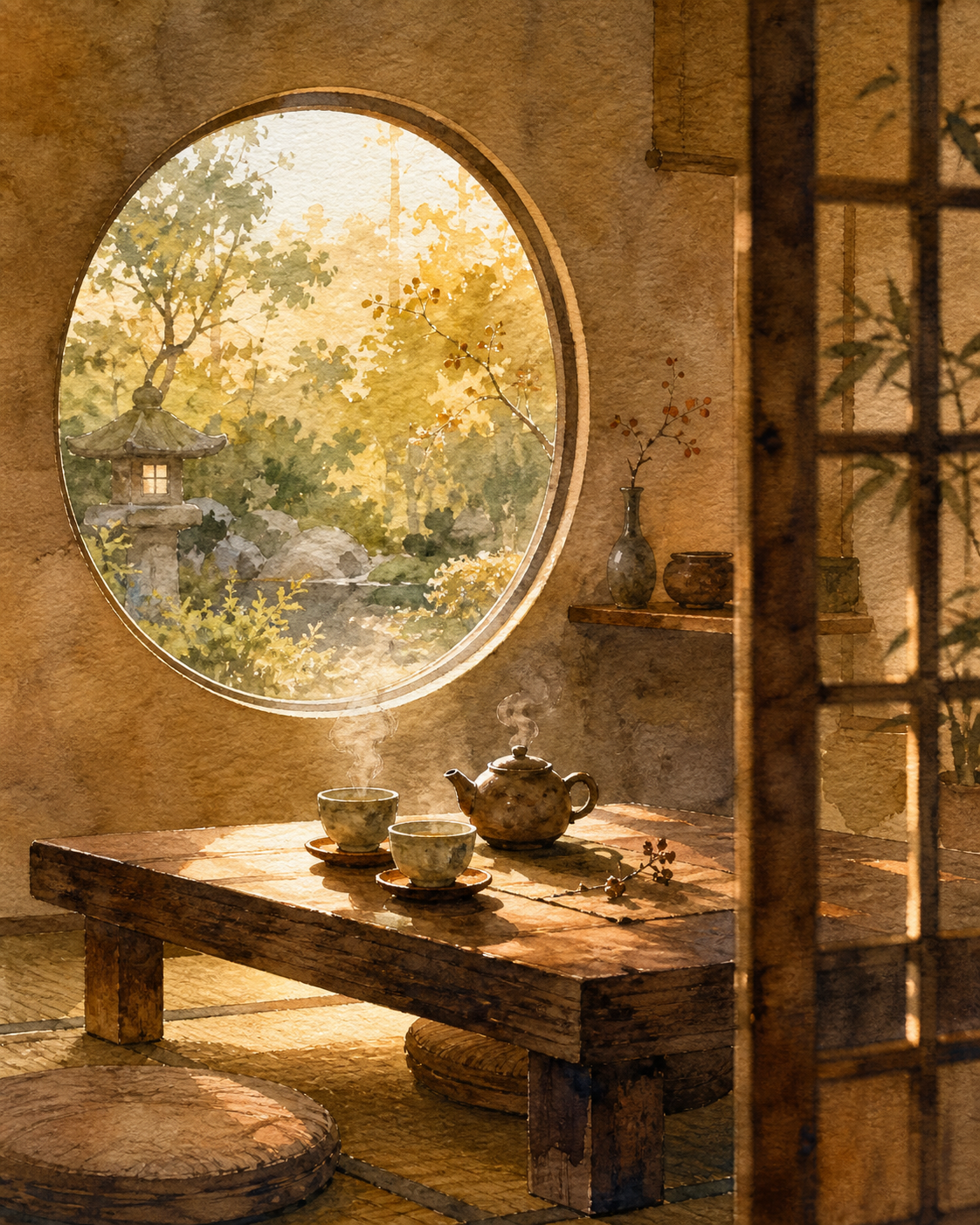
Whispers of the Golden Garden
Critique
1. Introduction This watercolor painting captures a moment of profound tranquility within a traditional Japanese tea room. The scene is centered around a large circular window framing a vibrant garden bathed in golden light. Through its delicate use of medium, the artwork invites the viewer into a space characterized by stillness and the subtle beauty of a quiet afternoon. 2. Description In the foreground, a sturdy wooden table holds a teapot and two teacups, from which wisps of steam rise gracefully. A small branch rests nearby, adding natural elegance to the interior. Beyond the circular opening, a stone lantern stands amidst lush greenery and stones, all illuminated by the sun. The edge of a shoji screen on the right adds structural depth to the composition. 3. Analysis The artist employs the circular window as a masterful focal point, drawing the eye toward the luminous exterior while maintaining domestic intimacy. The watercolor technique, featuring soft washes, creates a rich texture on the earthen walls and wooden surfaces. Light serves as a primary element, creating a dramatic contrast between the shaded interior and the ethereal brilliance of the garden. 4. Interpretation and Evaluation This piece successfully translates traditional aesthetics into a visual language that emphasizes harmony and calm. The technical execution of light and shadow demonstrates a sophisticated understanding of atmosphere, evoking a sensory experience of warmth. The balanced composition and refined color palette contribute to a work that feels both grounded in tradition and refreshingly contemporary in its quality. 5. Conclusion By focusing on the interaction between indoor and outdoor spaces, the painting achieves a remarkable sense of spiritual balance. What begins as an observation of a tea setting evolves into an appreciation for the interplay of light and architecture. This artwork stands as a testament to the power of simple moments, transformed into a scene of enduring beauty.
Same Subcategory
 Sanctuary of the Golden Ripple
Similar Artworks
 The Soft Glow of Peace in a Paper Lantern
 Whispering Sunbeams on the Veranda
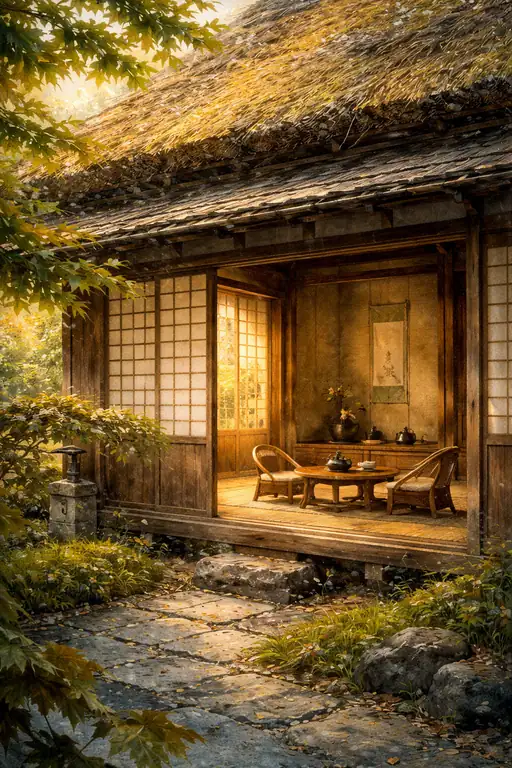 The Golden Silence of the Thatched Sanctuary
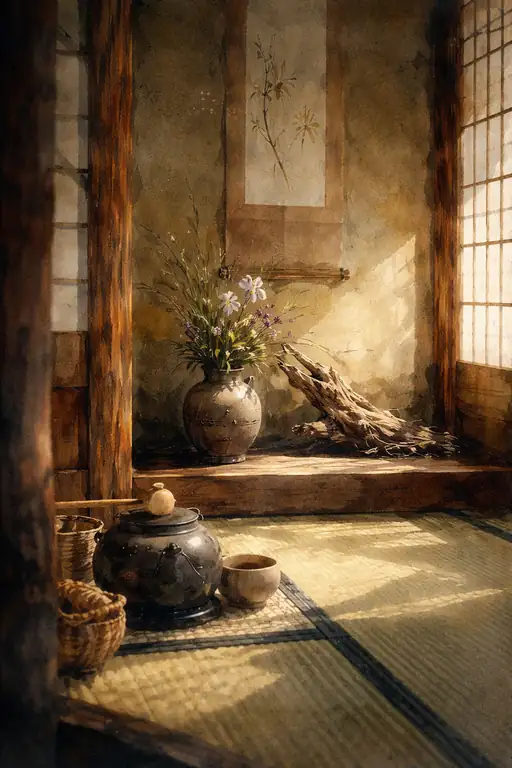 Stillness of the Tea Room
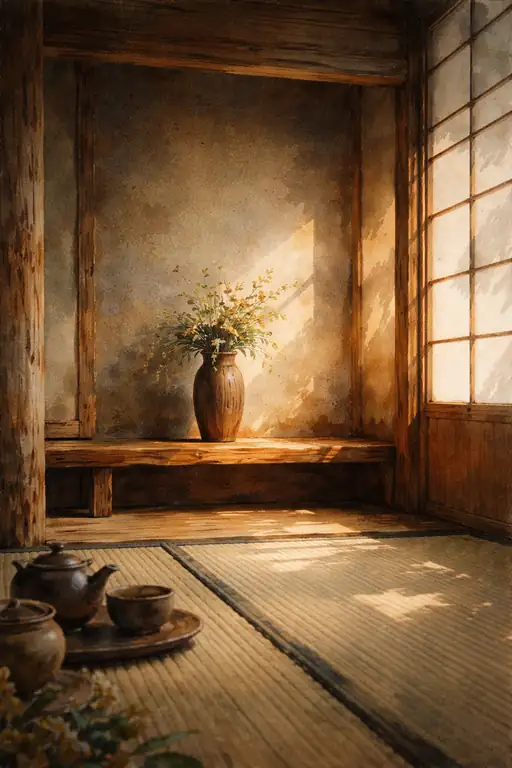 Morning Light Through Shoji
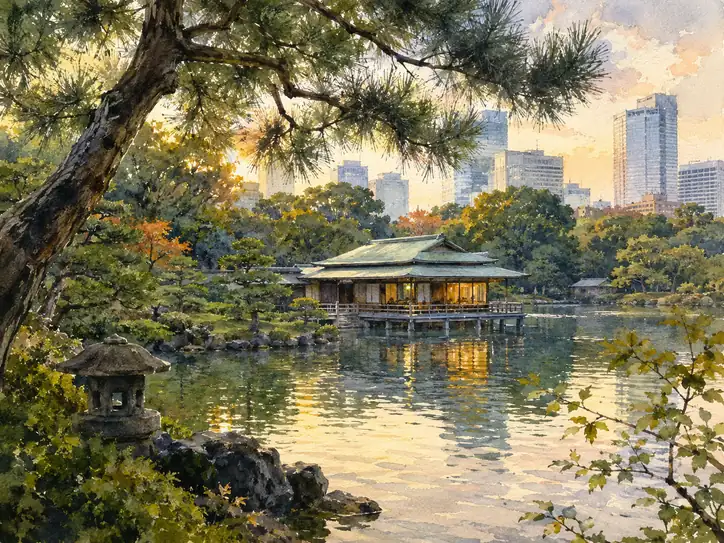 Twilight Sanctuary Between Eras
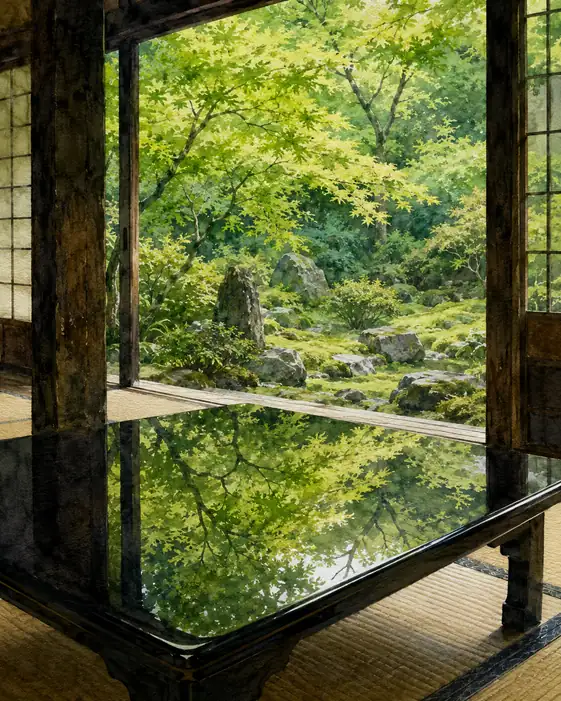 The Garden Borrowed by a Black Mirror
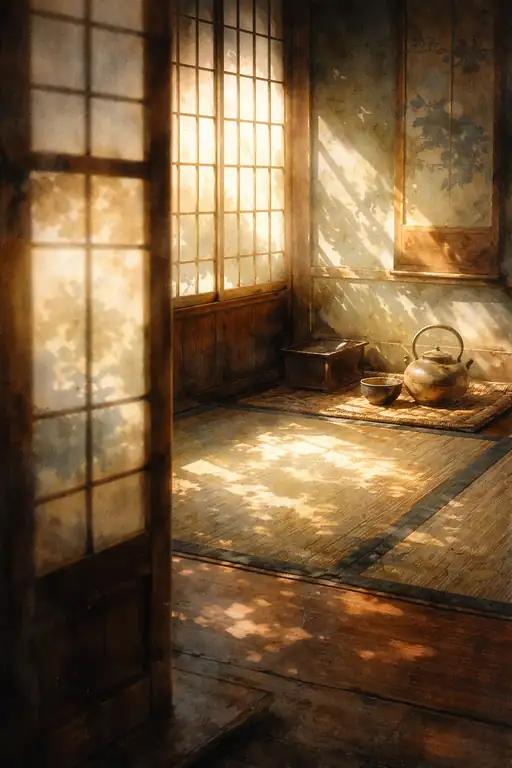 Shadows Dancing on Tatami
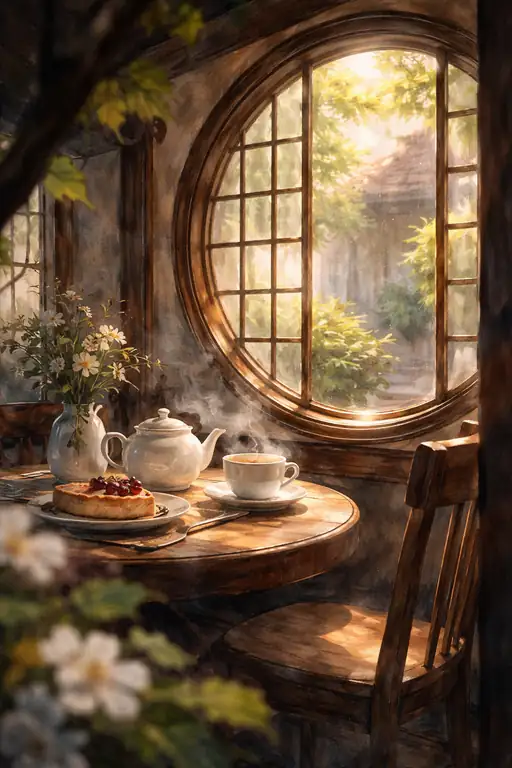 A Quiet Afternoon Steeped in Sweet Memories
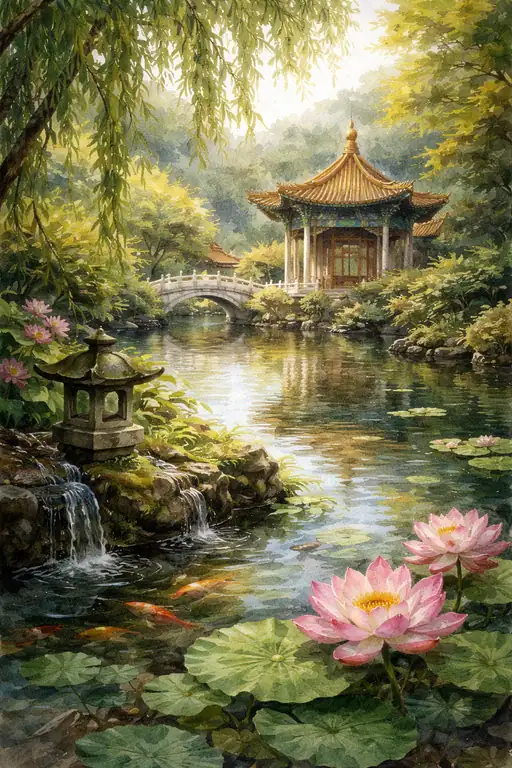 Serenity of the Gilded Pavilion