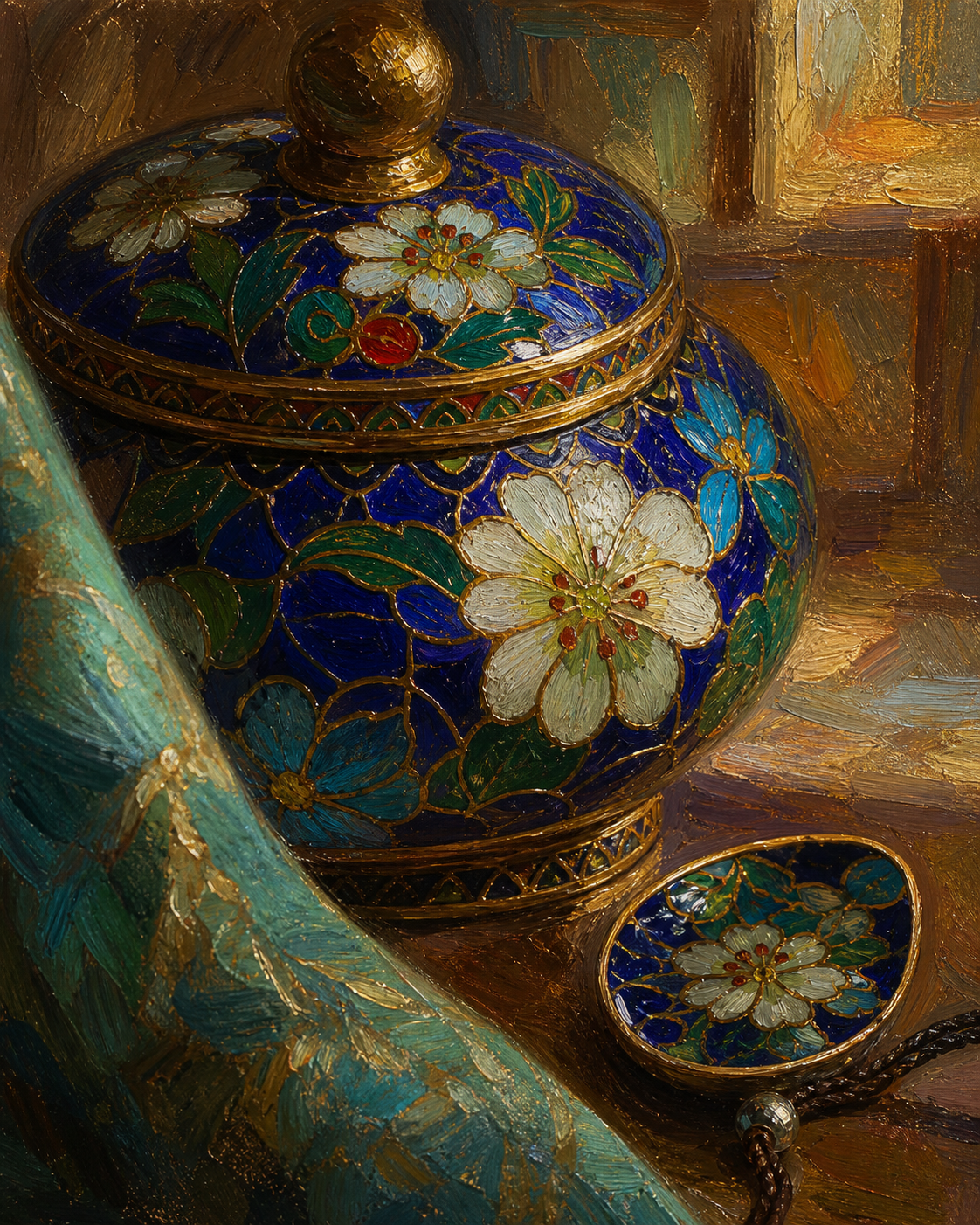
Eternal Bloom in Sapphire
Critique
1. Introduction This artwork is a still-life painting that features an ornate, lidded jar as its primary subject. The vessel is decorated with intricate floral patterns, primarily showcasing large white and smaller blue flowers against a deep sapphire background. The composition is a close-up view, emphasizing the textures and detailed craftsmanship of the depicted objects. 2. Description The central jar possesses a spherical body and a matching lid topped with a golden finial. Its surface is adorned with white blossoms that have delicate yellow centers, surrounded by green foliage and blue accents. To the lower right, a smaller dish or a secondary lid with similar floral motifs is visible. A textured, teal-green fabric draped in the foreground creates a dynamic diagonal line across the lower-left corner. 3. Analysis The artist utilizes a thick impasto technique, visible in the heavy brushstrokes that define the background and the foreground drapery. This texture contrasts with the smoother, though still tactile, appearance of the jar's decorative enameling. The color palette is dominated by the rich blue of the ceramic, which is complemented by the warm, golden-brown tones of the surrounding environment. Lighting appears to come from the upper right, casting soft highlights on the jar's lid and the edges of the fabric. 4. Interpretation and Evaluation The work demonstrates a high level of technical skill in representing various material qualities, from the hardness of ceramic to the softness of textile. The use of vibrant colors and intricate patterns suggests a theme of elegance and decorative beauty. The composition successfully balances the heavy presence of the jar with the diagonal sweep of the drapery, creating a sense of depth. Overall, the painting is an effective study of light and form within a domestic or studio setting. 5. Conclusion The initial focus on the jar's vibrant patterns eventually shifts to an appreciation of the overall painterly surface. The harmony between the detailed subject and the expressive brushwork in the periphery provides a satisfying visual experience. This piece serves as a sophisticated example of how traditional still-life subjects can be revitalized through a modern, textured application of paint.
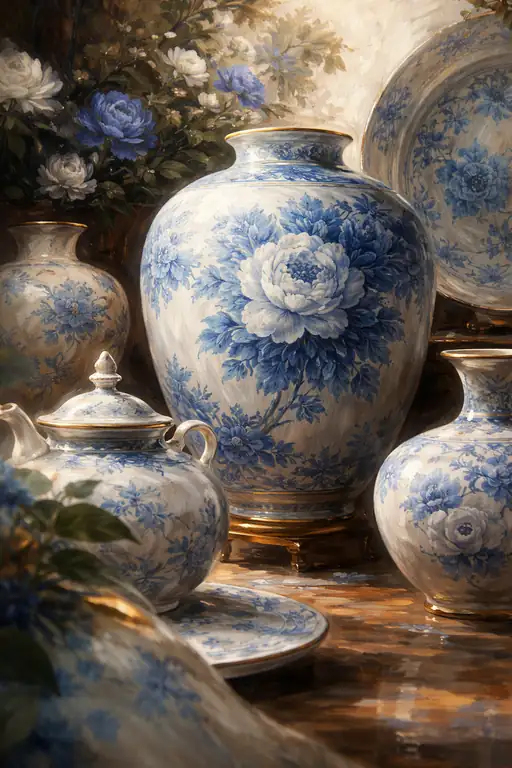 Opulence in Cobalt
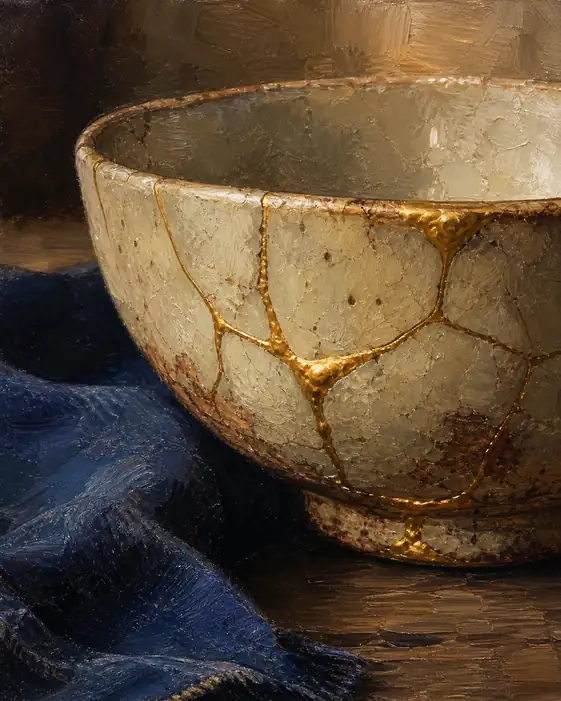 The Beauty of Becoming Whole Again
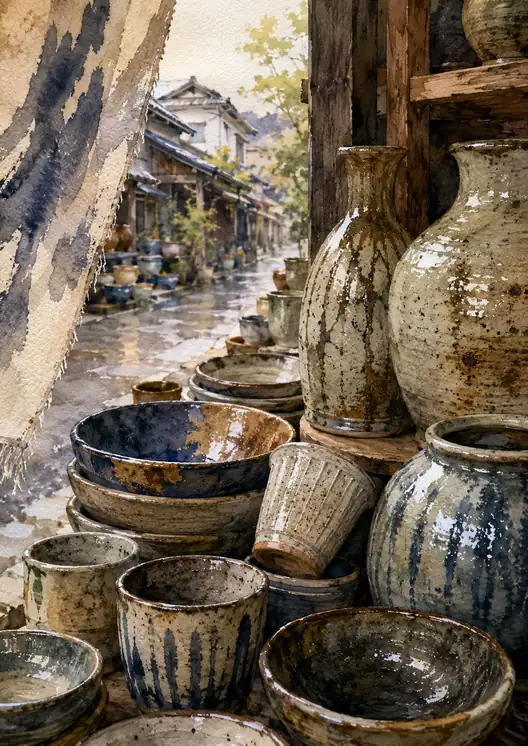 Reflections of Craft in the Rain
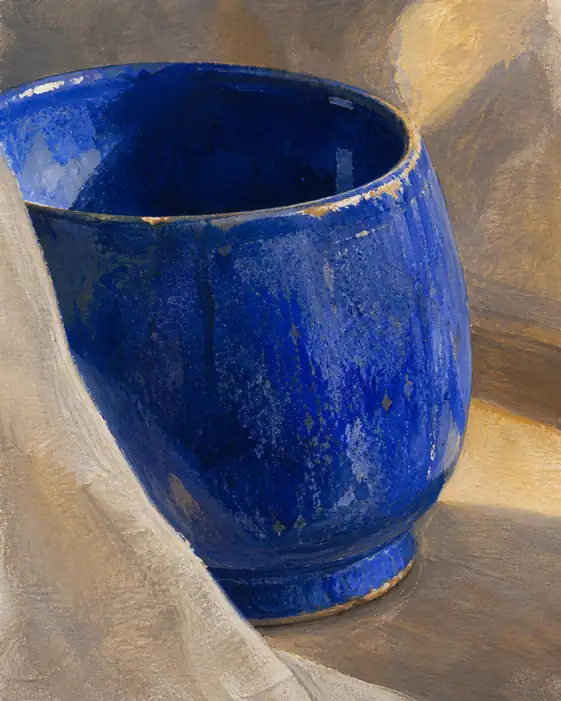 Vessel of Boundless Blue
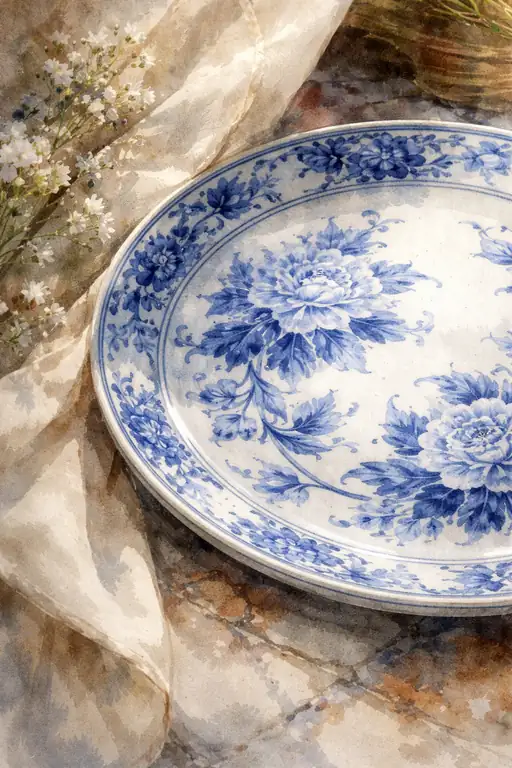 Grace Woven in Blue and White
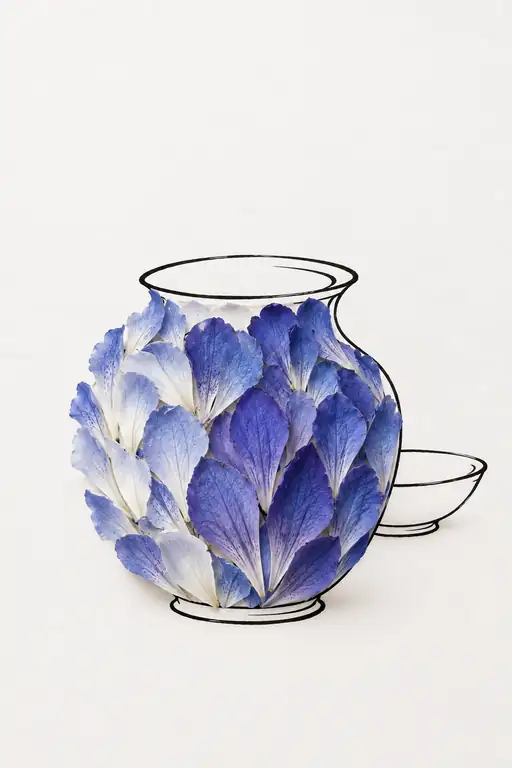 Blue Gives Stillness a Shape
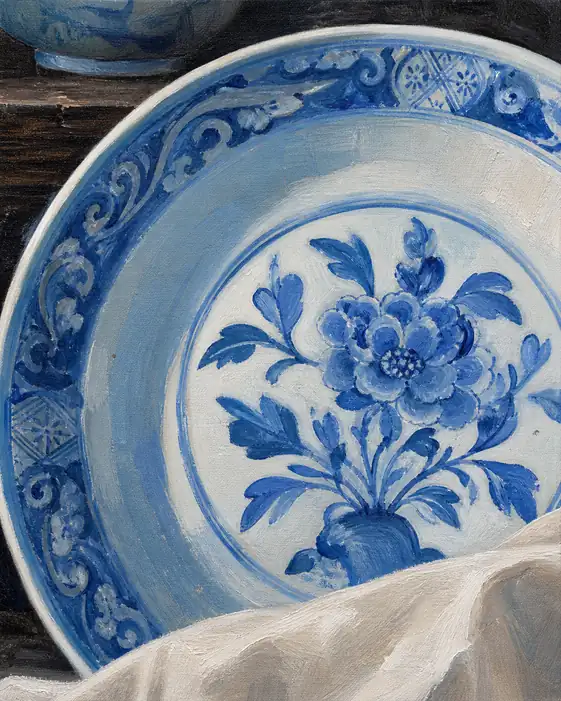 Resonance of the Blue Flower
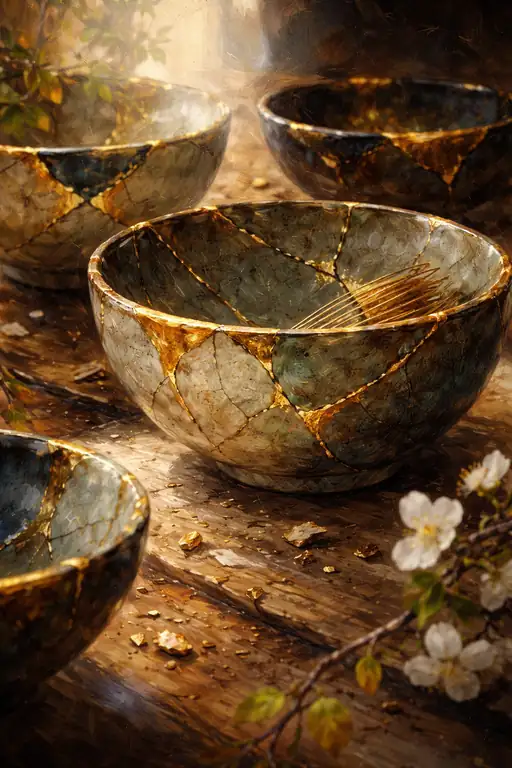 Light Dwelling in the Seams
 Basin of Quiet Glaze
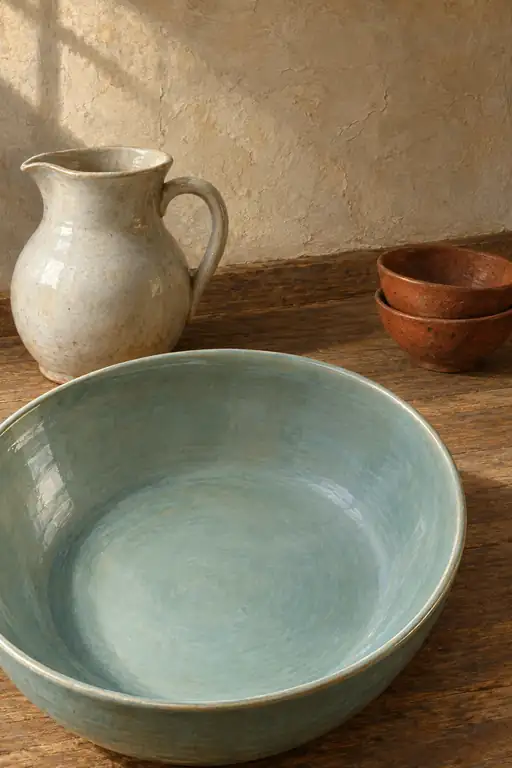 Vessels of Pale Solitude