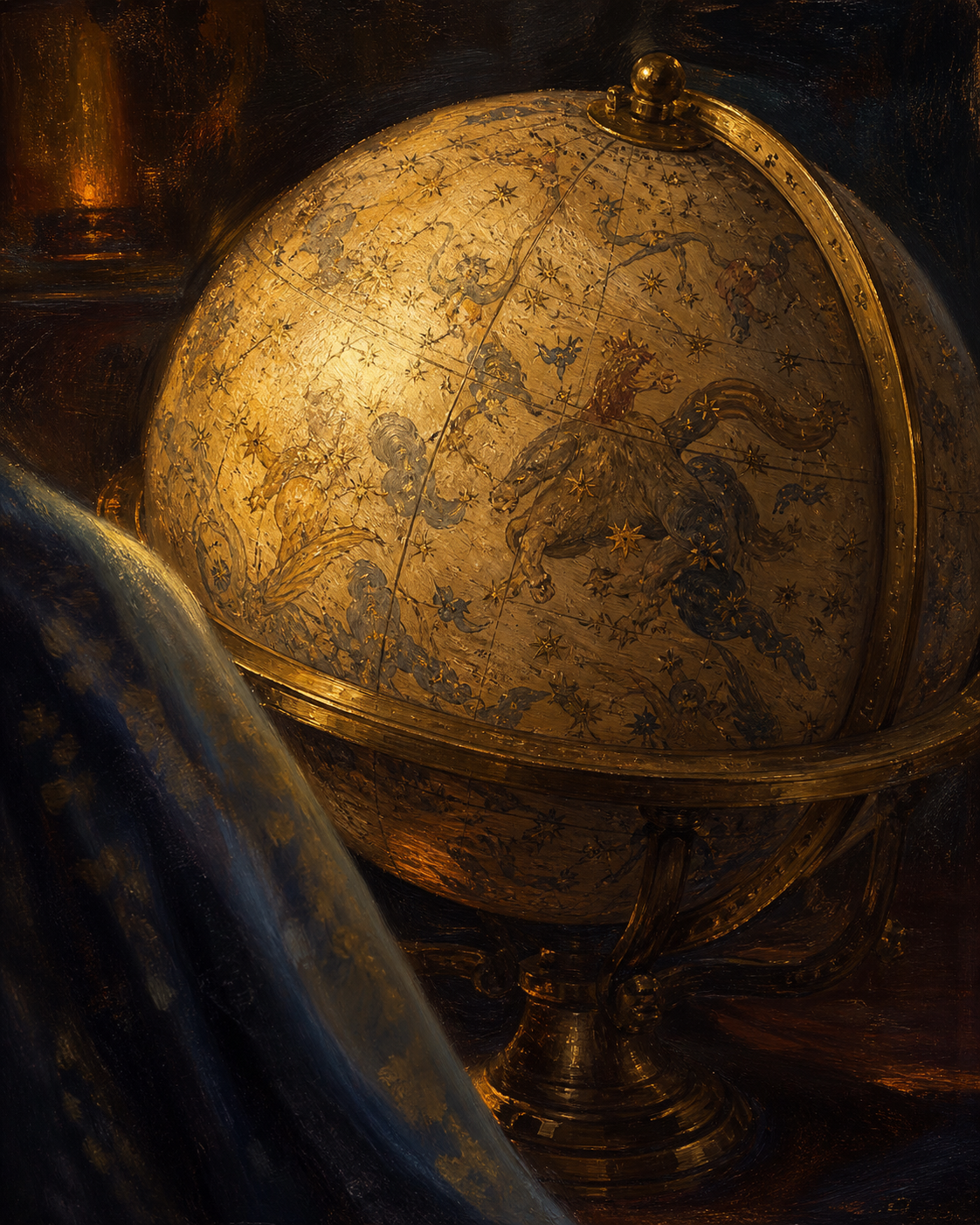
Cartographer of the Infinite Soul
Critique
1. Introduction This piece presents a detailed celestial globe bathed in warm golden illumination. Set against a dark background, the central object commands attention with its luminous presence. The painting captures the craftsmanship of historical astronomical instruments, elevating a scientific object into a work of aesthetic beauty. The focused light creates an intimate scholarly atmosphere. 2. Description The composition features a large globe supported by an ornate metallic stand. Its surface is decorated with celestial maps, showing mythological figures like a winged horse in gold and pale blue. In the left foreground, a dark blue fabric cascades downwards. A faint light source in the upper left casts a dramatic sheen across the textured sphere. 3. Analysis The artist employs stark chiaroscuro, contrasting the golden hues of the globe with the deep blues of the surrounding space. This lighting highlights the spherical volume and accentuates the thick impasto technique. Tactile brushstrokes give physical weight to the metal stand and the globe's worn surface. The curved fabric introduces a dynamic diagonal element. 4. Interpretation and Evaluation The celestial globe serves as a symbol of human curiosity and the desire to map the heavens. The rendering of constellations suggests a reverence for historical scientific inquiry. The juxtaposition of the structured globe with the flowing fabric creates compelling visual tension. The technical execution is commendable, particularly the masterful handling of light and texture. 5. Conclusion Ultimately, the painting is a striking study of light, texture, and symbolic objecthood. By isolating the globe within a shadowy setting, the artist transforms a scientific tool into a mesmerizing object of contemplation. The work bridges historical illustration and expressive still life, leaving a lasting impression of the cosmos's enduring allure.
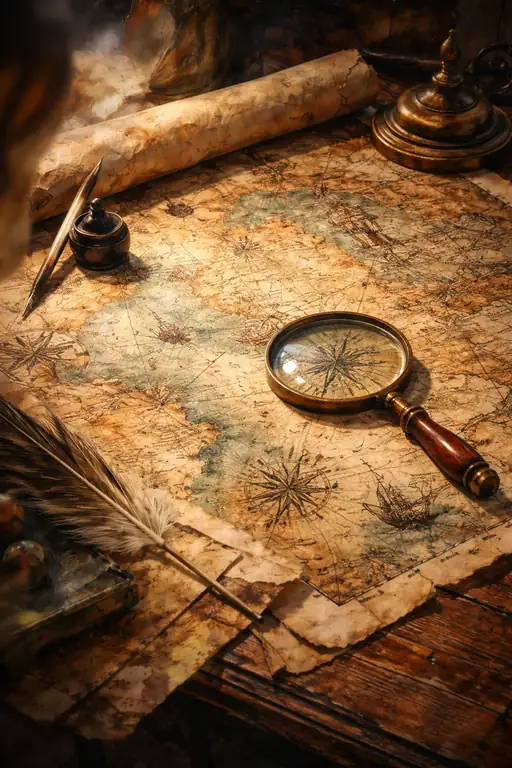 Navigating the Unknown
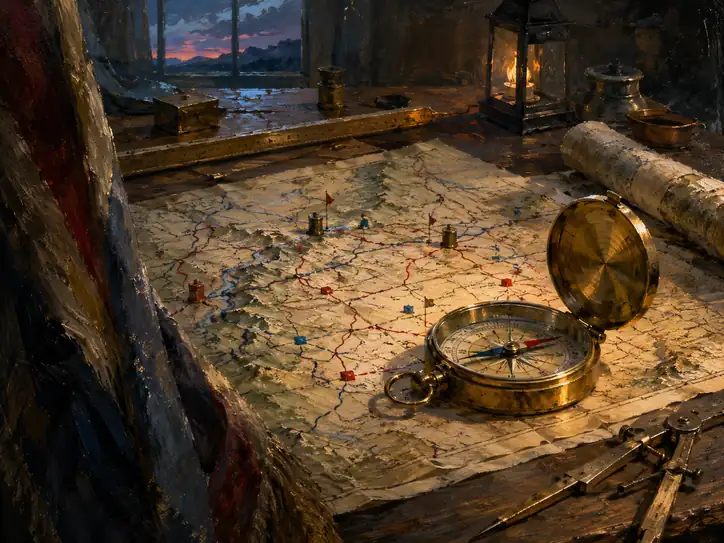 The Compass of Destiny: Charting the Path Unseen
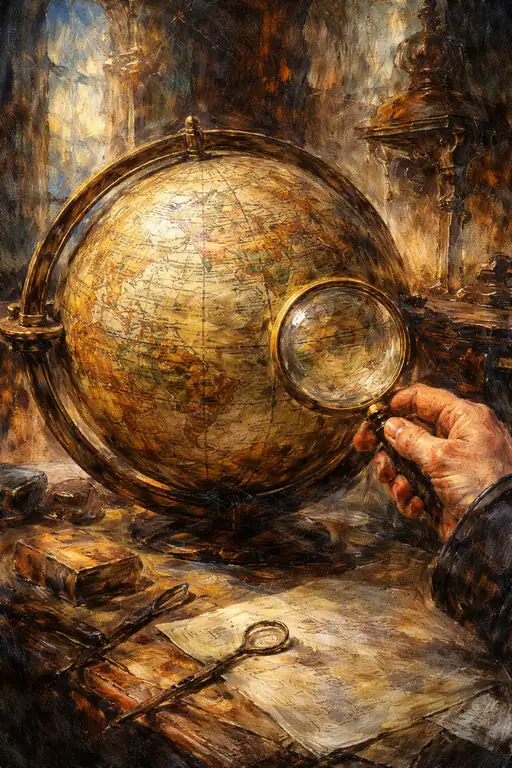 Whispers of the Old Cartographer
 Dreams of the New World
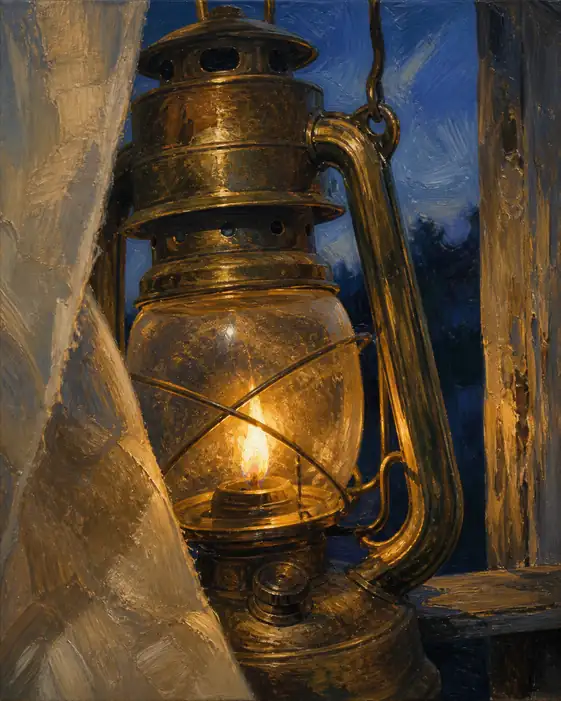 Beacon of the Twilight
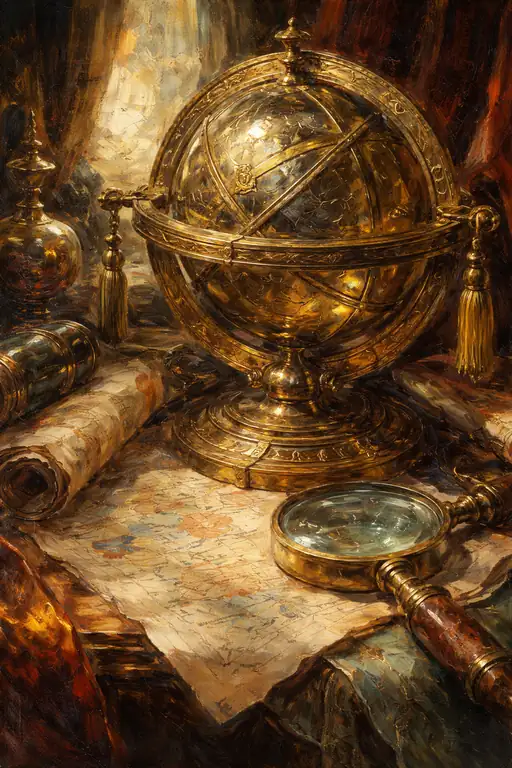 The Golden Map
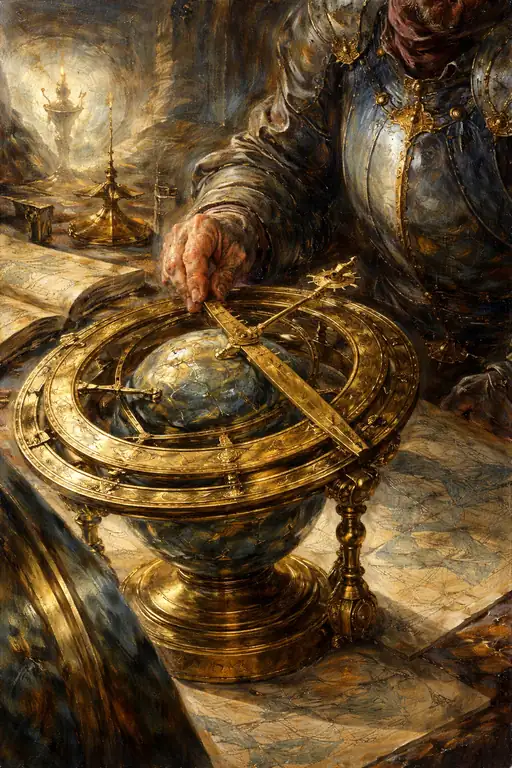 The Scholar Knight's Celestial Discovery
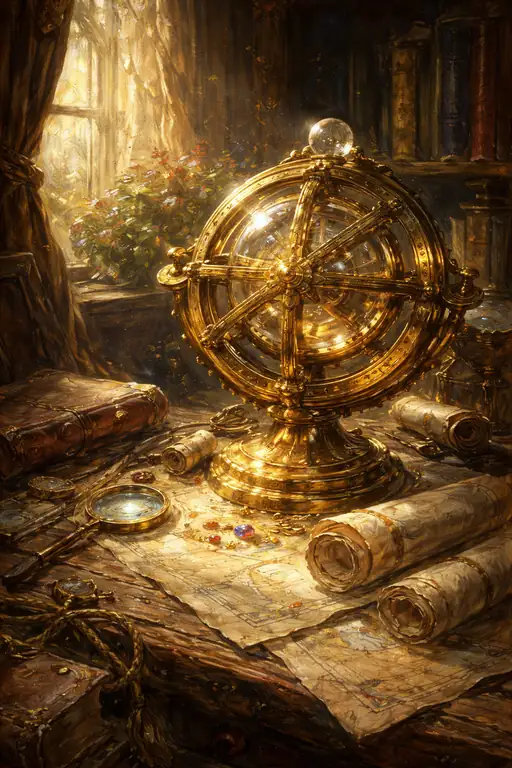 Wandering Through the Celestial Spheres
 Vigil for the Silver Moon
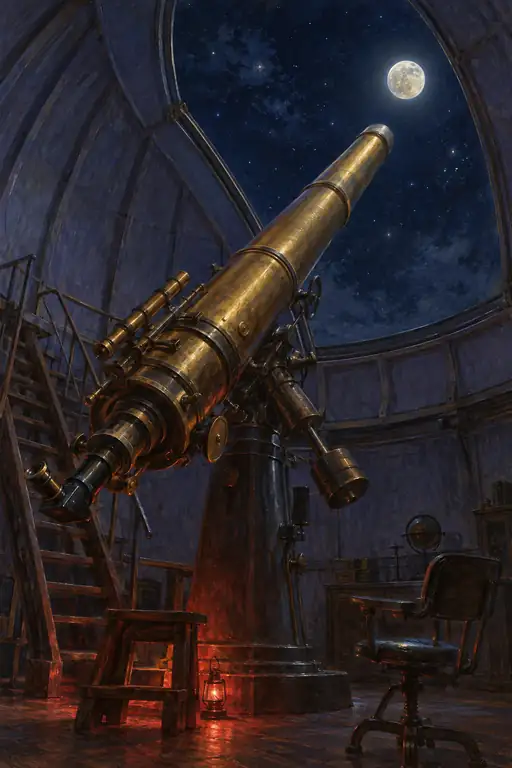 Eye to the Celestial Spheres
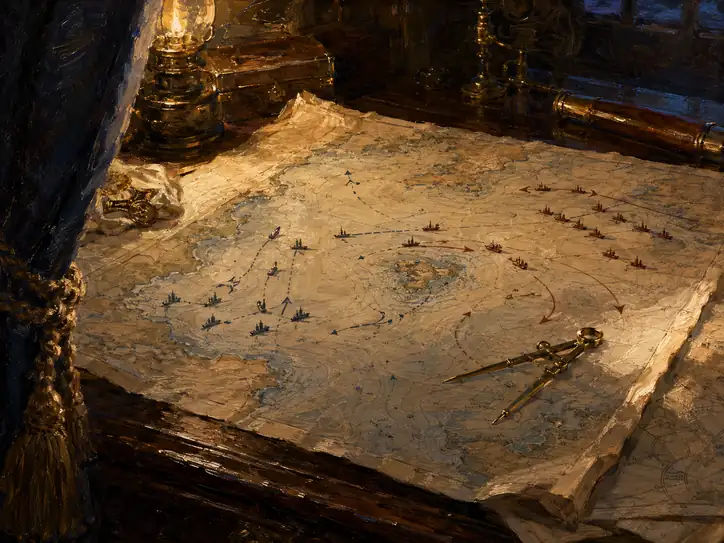 Destiny Mapped in Brass and Shadow
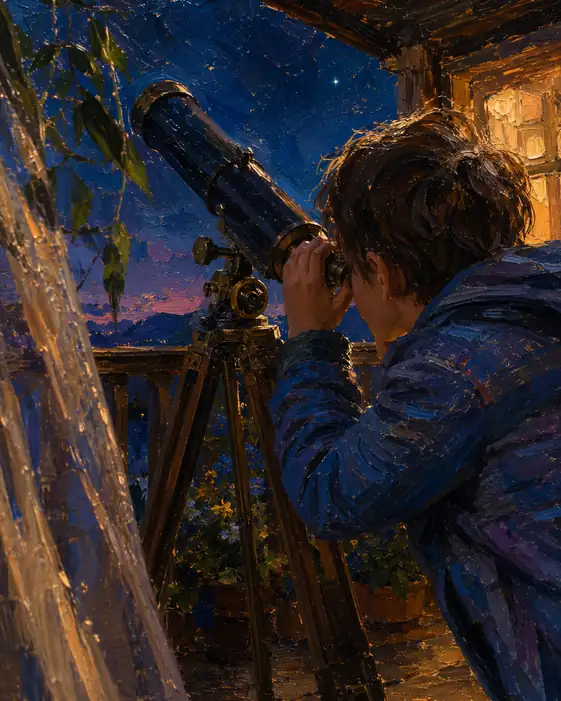 The Balcony to the Cosmos