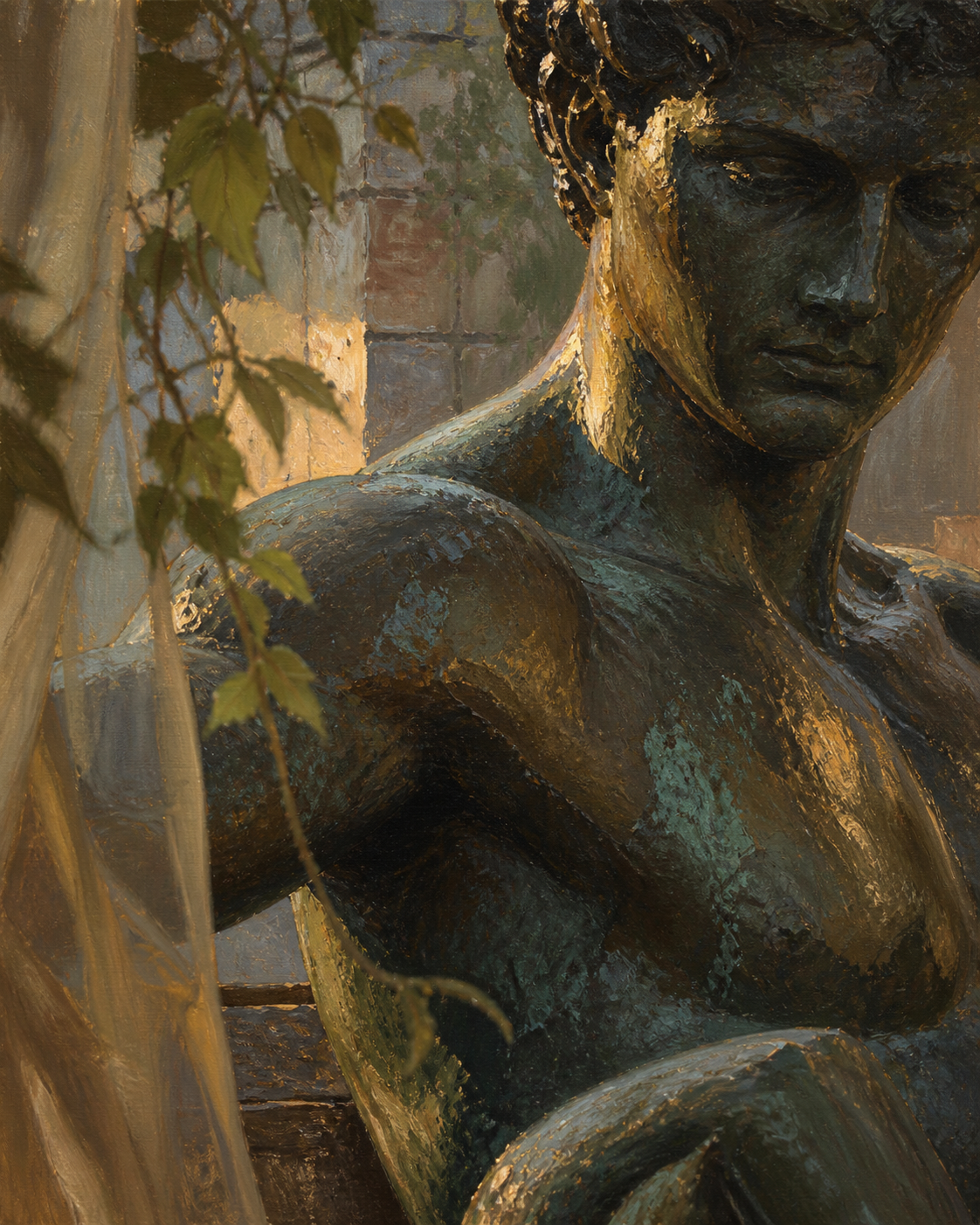
In the Embrace of Time and Tendrils
Critique
1. Introduction This oil painting presents a compelling close-up study of a classical bronze statue, focusing on the head and torso of a male figure. The artwork explores the intersection of man-made art and natural elements by depicting the sculpture in an outdoor setting partially draped with living ivy. It creates a bridge between classical antiquity and the natural world. 2. Description The statue, rendered in deep greenish-bronze tones with visible patina, dominates the right side of the frame. Its muscular form is illuminated by sharp, golden sunlight catching the shoulder and stoic profile. To the left, a vine of green ivy frames the scene. The background consists of a sun-drenched stone wall, its pattern softened by distance. 3. Analysis The artist employs a thick, impasto technique to mimic the rough, oxidized surface of old bronze. This tactile approach gives the sculpture physical presence. The lighting creates deep shadows that emphasize anatomical precision. The color palette mixes cool verdigris and warm golds, with the ivy providing an organic counterpoint to the metallic tones. 4. Interpretation and Evaluation The work is a meditation on time and human creation. The weathering suggests the passage of centuries, yet the statue remains a symbol of idealized beauty. Technically, the rendering of complex textures—metal, stone, and leaf—is exceptional. The composition is dynamic, balancing the mass of the sculpture with the delicate vine. 5. Conclusion Ultimately, the painting is a masterful exploration of light and historical resonance. It transforms a stationary object into a living presence through dramatic color. The initial impression of a cold subject is replaced by warmth as the viewer notices the intricate reflections. This piece successfully captures the dignified atmosphere of a garden corner.
 Tailored Dignity: Threads of Tradition
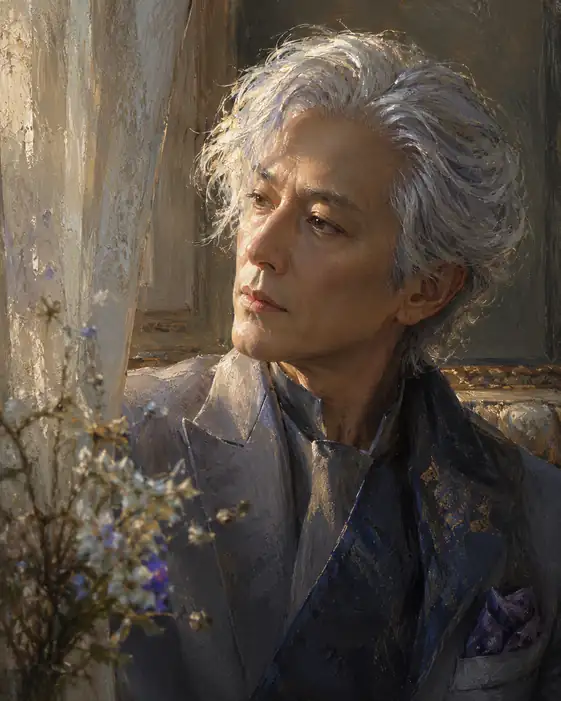 A Quiet Dialogue with Time
 Silent Gaze of the Forgotten Gods
 Grace in the Golden Light
 Where Time Embraces Silence
 Guardian of the Forest
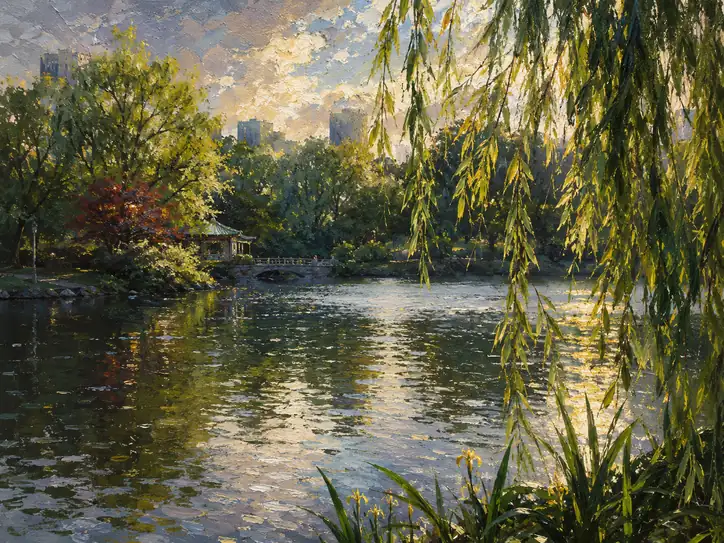 Beyond the Willow's Veil
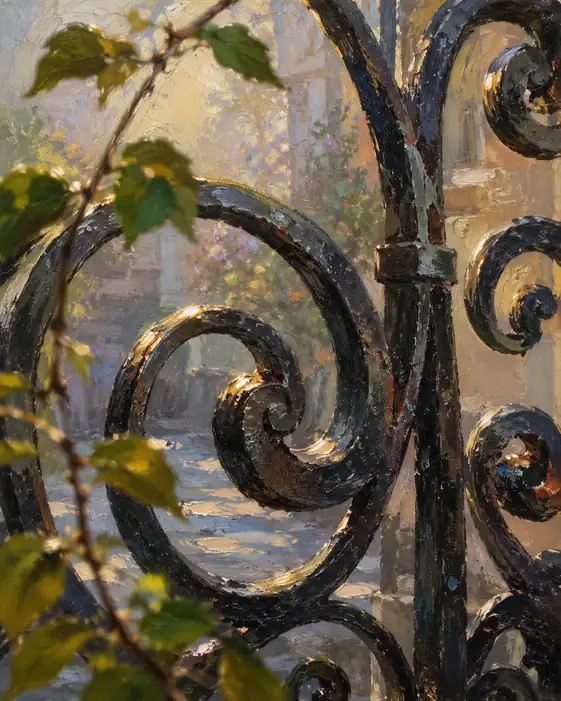 Glancing into Paradise
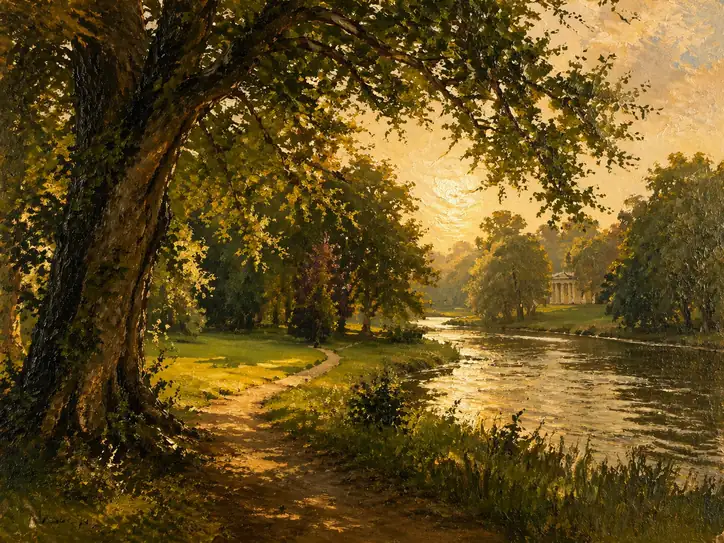 Pastoral Glow by the Classical Pavilion
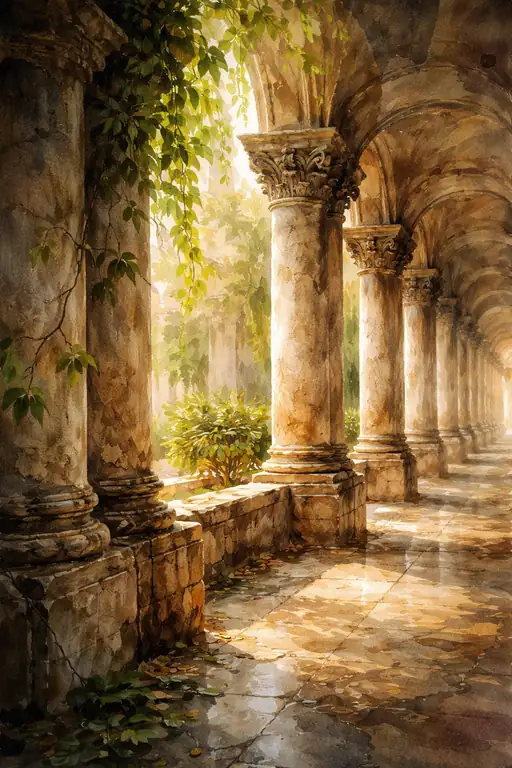 Sunlit Echoes in the Corridor
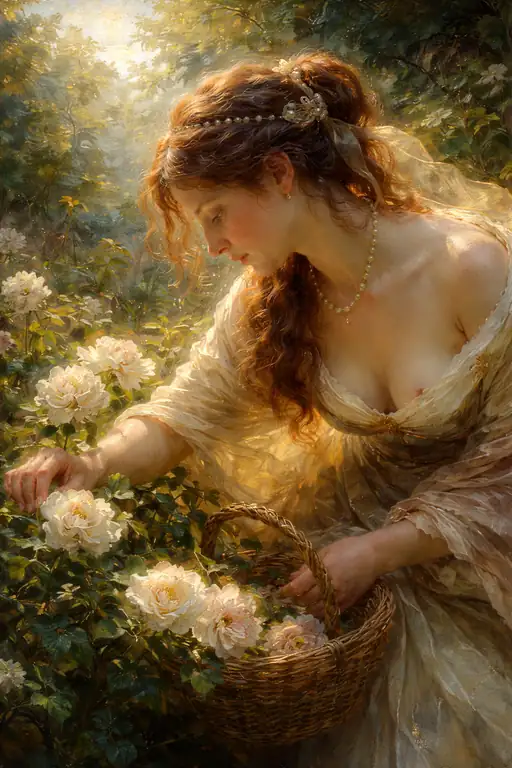 Serenade of the Sun-Drenched Petals
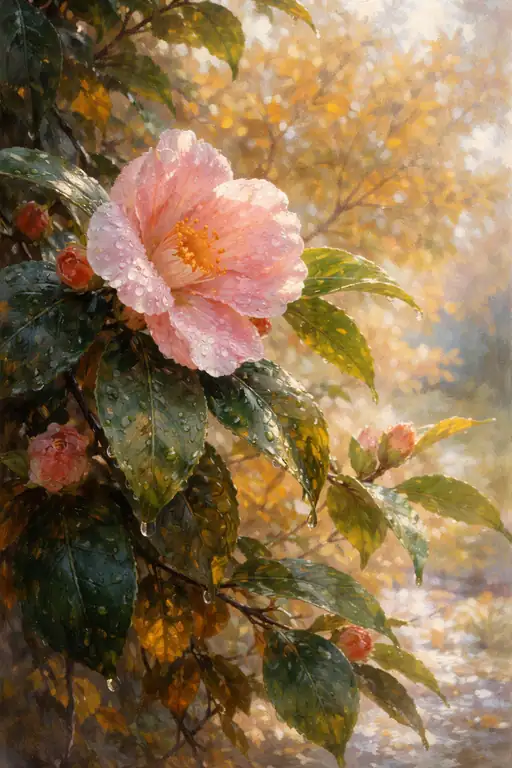 Radiance After the Rain