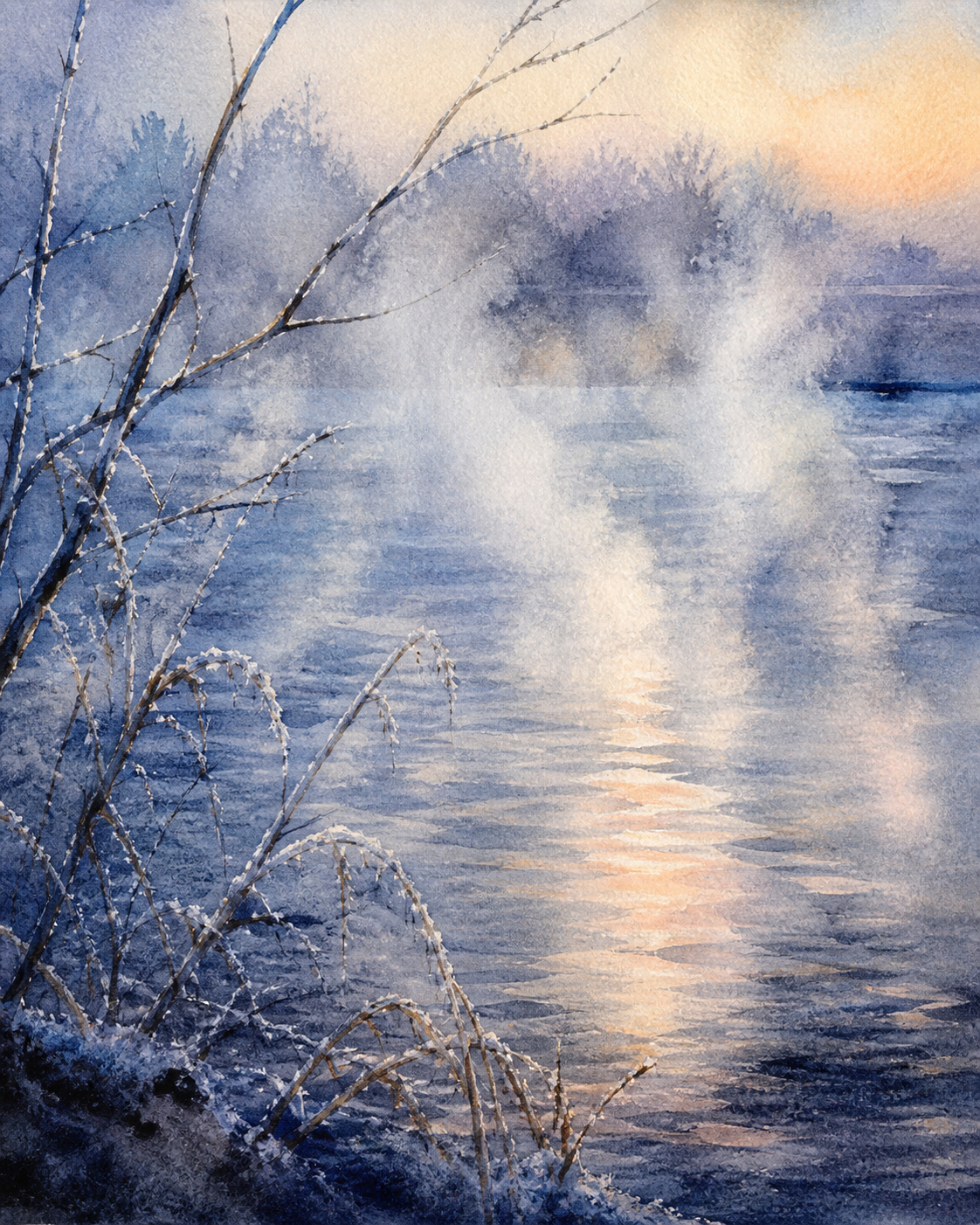
Breath of the Frozen Dawn
Critique
1. Introduction This evocative watercolor painting depicts a tranquil winter lake scene at the break of dawn. The composition is structured with a detailed foreground of frosted vegetation that leads the viewer’s eye toward the misty expanse of the water and a hazy distant shoreline. The color palette is defined by a sophisticated contrast between the cool indigo and violet tones of the winter landscape and the warm, golden glow of the rising sun. The work successfully captures the ephemeral quality of a cold morning through the masterful application of watercolor washes and fine detail. 2. Description In the immediate foreground, delicate branches and tall grasses are coated in a layer of white frost, rendered with precise, thin brushstrokes that emphasize their fragile structure. Wisps of white mist rise vertically from the surface of the lake, blending into the surrounding atmosphere through soft, wet-on-wet transitions. The water itself reflects the brilliant orange and yellow light of the sun, creating a shimmering path that cuts through the deep blue ripples. In the background, a silhouette of a dense forest is visible through a thick haze, its forms softened by the atmospheric perspective. The upper right corner is dominated by a pale, warm light that suggests the sun is just beginning to clear the horizon. 3. Analysis The strength of this composition lies in its balanced distribution of detail and atmosphere. The artist uses high-contrast rendering in the foreground to create a strong sense of immediacy, while the background relies on subtle tonal shifts to suggest depth and distance. The vertical movement of the rising mist creates a dynamic rhythm that counteracts the horizontal stability of the lake and the shoreline. Color temperature plays a crucial role in directing the viewer’s attention; the warm reflections on the water serve as a powerful focal point amidst the dominant cool tones. The use of negative space and soft edges effectively conveys the density of the cold, damp air. 4. Interpretation and Evaluation This painting can be viewed as a meditation on the silence and stillness of nature. The rising mist and the frosted grass evoke a sense of profound isolation and the pristine beauty of an untouched landscape. Technically, the artist demonstrates an exceptional ability to manipulate the transparency of watercolor to represent complex light effects. The integration of sharp, dry-brush details with expansive, atmospheric washes creates a rich visual texture that is both realistic and poetic. The work is highly successful in its ability to elicit an emotional response, making the viewer feel the sharp chill of the air and the quiet promise of the new day. 5. Conclusion Initially appearing as a traditional landscape, the painting reveals itself to be a sophisticated study of light and atmospheric phenomena. The artist’s control over the medium allows for a seamless transition between the tangible reality of the frost and the intangible quality of the mist. Ultimately, the piece stands as a compelling testament to the lyrical beauty of the natural world in its most quiet and fragile moments.
Same Subcategory
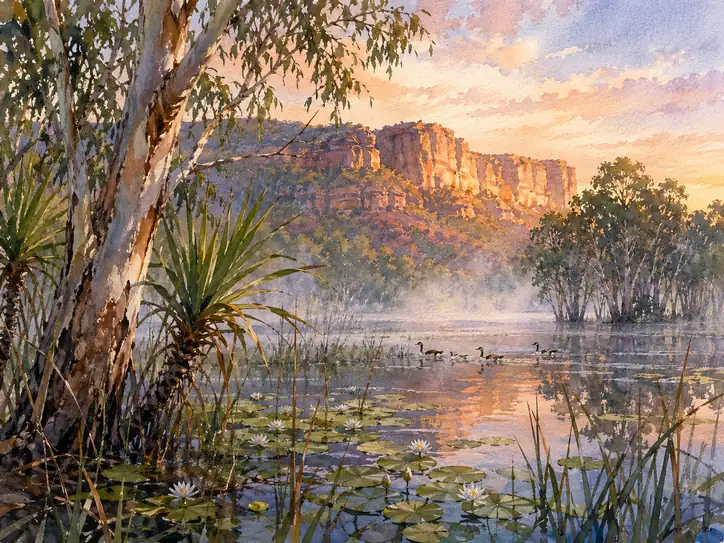 Where the Silent Mist Breathes
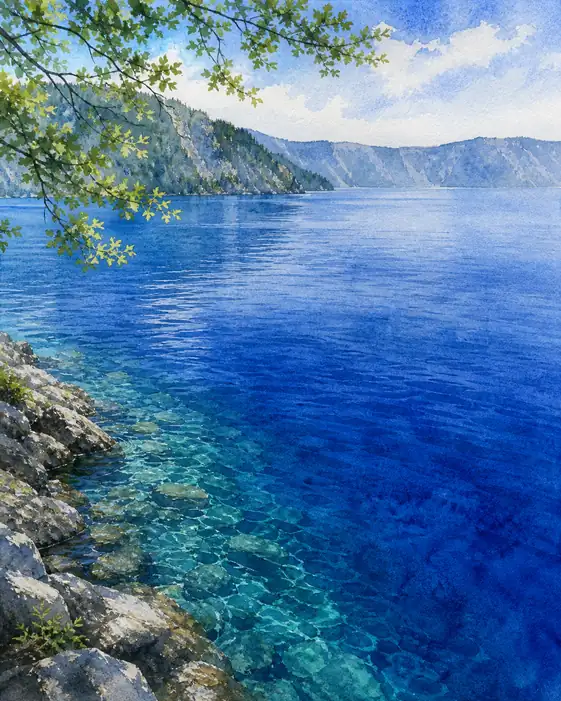 The Cerulean Silence of Pristine Waters
Similar Artworks
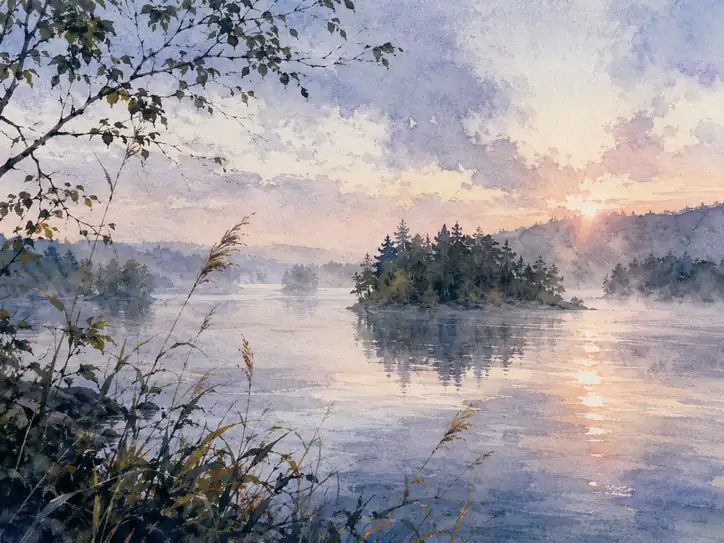 The Lake Where Morning Begins
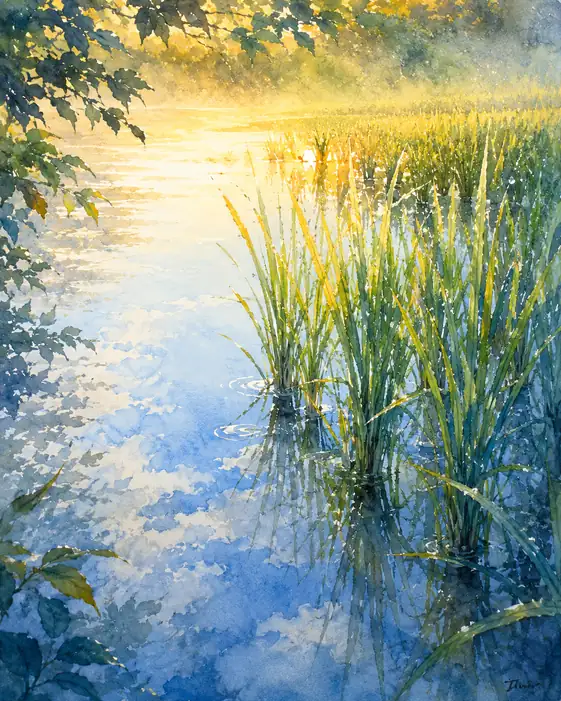 Reeds Listen to the Morning Water
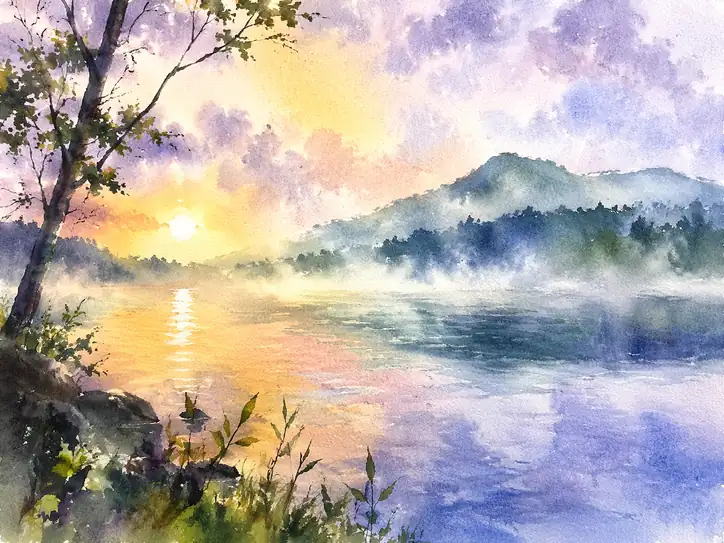 Golden Ripple in the Quiet Morning Mist
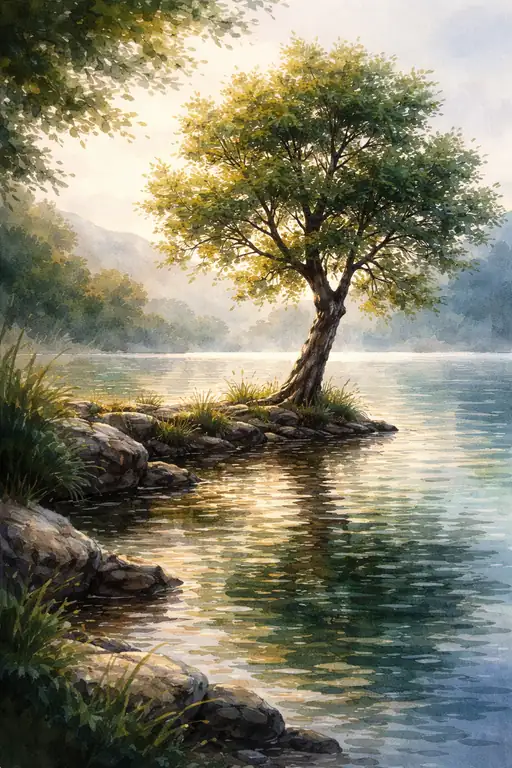 Whispers of the Dawn: A Solitary Tree's Grace
 Whispers from the Sacred Mist
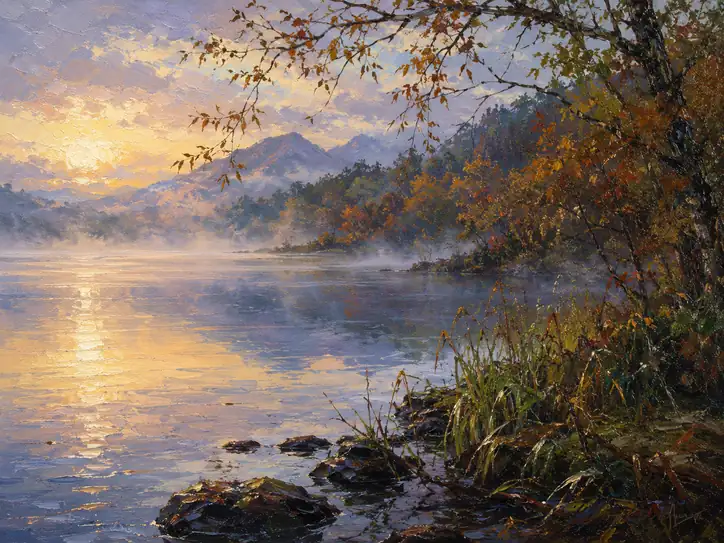 Solitude by the Fog-Bound Pond
 Stillness Woven in White Bark
 A Starlit Slumber Beneath the Ice
 Echoes of Gold in the Misted Silence
 A Glimmer of Hope in the Frozen World