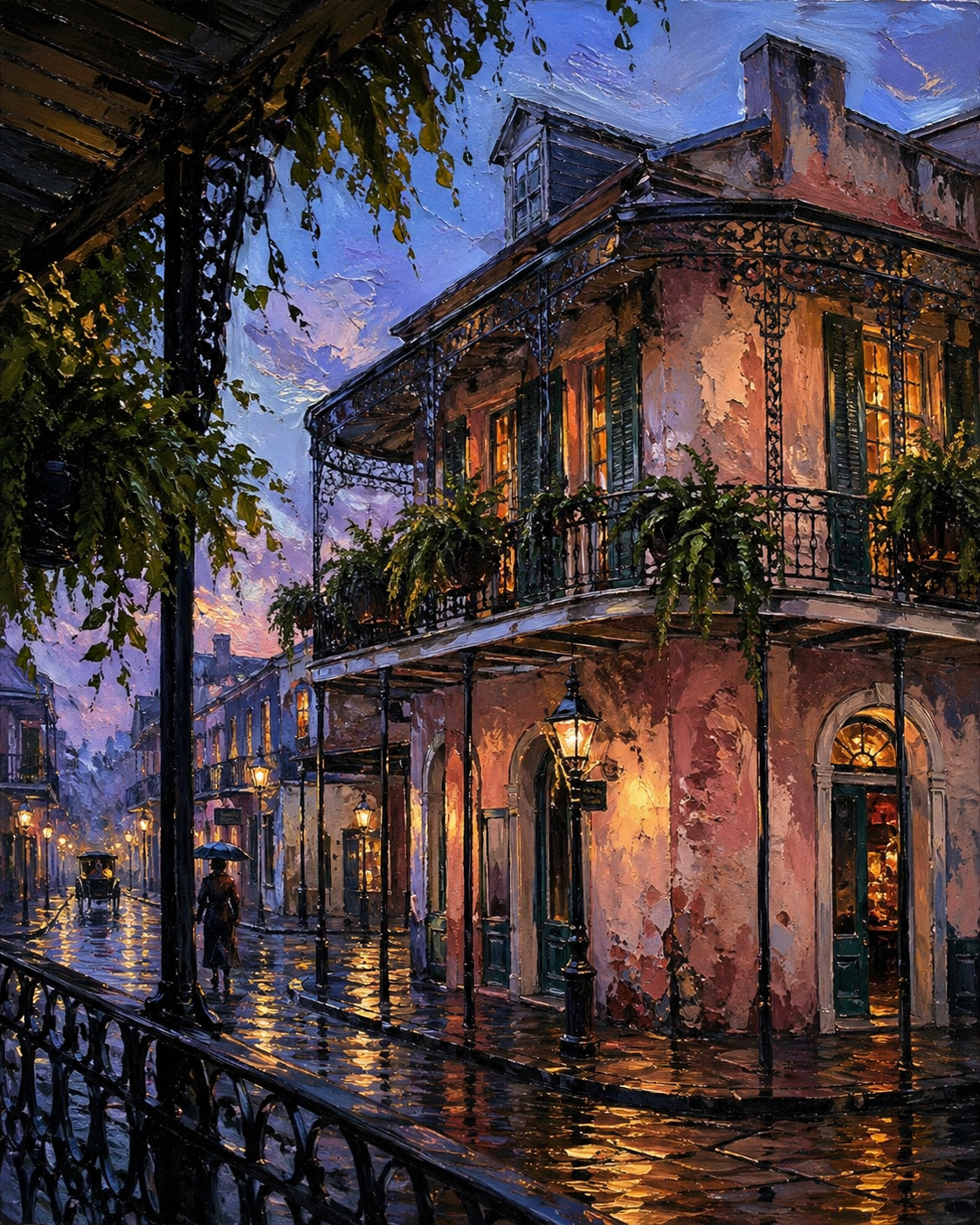
Rhythm of the Rain-Slicked Night
Critique
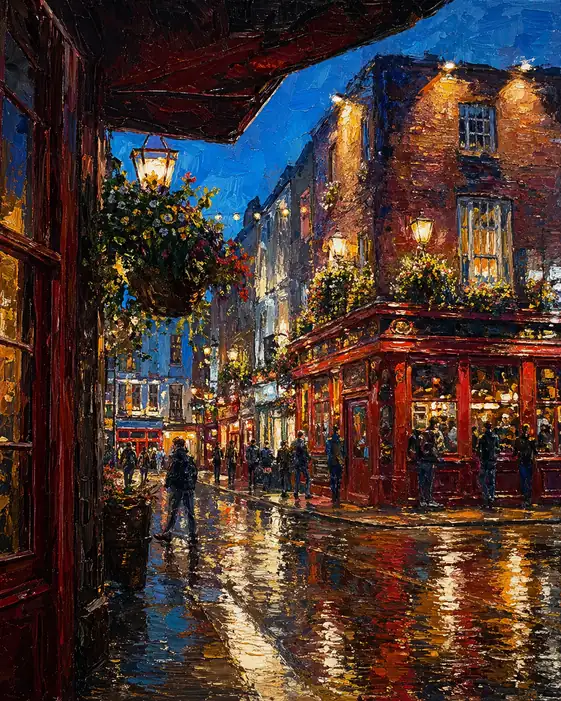
1. Introduction This oil painting captures an atmospheric urban scene at twilight, featuring historical architecture and rain-slicked streets. Centering on a grand building with intricate iron balconies, the work uses heavy impasto to emphasize texture. The artist explores the intersection of lamplight and the fading sky, creating a dramatic sense of place and nocturnal energy. 2. Description On the right, a three-story structure with aged walls dominates the frame, its surface thick with paint. Iron railings support lush plants, while street lamps cast a warm glow. In the distance, a figure and a carriage move through the misty air. The wet street mirrors the vibrant lights and architectural forms in shimmering reflections. 3. Analysis The palette relies on the contrast between complementary blues and oranges, providing depth. Technically, palette knives create a tactile surface, especially in the fragmented light on the pavement. The composition uses the building's corner to draw the eye toward the street. Masterful light diffusion adds a palpable sense of atmosphere and humidity. 4. Interpretation and Evaluation The work celebrates the beauty of a city after rain. The impasto technique solidifies fleeting light, granting the architecture a rhythmic vitality. Bold color choices and tactile texture offer an original visual experience. Technical proficiency and compositional balance allow the viewer to sense the scent of rain and the anticipation of the night. 5. Conclusion This painting transforms an urban fragment into an extraordinary vision through light and texture. Captivated by the reflections, the viewer discovers nuances hidden within the thick paint. Ultimately, the work reveals a sophisticated fusion of material and poetic landscape, demonstrating the power of expressive representational art.
Same Subcategory
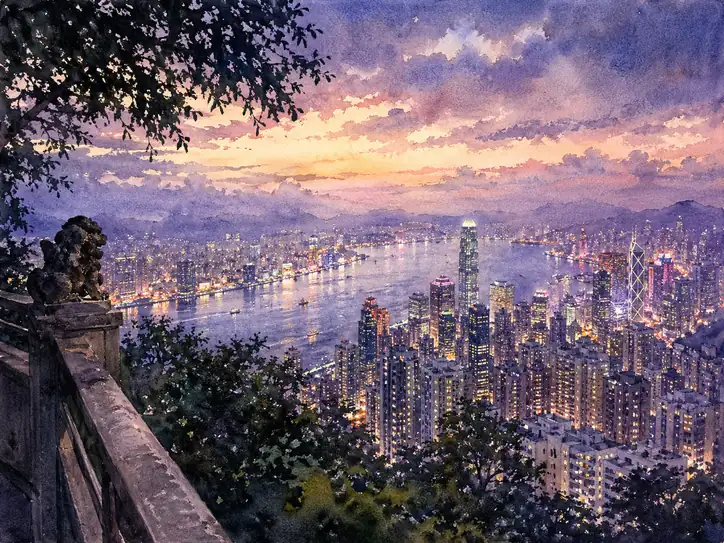 Sentinel over the Golden Harbor
Similar Artworks
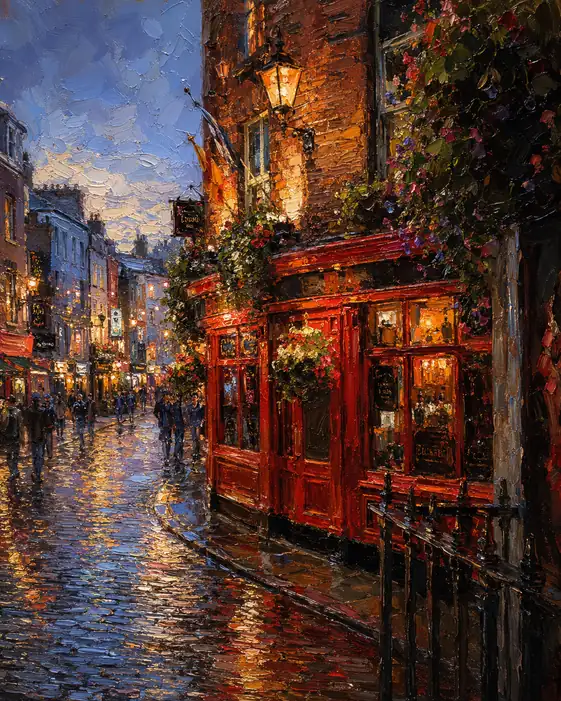 The Glow of Twilight: Warmth on a Rainy Street
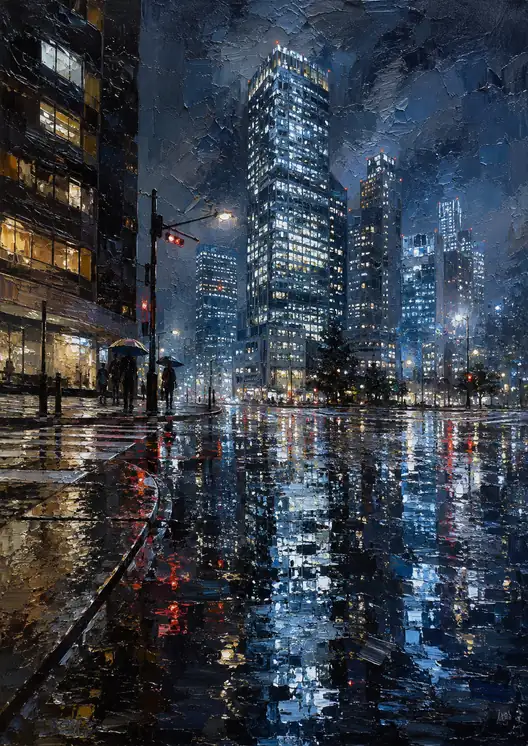 Warmth Scattered on Cold Asphalt
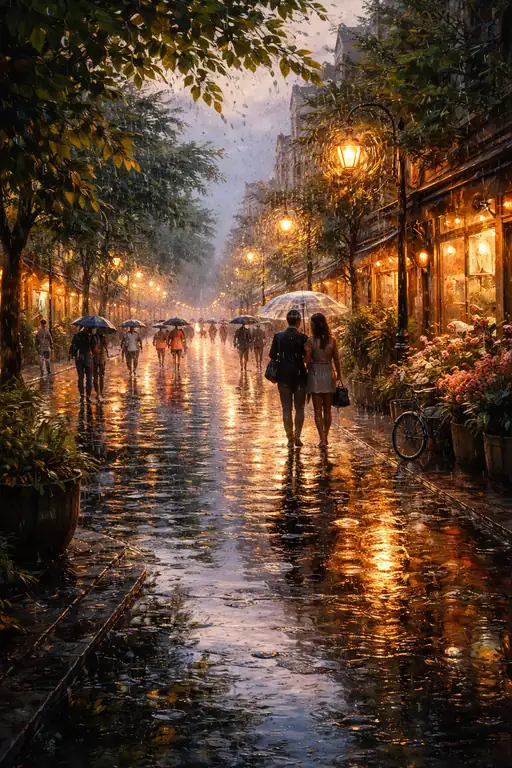 Echoes of Warmth in the Urban Downpour
 The Light That Welcomes Me Home
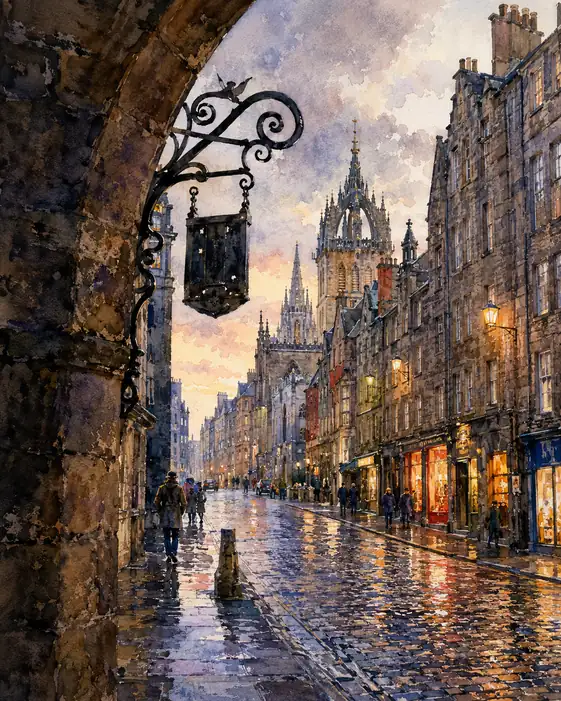 Gleam of the Wet Cobblestones
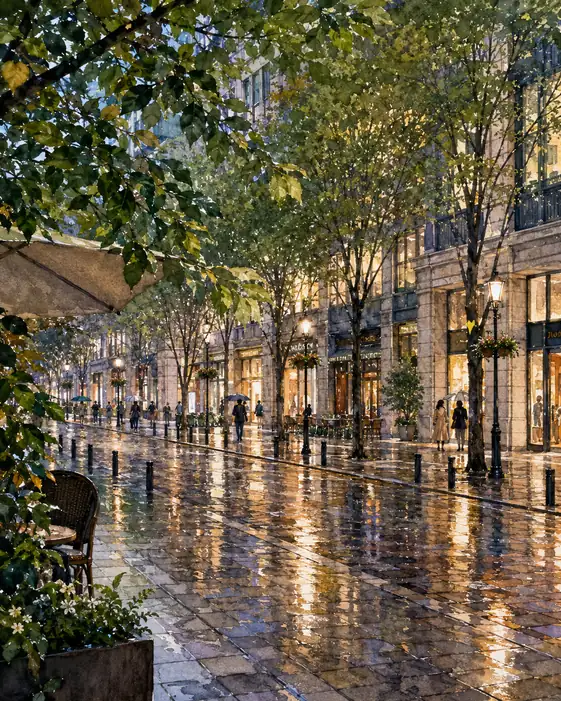 Reflections of Gold: A Stroll Through the Evening Rain
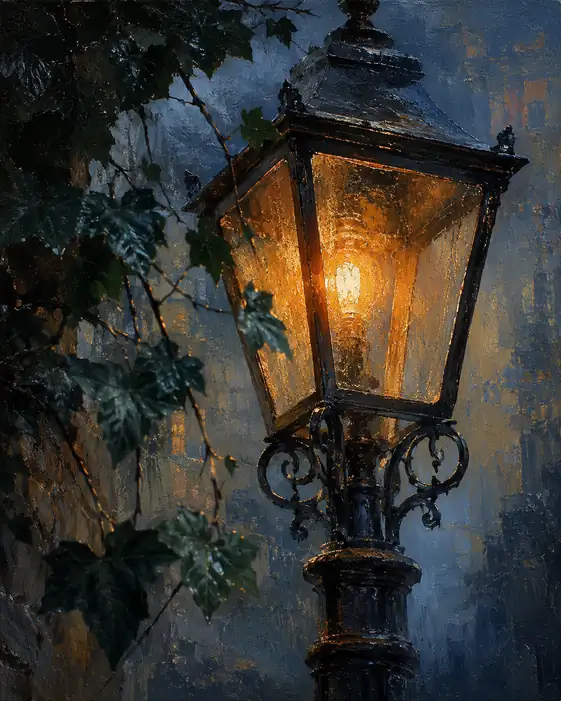 The Night's Warm Heart
 Illuminated Solitude
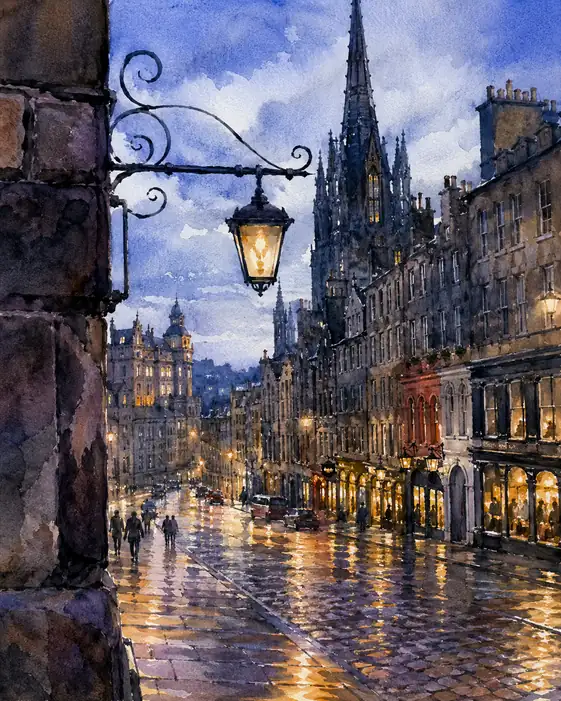 Tears of the Cobblestones
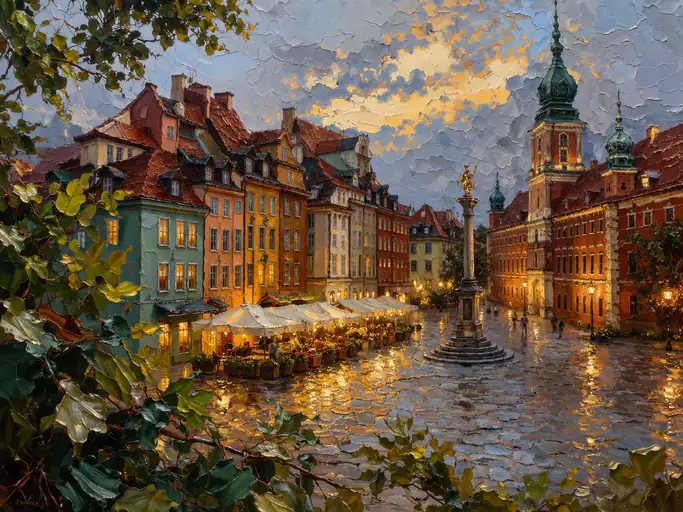 Twilight Reflections: The City's Golden Glow