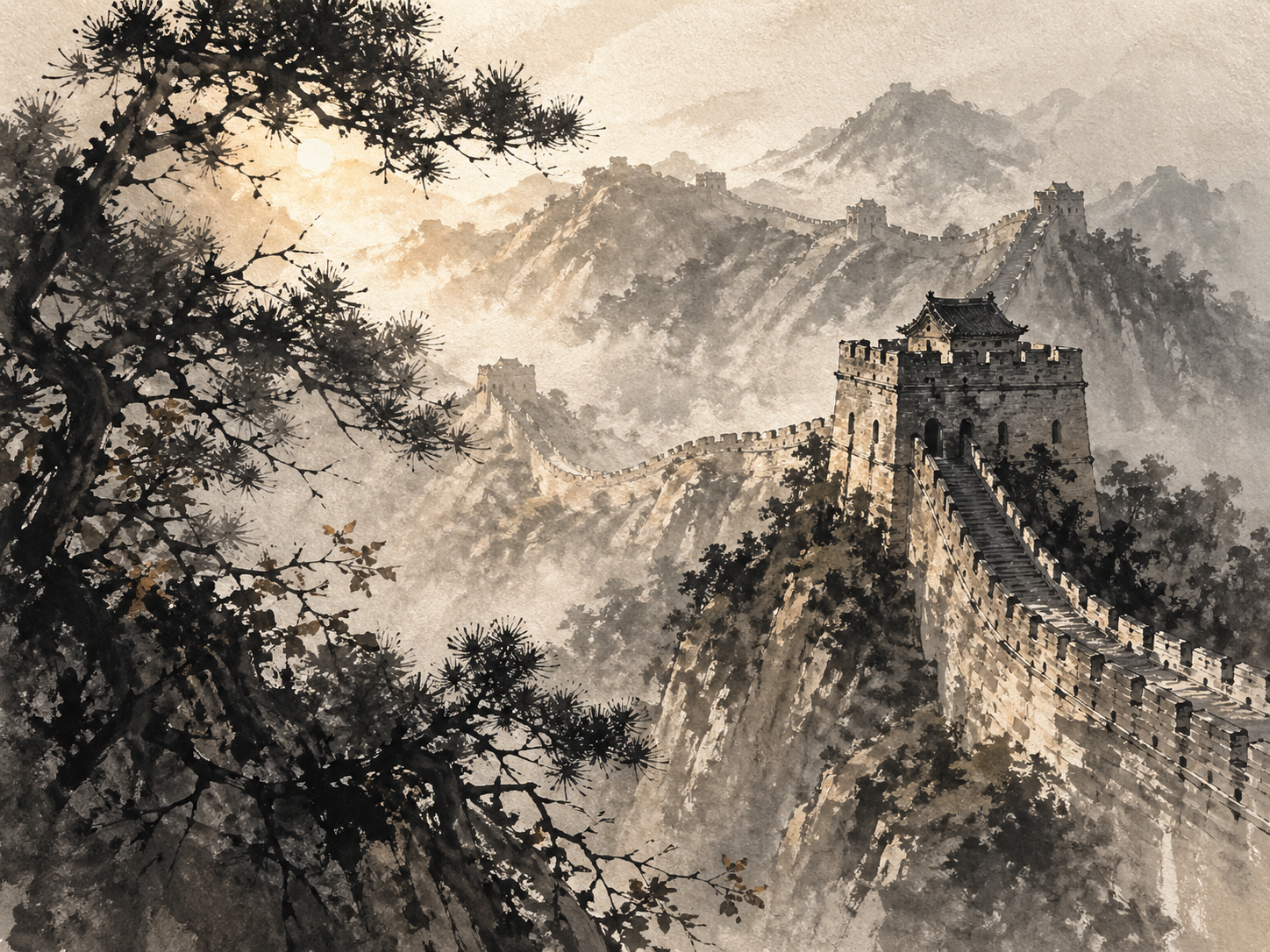
Eternal Watch on the Dragon's Ridge
Critique
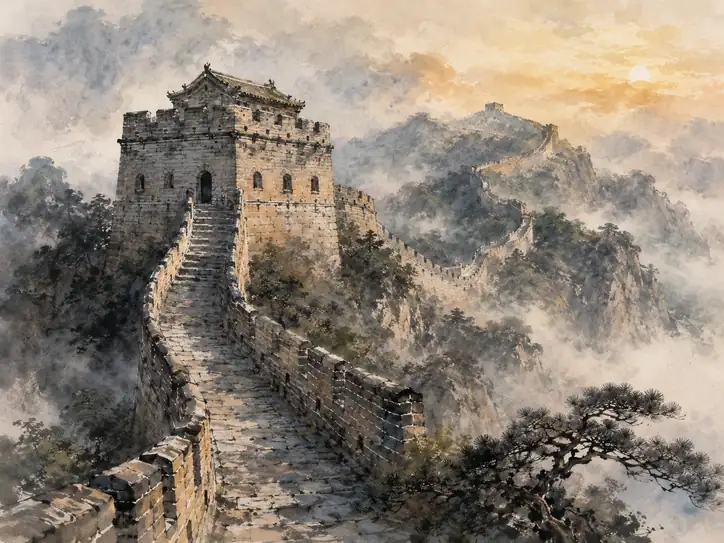
1. Introduction This horizontal landscape painting presents a grand depiction of the Great Wall of China, rendered in a style that masterfully blends traditional ink wash techniques with modern watercolor sensibilities. The scene captures the ancient fortification as it winds through a mountainous terrain shrouded in a heavy morning mist. A pale, glowing sun rises behind a prominent pine tree in the foreground, imbuing the sepia-toned environment with a soft, spiritual light. 2. Description On the left side of the composition, the gnarled branches and dark needles of an old pine tree frame the view, adding a sense of rugged vitality. The Great Wall itself begins in the mid-ground on the right, featuring a solid watchtower and a series of crenelated ramparts that disappear into the distant, hazy peaks. The mountains are depicted with broad, atmospheric washes that suggest immense scale, while the valley below is filled with a dense, white fog. Small flecks of paint and splatter effects throughout the sky and land enhance the weathered, historical texture of the scene. 3. Analysis The artist employs a restricted, almost monochromatic palette of browns, grays, and blacks, accented by the subtle golden glow of the sun. This choice emphasizes the formal qualities of the landscape and creates a somber, meditative atmosphere. The composition relies on the contrast between the organic, irregular forms of the pine tree and the rhythmic, geometric lines of the stone wall. Depth is achieved through the use of aerial perspective, where the clarity of the foreground elements gives way to increasingly faint and simplified shapes in the background. 4. Interpretation and Evaluation This work can be interpreted as a profound meditation on the themes of endurance and the intersection of human history with the natural world. The Great Wall is presented not merely as a military structure, but as a silent witness to centuries of change, standing firm against the elements. Technically, the painting demonstrates an exceptional control over ink-like washes and precise line work, successfully evoking the aesthetic of classical Chinese landscape art. The balance between detailed observation and expressive abstraction creates a powerful sense of timelessness. 5. Conclusion While the initial impression is one of epic scale and ancient mystery, the delicate handling of light and mist reveals a more intimate, poetic quality. The painting masterfully captures the enduring spirit of the landscape and its historical significance. It ultimately stands as a compelling tribute to the monumental heritage of the East Asian region.
Same Subcategory
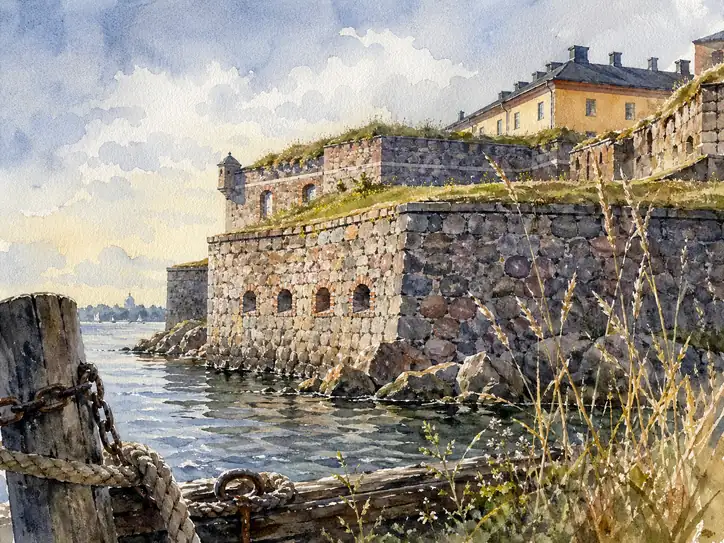 The Historic Stone Fortress by the Sea
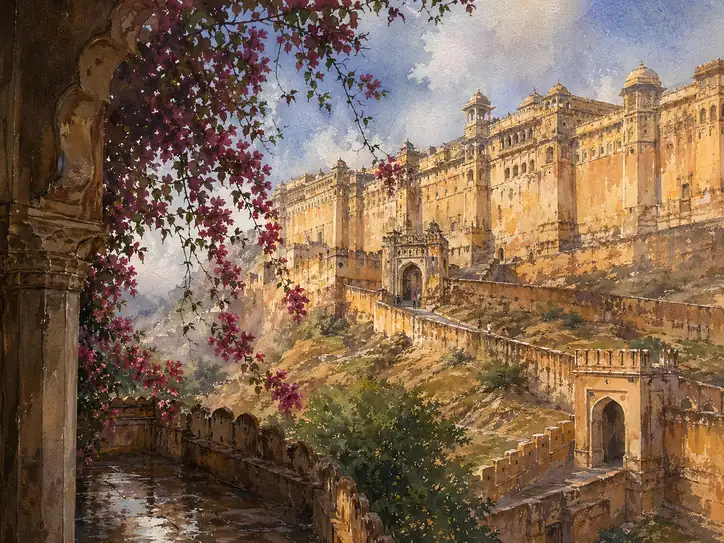 The Golden Bastion and the Crimson Cascade
Similar Artworks
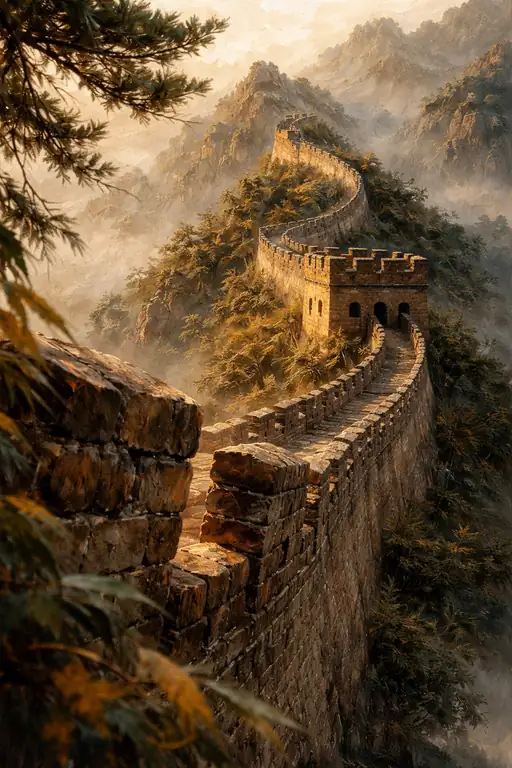 The Stone Serpent Bathing in Golden Mists
 Awakening of the Misty Peaks
 Dreams of the Stone Dragon
 Echoes of the Rain on Castle Stones
 Sovereign of the Golden Clouds
 Awakening of the Golden Citadel
 Whispers of a Silent Guardian
 The Citadel's Quiet Breath
 The Long Silence between Watchers
 Stand at the Edge of the World