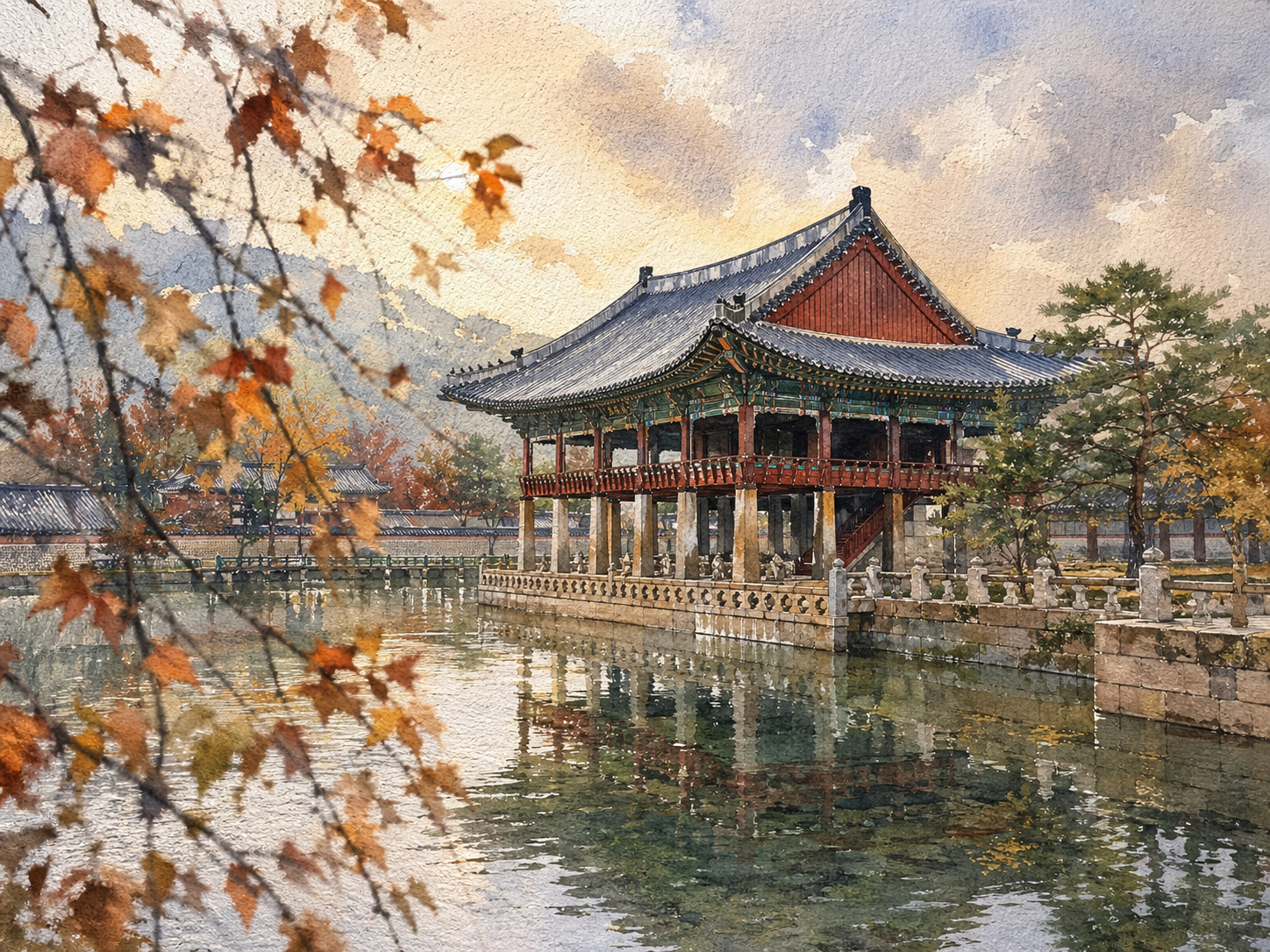
Golden Leaves, Timeless Waters
Critique
1. Introduction This watercolor painting presents a majestic view of a traditional palace pavilion situated over a tranquil pond during the autumn season. The work combines detailed architectural rendering with the fluid, expressive qualities of watercolor on a textured surface. It captures a harmonious balance between the grandeur of royal structures and the transient beauty of the natural world. 2. Description The central focus is a large, two-story wooden pavilion supported by numerous stone pillars rising from the water. Its intricate dark-tiled roof and vibrant decorative paintwork are mirrored precisely in the clear pond below. In the foreground on the left, branches of maple trees with fiery orange and gold leaves frame the scene. The background reveals misty mountain peaks and secondary palace buildings under a soft, overcast sky. 3. Analysis The artist utilizes a warm and cool color contrast to establish visual interest, pitting the oranges of the autumn foliage against the deep blues of the pavilion roof and the water. The composition employs a diagonal perspective, leading the viewer's eye from the vibrant leaves in the foreground toward the imposing architecture. The use of light and shadow on the pavilion's pillars and under its eaves creates a strong sense of three-dimensional form and solid structure. 4. Interpretation and Evaluation This piece effectively communicates the serene and dignified atmosphere of a historic royal site. The technical execution of the water reflections is particularly noteworthy, achieved through a delicate layering of washes that suggests both depth and stillness. The inclusion of the seasonal foliage serves as a metaphor for the passage of time, contrasting with the enduring presence of the stone and timber architecture. It is a work of significant aesthetic merit and technical precision. 5. Conclusion Initially, the vibrant autumn colors dominate the viewer's attention, but the structural complexity of the pavilion soon becomes the primary interest. The painting serves as an evocative summary of the elegance found in traditional East Asian palace architecture. It leaves a lasting impression of peace and historical continuity, successfully capturing the essence of a cultivated landscape in its most colorful season.
Same Subcategory
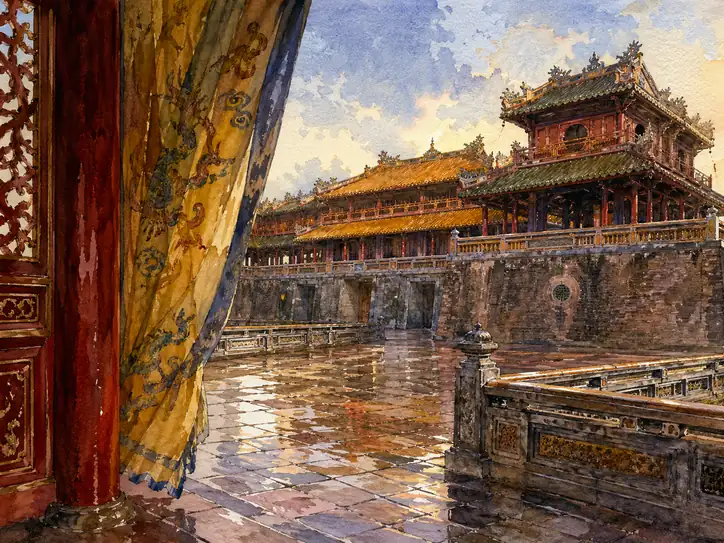 Legacy of the Imperial Silence
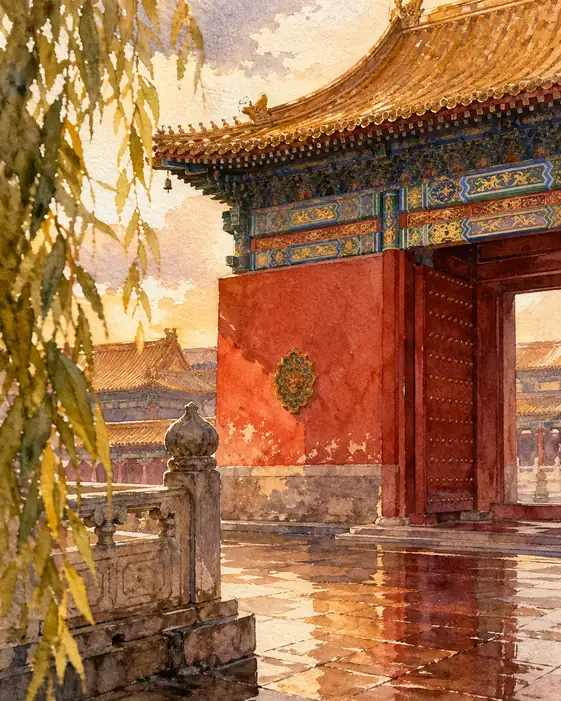 Echoes of Crimson After the Rain
Similar Artworks
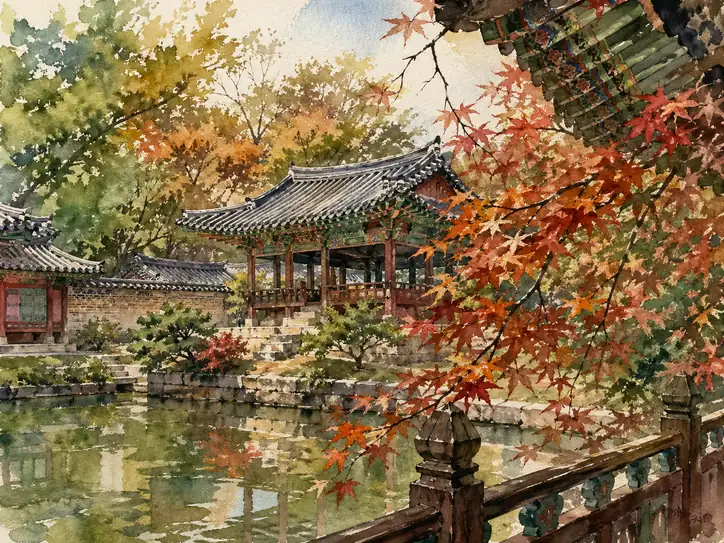 Whispers of Red in the Tranquil Garden
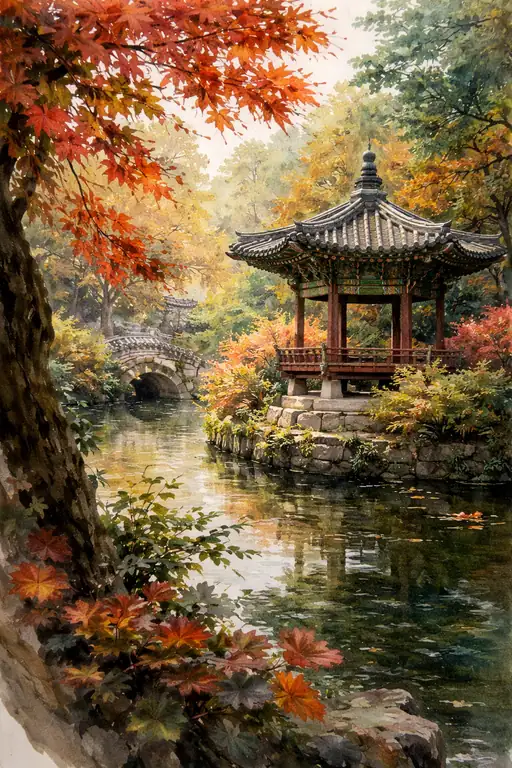 Crimson Leaves Reflected in Autumn's Mirror
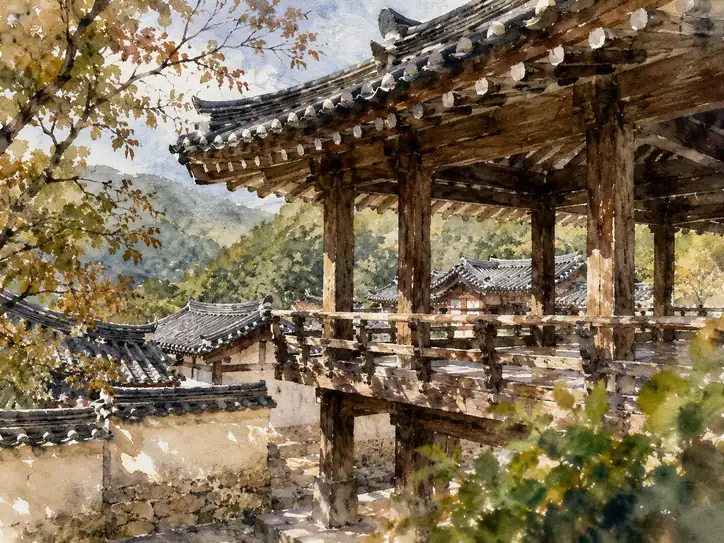 Serene Sanctuary of Autumn
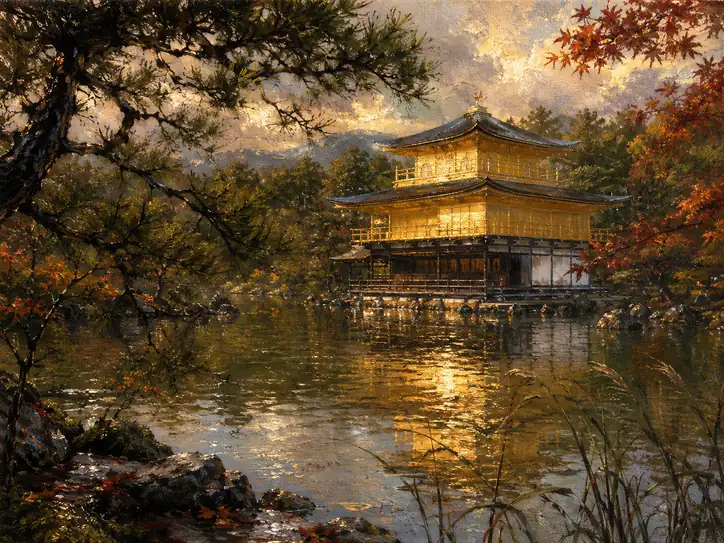 The Echo of Golden Stillness
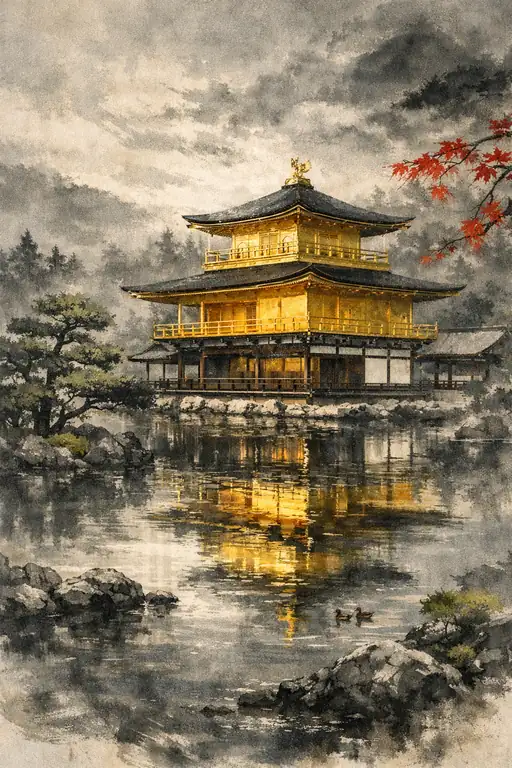 Echoes of the Golden Sanctuary
 The Rain's Quiet Reflection
 Crimson Reflections of an Ageless Hall
 Echoes in the Autumn Mist
 Eternity Reflected in the Garden Pond
 A Window into Serenity