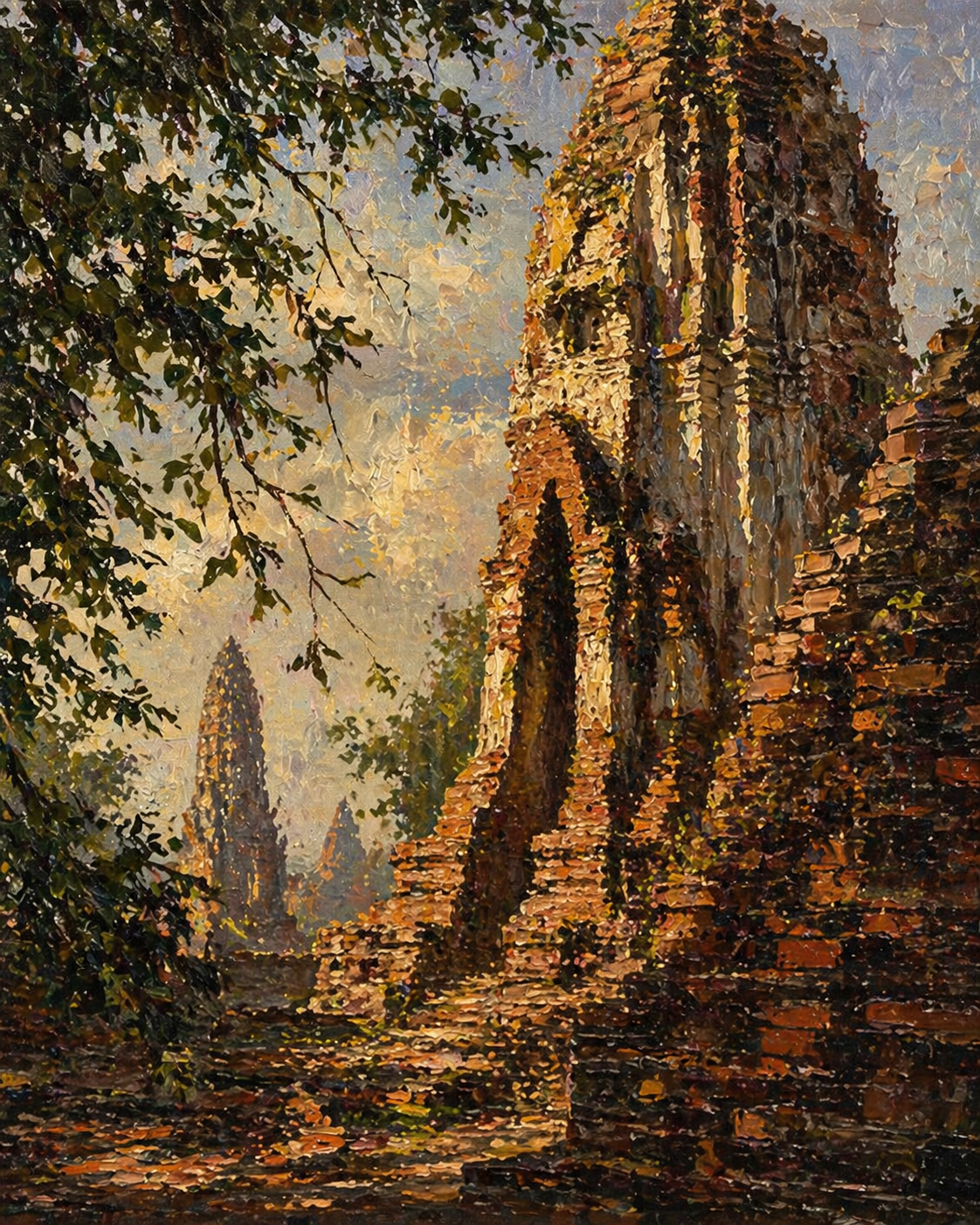
Echoes of a Forgotten Kingdom
Critique
1. Introduction This oil painting presents a evocative depiction of ancient stone temple ruins nestled within a dense forest. The weathered spires and crumbling facades, captured with a sense of historical weight, serve as symbols of the passage of time and the enduring silence of a forgotten civilization. Through the interplay of light and shadow filtering through the foliage, the viewer is invited to contemplate the sublime beauty inherent in these monumental remnants of the past. 2. Description The composition is dominated by a large, intricately detailed stone tower on the right, which shows significant signs of erosion and structural decay. In the background, additional spires emerge from a hazy atmosphere, suggesting a vast complex stretching into the distance. In the foreground, dark green branches hang from the left, framing the scene and creating a strong visual contrast between the organic forms of nature and the geometric, albeit broken, architecture of the man-made structures. 3. Analysis Technically, the work is characterized by a vigorous impasto technique, where thick layers of paint are applied to create a tactile surface. The bold, expressive brushstrokes emphasize the rugged texture of the stone and the chaotic growth of the surrounding vegetation. The color palette is centered on warm ochres and burnt oranges that illuminate the ruins, standing in sharp contrast to the cool grays and muted blues of the sky. This chromatic tension enhances the sense of depth and atmospheric perspective throughout the canvas. 4. Interpretation and Evaluation The artist masterfully explores the duality between the persistence of nature and the inevitable decline of human ambition. Rather than merely documenting ruin, the painting imbues the structures with a divine quality, as if they are being reclaimed by the earth in a sacred process. The creative use of light to define form and texture demonstrates exceptional skill, effectively capturing the ephemeral quality of a specific moment in time. The balance between representational accuracy and expressive abstraction is a testament to the work's originality. 5. Conclusion In conclusion, the painting offers a profound reflection on the relationship between humanity and the environment. What begins as a simple landscape study evolves into a powerful meditation on the cycle of life and the majesty of historical memory. The commanding use of material and the sophisticated treatment of light elevate this scene into a work of universal significance, showcasing a refined artistic vision that resonates with quiet power and technical excellence.
Same Subcategory
 Echoes of Faith Carved in the Earth
 Poseidon's Last Golden Gaze
Similar Artworks
 Gateway to the Ancient Light
 Where Time Splits the Stone
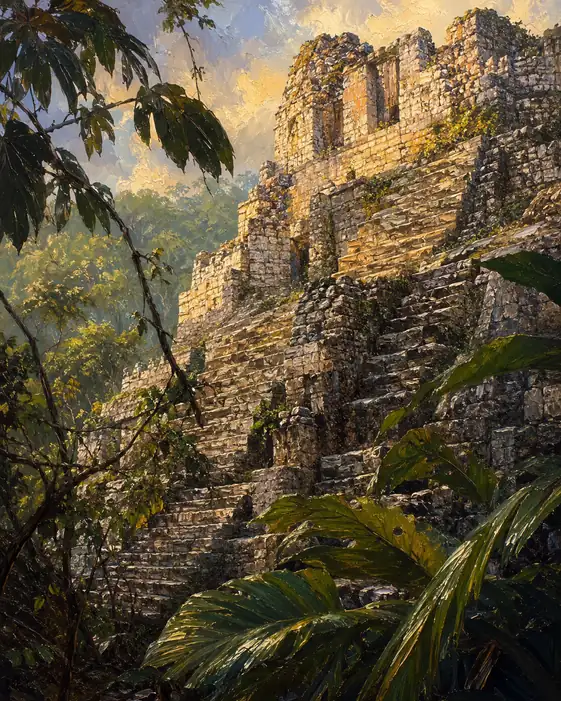 The Golden Stairway to Oblivion
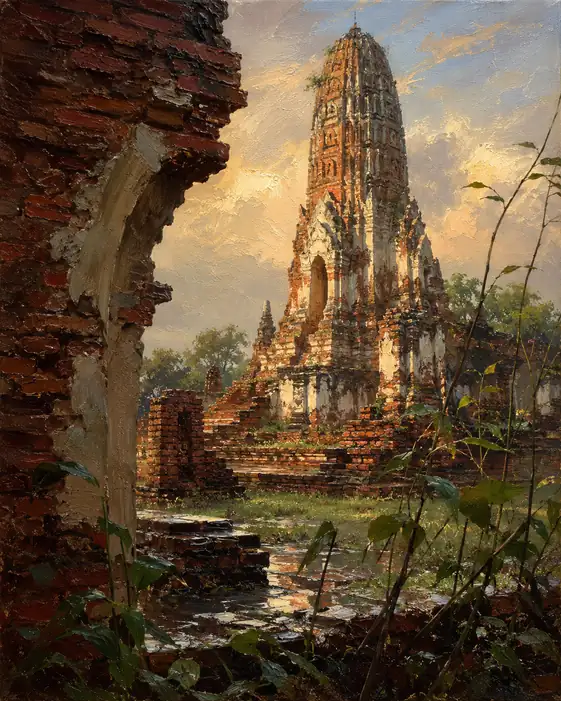 Whispers of the Brick Sanctuary
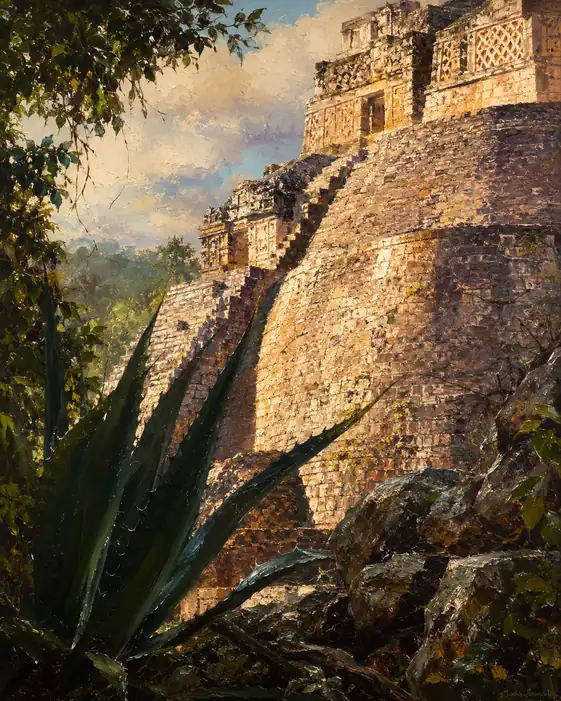 Golden Slumber of the Ancient Empire
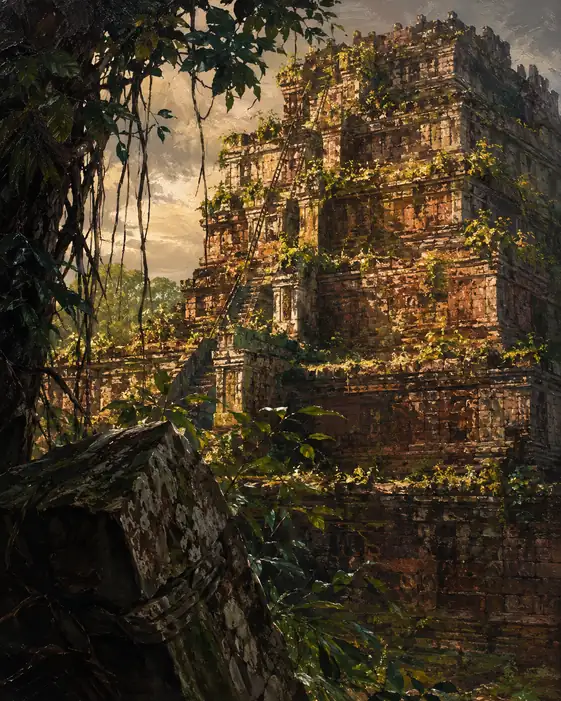 Where Empires Fade into Gold
 Reclaimed by the Emerald Jungle
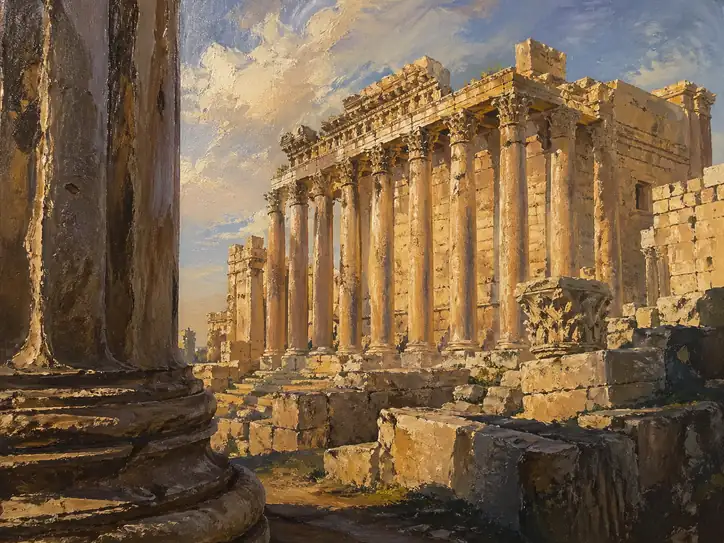 The Golden Echo of Antiquity
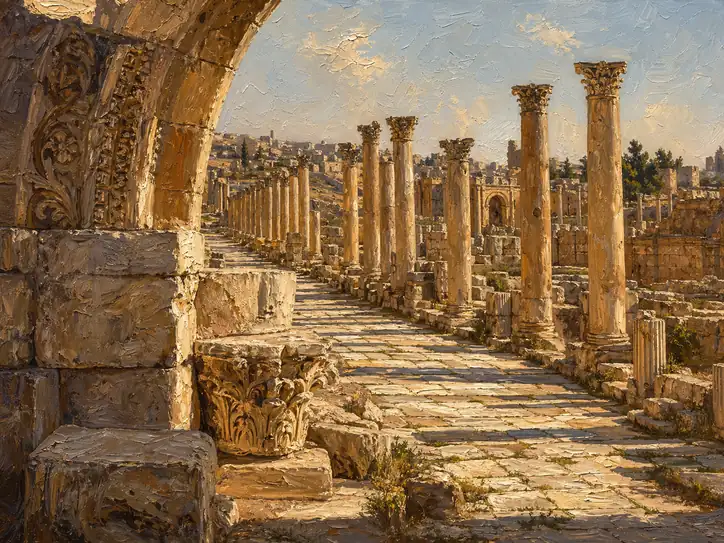 Echoes of the Corinthian Path
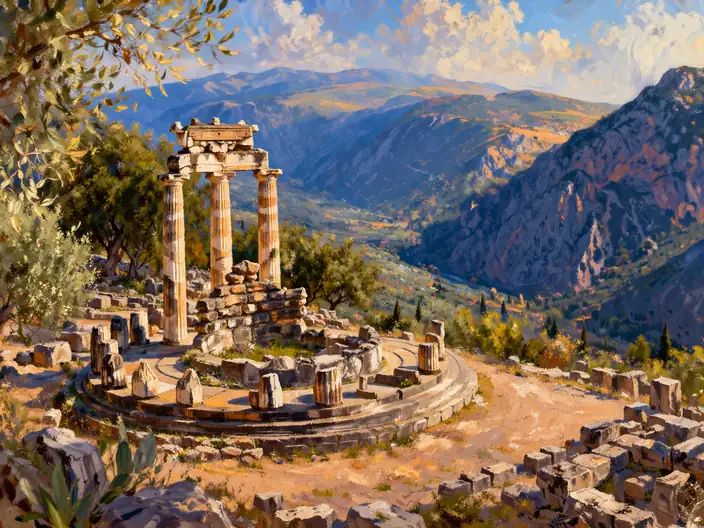 Timeless Pillars of the Mountain Sanctuary