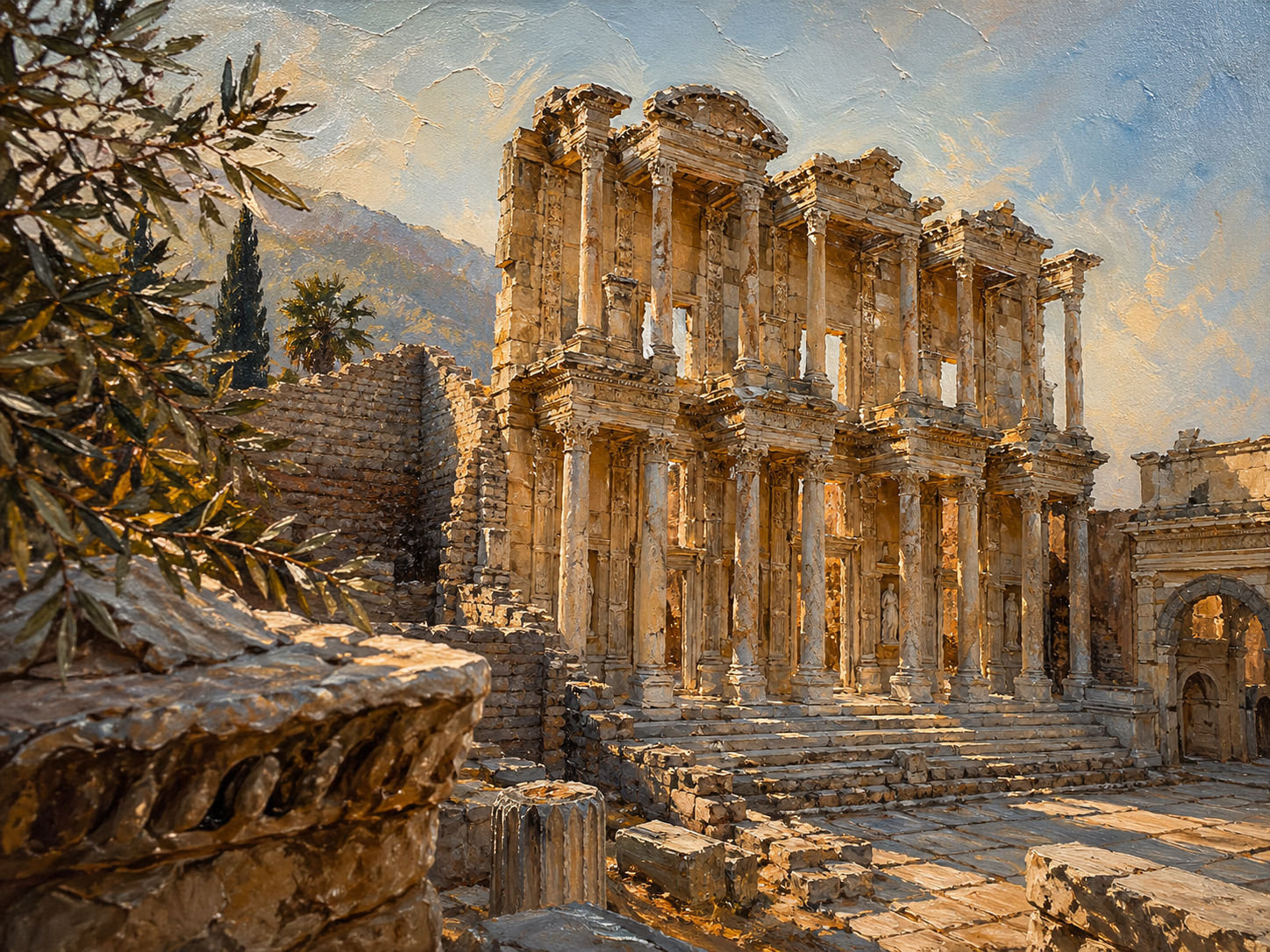
The Eternal Glow of Forgotten Wisdom
Critique
1. Introduction This painting dramatically captures ancient architectural ruins enduring through the passage of time utilizing thick, layered oil techniques. Dominating the center of the composition is a grand facade adorned with elaborate decorations, speaking volumes of past glory and present decay. The artist employs a strong contrast of light and shadow alongside an impasto technique, powerfully conveying the texture of stone and the weight of history. Viewers standing before this overwhelming presence are compelled to feel profound nostalgia and romanticism. 2. Description The primary ancient structure consists of two tiers of Corinthian columns and walls decorated with intricate sculptures. Golden evening light illuminates the right side of the building, casting deep shadows that define the architectural details. In the left foreground, olive branches sway gently, introducing a dynamic contrast to the static beauty of the ruins. Fallen stones and weathered steps scatter the foreground, while dry mountains and a warm sky recede into the background. 3. Analysis The composition captures the architecture from a slight angle, effectively emphasizing its three-dimensional form and depth. The color palette revolves around warm beiges and ambers of the stone, contrasted by deep browns and cool grays in the shadows to create visual drama. The impasto technique, applied with palette knives, utilizes the physical texture of the paint to recreate weathered surfaces. Furthermore, the dark foreground foliage serves to frame the scene and enhance the spatial illusion. 4. Interpretation and Evaluation This artwork transcends mere architectural documentation, exploring the aesthetic of decay and impermanence. The paradox of rigid stone succumbing to natural forces is vibrantly depicted through energetic brushwork. Its exceptional ability to render tactile qualities communicates the temperature and atmosphere of the site, achieving high artistic integrity. It masterfully fuses historical insight with a unique approach to capturing light as a physical substance. 5. Conclusion Initially captivated by the immense scale and golden brilliance, one gradually perceives the cruelty and beauty of passing time through weathered details. This piece revives a classical theme with modern techniques. Ultimately, it invites contemplation on permanence and transience.
Same Subcategory
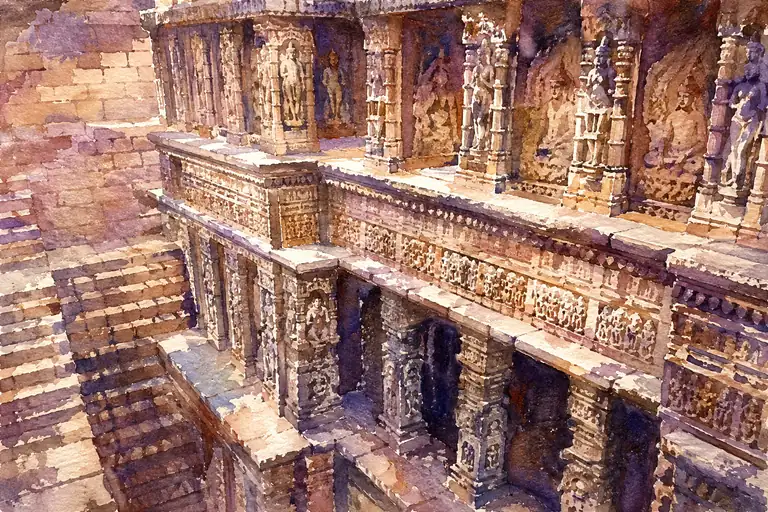 Whispers in the Sacred Depths
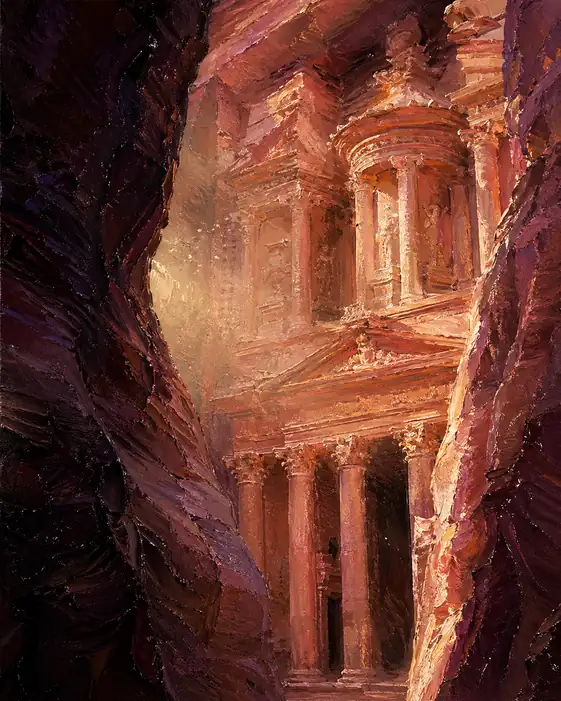 Threshold of Eternity: The Golden Secret of the Canyon
Similar Artworks
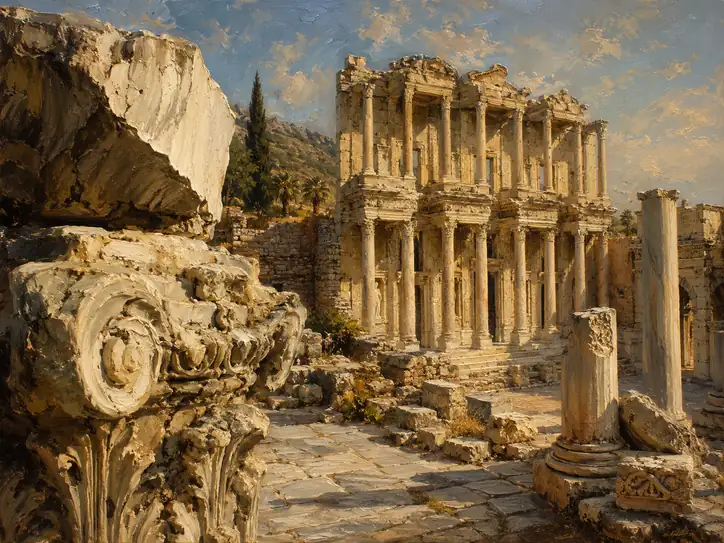 Where the Ancient Sun Still Remembers
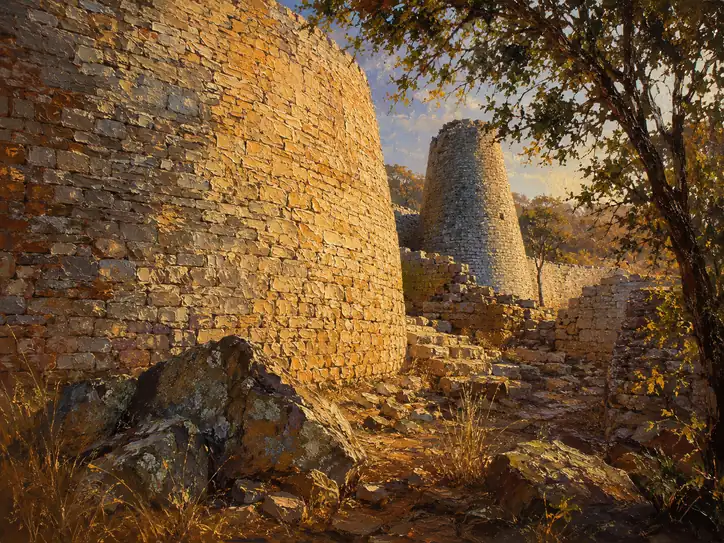 Silent Chronicles of the Stone Fortress
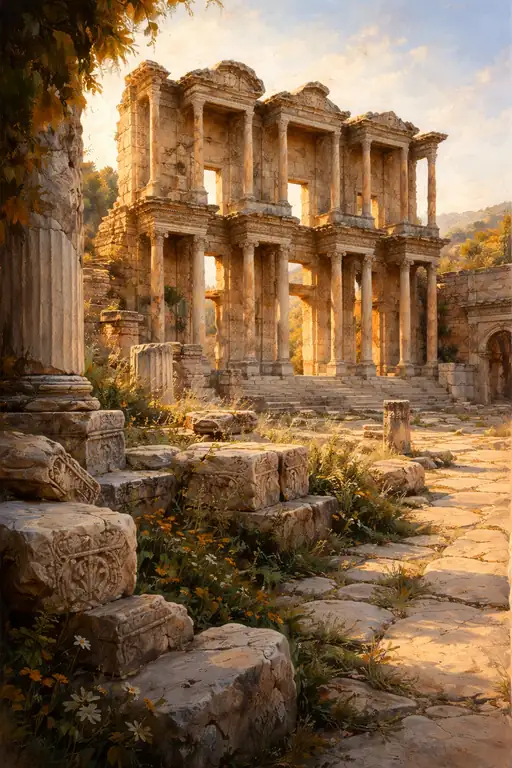 Golden Echoes of the Ages
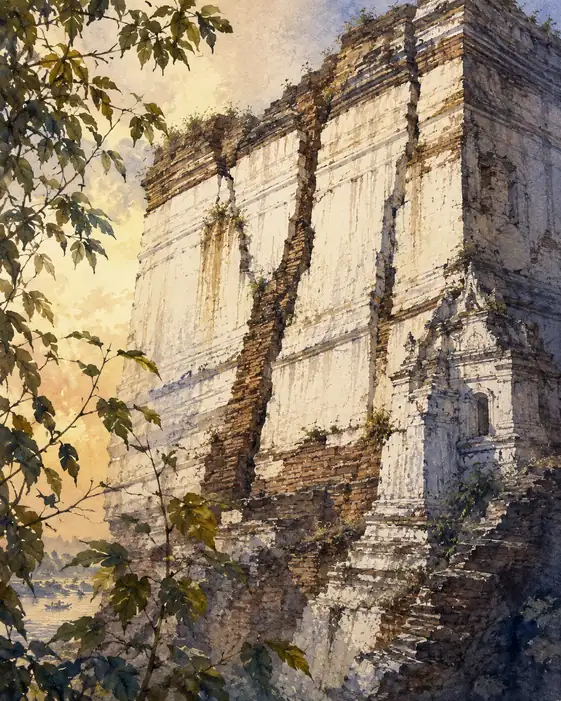 Where Time Splits the Stone
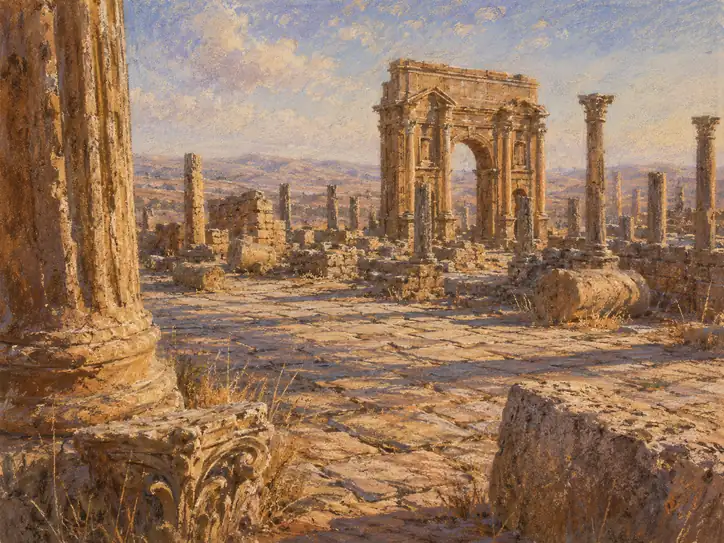 The Silent Dignity of Time
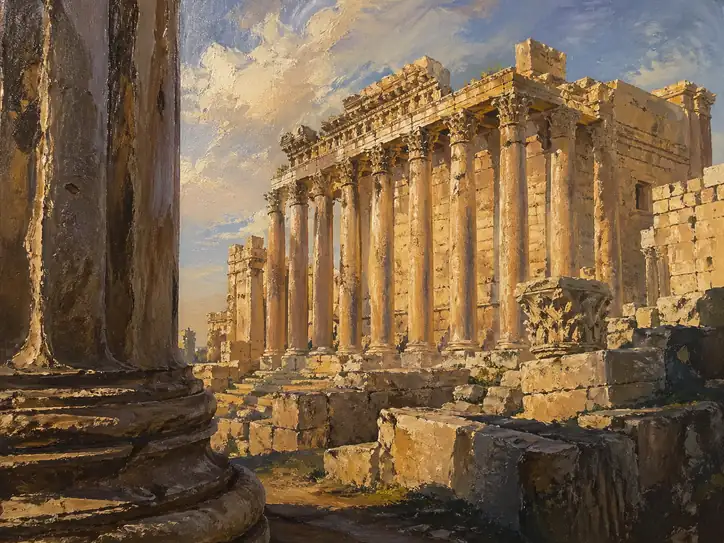 The Golden Echo of Antiquity
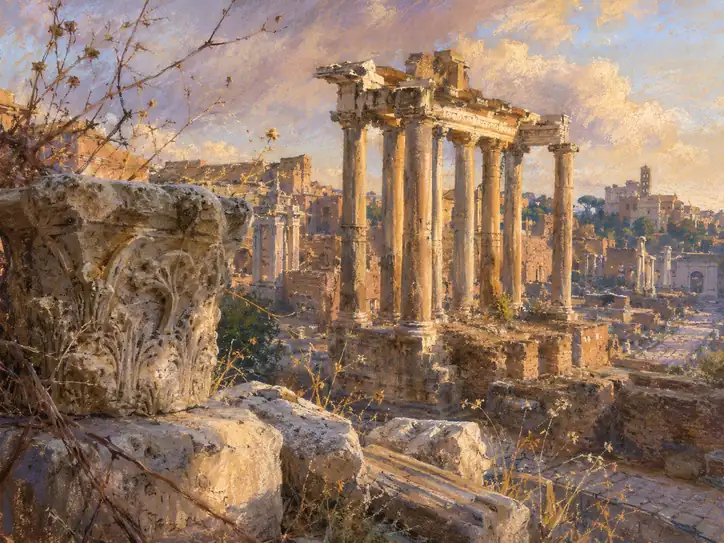 Whispers of the Golden Forum
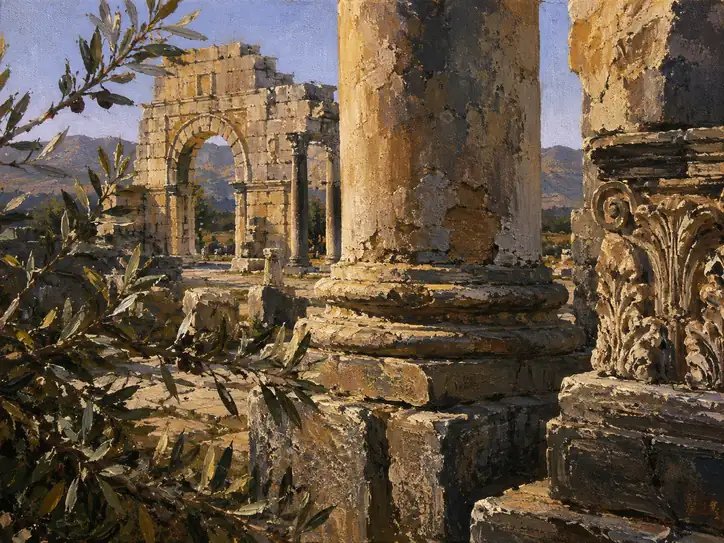 The Silent Witness of Ages
 Gateway to the Ancient Light
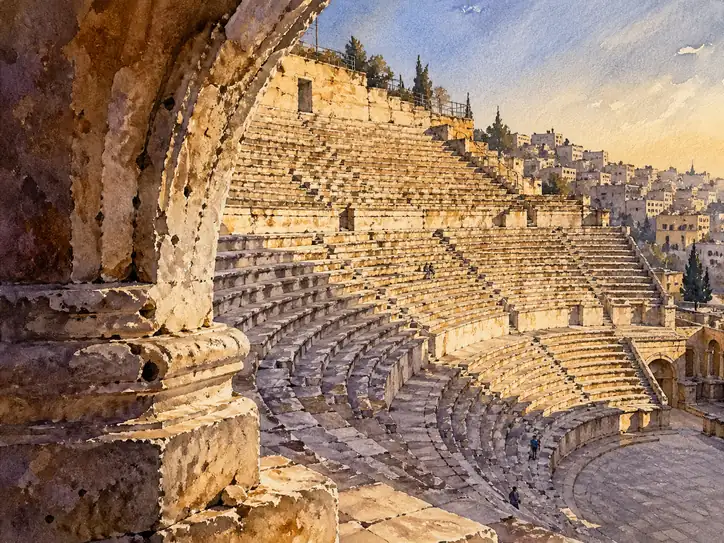 Echoes of the Arena: Where Silence Meets Past Glory