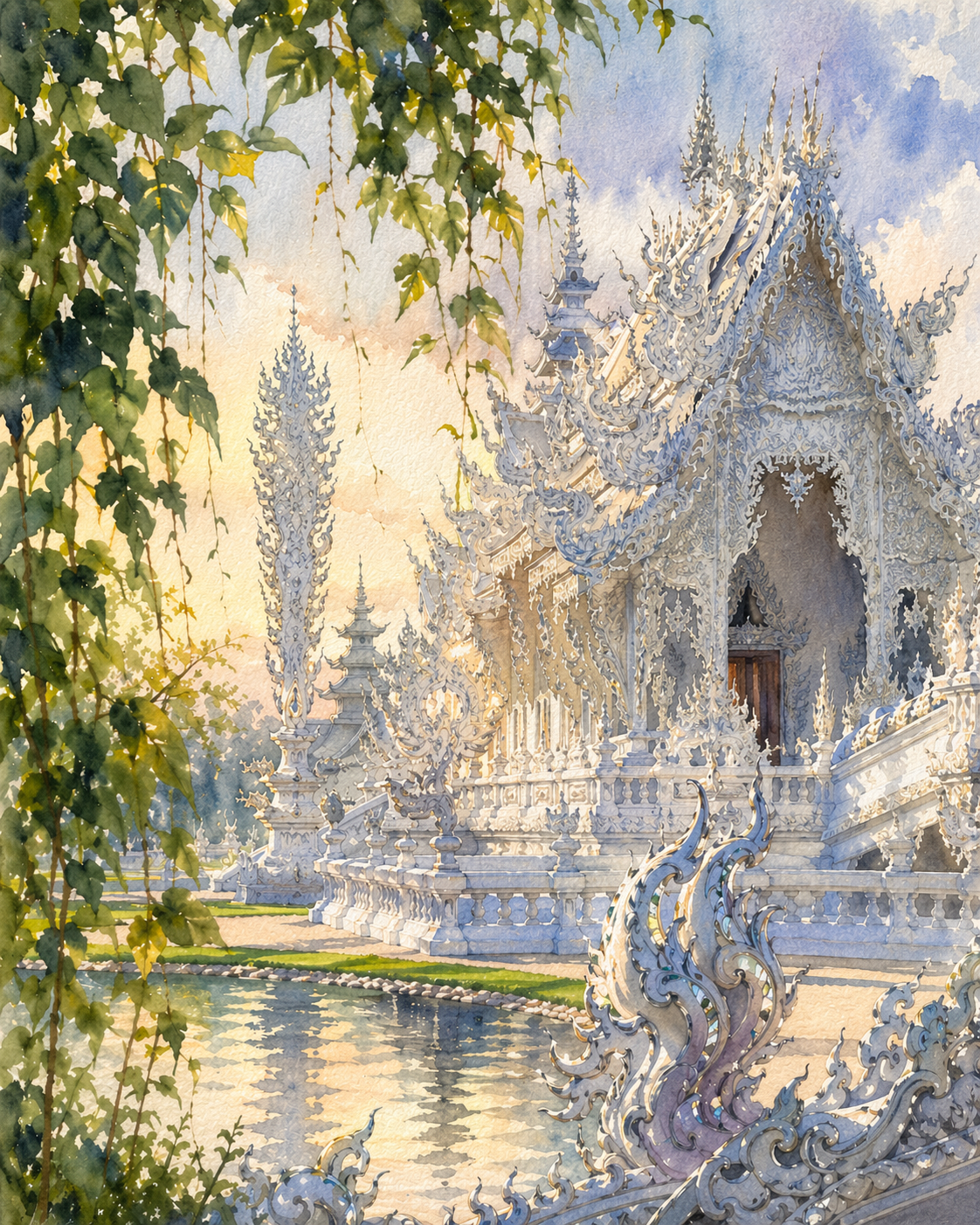
Ivory Radiance in the Morning Dew
Critique
1. Introduction This watercolor painting captures the ethereal beauty of an intricately decorated white temple, reminiscent of contemporary Thai architectural styles. Framed by lush green vines on the left, the scene presents a breathtaking fusion of man-made splendor and natural tranquility. The soft, golden glow of a rising or setting sun bathes the complex carvings in a warm light, highlighting the extraordinary detail of the structure. 2. Description The primary subject is a magnificent white temple adorned with flame-like ornamental motifs, occupying a significant portion of the right side of the canvas. In the foreground, a still body of water acts as a mirror, reflecting the stark whiteness of the building and the colorful sky above. Vibrant green leaves hang from the upper left corner, creating a natural frame through which the viewer observes the temple. The sky transitions smoothly from a gentle blue and purple to a warm, sunlit amber. 3. Analysis The composition relies on a dynamic contrast between the rigid, crystalline whiteness of the architecture and the organic, flowing forms of the vegetation. The artist expertly employs watercolor washes to create depth within the monochromatic structures, using subtle shadows to define the complex geometry. The vertical lines of the hanging vines provide a counterpoint to the diagonal thrust of the temple’s rooflines, establishing a sophisticated visual balance. Reflective surfaces in the water are handled with transparency and precision. 4. Interpretation and Evaluation This work successfully creates a sense of sacred space where the pinnacle of artistic decoration meets the serenity of the natural world. By using foliage as a foreground element, the artist invites the viewer into a private, meditative experience of the site. The rendering of light is particularly noteworthy, as it goes beyond mere illumination to suggest a transcendental quality inherent in the architecture. The technical execution of the minute details and the atmospheric perspective shows remarkable command over the medium. 5. Conclusion The painting is a masterful synthesis of structural complexity and poetic atmosphere. While the viewer is initially overwhelmed by the sheer density of the architectural ornamentation, the overarching sense of light and stillness eventually prevails. It remains a powerful testament to the ability of art to capture both physical precision and emotional resonance in a single frame.
Same Subcategory
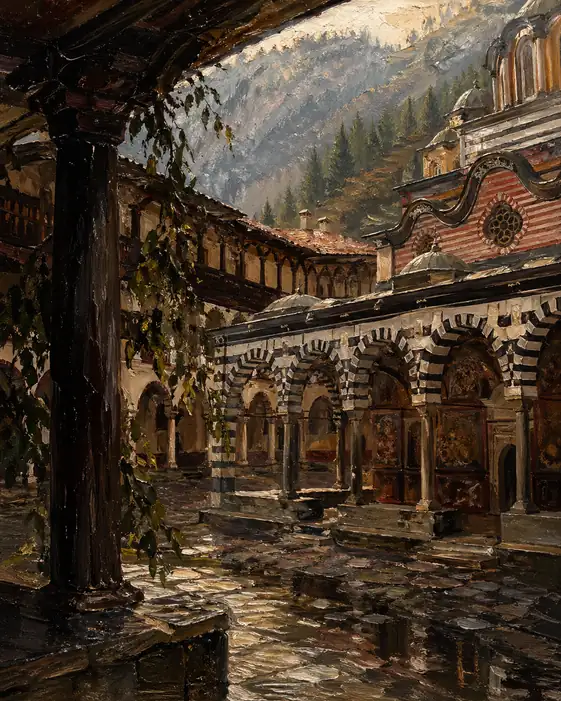 Eternal Echoes in the High Valley
Similar Artworks
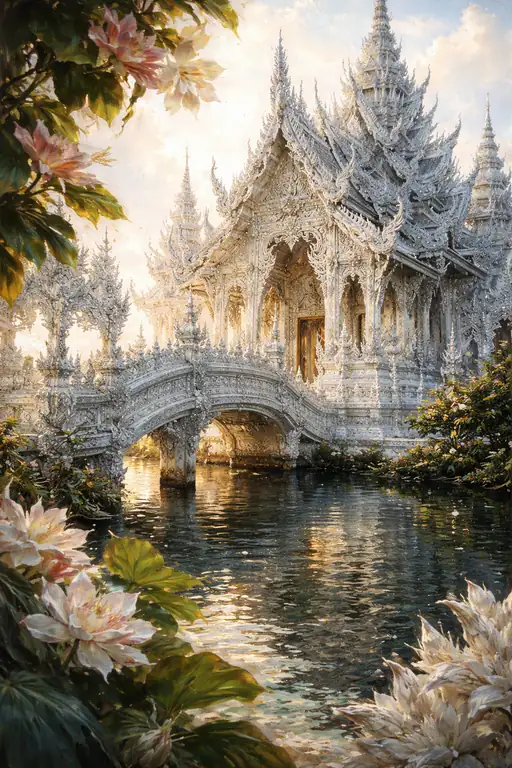 Ethereal White Blossoms of the Sacred Realm
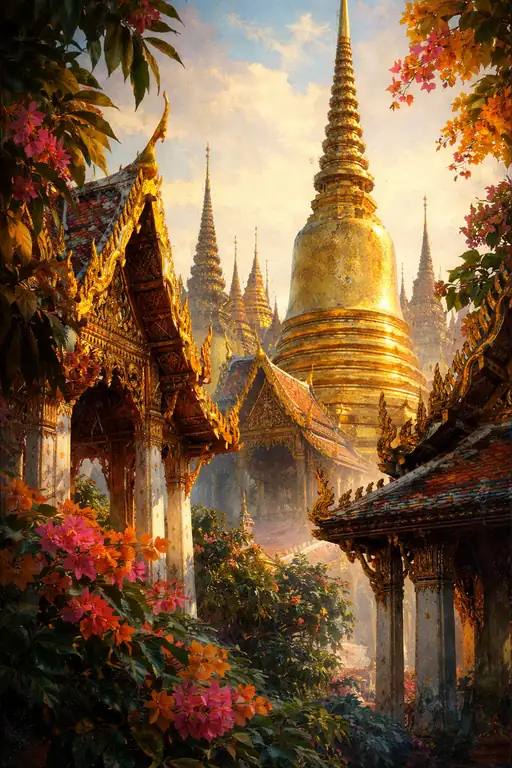 The Golden Stupa's Radiant Ascension
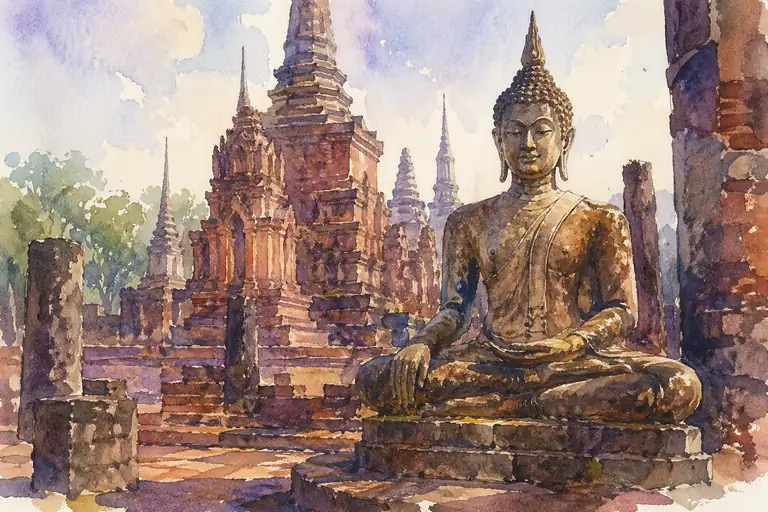 Stillness Across the Ages
 Whispers of the Bodhi Tree
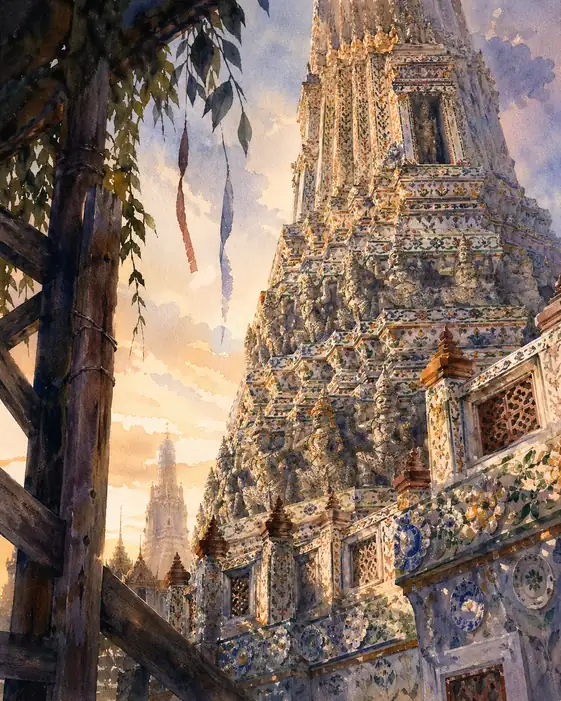 Spire of the Eternal Light
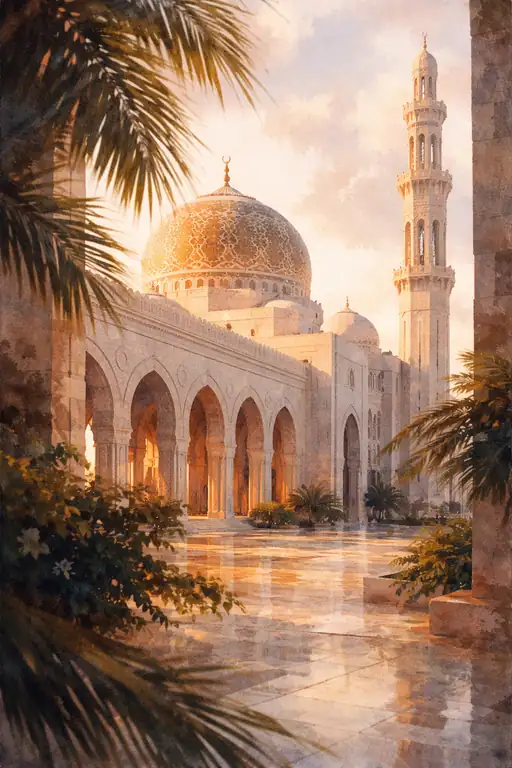 Mirage of the Amber Domes
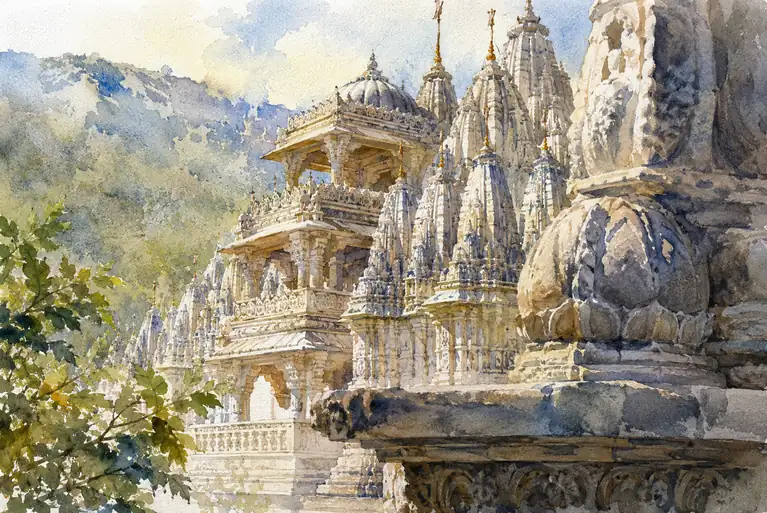 Silent Sanctuary of White Marble
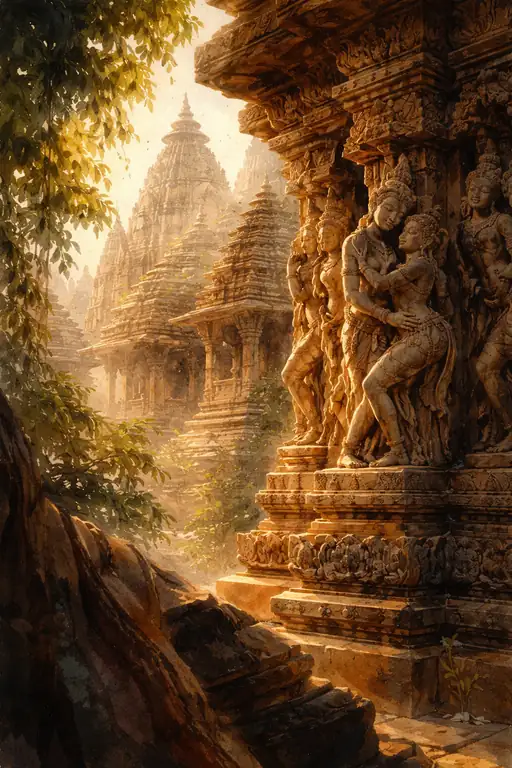 Whispers in Stone: The Hidden Sanctuary
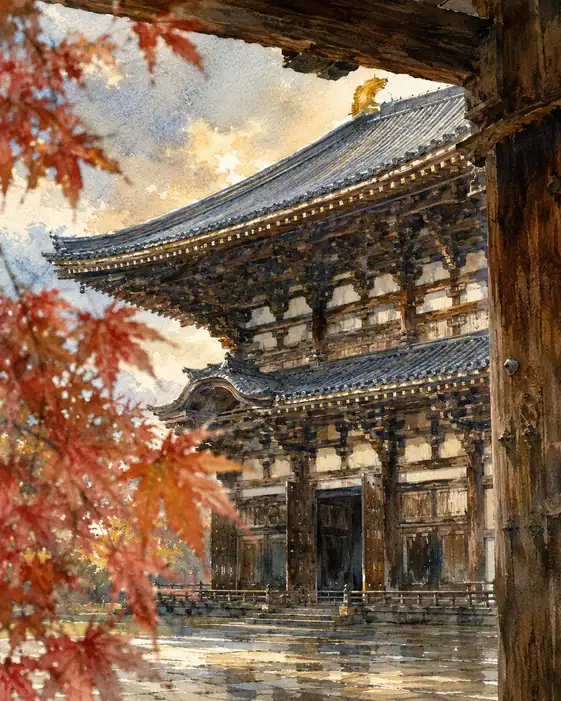 Eternity in Crimson
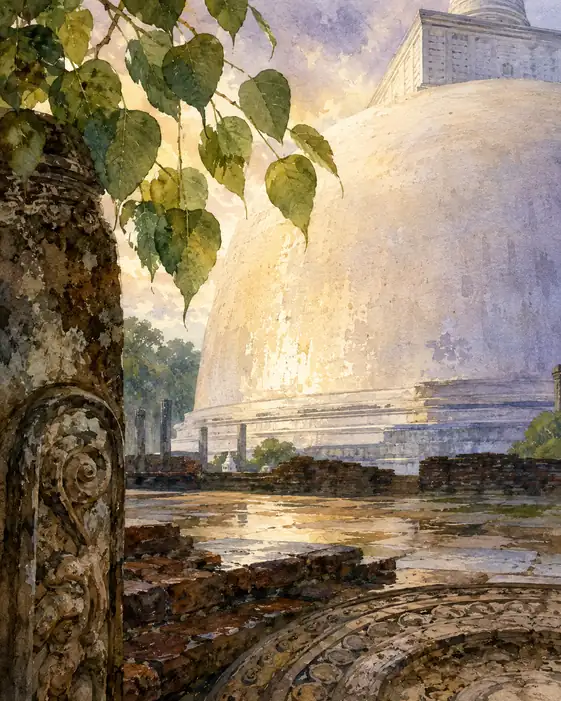 The White Sanctuary of Dawn