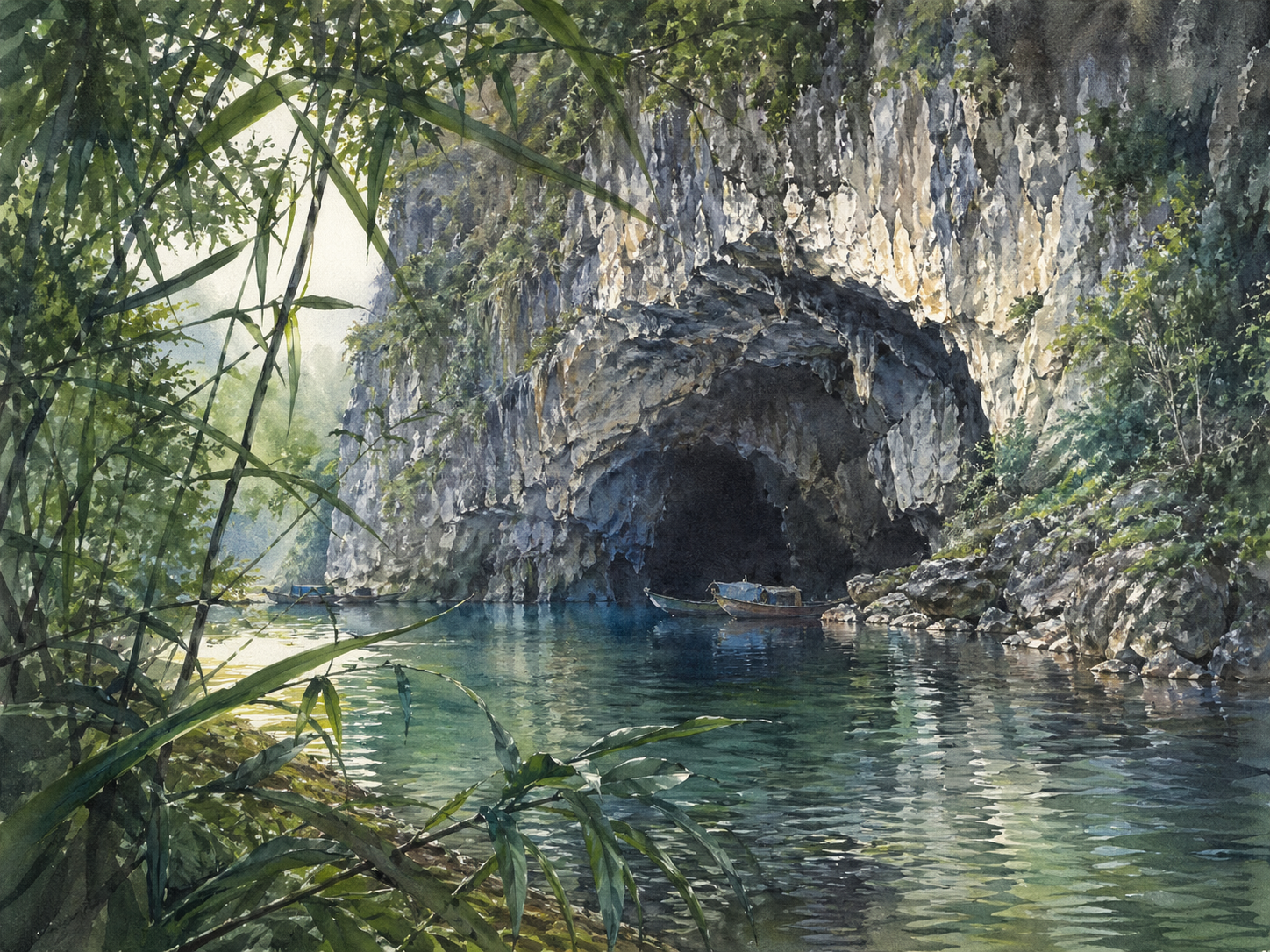
Sanctuary of the Emerald Cavern
Critique
1. Introduction This watercolor painting depicts a majestic limestone cave opening onto a serene body of water, capturing a moment of profound natural tranquility. Framed by lush bamboo foliage in the foreground, the composition leads the viewer toward a dark, mysterious cavern carved into a towering cliffside. The artwork masterfully balances the rugged permanence of geological formations with the ephemeral quality of light and water. It serves as a compelling exploration of nature's grandeur and the quiet harmony found within secluded landscapes. 2. Description In the center, a massive, textured rock face rises vertically, featuring a cavernous entrance that recedes into deep shadow. Several small wooden boats are moored near the cave’s mouth, adding a subtle human element to the otherwise pristine environment. The water reflects the surrounding cliffs with delicate, rippling textures, shifting from emerald green to pale azure. Sunlight filters through the overhead canopy, illuminating the upper reaches of the craggy precipice and casting soft glows onto the translucent leaves on the left. 3. Analysis The artist employs a sophisticated interplay of detailed brushwork and atmospheric washes to define the various surfaces. The rock textures are rendered with a variety of muted tones, creating a sense of three-dimensional form through careful shading. A stark contrast between the dark foliage in the foreground and the luminous cliff face enhances the depth of the scene. Furthermore, the horizontal stillness of the water provides a stable foundation for the complex, vertical energy of the karst landscape, creating a visually balanced and harmonious composition. 4. Interpretation and Evaluation This piece can be interpreted as a meditation on the coexistence of human life and the overwhelming scale of the natural world. The small boats signify a humble presence within a vast, ancient setting, suggesting a narrative of peaceful adaptation rather than dominance. The technical execution is exceptional, particularly in the artist's ability to render the crystalline clarity of the water and the intricate patterns of the stone. This work possesses an original aesthetic that elevates a traditional landscape into a poetic and evocative visual experience. 5. Conclusion Overall, the painting is a remarkable demonstration of watercolor technique, successfully conveying both the immense power and the delicate beauty of nature. While the initial impression is one of peaceful solitude, a closer examination reveals a wealth of textural detail that deepens the viewer's appreciation for the scene's complexity. The artist has captured not just a physical location, but a specific atmosphere charged with quiet reverence. Ultimately, the work stands as a testament to the enduring allure of the wilderness and the skill required to translate it onto paper.
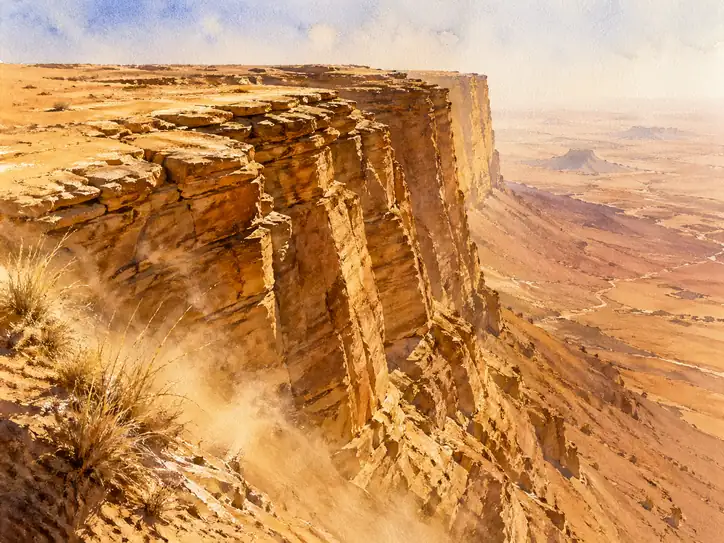 The Wind's Whisper: Dust over the Expanse
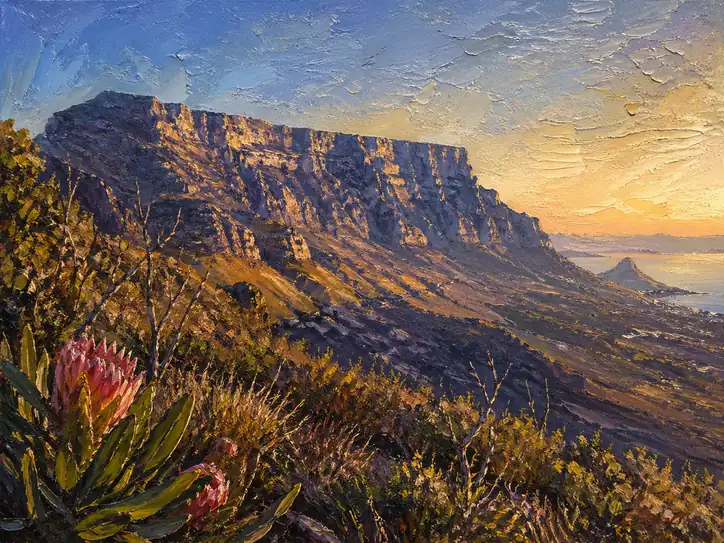 Glow of the Sentinel: Table Mountain and the Protea's Bloom
 Threshold of Eternal Echoes
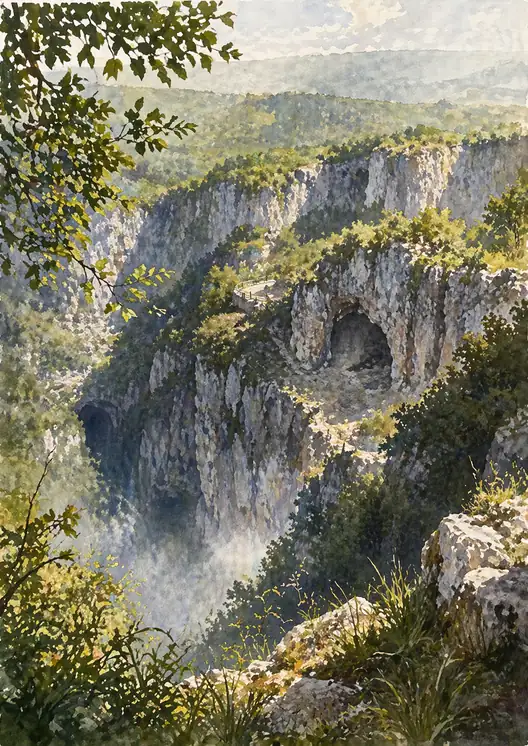 Gorge Cave
 Into the Heart of the Earth
 Sailing Towards the Whispering Light
 Breath of the Cavern
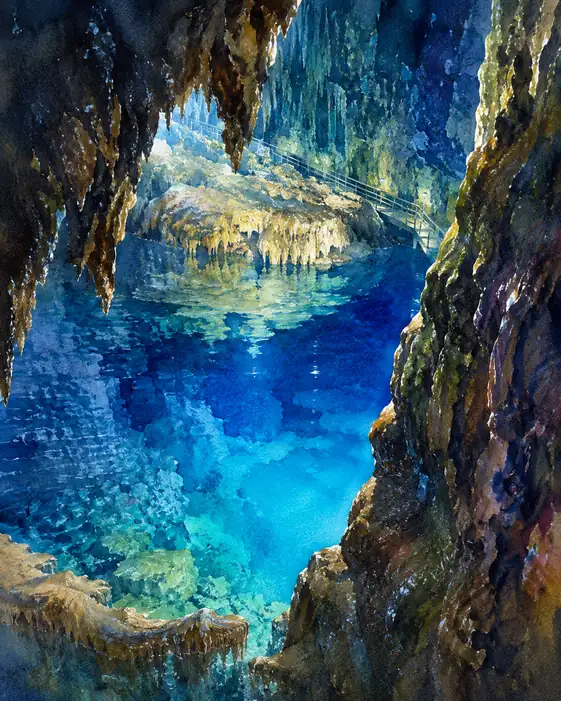 Luminous Depths: The Azure Sanctuary
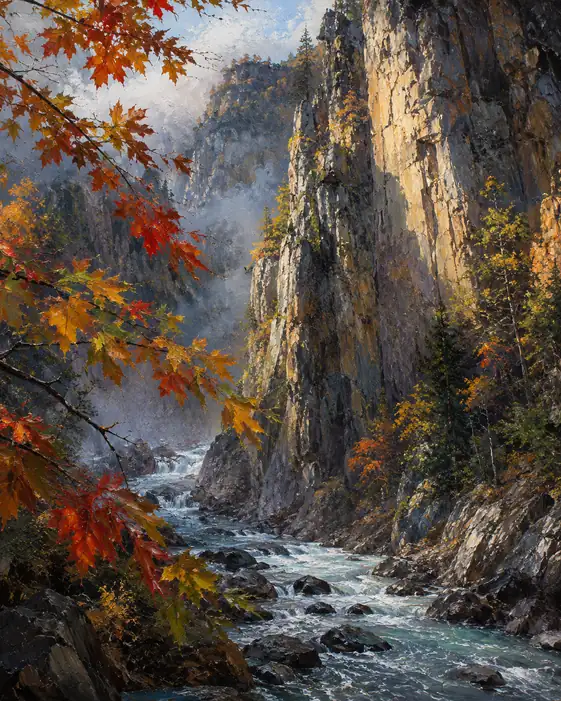 Autumn Whispers in the Sunlit Gorge
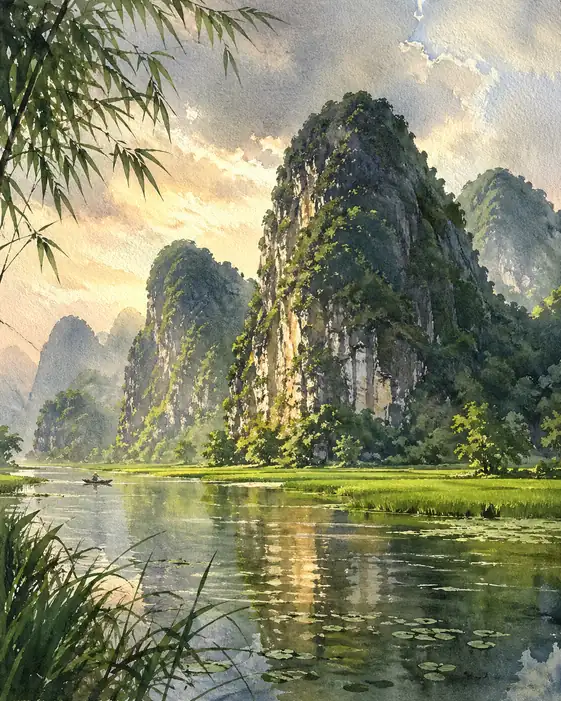 Serenity of the Hidden Utopia
 Sanctuary of Light
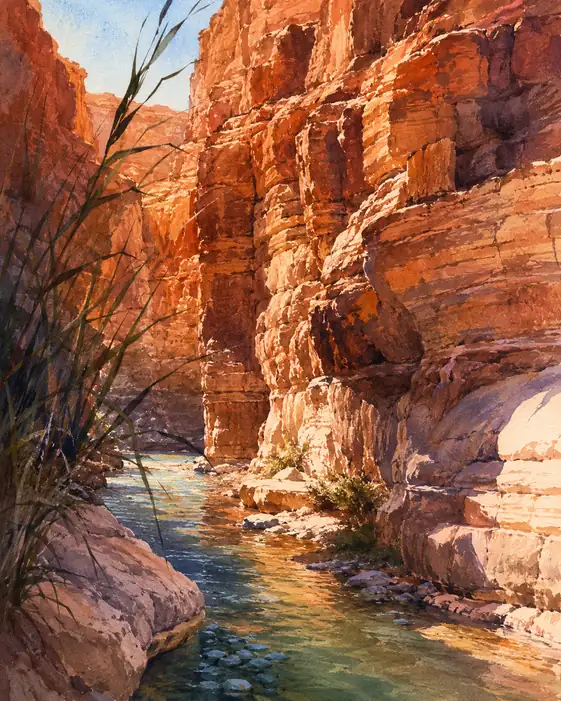 Whispers of the Sunlit Gorge