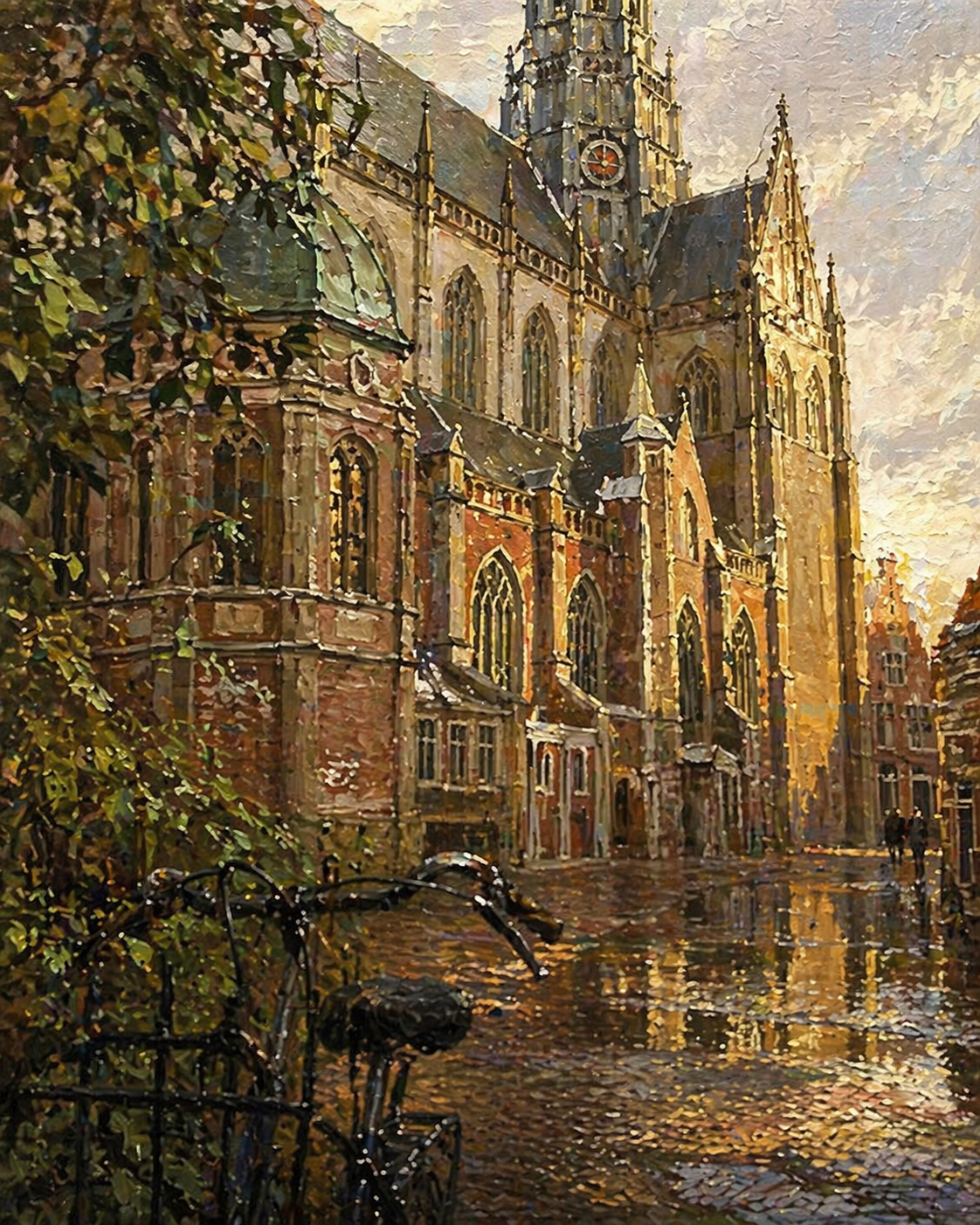
Golden Cathedral After the Rain
Critique
1. Introduction This impressionistic oil painting depicts a majestic Gothic cathedral towering over a rain-slicked city street at twilight. The work utilizes a rich impasto technique to capture the complex architectural details and the luminous quality of the fading light. The composition effectively juxtaposes the enduring presence of the cathedral with the transient reflections on the wet cobblestones below. 2. Description The cathedral dominates the right side of the frame, its spires and stained-glass windows illuminated by a warm, golden glow from the setting sun. The stone facade is rendered with thick, textural brushstrokes that suggest both age and grandeur. In the foreground, a dark, silhouetted bicycle leans against foliage on the left, partially obscured by shadows. The wet pavement reflects the building's warm light and the cool tones of the sky, creating a shimmering, fragmented mosaic on the ground. Tiny figures of pedestrians are visible in the distance, providing a sense of scale to the massive structure. 3. Analysis The artist employs a vibrant palette of ochre, sienna, and burnt orange for the cathedral, contrasted with deep greens and cool grays in the shadows and sky. The heavy application of paint creates a tactile surface that enhances the physical presence of the stone architecture. A strong diagonal line formed by the cathedral's base leads the viewer's eye into the depth of the urban space. The play of light and shadow is central to the work, with the high-key highlights on the stone surfaces creating a dramatic tension against the darker foreground elements. 4. Interpretation and Evaluation The painting successfully conveys a sense of spiritual and historical weight through its focus on the monumental cathedral. The use of impressionistic techniques allows for an emotional interpretation of the scene, emphasizing atmosphere and light over literal representation. Technically, the artist demonstrates a high level of skill in managing thick paint to create both broad structural forms and intricate decorative details. The overall effect is one of quiet awe, capturing a moment where the man-made environment is transformed by natural light. 5. Conclusion By blending the solidity of Gothic architecture with the fluid nature of light and reflection, this work achieves a powerful visual resonance. The textured surface invites close inspection, revealing the artist's energetic engagement with the medium. This painting stands as a sophisticated exploration of light's transformative power within a historic urban context.
Same Subcategory
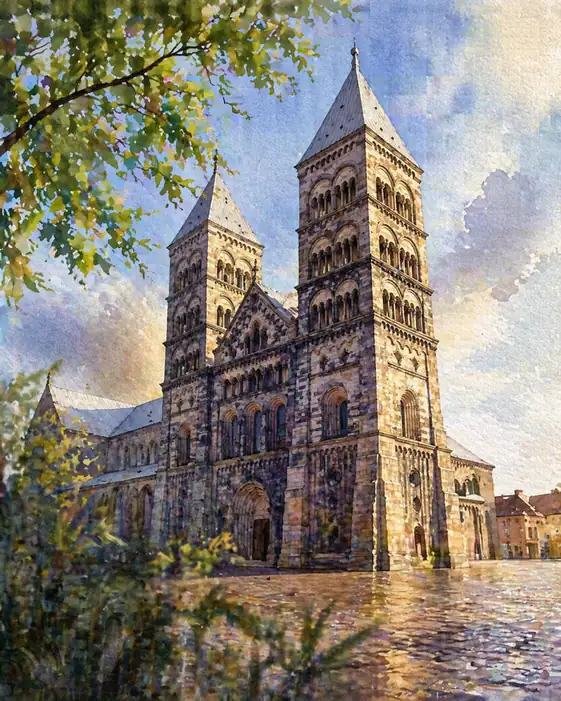 Echoes in the Stonework
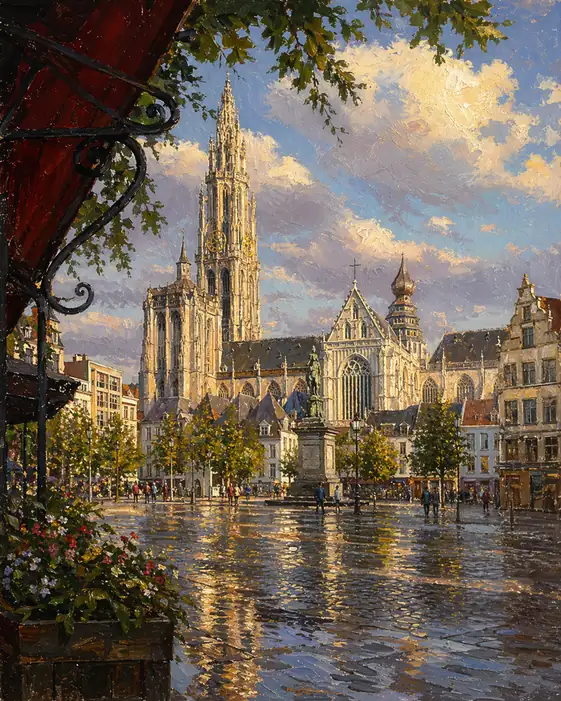 Cathedral Reflections in the Rain
Similar Artworks
 The Glow of Silent Devotion
 Reflections of the Sacred Spires
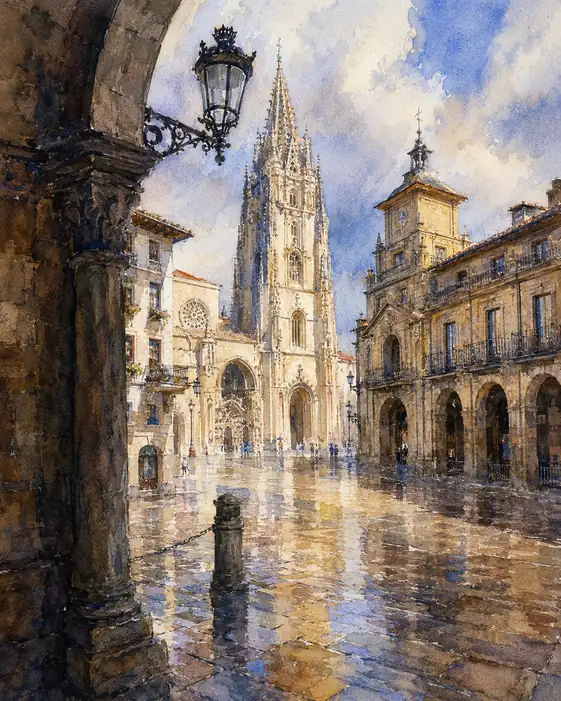 Sanctuary of the Rain-Slicked Stone
 Under the Spires of Evening Grace
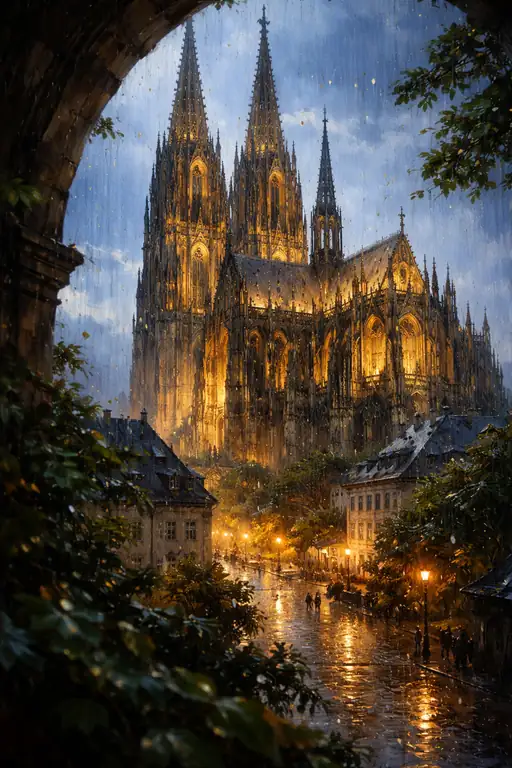 A Glimpse of the Gothic Majesty in the Rain
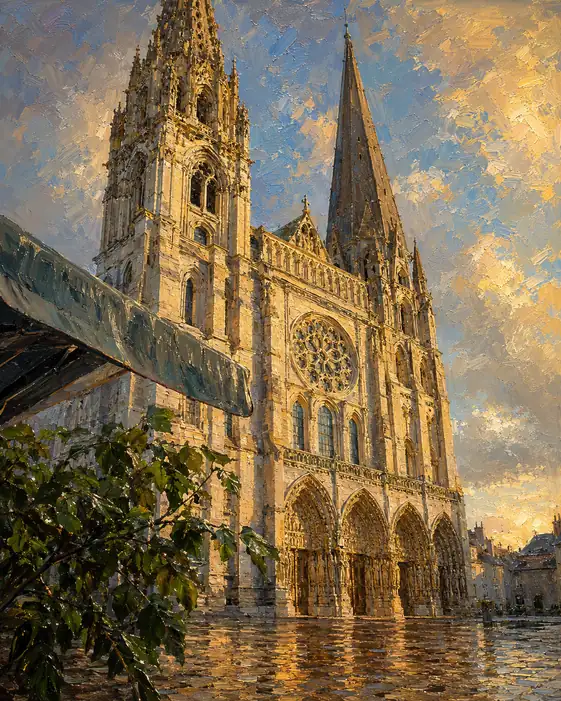 Where the Light Lingers
 Gilded Spire after Rain
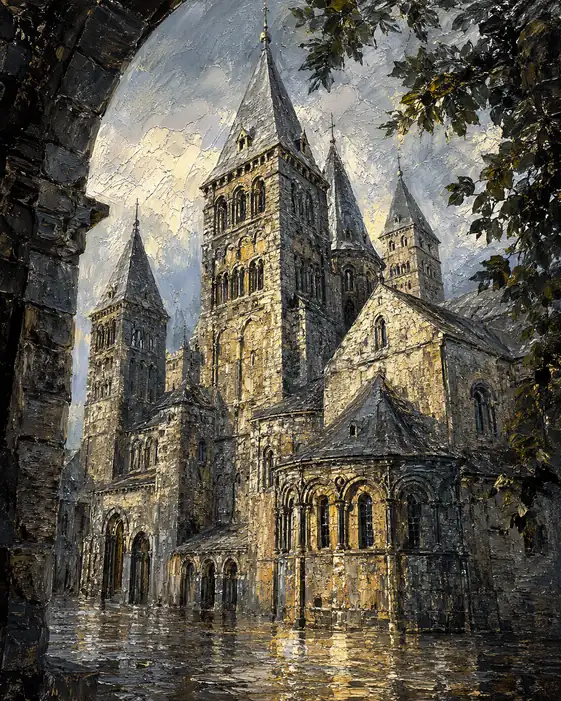 Stone and Golden Shadows
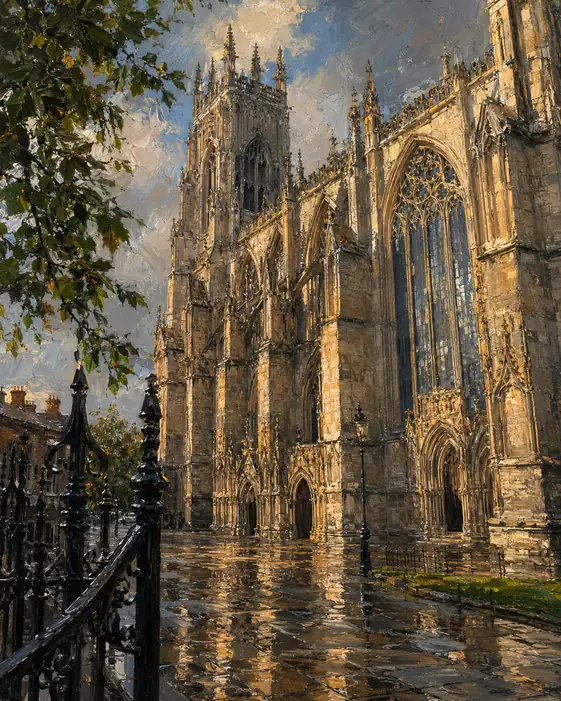 Resonance of the Golden Spire
 Symphony of the Burning Twilight