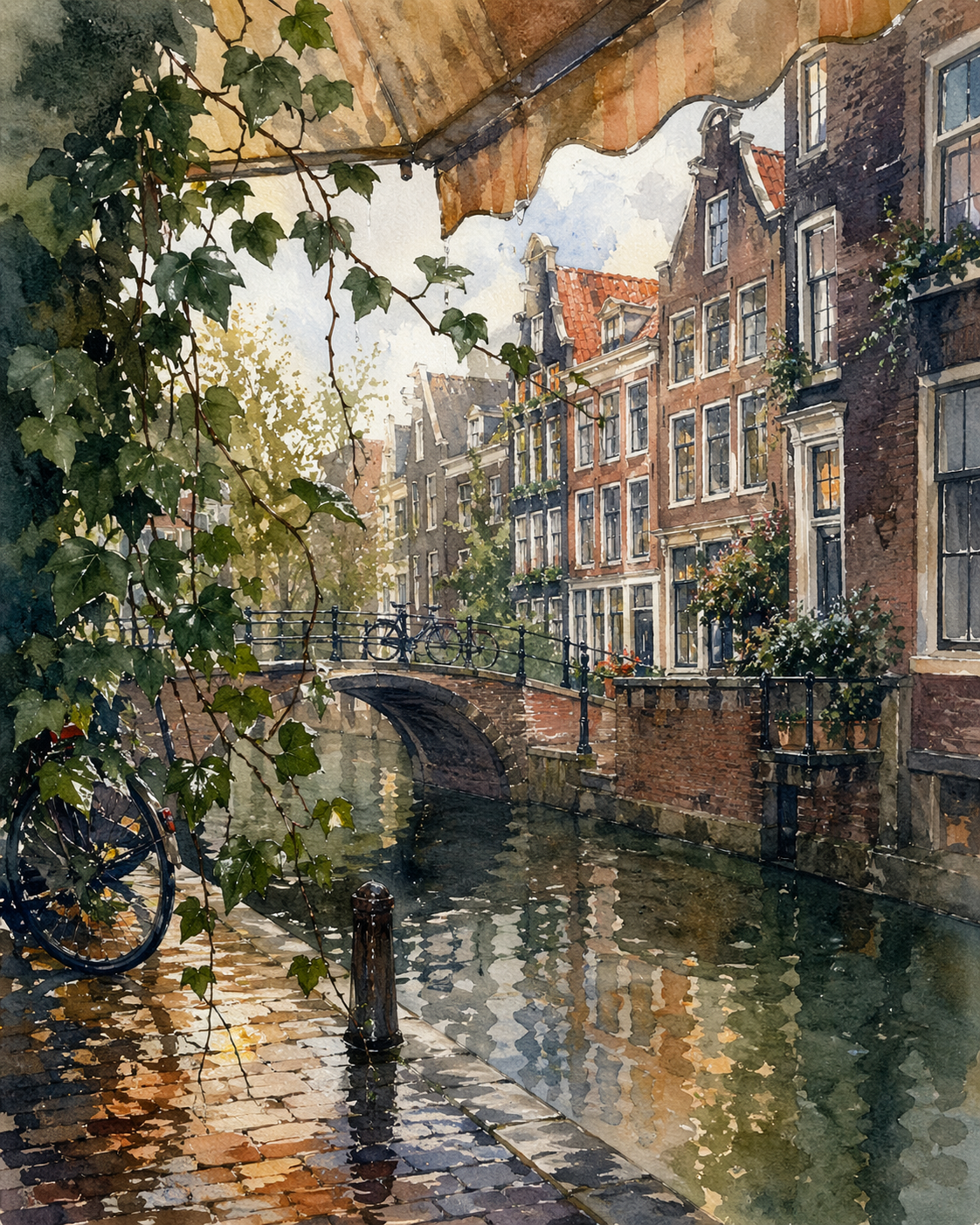
Reflections on a Quiet Canal
Critique
1. Introduction This watercolor painting captures a quintessential canal scene in a European city, characterized by historic gabled architecture and serene waterways. The perspective is cleverly framed from beneath an awning, with cascading ivy in the foreground adding a layer of organic texture. The work evokes a quiet, atmospheric moment, likely just after a rainfall, given the reflective quality of the surfaces. 2. Description The composition features a narrow canal flanked by traditional brick buildings with distinctive stepped gables. A stone arch bridge spans the water in the middle ground, upon which a silhouette of a bicycle is visible. In the foreground, a wet cobblestone path glimmers with light, leading the eye toward the canal's edge. To the left, dense green ivy hangs from above, its leaves rendered with varying shades of emerald and forest green. The water surface acts as a mirror, blurring the reflections of the sky and the colorful facades of the houses. 3. Analysis The artist utilizes a masterful blend of controlled washes and delicate line work to define the architectural details. The use of a vertical format emphasizes the height of the buildings and the depth of the canal. Color transitions are subtle, with warm earthy tones of the bricks contrasting against the cool blues and grays of the water and sky. Light is handled with great sensitivity, particularly in the golden highlights on the wet pavement, which provide a rhythmic counterpoint to the shadowed areas under the ivy. 4. Interpretation and Evaluation The painting successfully conveys a sense of timelessness and local character through its focus on traditional urban elements. The inclusion of the ivy and the awning creates an intimate viewpoint, suggesting the artist's personal presence within the scene. Technically, the rendering of reflections and the texture of wet stone is highly accomplished, demonstrating a deep understanding of watercolor's fluid properties. The overall mood is one of tranquil observation, celebrating the quiet beauty of historic urban environments. 5. Conclusion Through its evocative use of light and careful attention to architectural form, this work transforms a familiar city view into a poetic visual narrative. The balance between the man-made structures and the encroaching greenery highlights a harmonious coexistence. This painting serves as a refined tribute to the enduring charm and atmospheric quality of canal-side life.
Same Subcategory
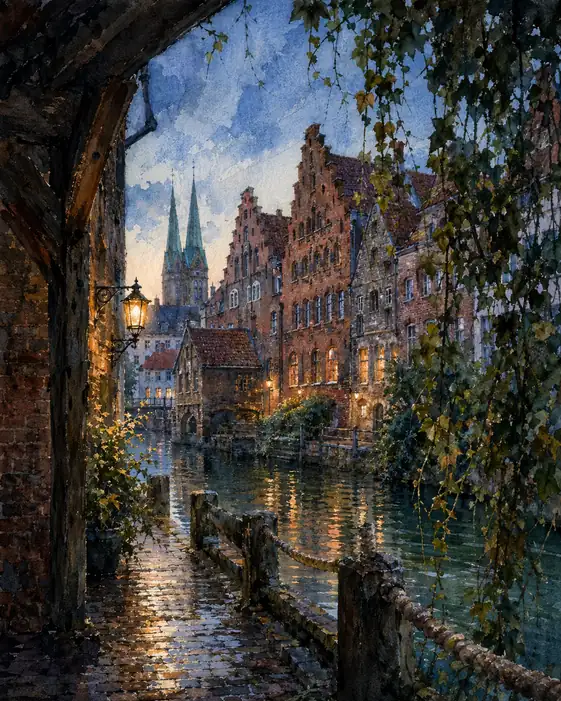 Dusk's Gentle Glow: A European Canal Serenade
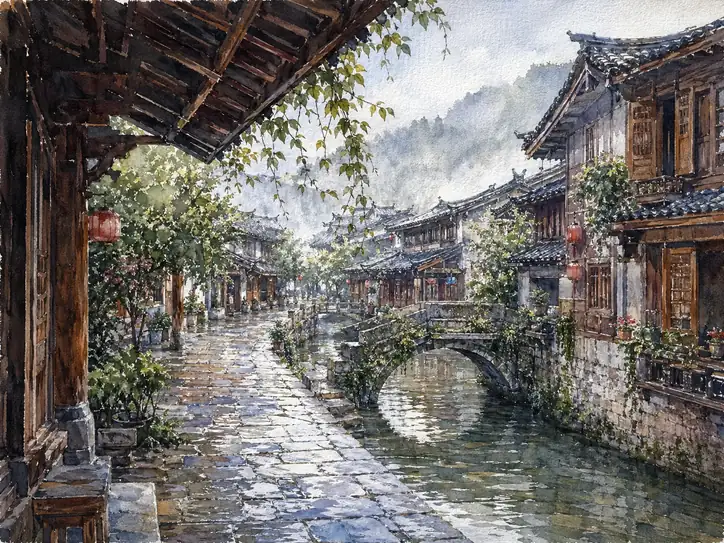 Reflections on the Timeless Path
Similar Artworks
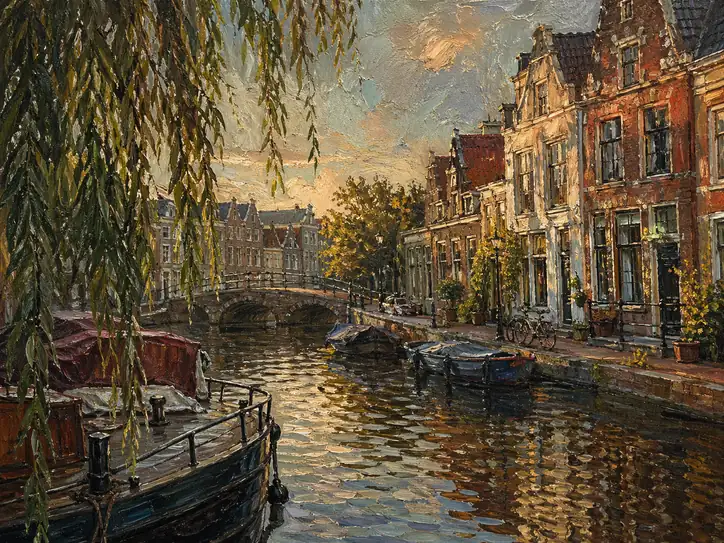 Sunset Over the Historic Waterway
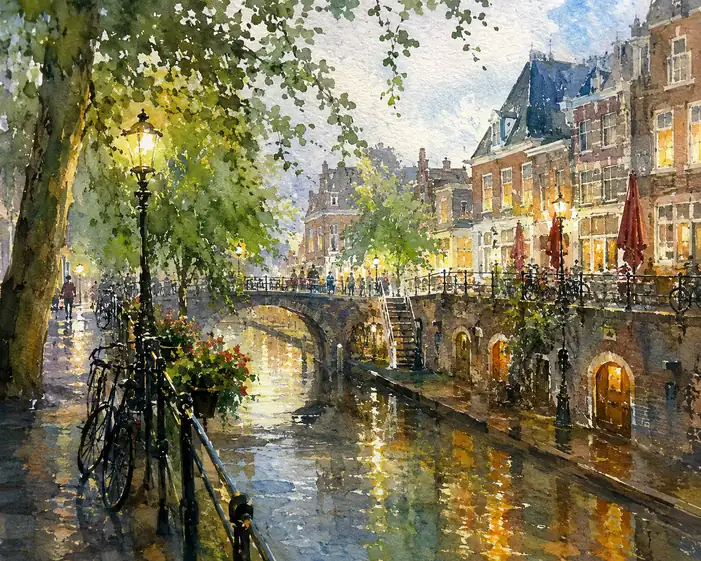 Where Twilight Lingers
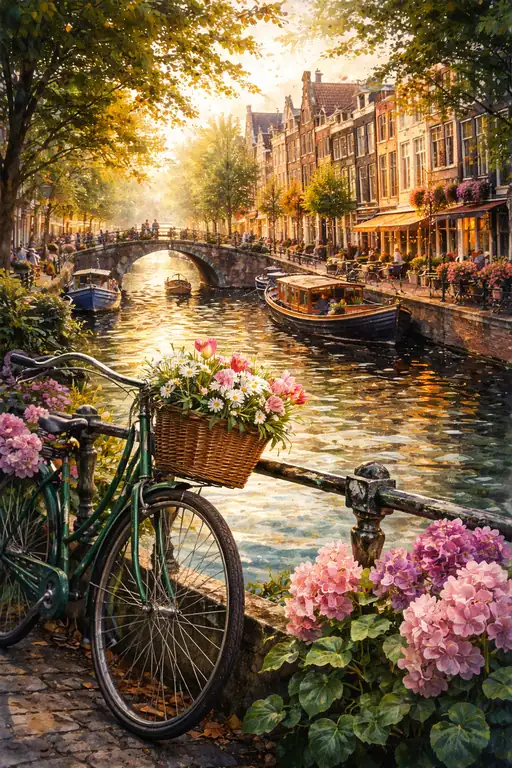 Golden Serenade of the Canal
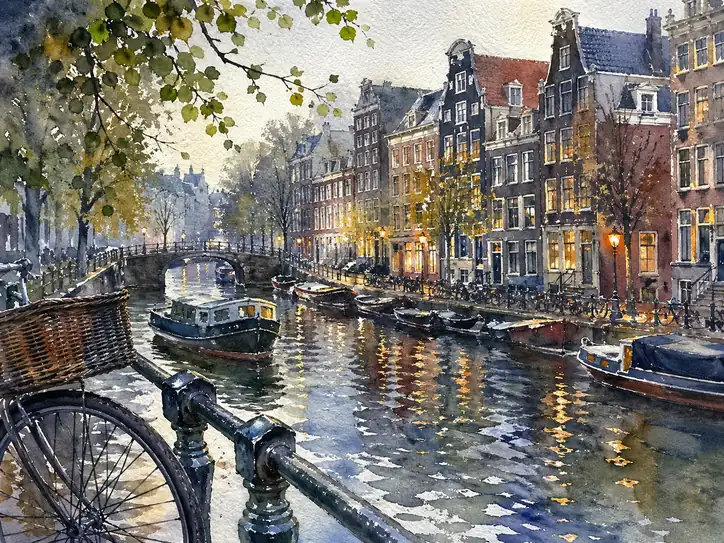 Twilight Echoes on the Canal
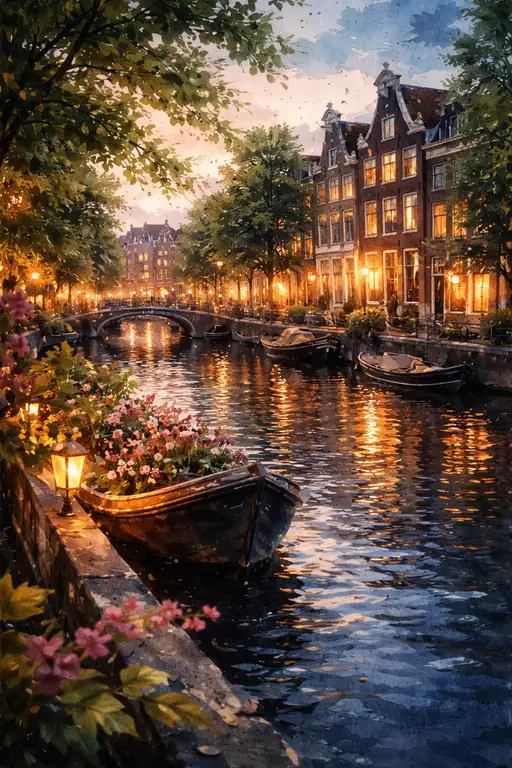 Embrace of the Evening
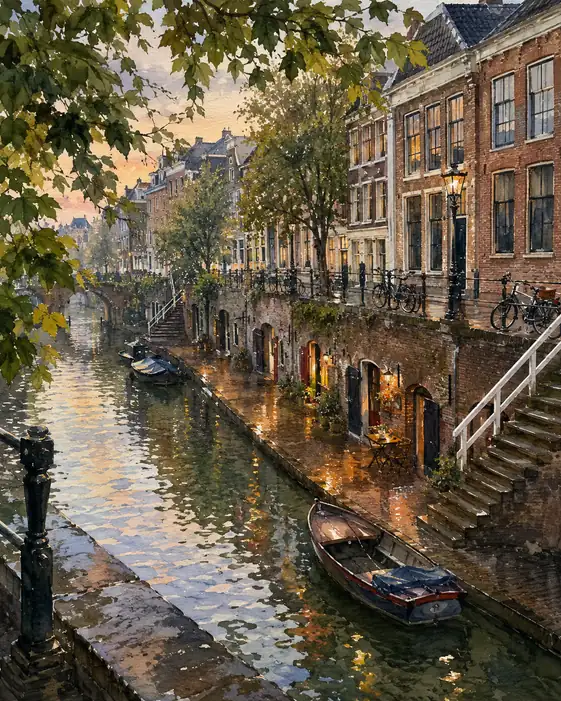 Gilded Dusk on the Ancient Canal
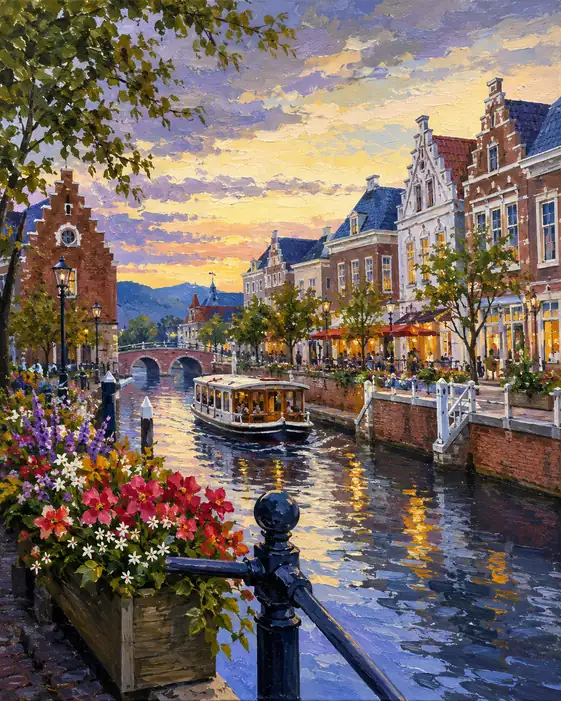 Twilight Glow along the Amsterdam Canal
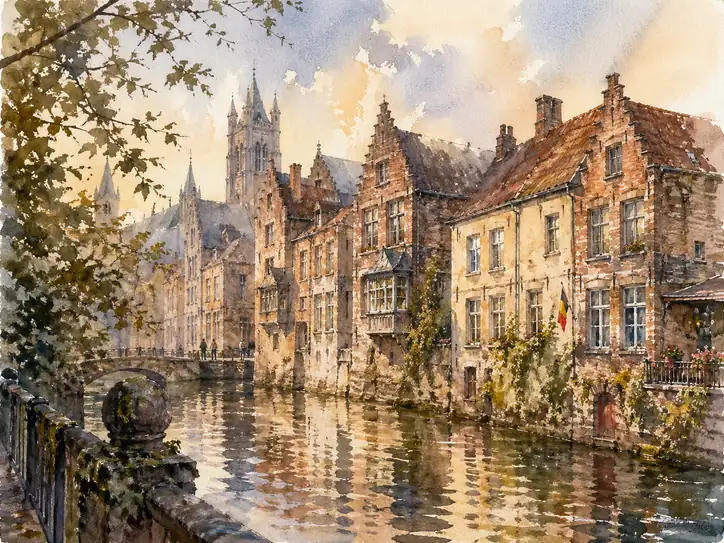 A Bridge to Forgotten Afternoon
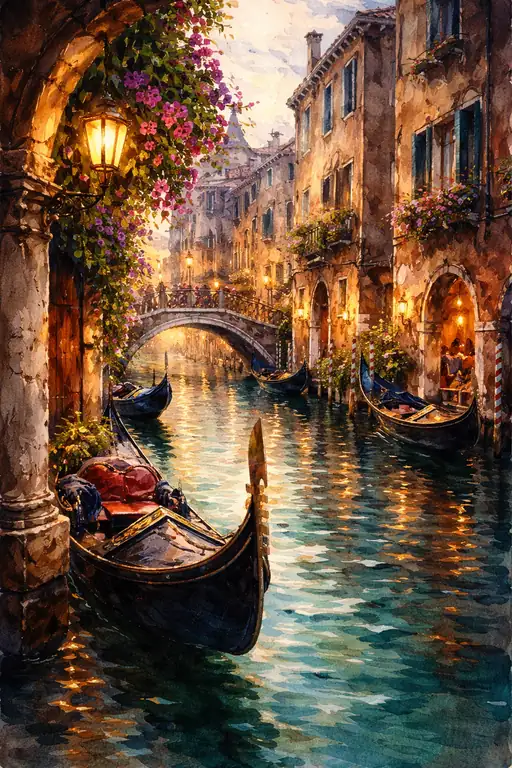 Twilight Rhapsody on the Venetian Canal
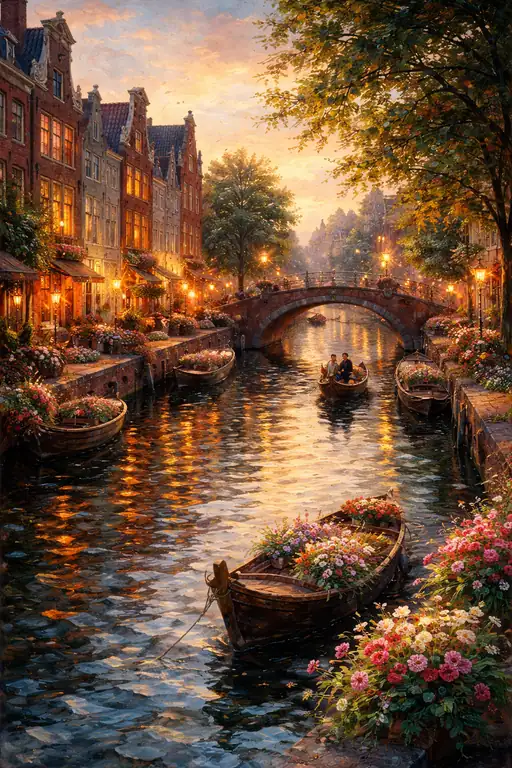 Golden Hour on the Tranquil Waters