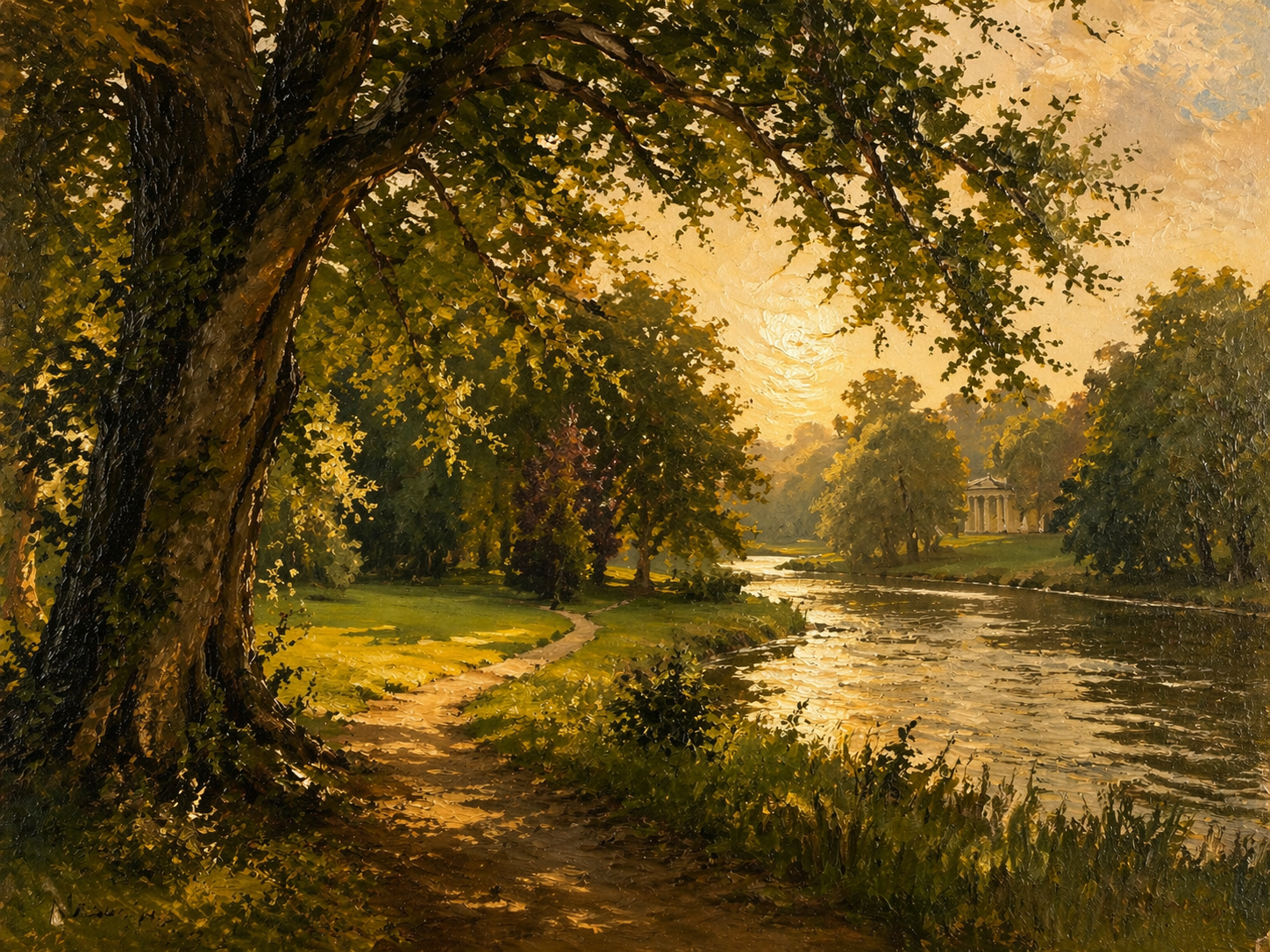
Pastoral Glow by the Classical Pavilion
Critique
1. Introduction This oil painting presents a serene and idyllic landscape, centered on a sweeping bend of a river as it flows through a lush, park-like environment. The composition captures the transition between the untamed natural world and the orderly elegance of classical architecture. Through a masterfully controlled palette of golden and green hues, the artist evokes a sense of timeless tranquility and pastoral beauty. 2. Description In the foreground, a massive, weathered tree trunk dominates the left side, its sprawling canopy framing the upper portion of the canvas. A well-trodden earthen path winds alongside the riverbank, leading the viewer’s eye toward a distant neoclassical pavilion nestled among the trees on the opposite shore. The sky is filled with a soft, hazy light that reflects brightly on the water’s surface, suggesting a late afternoon sun descending toward the horizon. 3. Analysis The artist employs a dynamic diagonal composition, with the river and path creating a sense of depth that draws the eye toward the center of the image. Thick, expressive brushstrokes are used to define the texture of the tree bark and the dense foliage, while more delicate, blended applications capture the atmospheric haze of the distance. Contrast is achieved through the deep shadows of the foreground foliage against the brilliant, reflected light on the river. 4. Interpretation and Evaluation The work brilliantly balances the grandeur of nature with the subtle presence of human intervention, symbolized by the distant pavilion. This creates a romanticized vision of the landscape that emphasizes harmony and order. Technically, the rendering of light as it filters through the leaves and dances on the water is executed with significant skill, demonstrating a deep understanding of natural phenomena and atmospheric perspective. 5. Conclusion Ultimately, the painting serves as a profound meditation on the restorative power of nature and the enduring appeal of the pastoral ideal. By transforming a simple riverside view into a realm of golden light and shadow, the artist invites a meditative engagement from the viewer. The initial impression of a peaceful afternoon evolves into an appreciation for the complex interplay of light, shadow, and architectural history.
Same Subcategory
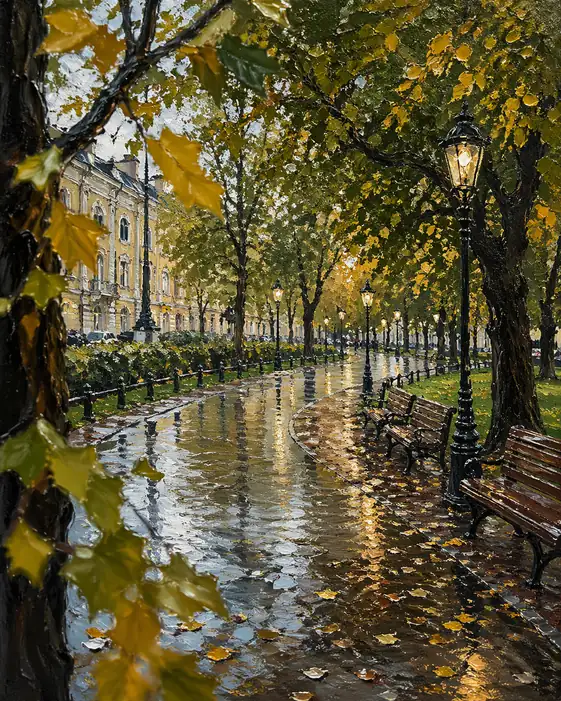 Glimmering Path of Rain
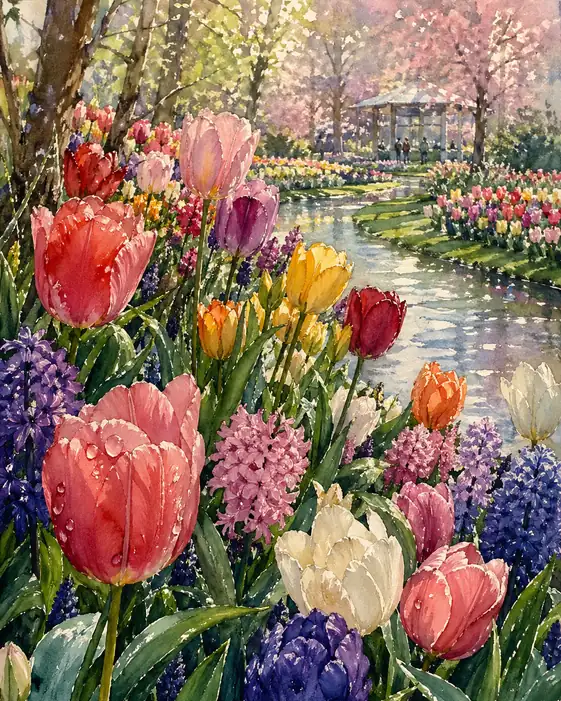 Spring’s Awakening Symphony
Similar Artworks
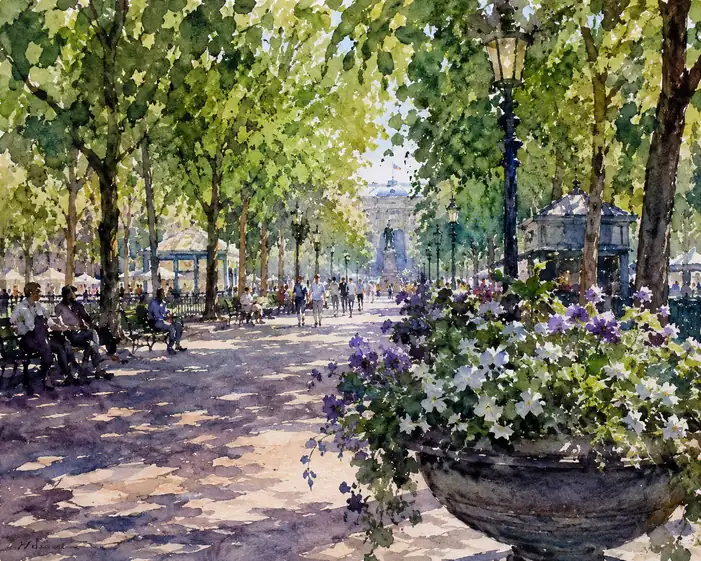 Azure Echoes in the Silent Pavilion Garden
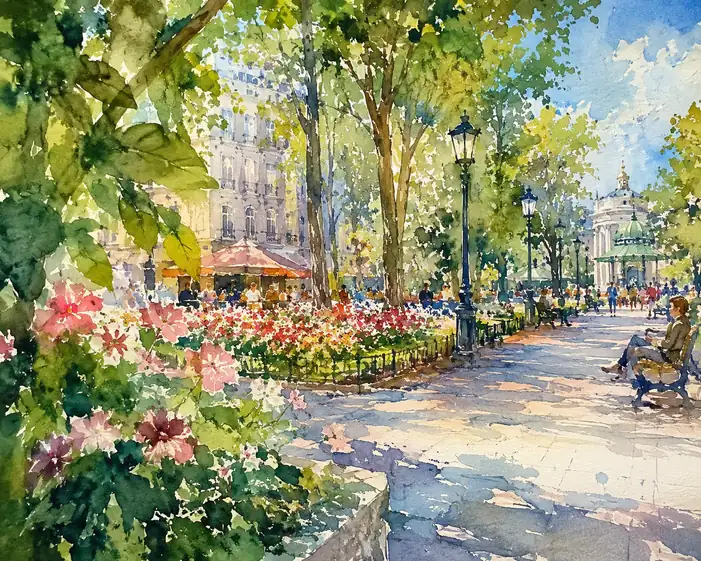 Sunlight and Shadows in the Tuileries Breeze
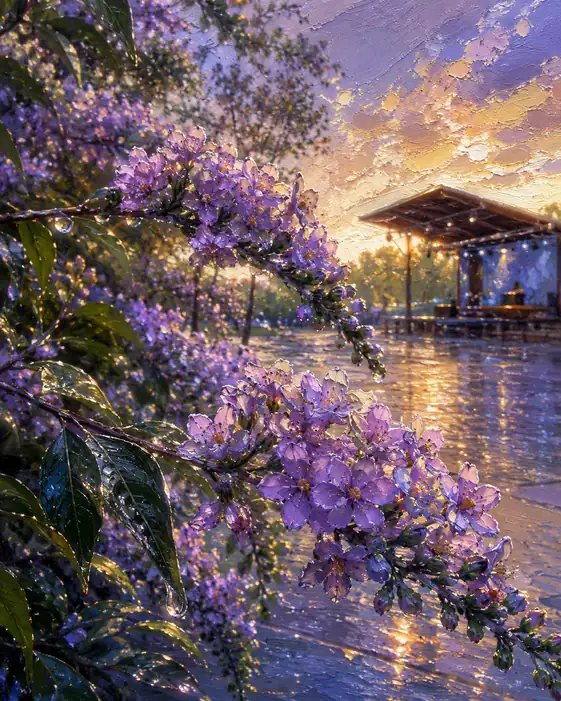 After the Shower, Into Amber Light
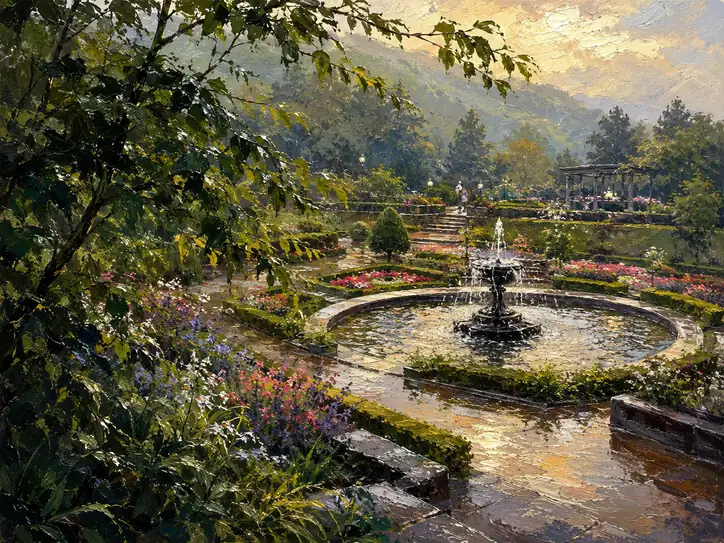 The Fountain's Golden Song
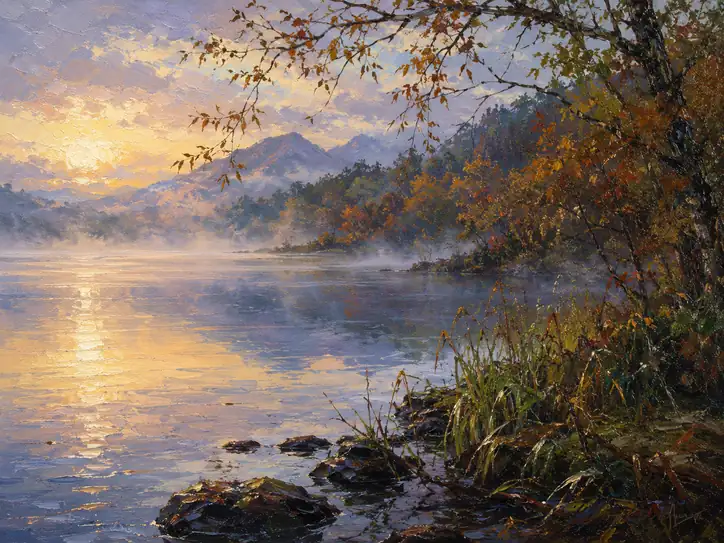 Solitude by the Fog-Bound Pond
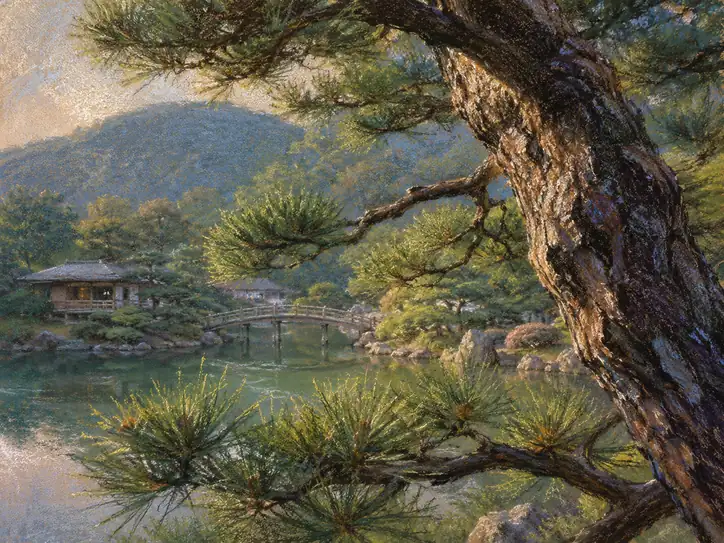 Golden Peace in the Pine-Framed Garden
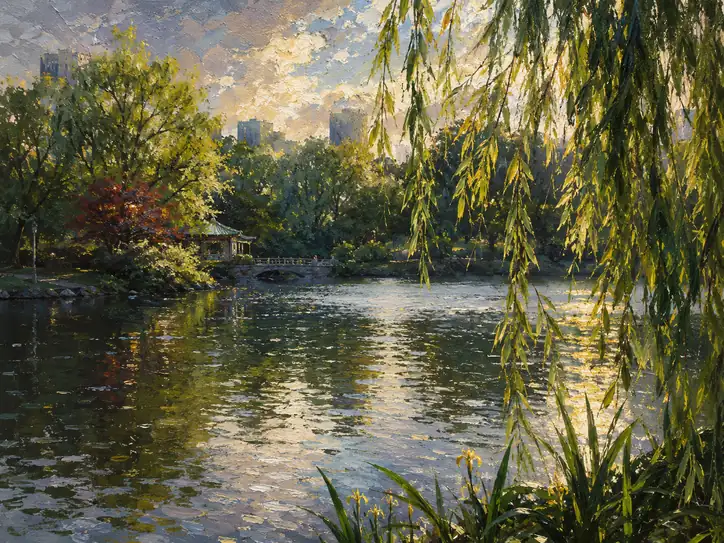 Beyond the Willow's Veil
 Golden Sunlight Dancing on the Rushing Waters
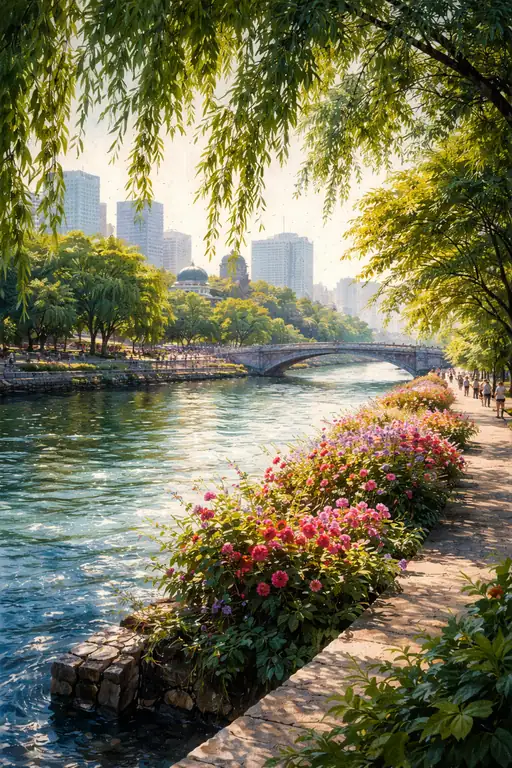 Oasis Amidst the Concrete Forest
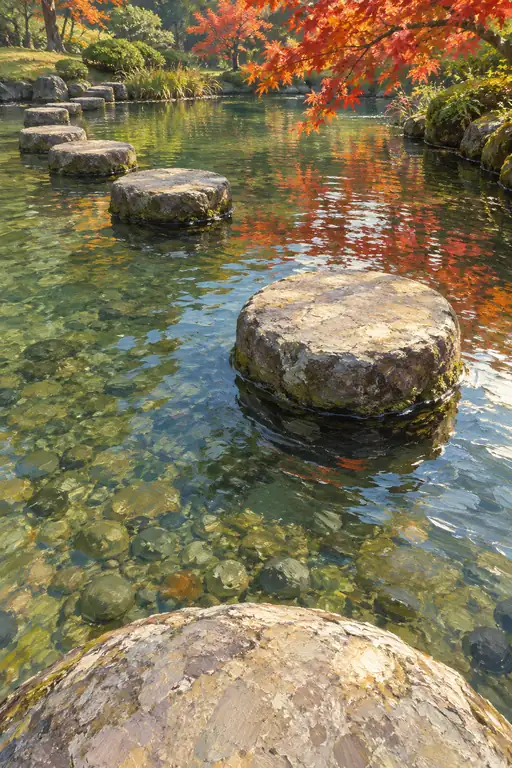 Steps Across the Amber Current