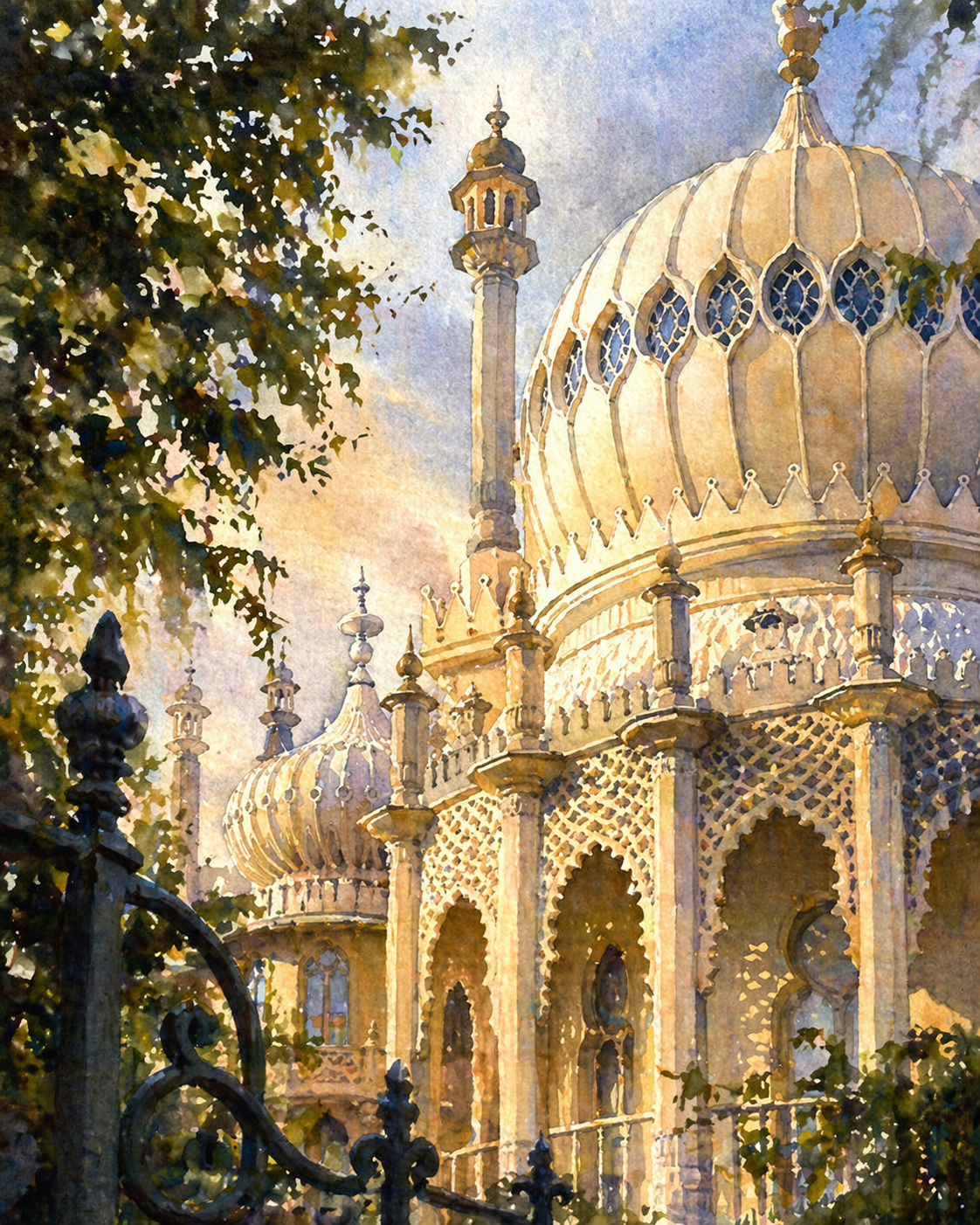
Radiance of the Grand Pavilion
Critique
1. Introduction This architectural watercolor study captures the intricate majesty of a monumental building characterized by its ornate domes and soaring minarets. The composition focuses on the interplay between the grand, light-filled structure and the soft, organic forms of surrounding foliage. Through a delicate application of pigment, the work evokes a sense of historical grandeur and environmental harmony. It serves as a testament to the enduring appeal of complex architectural designs rendered through the fluid and expressive medium of watercolor. 2. Description The painting depicts several pale, cream-colored domes decorated with pointed arched windows and intricate stone carvings. A tall, slender minaret rises prominently in the center, drawing the eye upward toward the diffuse, sunlit sky. In the foreground, an ornate metal fence and dark green leaves provide a structural frame that pushes the building into the mid-ground. The right side of the architecture is bathed in a warm, golden glow, while the left side transitions into softer, cooler shadows. Every surface appears textured with delicate patterns and repetitions typical of Indo-Saracenic styles. 3. Analysis The artist utilizes a combination of broad, luminous washes and fine, detailed strokes to define the building's complex geometry. Warm ochre and sienna tones dominate the sunlit portions of the masonry, contrasted by the cool blues and violets found in the shadowed arches and sky. The use of negative space within the lattice work creates a convincing sense of three-dimensional depth and transparency. Furthermore, the stippled application of green and brown in the trees adds a vibrant, energetic texture that balances the stillness of the stone. 4. Interpretation and Evaluation The work successfully conveys a mood of quiet reverence and exotic elegance through its masterful control of light. The technical execution of the watercolor medium is exemplary, particularly in how the bleeding edges of the foliage contrast with the precise edges of the stone domes. By isolating these specific architectural elements, the piece emphasizes the rhythmic beauty of the repetitive patterns and graceful curves. The overall composition is well-balanced, utilizing the dark foreground elements to ground the ethereal qualities of the luminous architecture. 5. Conclusion This painting offers a sophisticated exploration of how light interacts with multifaceted surfaces to create a dynamic visual experience. The initial impression of overwhelming detail gradually shifts toward an appreciation for the harmonious color palette and atmospheric depth. The final result is a highly polished and evocative study that celebrates the intersection of human craftsmanship and natural light. It remains a compelling example of classical architectural rendering that prioritizes both technical accuracy and artistic mood.
Same Subcategory
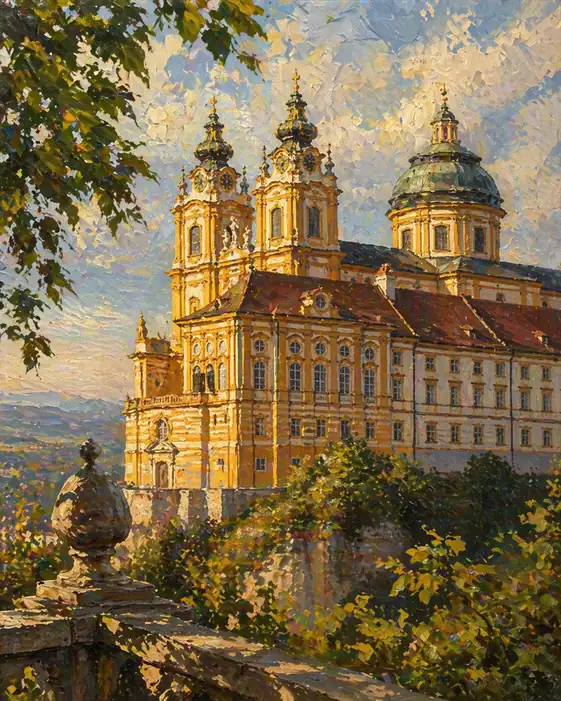 Ascending to the Golden Heights
Similar Artworks
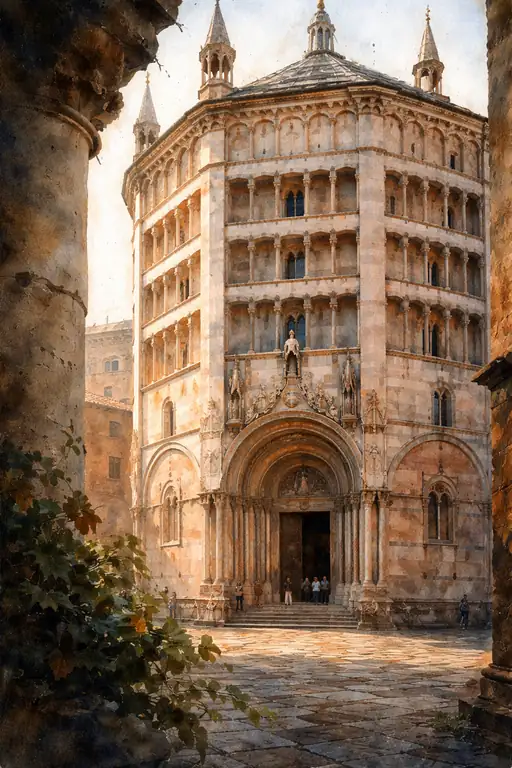 The Golden Sanctum: A Solitary Journey Through Time
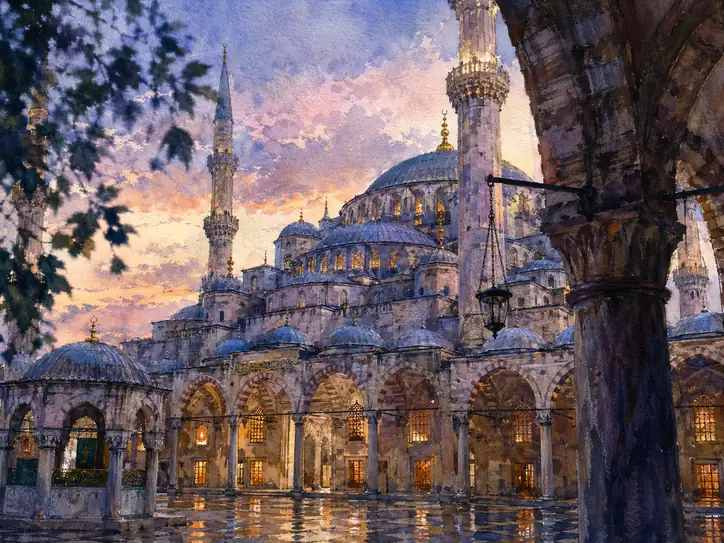 Twilight Prayer: When the Sacred Sky Whispers
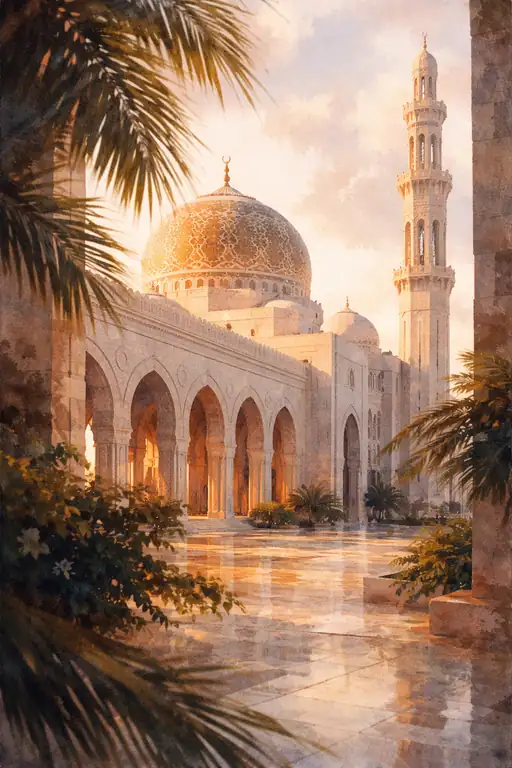 Mirage of the Amber Domes
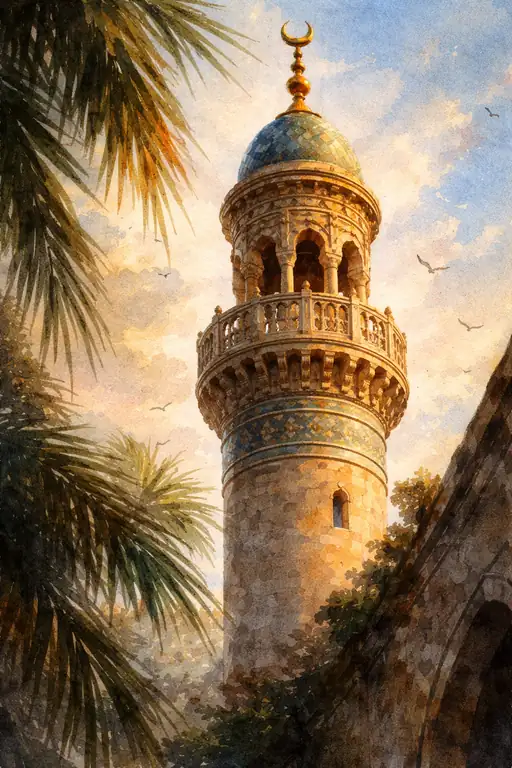 Golden Hour at the Minaret
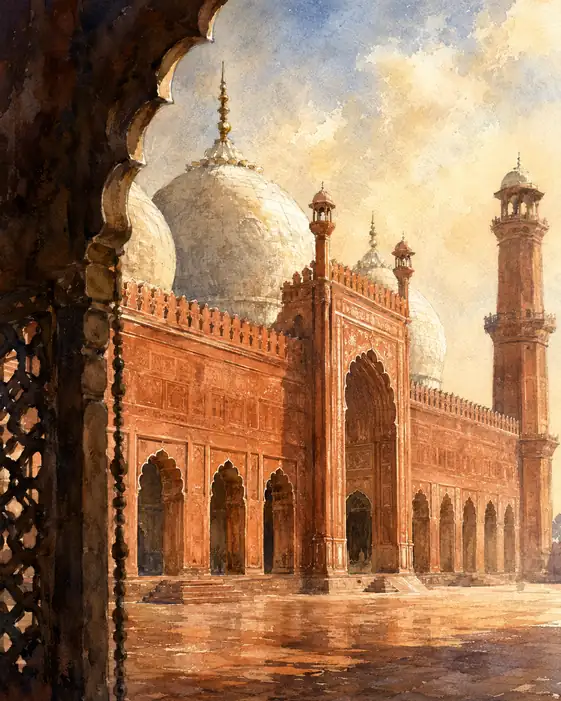 Where the Light Prays
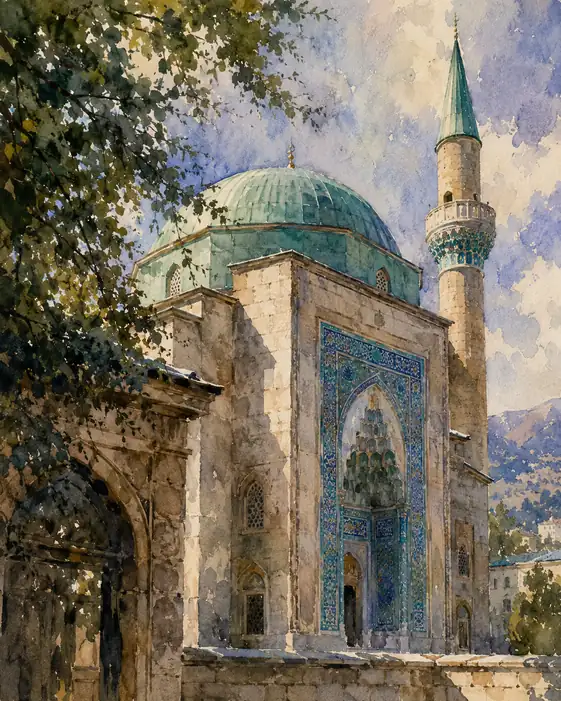 Sanctuary of the Emerald Dome
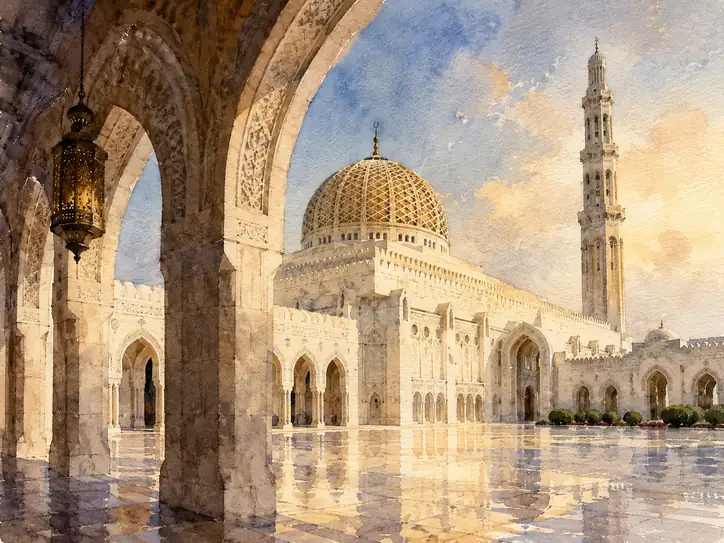 Reflections of Heavenly Silence
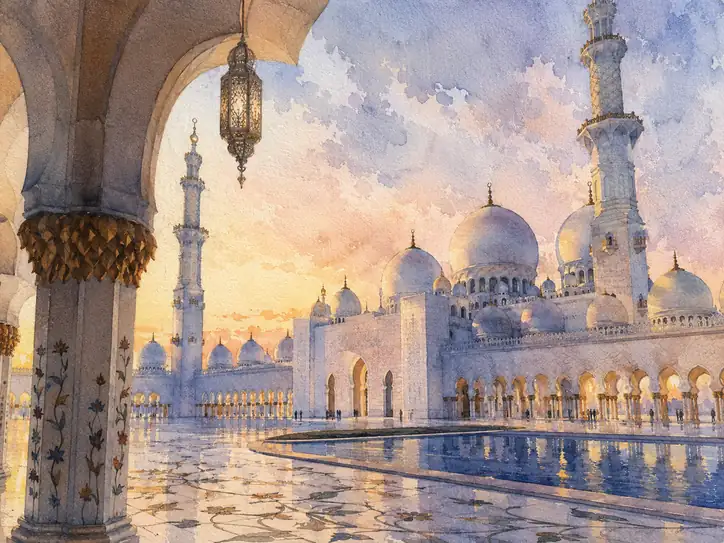 Tranquility in the Golden Dusk
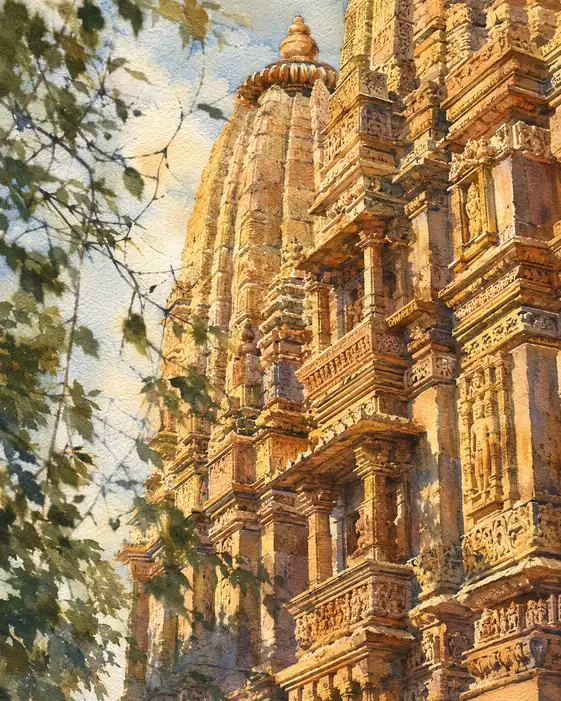 The Golden Spire's Soliloquy
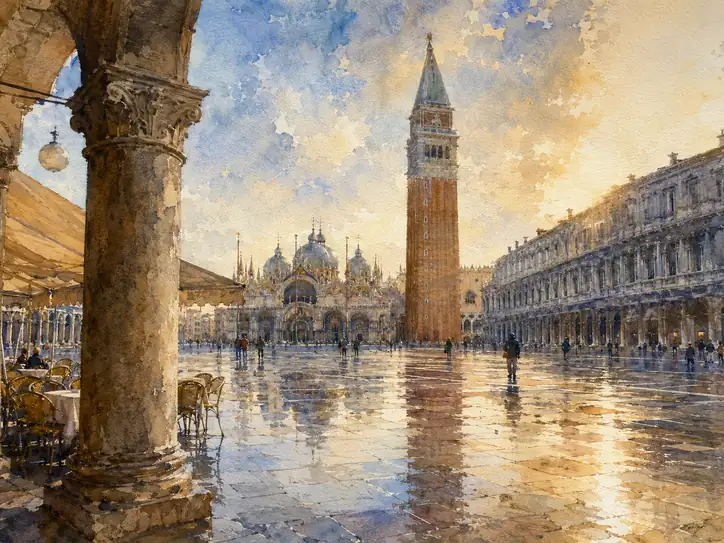 Venice Unveiled: The Mirror of Piazza San Marco