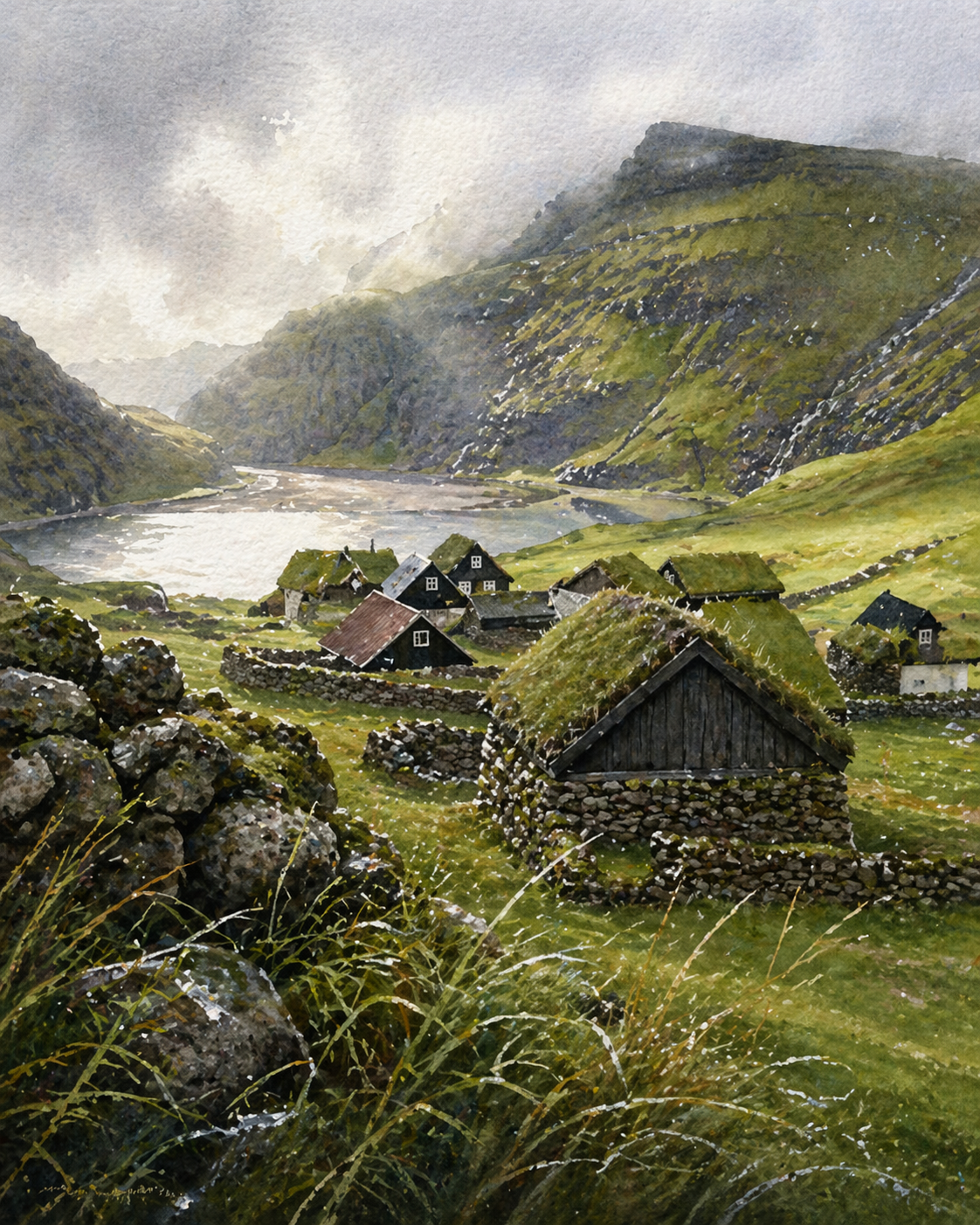
Valley of Quiet Time
Critique
1. Introduction This watercolor painting depicts a secluded traditional settlement nestled in a deep valley, rendered with delicate and sensitive brushwork. The stone-walled houses, capped with thick turf roofs, stand in harmony with the surrounding rugged landscape, creating a scene that evokes the mystical atmosphere of a remote Nordic fjord. The artist expertly manages the transparency and fluid nature of the medium to capture the cool, moisture-laden air and the soft diffusion of light. It is a work that transports the viewer to a place of profound silence and natural beauty. 2. Description The foreground and middle ground are dominated by several dwellings built from fieldstone, their roofs covered in a lush layer of grass that blends seamlessly into the hillsides. In the immediate foreground, detailed renderings of rocky outcrops and wild grasses provide a tactile entrance into the scene. Beyond the village, a calm body of water reflects the overcast sky, bordered by steep, verdant mountains that rise dramatically toward the clouds. The sky is filled with a soft, hazy light, with wisps of mist clinging to the emerald slopes, adding a sense of atmospheric depth to the entire composition. 3. Analysis The formal success of the piece lies in the effective contrast between the crisp, detailed textures of the stonework and the soft washes used for the background elements. The artist employs controlled brushstrokes to define the individual stones and blades of grass in the foreground, while using wet-in-wet techniques to create the smooth, receding planes of the mountains. The color palette is restricted to a harmonious range of earthy grays and vibrant, mossy greens, creating a unified tonal environment. The zig-zagging patterns of the stone walls lead the eye through the composition, ensuring a balanced and stable visual structure. 4. Interpretation and Evaluation This artwork explores the theme of human resilience and integration within a dominant natural environment. The small scale of the houses relative to the towering peaks highlights the vastness of the wilderness and the slow passage of geological time. Technically, the rendering of the organic textures—specifically the moss-covered roofs and the weathered stone—is highly proficient for the watercolor medium. The painting possesses a lyrical quality that eschews melodrama in favor of a quiet, steady observation. It is a highly successful interpretation of a specific landscape, capturing its unique spirit through refined technique. 5. Conclusion In conclusion, the painting is a masterful example of atmospheric landscape art that honors the quiet dignity of rural life. While the initial impression is one of idyllic solitude, a closer look reveals the rigorous technical discipline required to evoke such a complex sense of place. The artist's sensitive touch allows the viewer to feel the dampness of the grass and the coolness of the mountain air. It ultimately provides a meditative experience, reminding us of the enduring beauty found in the most remote corners of the world, rendered with a timeless elegance and profound respect for the subject.
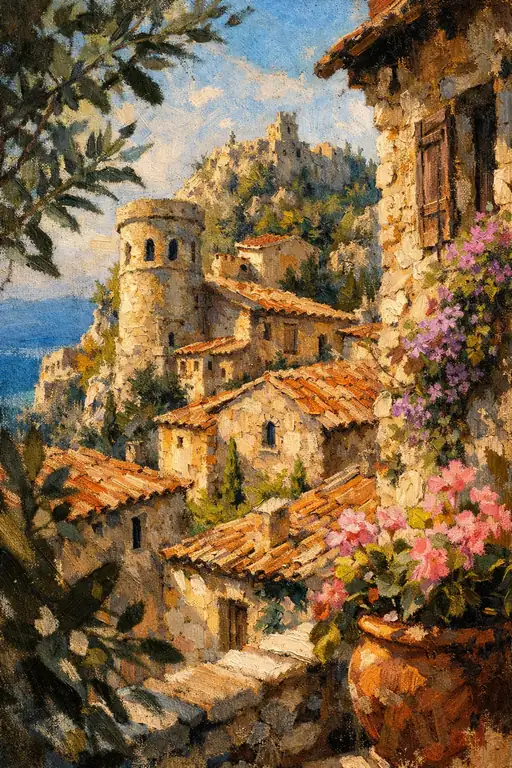 Sunlit Echoes on the Mediterranean Stone
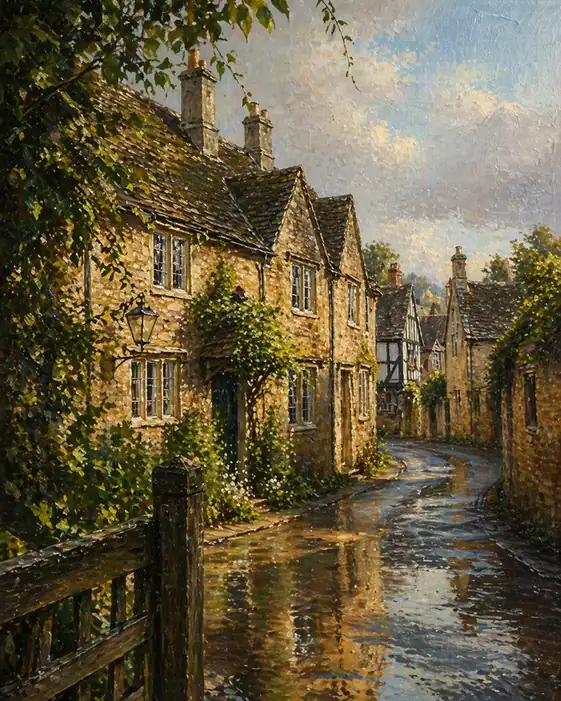 Rainy Cotswolds Street
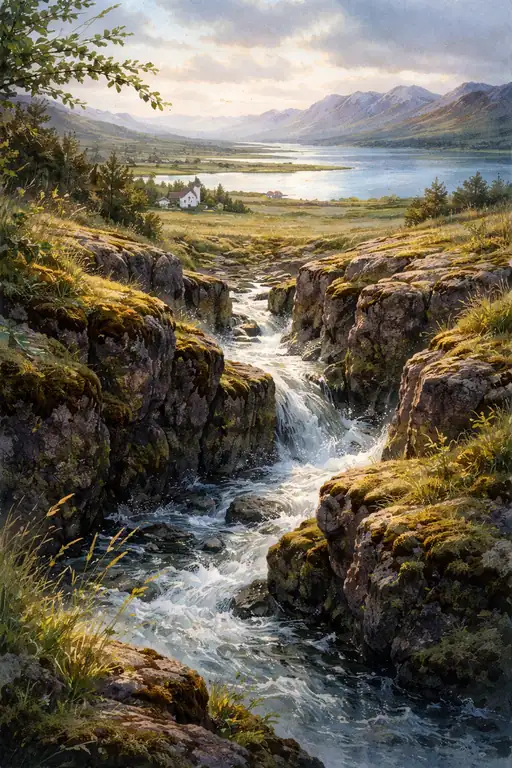 Whispers of the Emerald Valley
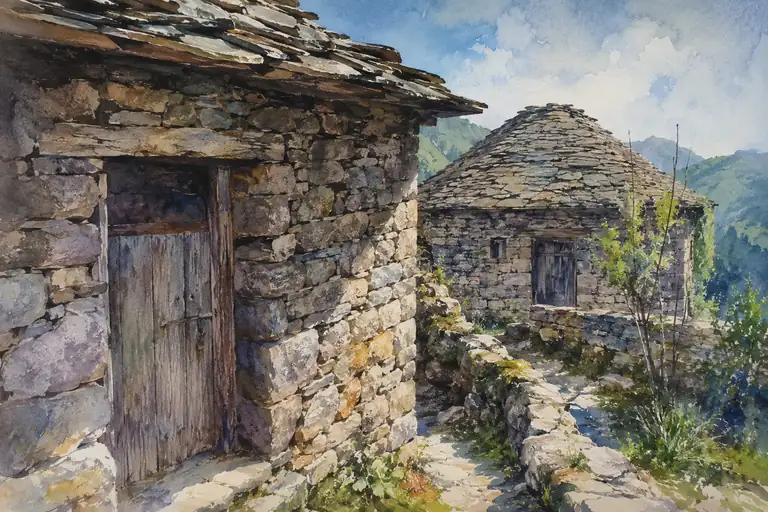 Echoes of a Simple Life
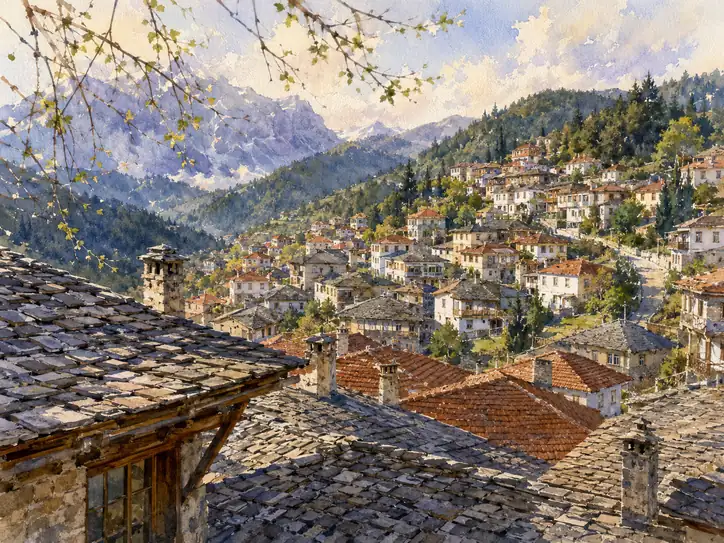 Warmth Beneath the Silent Peaks
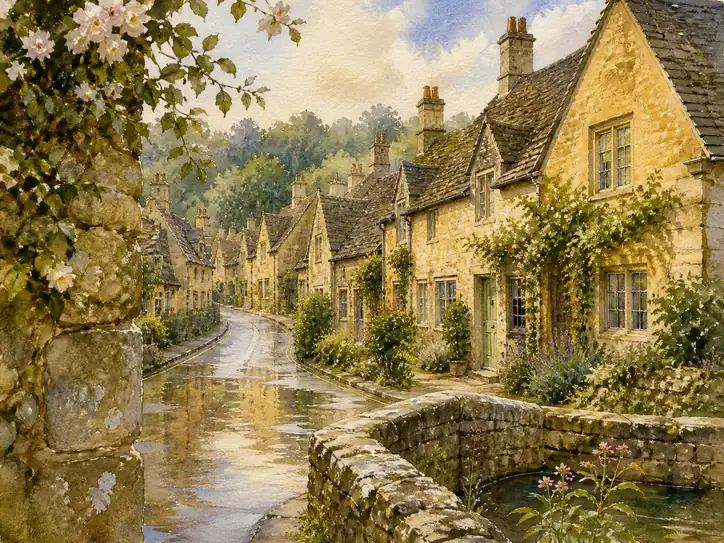 Where the Rain Whispers Peace
 Through the Lattice of Time
 Shelter of the Ancient Boulder
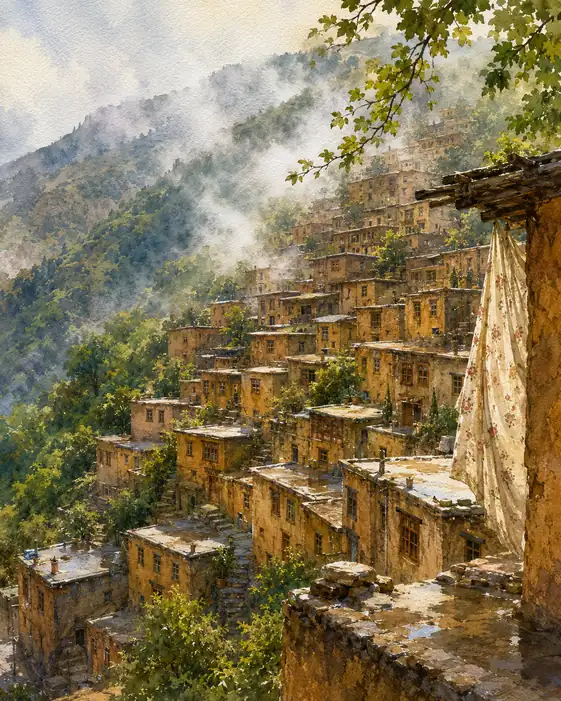 Where the Mountains Breathe
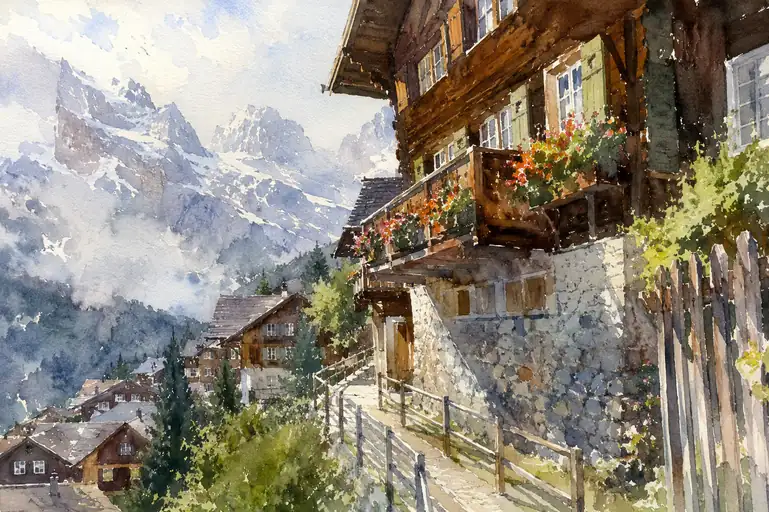 A Path to the Sky’s Embrace
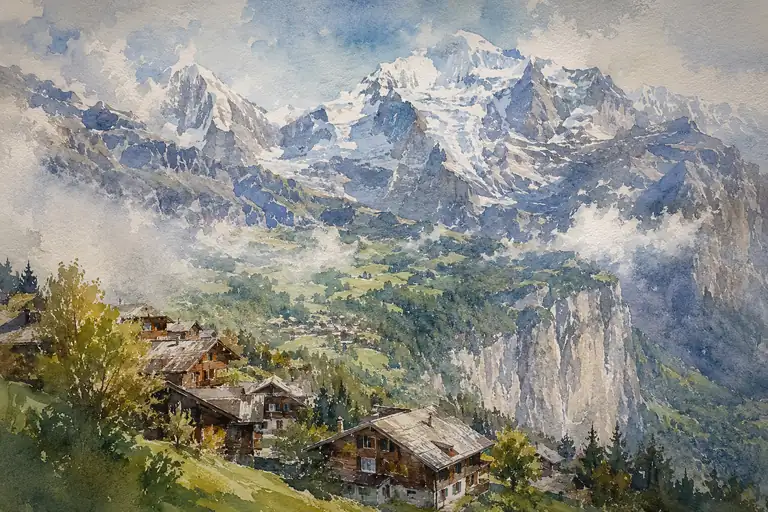 Silence of the High Valleys
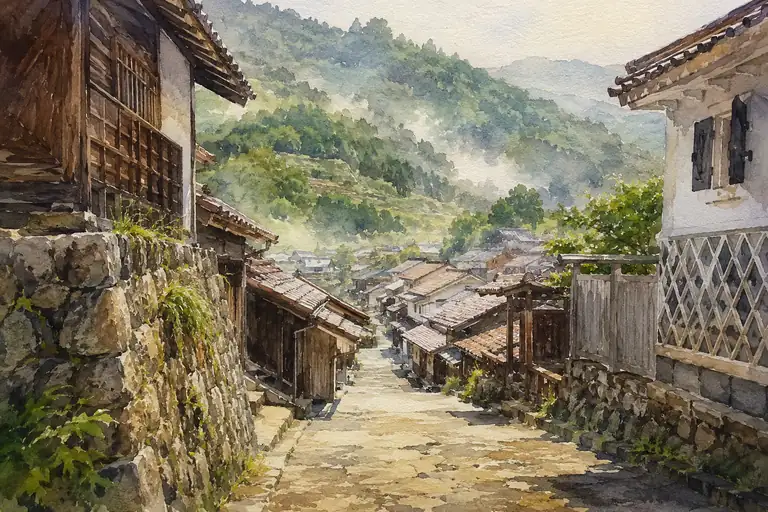 Echoes of the Ancient Path