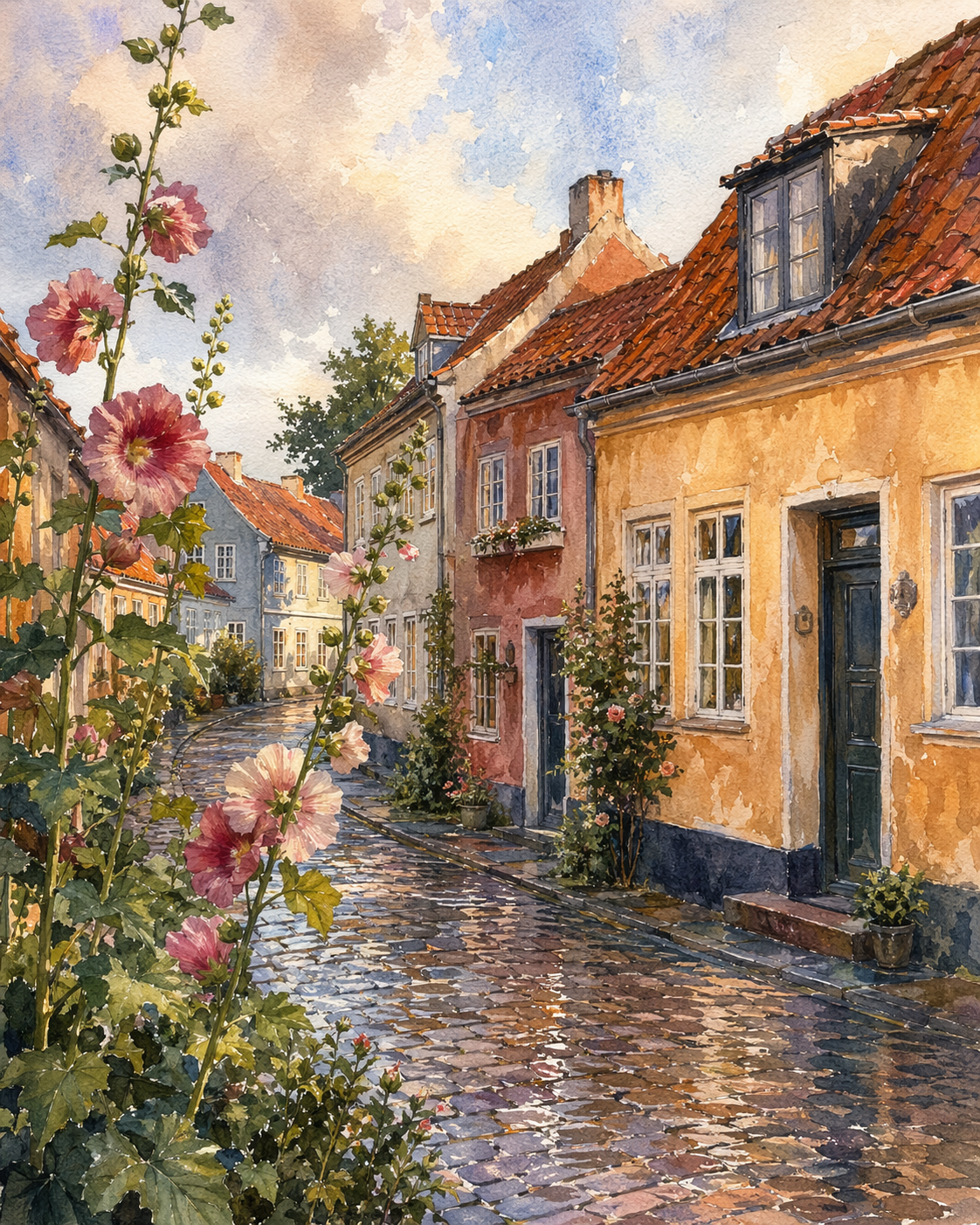
After the Rain, A Pastel Melody
Critique
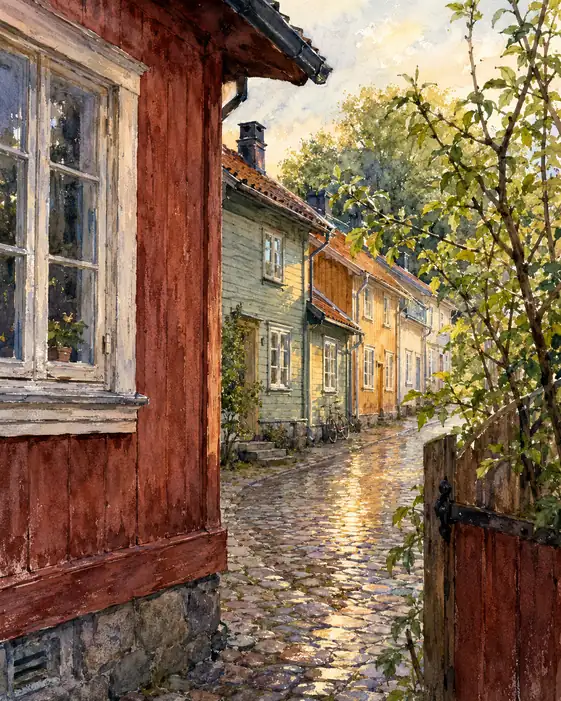
1. Introduction This watercolor painting beautifully captures the serene ambiance of an old European street glistening in the aftermath of rain. The artwork utilizes the medium's inherent transparency to convey a delicate sense of light and moisture, transforming an ordinary urban scene into a poetic narrative. By juxtaposing historical architecture with the ephemeral beauty of blooming flowers, the artist creates a composition that is both nostalgic and vibrantly alive. 2. Description On the left side of the foreground, tall, elegant hollyhocks with soft pink blossoms stretch upward, providing a vertical anchor and a splash of color. To the right, a row of charming multi-colored houses—painted in shades of yellow, terracotta, and soft blue—lines a curving cobblestone path that leads the viewer’s eye into the distance. The wet stones of the street reflect the bright sky and the surrounding facades, creating a complex mosaic of light and color on the ground. The sky above is filled with soft, luminous clouds, suggesting a gentle transition in the weather. 3. Analysis The color palette is characterized by a harmonious blend of warm earth tones in the buildings and cool, reflective tints in the shadows and street. The vibrant pink of the flowers serves as a focal point, its brightness enhanced by the surrounding green foliage and the neutral tones of the cobblestones. Technical mastery is evident in the artist's ability to balance broad, atmospheric washes with precise linework for architectural details and window frames. The repetitive, rhythmic pattern of the cobblestones provides a staccato contrast to the smooth, vertical planes of the houses. 4. Interpretation and Evaluation The primary achievement of this piece lies in its evocative representation of atmosphere and the sensory experience of a rain-washed environment. Through the nuanced handling of reflections on the pavement, the artist demonstrates a sophisticated understanding of how light interacts with varying surfaces. The work suggests a quiet reverence for the beauty found in daily life, elevating a simple streetcorner to a subject of profound artistic depth. This successful integration of natural and man-made elements highlights the artist’s distinctive voice and technical skill. 5. Conclusion A close inspection of the work reveals a rich tapestry of subtle details that reflect the fleeting qualities of light and air. The painting effectively captures the emotional resonance of a peaceful afternoon, inviting the viewer to linger in its quiet, sun-drenched space. The initial impression of charm and clarity matures into a lasting appreciation for the artist's compositional integrity and sensitive use of color, marking the work as an exceptional contribution to modern watercolor landscape painting.
Same Subcategory
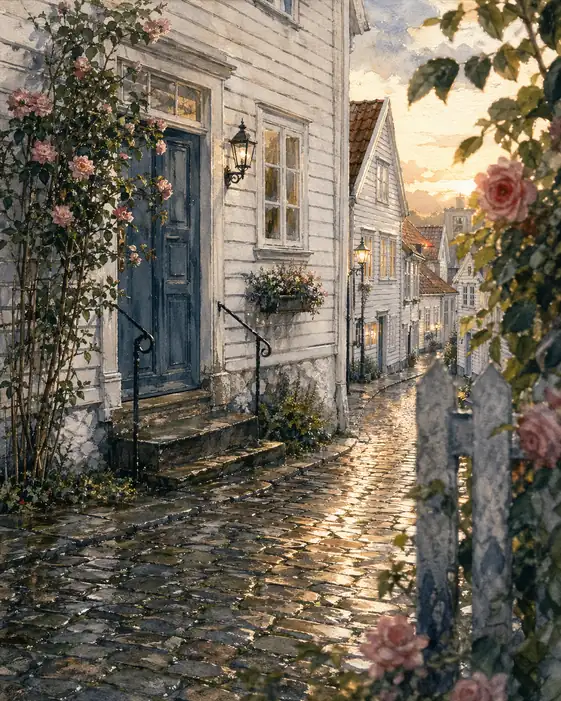 Golden Hour Reflections
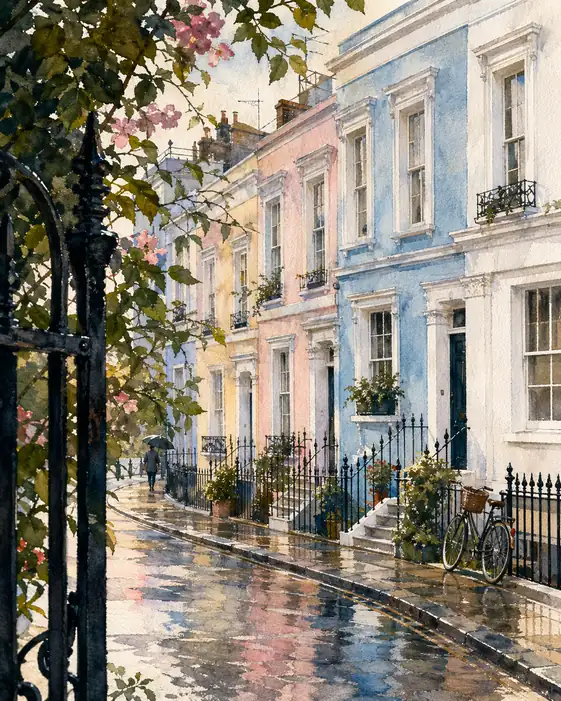 Rain-Washed Reflections of the City
Similar Artworks
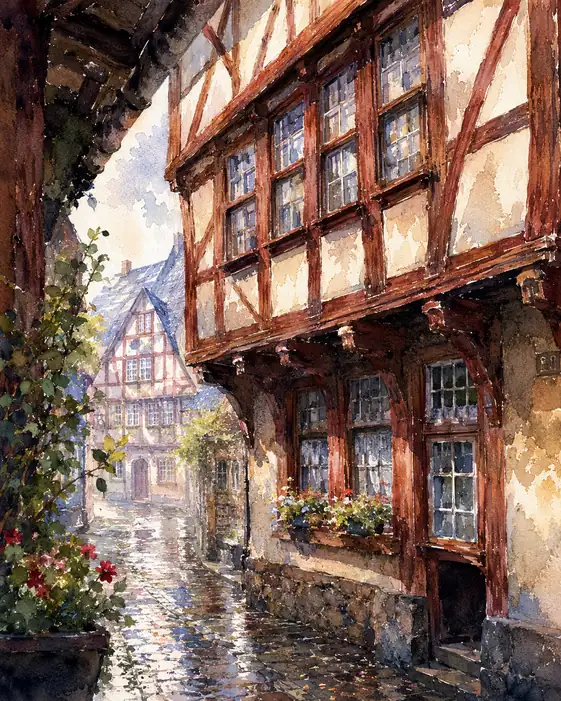 Quiet Whispers of the Rain-Slicked Path
 Whispers of the Clock Tower After Rain
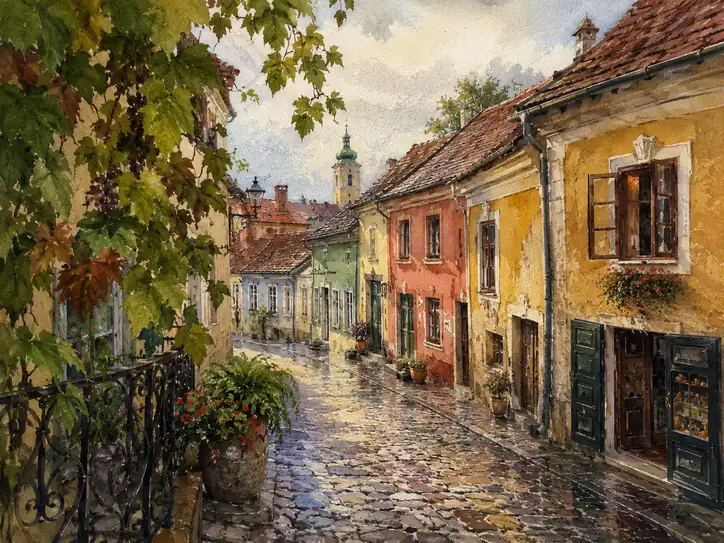 Luminous Path through the Painted Town
 A Path Paved with Twilight
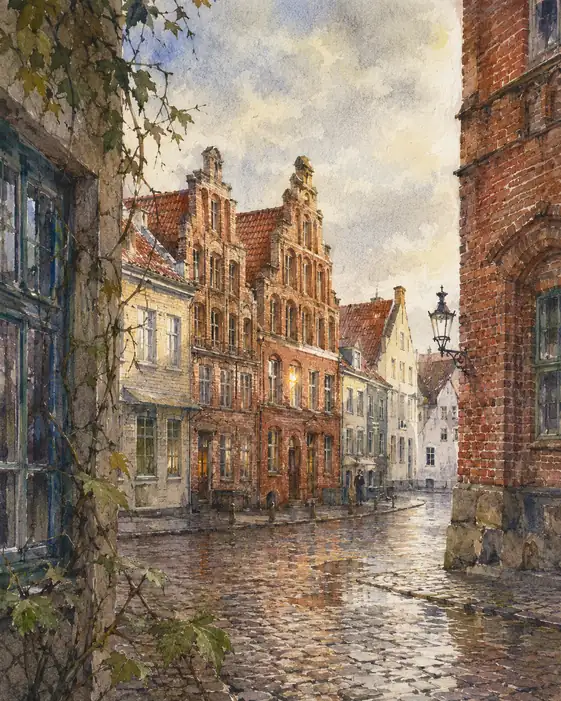 Silent Footsteps on Rain-Washed Stone
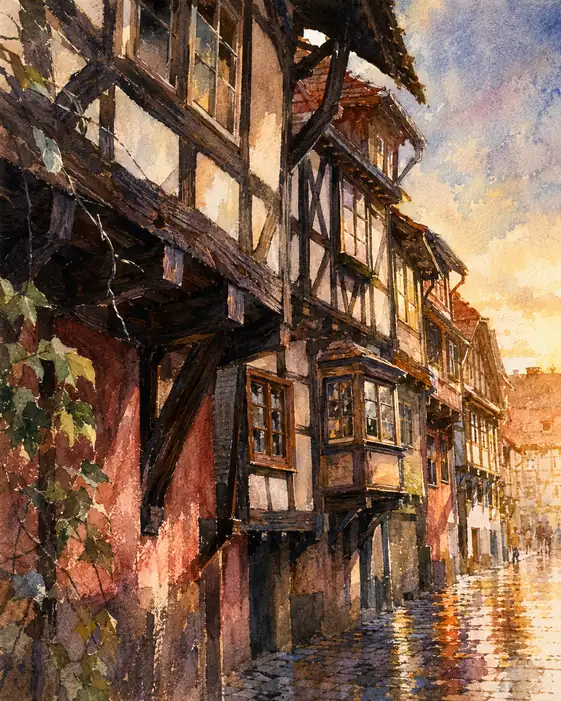 Golden Dusk on Ancient Beams
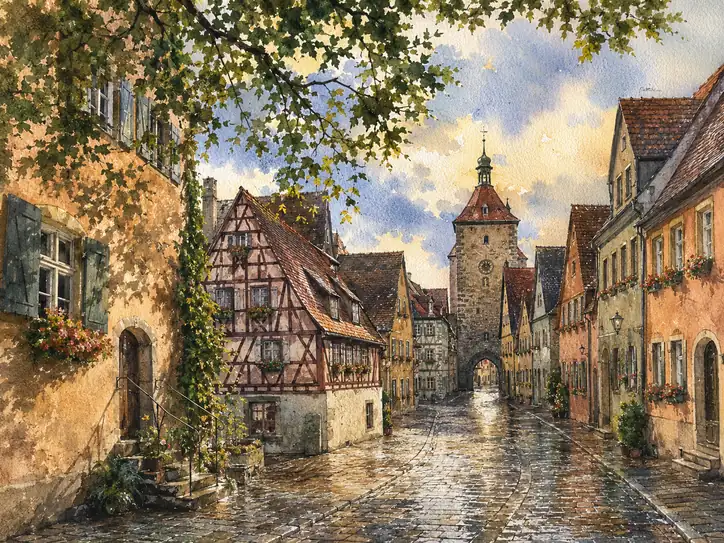 The Whispering Road After Rain
 The Golden Return
 Beyond the Blue Window
 Echoes Toward the Gothic Spire