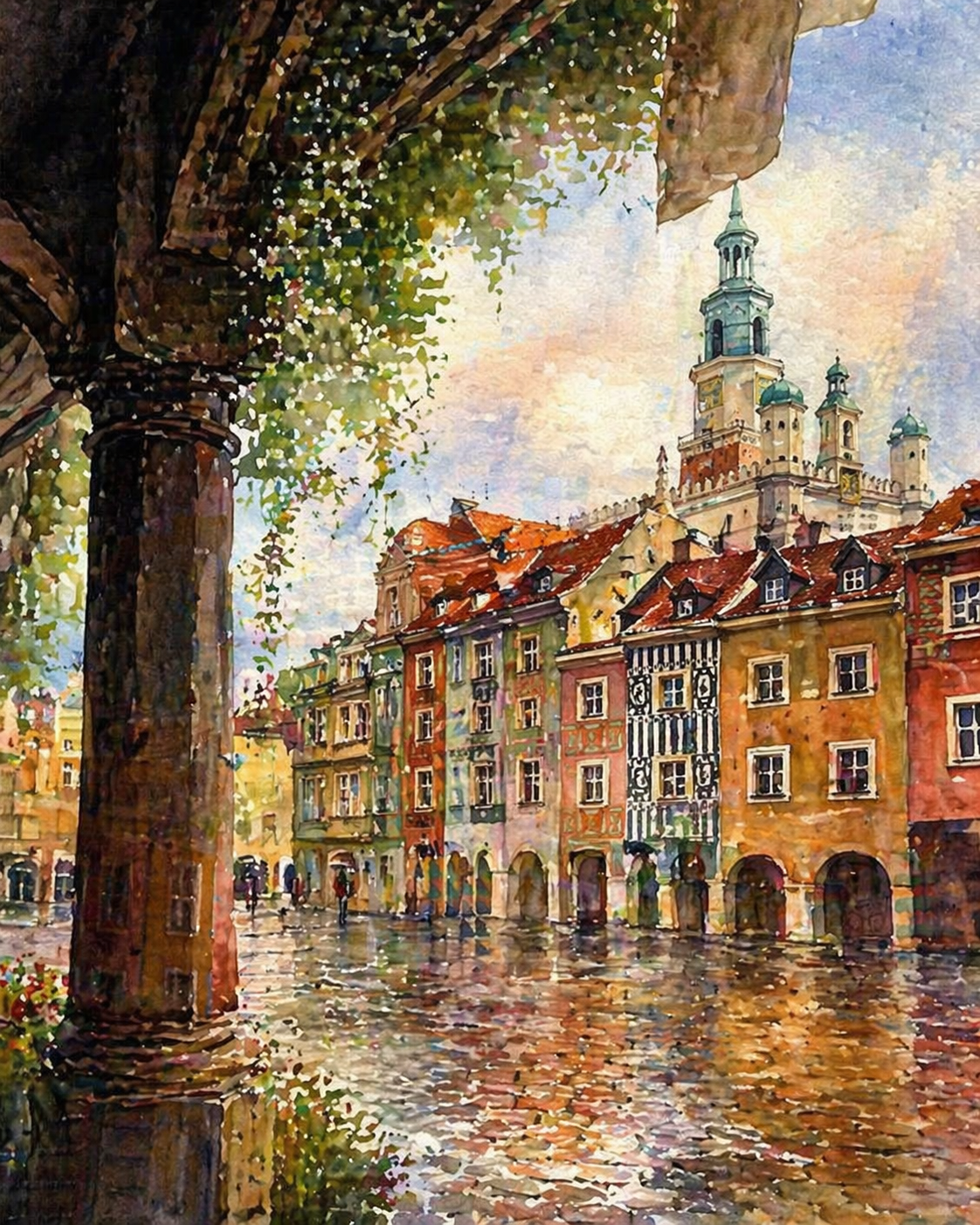
The Archway to Sunlit Yesterdays
Critique
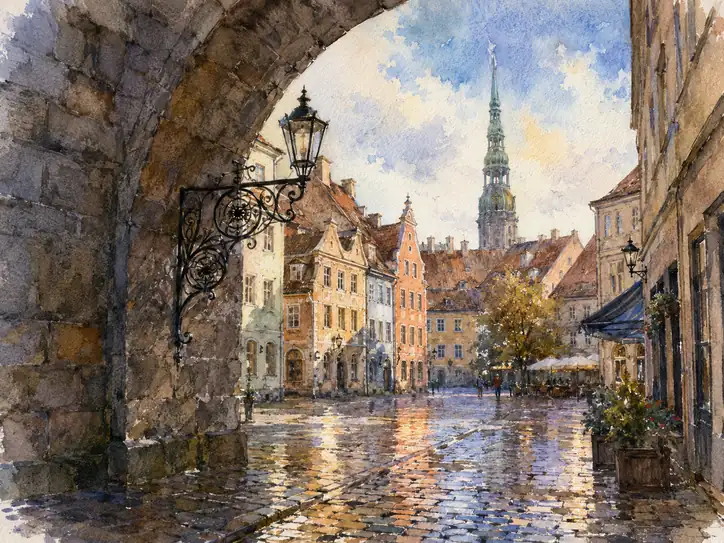
1. Introduction This watercolor work depicts a vibrant European town square viewed from the shadow of a grand architectural archway. The composition utilizes a framing technique, placing the viewer within a dark, shaded foreground to look out upon the sunlit, colorful buildings of the plaza. This introduction establishes a sense of discovery and provides a layered perspective on the relationship between ancient stone structures and the bustling life of the city. 2. Description The painting features a row of multi-colored houses with red-tiled roofs, situated along a wet, shimmering ground that reflects the diverse palette of the facades. In the background, a tall, ornate clock tower with green domes rises above the residential structures into a sky filled with soft, textured clouds. The left side is dominated by a heavy, weathered stone column and cascading green foliage, which creates a sharp contrast in both value and detail. 3. Analysis Technically, the artist employs a wide range of watercolor methods, from detailed dry-brushing on the building windows to broad, fluid washes on the reflective ground. The color temperature shifts from the cool, deep umbers of the shaded arch to the warm, exuberant oranges and ochres of the center square. This balance is maintained by the atmospheric gray-blue of the sky, which helps to unify the high-contrast elements of the composition. 4. Interpretation and Evaluation The work can be interpreted as a study of resilience and the historical layers that define a city's character. The evaluation of the piece focuses on the artist's ability to capture the reflective quality of the damp pavement, which effectively doubles the visual interest of the architecture. The sophisticated use of negative space within the archway demonstrates a strong understanding of structural depth and compositional balance, marking it as a highly accomplished urban landscape. 5. Conclusion In conclusion, the painting offers a poetic and technically proficient view of a historic urban center. While the initial focus may be on the cheerful variety of the colorful buildings, the concluding impression is one of architectural harmony and spatial depth. This piece successfully transports the viewer into a moment of quiet observation, capturing the unique light and atmosphere that follow a brief afternoon rain.
Same Subcategory
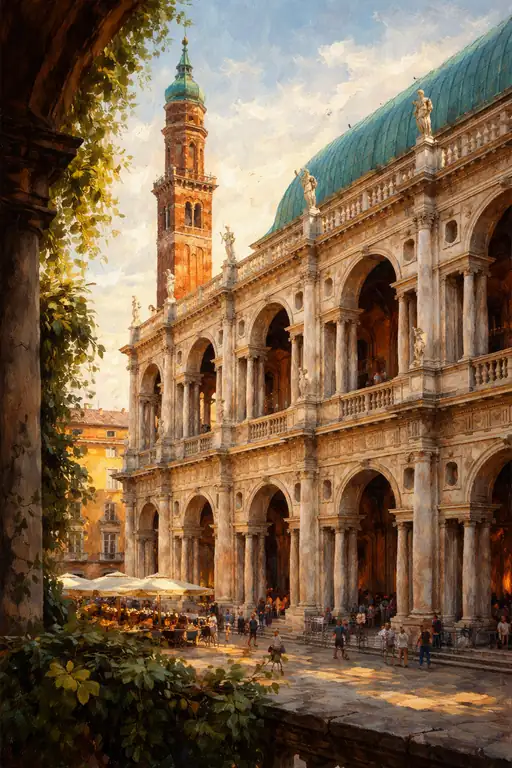 Life Beneath the Turquoise Dome
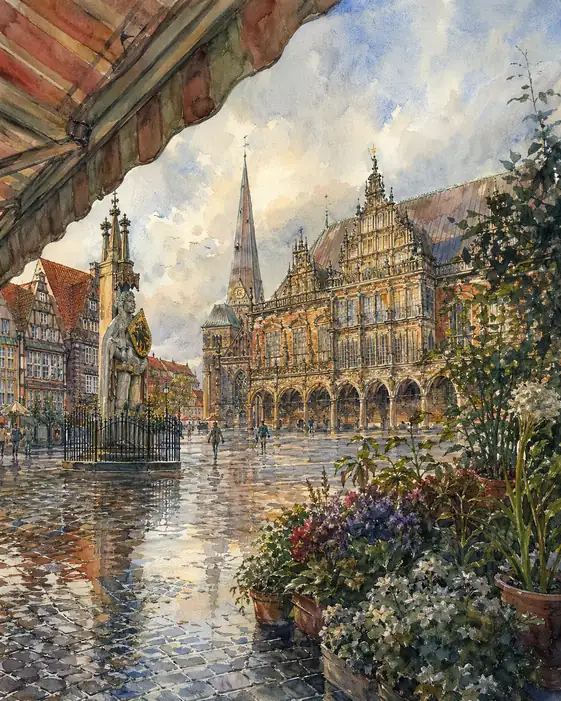 Reflections of the Gothic Square
Similar Artworks
 Whispers of the Rain-Washed Stones
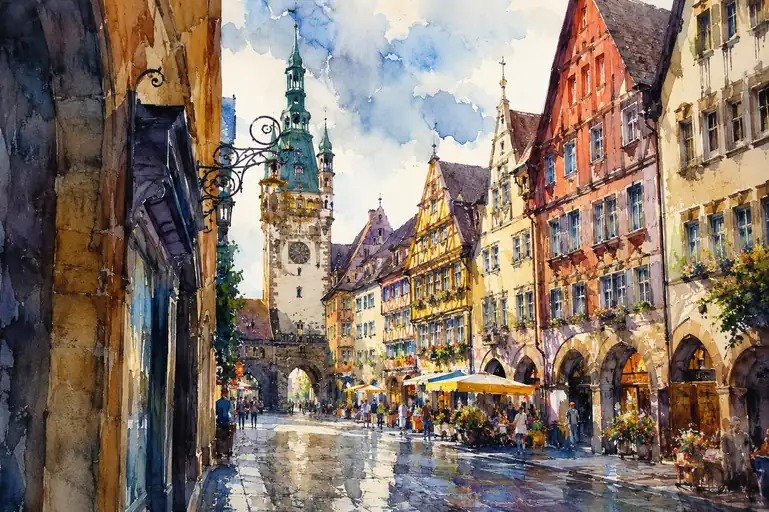 The Timeless Pulse of the Sunlit Plaza
 Echoes on the Sunlit Cobblestones
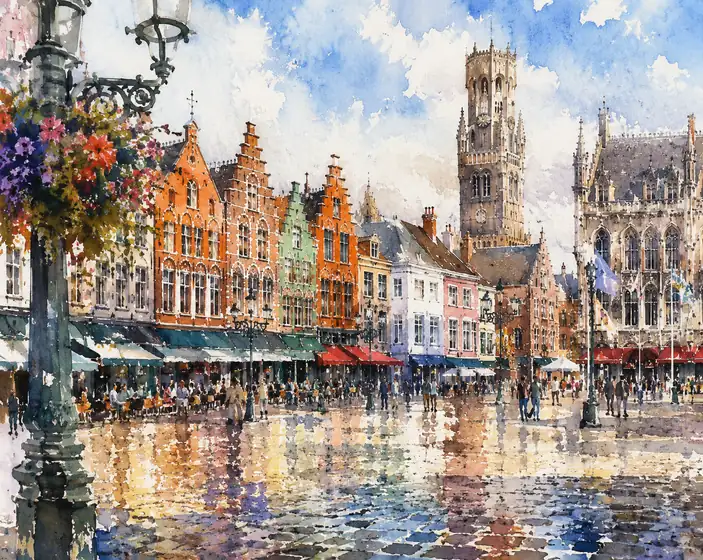 After the Rain, a Canvas of Light
 The Gateway to Twilight Serenity
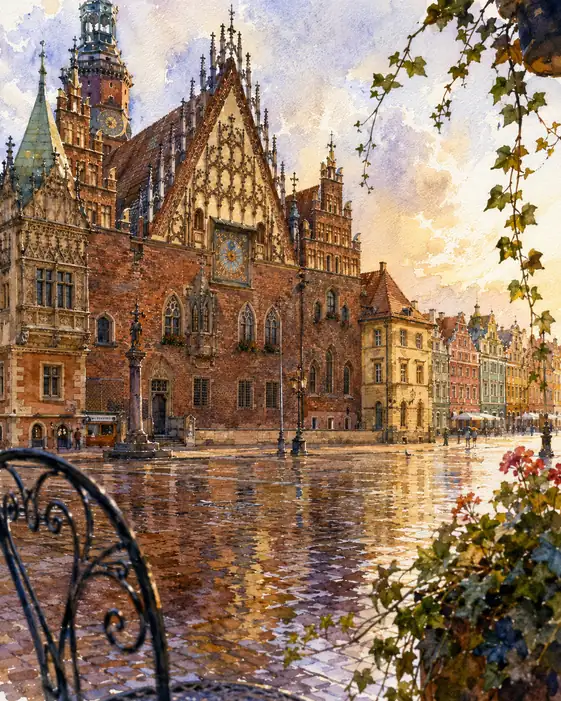 Glisten of History
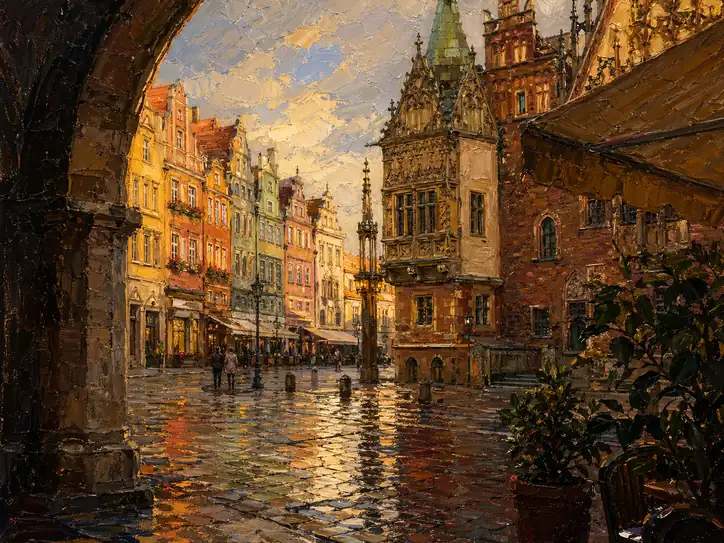 Golden Tears of the Old Town
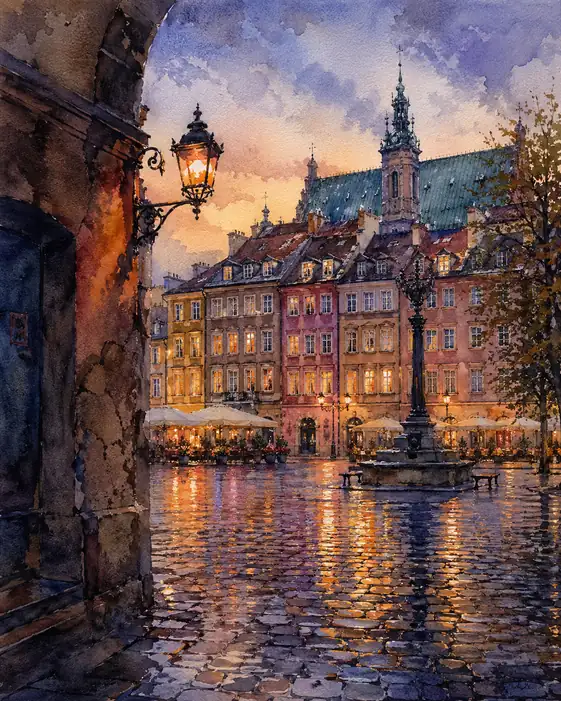 Raindrops and Nostalgic Reflections
 Glistening Rain in the Eternal City
 Luminous Path through the Painted Town