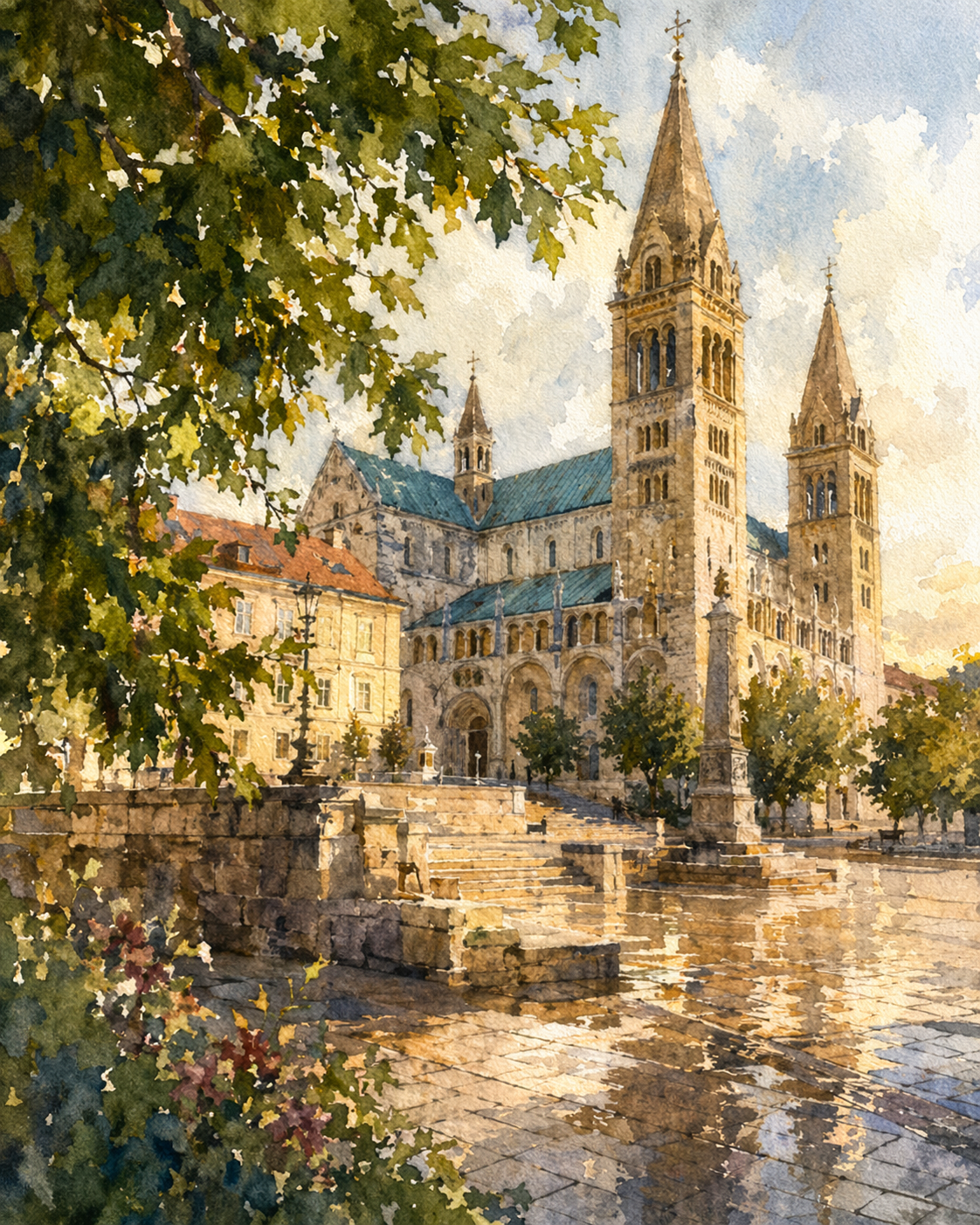
Golden Cathedral After the Rain
Critique
1. Introduction This watercolor painting captures a magnificent cathedral complex bathed in golden sunlight, reflecting upon a rain-washed plaza. The artwork creates a powerful harmony between the enduring stone architecture and the vibrant, living presence of a large foreground tree. Utilizing the inherent transparency of the medium, the piece invites the viewer into a serene old-world atmosphere where light and moisture dance across a historic urban space. 2. Description Stretching from the center to the upper right is a Romanesque-style cathedral featuring multiple soaring spires and teal-colored roofs. The stone facades glow with warm amber tones under the afternoon sun, which contrasts beautifully with the cool shadows of the arches. In the foreground, the wet cobblestones of the square act as a mirror, creating soft, fluid reflections of the towers and sky. A lush, leafy tree on the left provides a darker tonal anchor and frames the sprawling architectural view. 3. Analysis The composition is built on a series of vertical elements, where the spires of the cathedral echo the upright trunk and cascading branches of the tree. The artist masterfully employs wet-on-wet watercolor techniques to render the ground reflections, giving the static scene a sense of shimmering vitality. High-key highlights on the stone edges contrast with deep, layered washes in the shaded areas, providing a tactile sense of weathered masonry. This careful tonal management establishes a clear three-dimensional structure and atmospheric depth. 4. Interpretation and Evaluation This work serves as a meditation on the interplay between monumental human structures and the ephemeral qualities of nature and light. The technical proficiency is outstanding, particularly in the way the artist balances rigorous architectural detail with spontaneous, fluid passages in the square. By treating light not just as a physical reality but as a transformative element, the painting achieves a sense of spiritual purity. The piece holds significant aesthetic value for its ability to combine historical reverence with a fresh, contemporary sensibility. 5. Conclusion The deliberate brushwork and sophisticated understanding of light effectively convey the timeless beauty of this sacred site. While the initial impression is one of grand architectural scale, the viewer is ultimately captivated by the subtle, poetic details of the reflections and the play of shadows. This painting stands as a exceptional demonstration of watercolor’s potential, offering a profound sense of tranquility and a renewed appreciation for the delicate balance of structure and atmosphere.
Same Subcategory
 Autumn's Golden Frame: A Cathedral's Grace
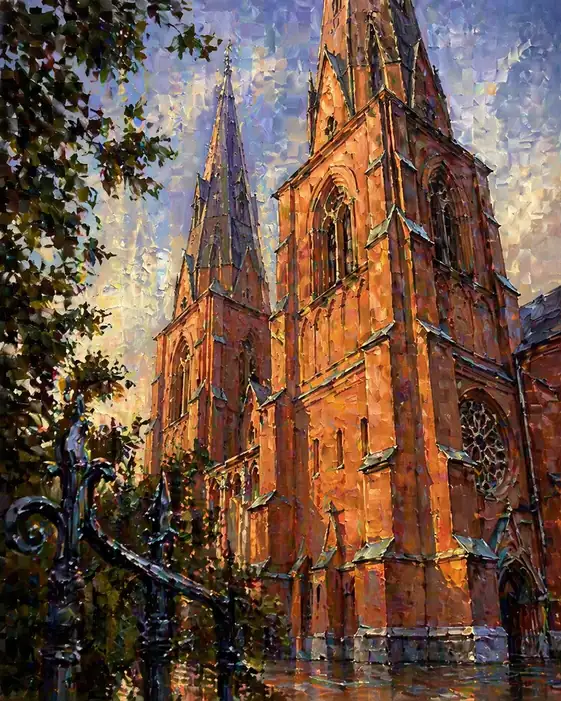 Dancing Bricks at Twilight
Similar Artworks
 Cathedral Reflections in the Rain
 Path to the Golden Twilight
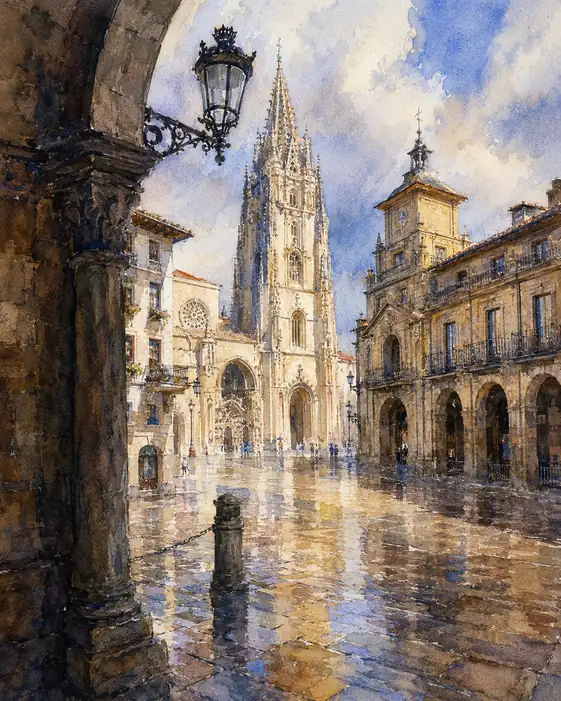 Sanctuary of the Rain-Slicked Stone
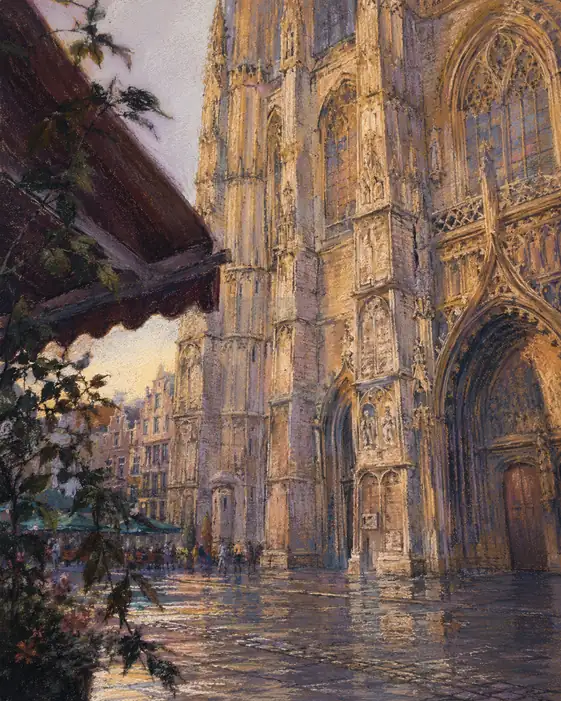 Golden Reverie at the Cathedral Gate
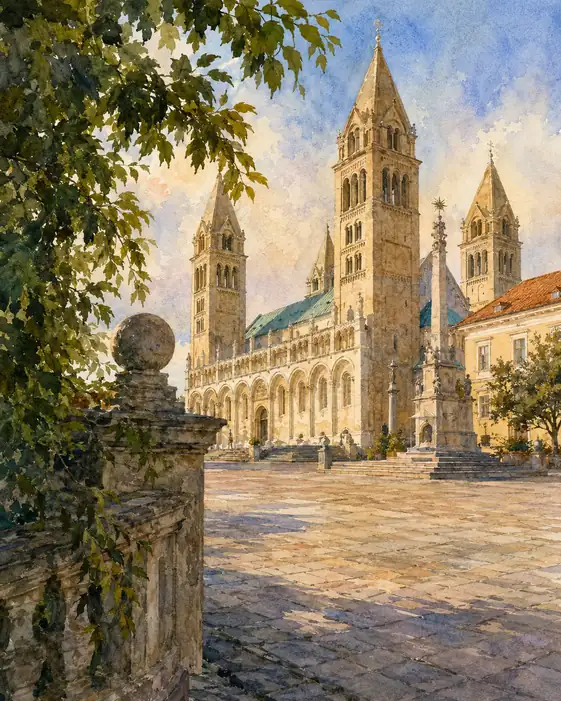 Golden Silence of the Cathedral Square
 Golden Silence of the Square
 Symphony of the Burning Twilight
 The Glow of Silent Devotion
 Echoes of Rain on Golden Stone
 Reflections of the Sacred Spires