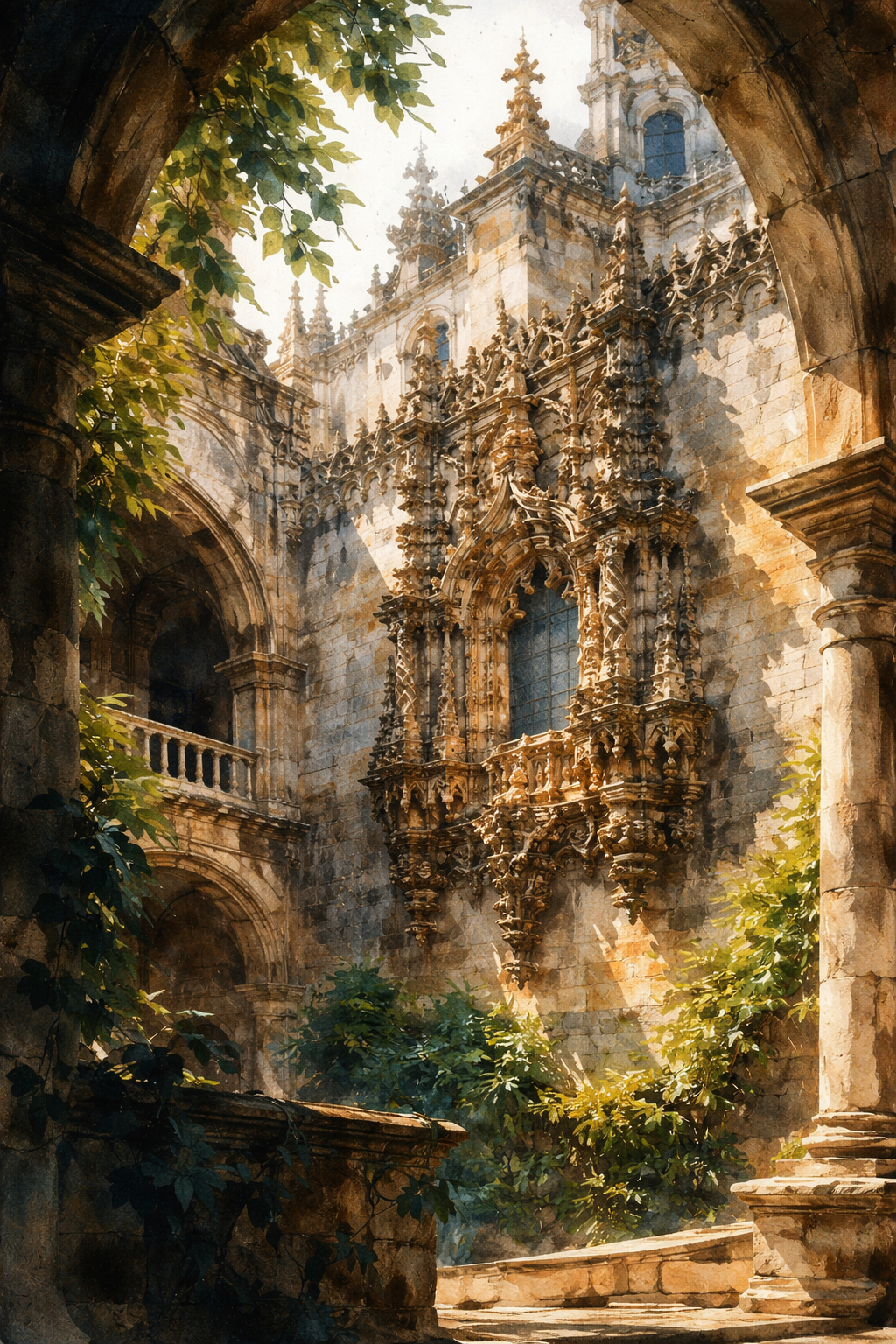
Lace of Stone Kissed by the Sun
Critique
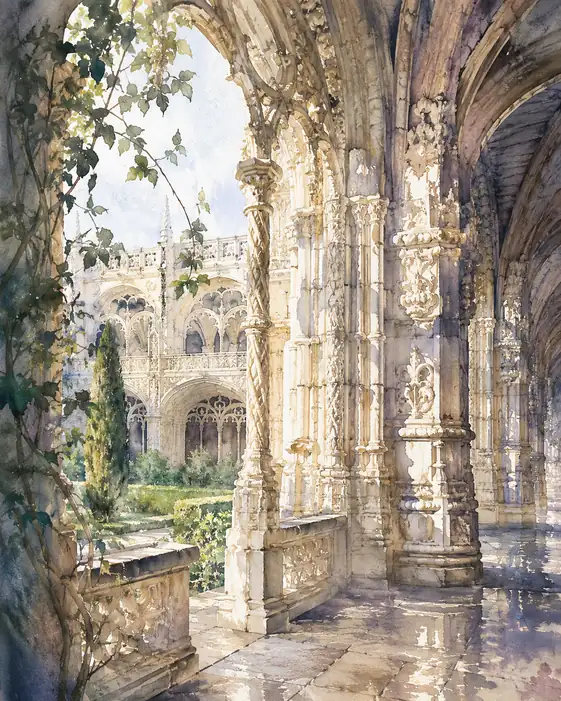
1. Introduction This watercolor painting presents a serene and sun-drenched courtyard featuring highly ornate Gothic architecture. The scene is framed by classical stone arches, leading the viewer's eye toward a central facade adorned with remarkably intricate carvings. The artwork captures a sense of quiet grandeur, where the permanence of stone meets the fleeting brilliance of a clear, sunny afternoon. 2. Description The focal point of the composition is an elaborate window or balcony structure, characterized by dense, lace-like stone carvings typical of the Manueline style. On the right, a sturdy fluted column supports a broad arch that partially frames the view. The left side features a series of recessed arches and balustrades, while vibrant green ivy and leafy branches creep into the frame from the foreground and top edges, adding an organic element to the stone environment. 3. Analysis The artist demonstrates exceptional skill in the handling of light and shadow, using a warm palette of ochre, sienna, and cool grays to define the architectural volumes. The strong natural light coming from the upper right creates sharp contrasts, bringing out the three-dimensional quality of the complex ornamentation. Loose, textured brushstrokes in the foliage provide a rhythmic counterpoint to the more disciplined and precise rendering of the masonry. 4. Interpretation and Evaluation This piece successfully evokes a feeling of timelessness and historical weight through its focus on meticulous architectural detail. The interaction between the structured artificial forms and the spontaneous growth of the greenery suggests a harmonious relationship between nature and human creation. The composition is well-balanced, and the technical execution of the sunlight filtering through the space is particularly commendable. 5. Conclusion The painting serves as an evocative study of light and heritage, transforming a complex architectural subject into a cohesive and atmospheric vision. What initially appears as a dense display of ornamentation eventually reveals itself as a delicate play of luminosity and texture. It is a masterful work that honors the complexity of the past while celebrating the simple beauty of natural light.
Same Subcategory
 Gathering Under the Twilight Arches
Similar Artworks
 The Litany of Ivy and Stone
 Tranquil Courtyard: A Tapestry of Stone and Foliage
 Velvet Shadows and Shimmer
 Sanctuary of the Golden Hour
 Where Ivy Embraces Stone
 The Silent Labyrinth of Sun and Stone
 The Stone Lace of Eternity
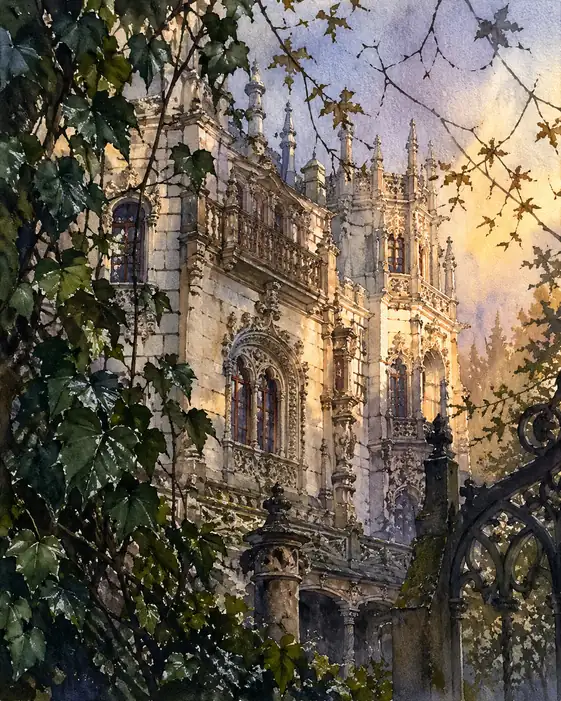 Echoes of the Gilded Era
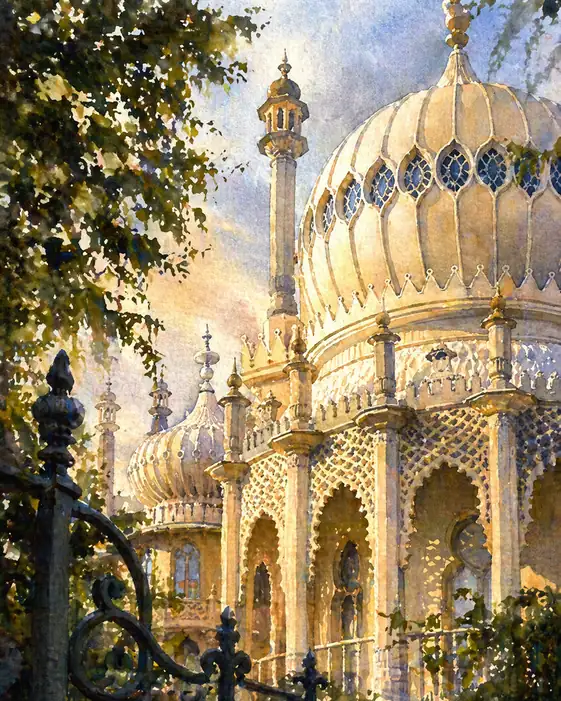 Radiance of the Grand Pavilion
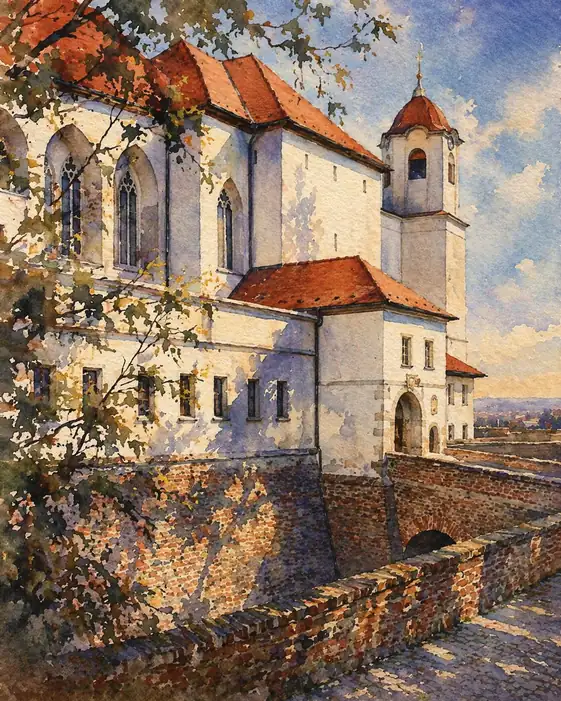 Echoes of the Past