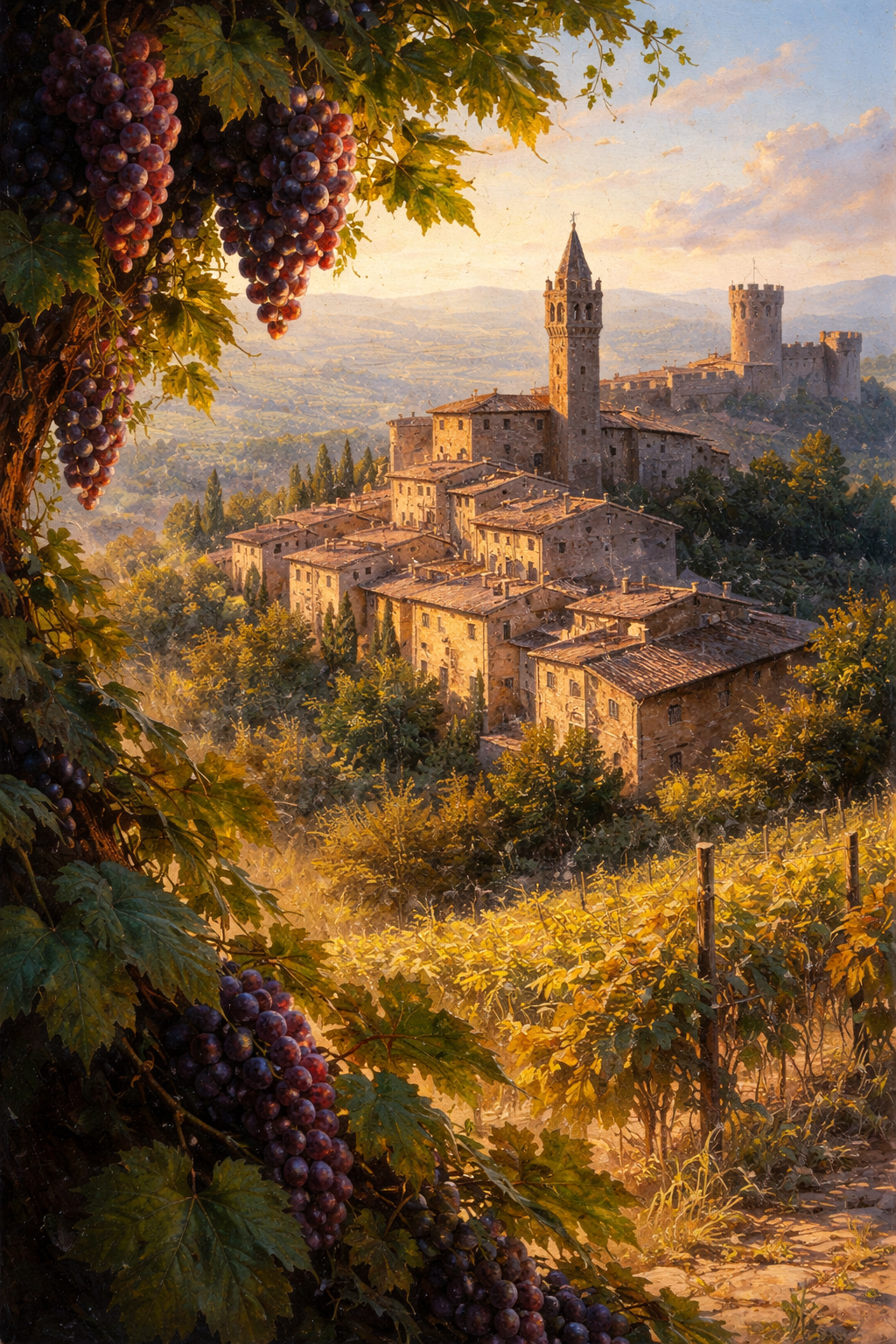
Golden Vineyard Village
Critique
1. Introduction This landscape painting depicts a serene hillside village surrounded by lush vineyards during the golden hour. The composition skillfully balances the intricate details of agricultural life with the timeless majesty of medieval architecture. It invites the viewer into a pastoral scene that evokes a strong sense of European heritage and natural abundance. 2. Description The foreground is dominated by a detailed grapevine on the left, heavy with ripe, dark purple bunches of grapes. In the midground, a cluster of sun-drenched stone houses climbs a gentle slope, punctuated by a prominent bell tower and a defensive castle in the distance. The background reveals rolling hills under a soft, luminous sky, suggesting a vast and tranquil countryside extending toward the horizon. 3. Analysis The artist utilizes a warm color palette of gold, ochre, and deep violet to establish a harmonious atmosphere. The use of light is particularly effective, as the low sun creates long shadows and highlights the textures of the stone walls and foliage. A vertical orientation emphasizes the height of the architecture while the framing vines provide a sense of depth and intimacy. 4. Interpretation and Evaluation This work can be interpreted as a celebration of the synergy between human civilization and the fertile land. The juxtaposition of the productive vineyard and the historical buildings suggests a continuity of culture and tradition through the seasons. The technical execution is exceptional, specifically in the rendering of light filtering through the vine leaves and the atmospheric perspective. 5. Conclusion The painting successfully captures a moment of quiet splendor that resonates with universal themes of peace and prosperity. While the initial impression is one of simple beauty, closer observation reveals a sophisticated exploration of light and texture. It stands as a refined representation of rural life that remains both grounded and idealistic.
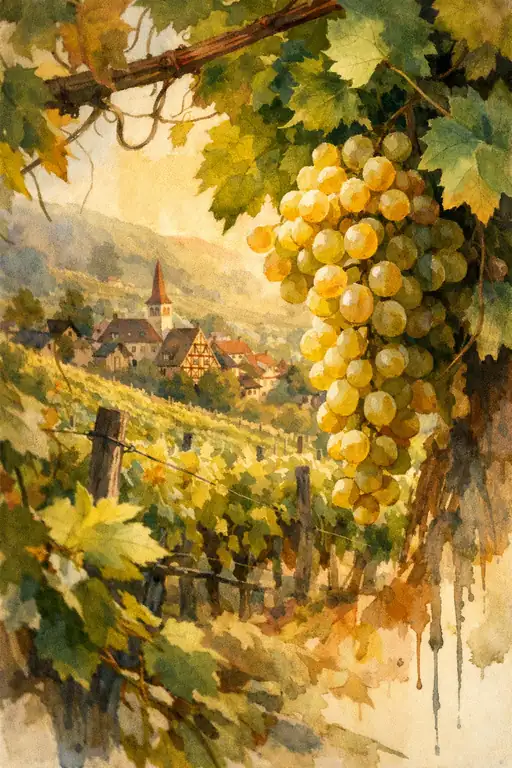 Vineyard Whispers in the Sun
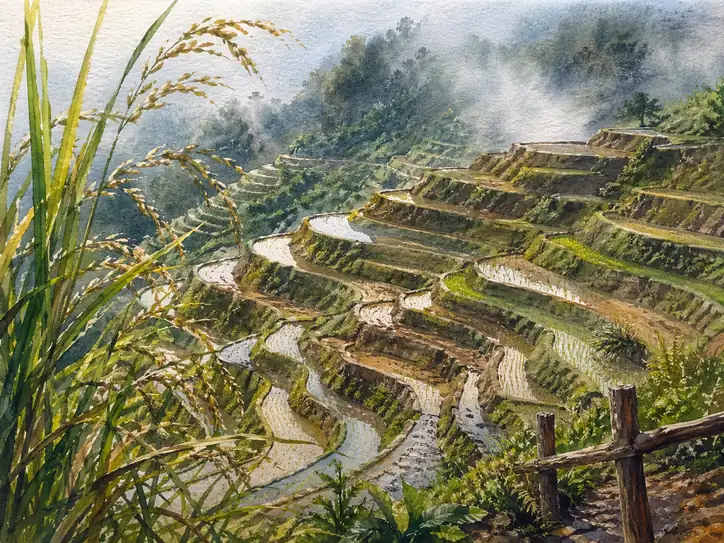 Mist and Gold: The Terraces' Embrace
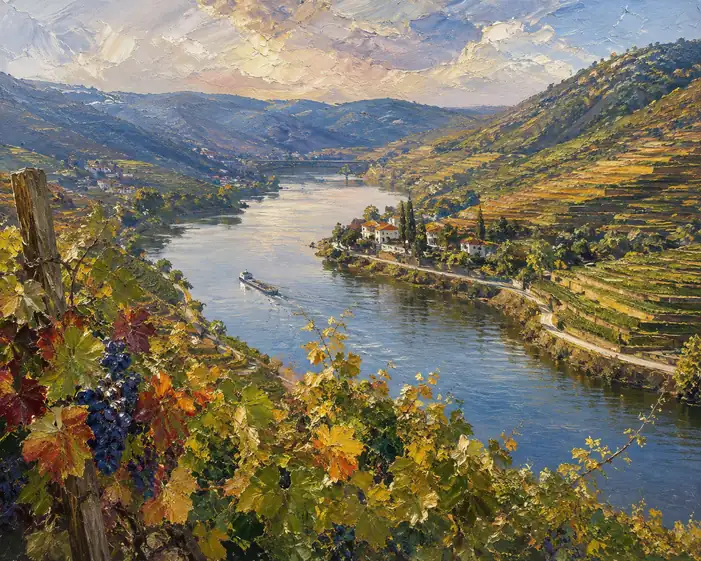 The Golden Slopes of Douro
 Whispers of the Golden Harvest
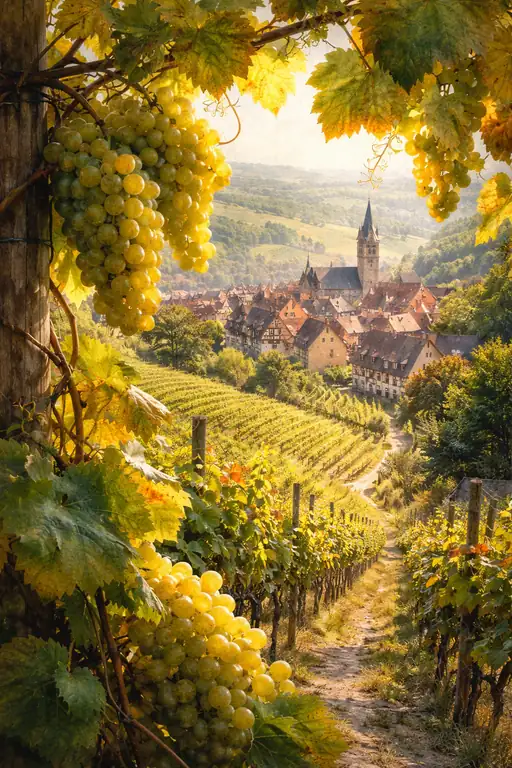 Golden Harvest Over the Valley
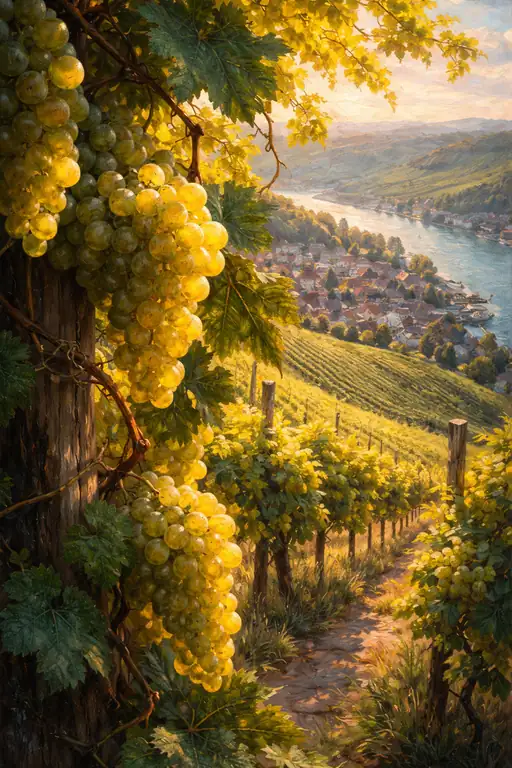 Sunlit Vineyards
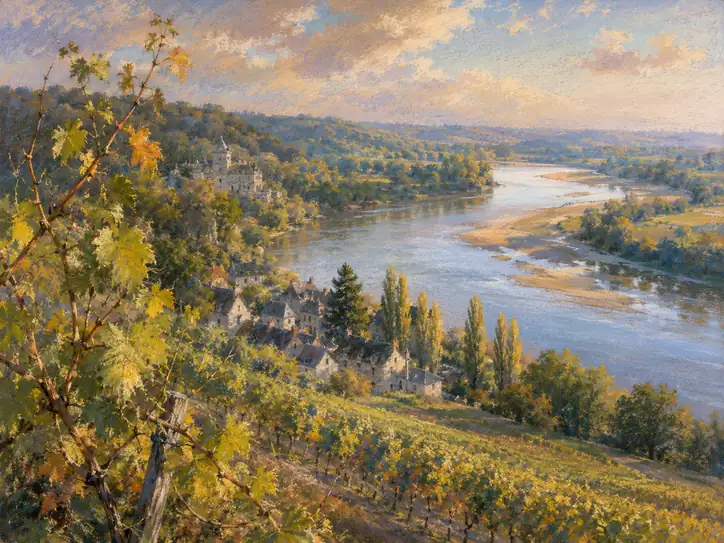 The Valley of Quiet Memories
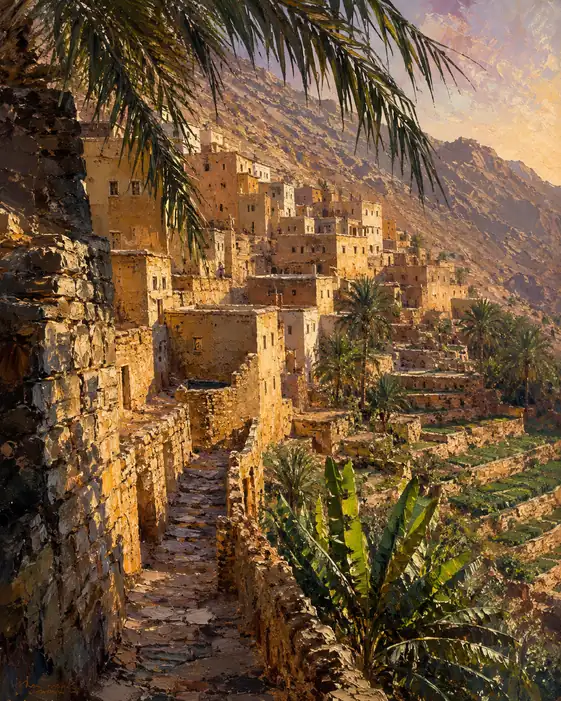 Cradled by the Golden Slopes
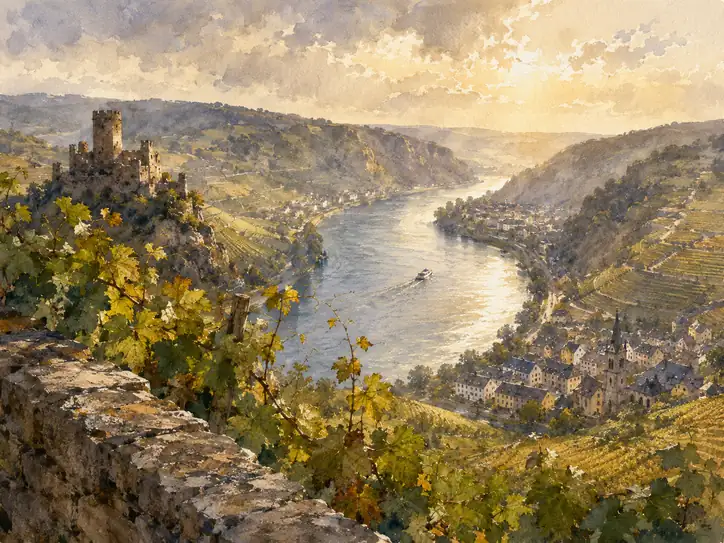 Golden Verse of the River Valley
 The Sun's Harvest in the Valley
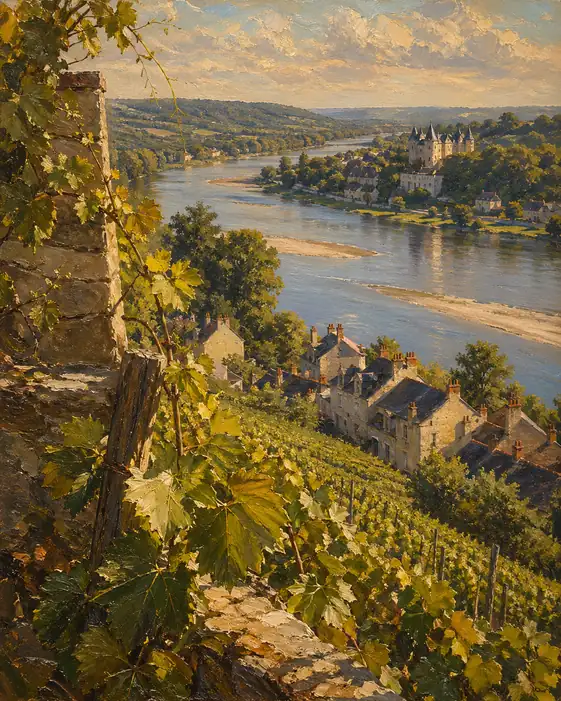 Where the Golden Light Whispers