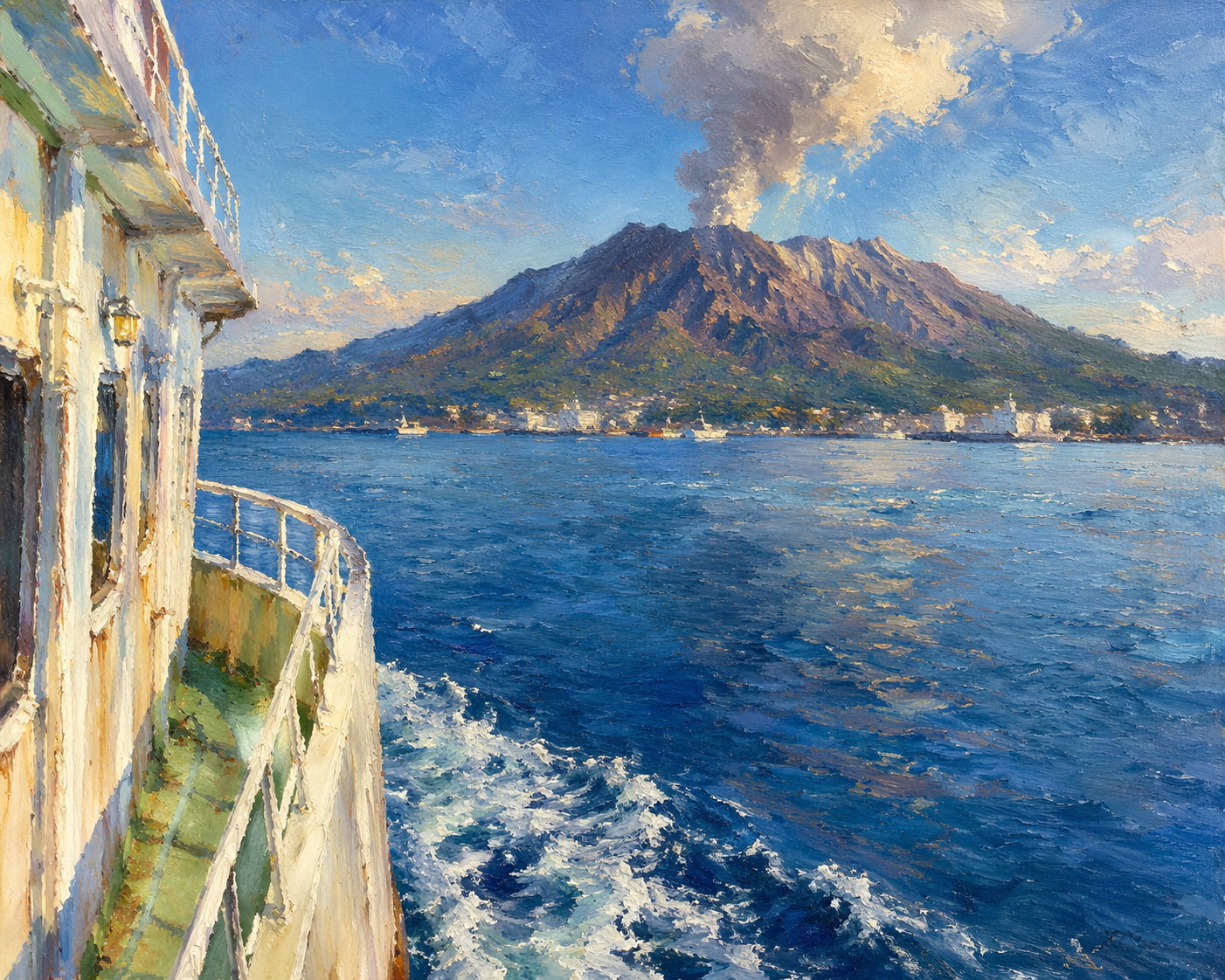
Echoes of the Fiery Peak
Critique
1. Introduction This impressionistic seascape portrays a dynamic view from the deck of a moving vessel, looking across a wide expanse of water toward a prominent volcanic mountain. The composition successfully captures the invigorating atmosphere of a sea voyage and the geological majesty of the destination. Through its bold use of color and texture, the painting invites the viewer to experience the physical sensations of wind, light, and movement. 2. Description The left side of the canvas is occupied by the weathered white railing and side of a ferry, where flecks of rust and aged paint are rendered with thick, tactile strokes. Churning white foam from the ship’s wake marks the deep blue water in the lower left corner. Across the restless sea, a massive mountain peaks on the horizon, its slopes a mix of dark rock and sparse greenery, while a plume of grey-white smoke rises from its summit. At the mountain's base, a row of white coastal buildings stretches along the shoreline under a vast sky. 3. Analysis The artist utilizes a strong impasto technique, particularly evident in the rendering of the ship's structure and the volcanic plume, creating a sense of three-dimensional depth. The perspective is established by the diagonal line of the ship’s railing, which draws the eye across the deep blue sea toward the distant mountain. Lighting is handled with great skill, with golden sunlight catching the edges of the ship and the billowing smoke, providing a warm contrast to the cool tones of the water and sky. 4. Interpretation and Evaluation The work is an evocative study of both industrial form and natural power, juxtaposing the enduring metal of the ship with the volatile energy of the volcano. Its technical merit lies in the confident brushwork and the sophisticated manipulation of light, which imbues the scene with a vivid, immediate quality. This painting is evaluated as a highly effective example of modern impressionism, successfully conveying the emotional and physical essence of maritime travel. 5. Conclusion By positioning the viewer directly on the ship’s deck, the artist creates an immersive experience that bridges the gap between the observer and the distant landscape. The initial focus on the ship’s textures soon transitions into a broader appreciation for the dramatic geological features of the background. Overall, the painting stands as a powerful tribute to the beauty and unpredictability of the natural world as seen through the lens of human transition.
Same Subcategory
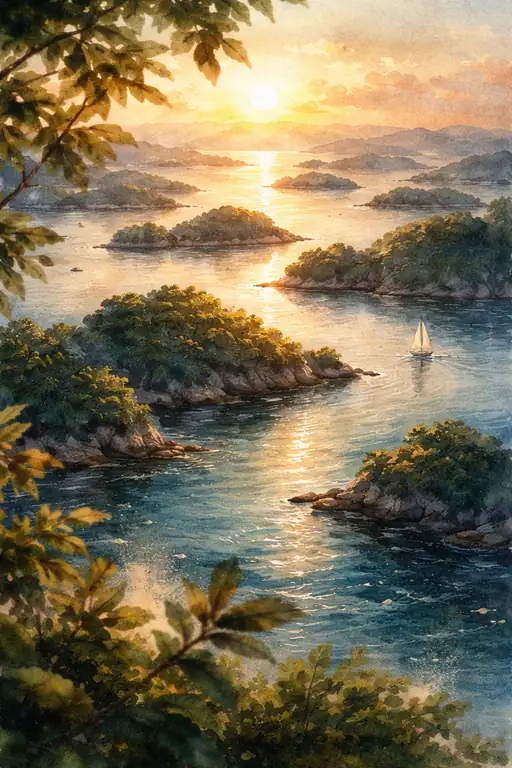 The Golden Path of the Tranquil Archipelago
Similar Artworks
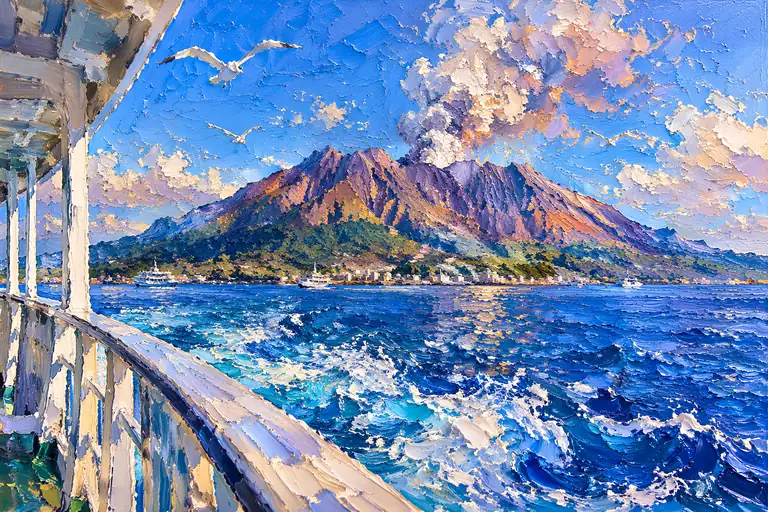 Pulse of the Azure Roar
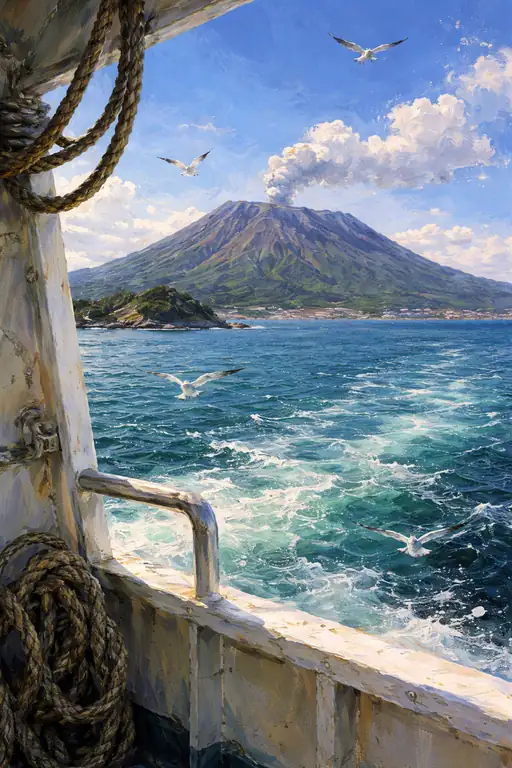 Voyage to the Earth’s Beating Heart
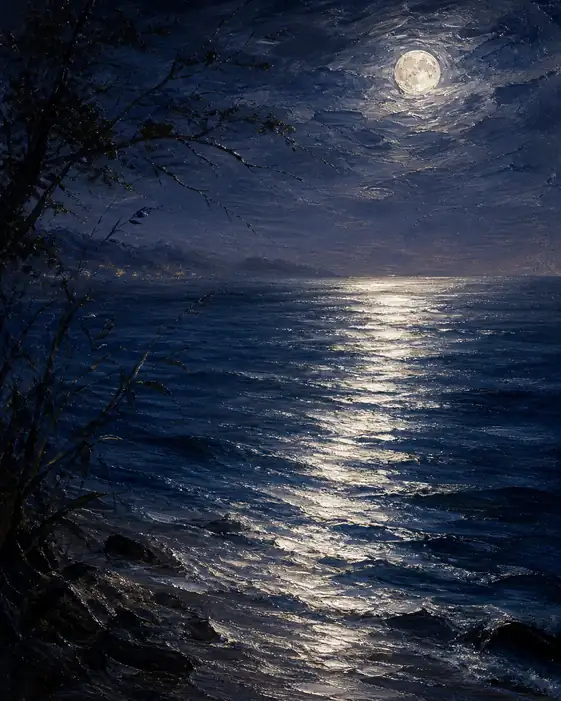 Silver Path to the Infinite Night
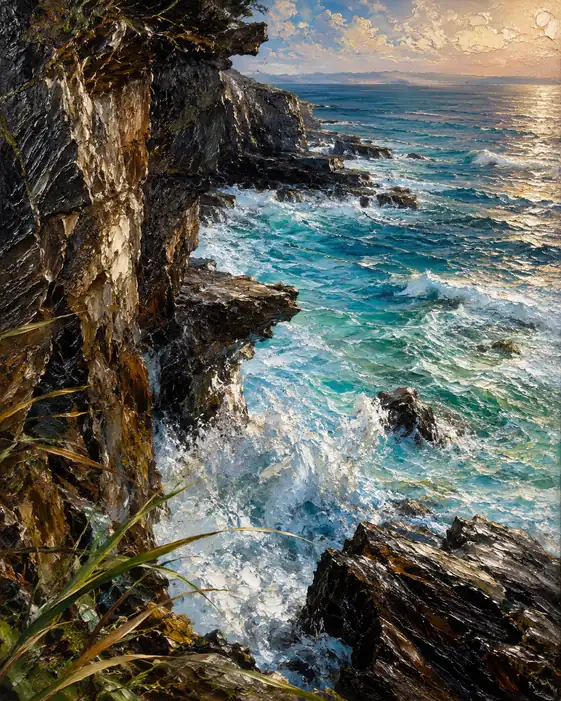 Collision of Eternity
 Eternity in the Transient Light
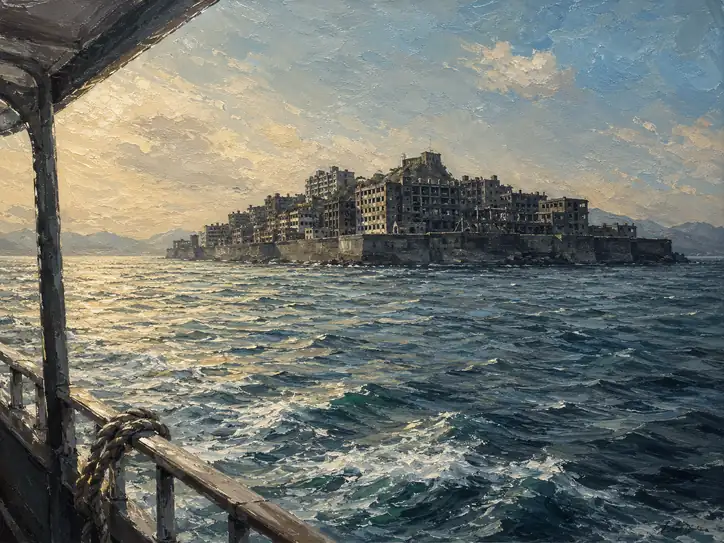 The Iron Giant's Final Sunset
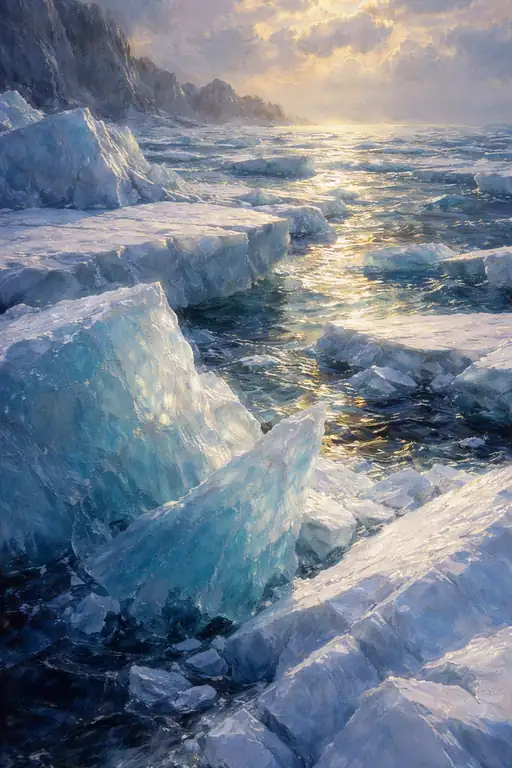 The Last Light of the Polar Kingdom
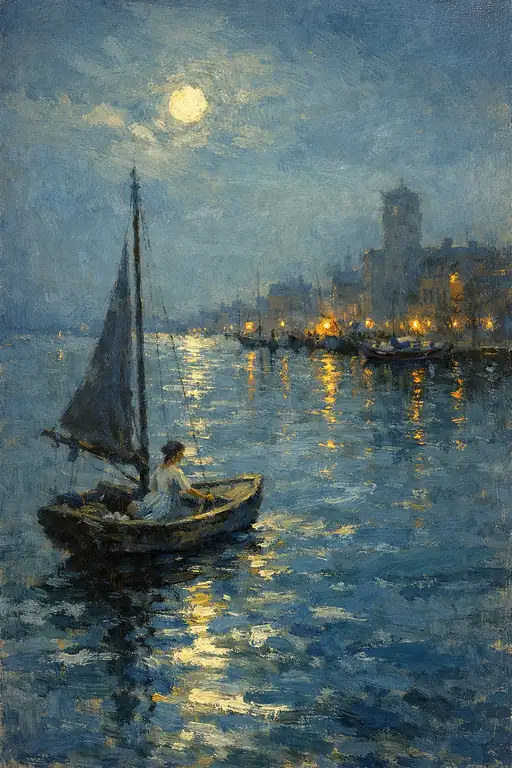 Moonlit Drifting Through the Indigo Night
 Road Carved Upon the Deep
 Trace of the Departing Blue