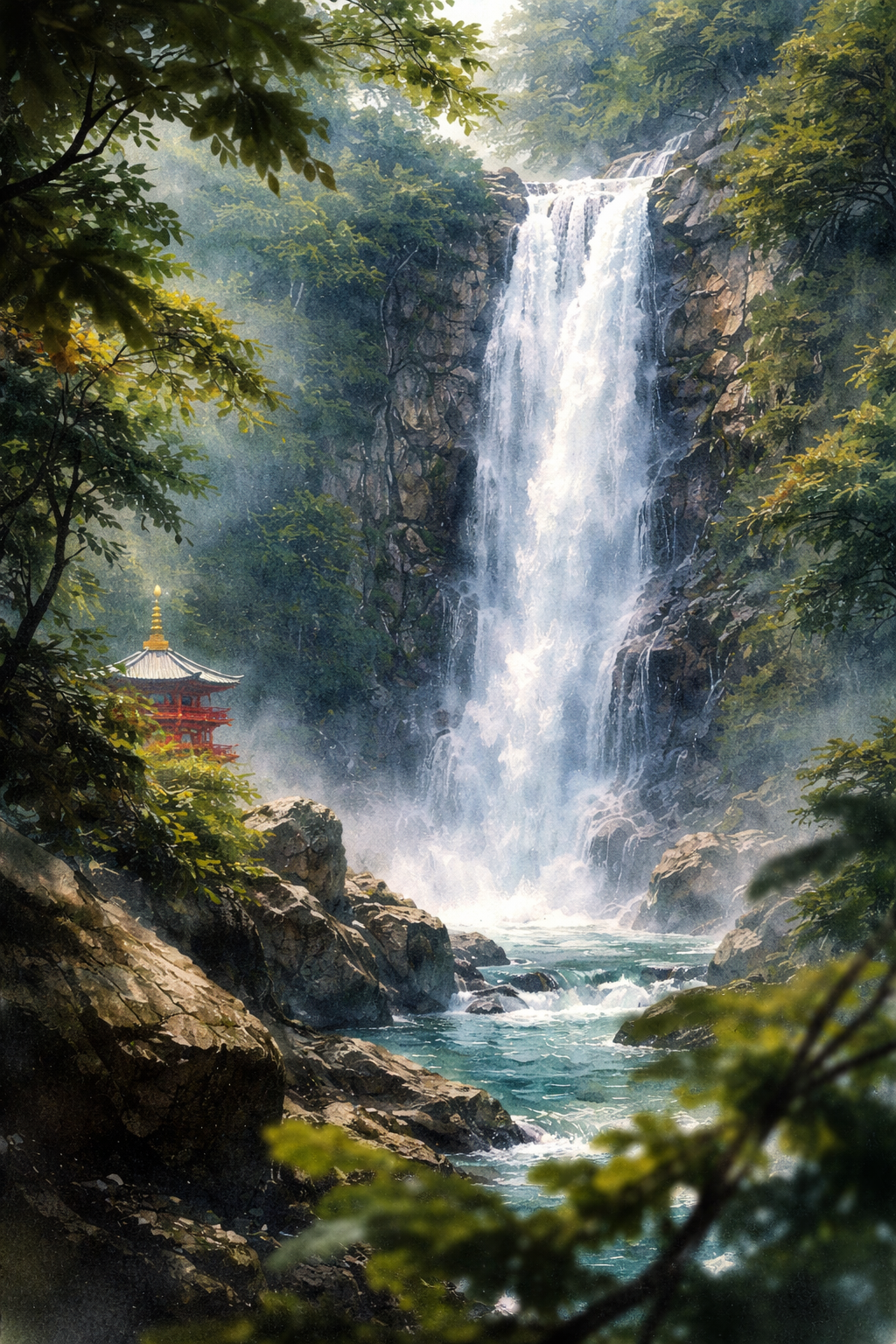
Serenity of the Falling Waters
Critique
1. Introduction This landscape painting presents a grand synthesis of nature's raw power and traditional architectural elegance. The composition is anchored by a massive, cascading waterfall that dominates the vertical frame, accompanied by a vermilion pagoda nestled quietly among the dense foliage. Through a cool color palette and meticulous detailing, the work invites the viewer into a serene, secluded mountainous realm. 2. Description In this vertically oriented work, a powerful waterfall flows from the upper regions, tumbling down the rocky face into a river below. On the left side of the mid-ground, a traditional Japanese pagoda stands prominently, framed by lush green trees that cling to the steep cliffs. The foreground is defined by large, moss-covered rocks, while mist and white spray rise from the basin of the falls, creating a soft, atmospheric haze. 3. Analysis The artist effectively employs contrast in both texture and lighting to create a dynamic visual experience. The smooth, linear descent of the water is juxtaposed against the rugged, irregular surfaces of the surrounding stone, providing a strong rhythmic quality. Sunlight filtering through the canopy illuminates the rising mist, while the vibrant red of the pagoda serves as a strategic focal point against the subdued greens and greys of the natural environment. 4. Interpretation and Evaluation The placement of a sacred structure in such a remote natural setting can be interpreted as a symbol of human reverence for the sublime power of the environment. The technical execution of the water's movement and the atmospheric depth achieved through color gradation demonstrate superior observational skill and craftsmanship. By successfully balancing realistic portrayal with a poetic sense of space, the work revitalizes a classic theme with a modern aesthetic sensibility. 5. Conclusion While the initial impression is one of overwhelming natural majesty, closer inspection reveals a profound sense of spiritual tranquility and philosophical depth. The painting moves beyond mere representation to present an idealized balance between the human spirit and the eternal forces of nature. Ultimately, this work stands as a testament to the enduring beauty of harmony, leaving the viewer with a sense of peaceful reflection.
Same Subcategory
Similar Artworks
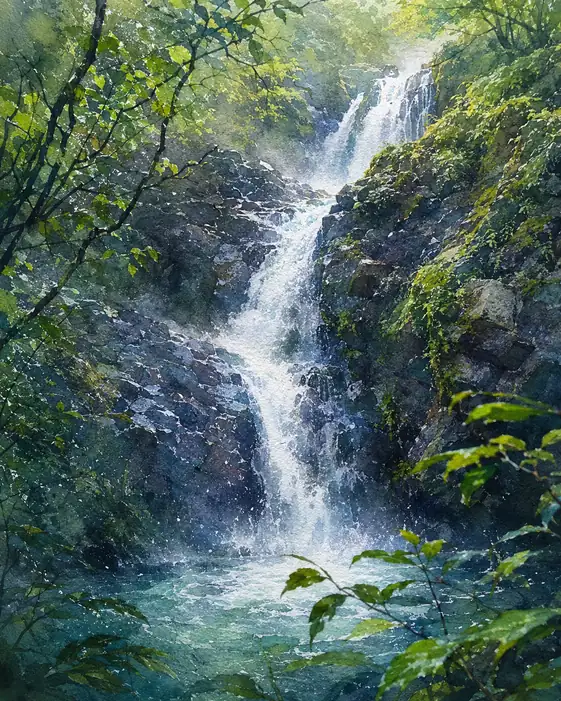 Melody of the Hidden Valley
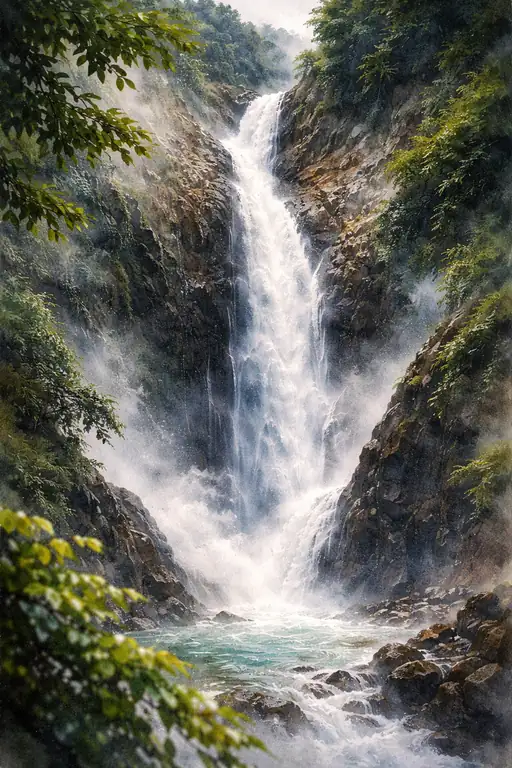 Cascading Veil: The Forest's Pulse
 The Dragon's Breath and My Autumn Song
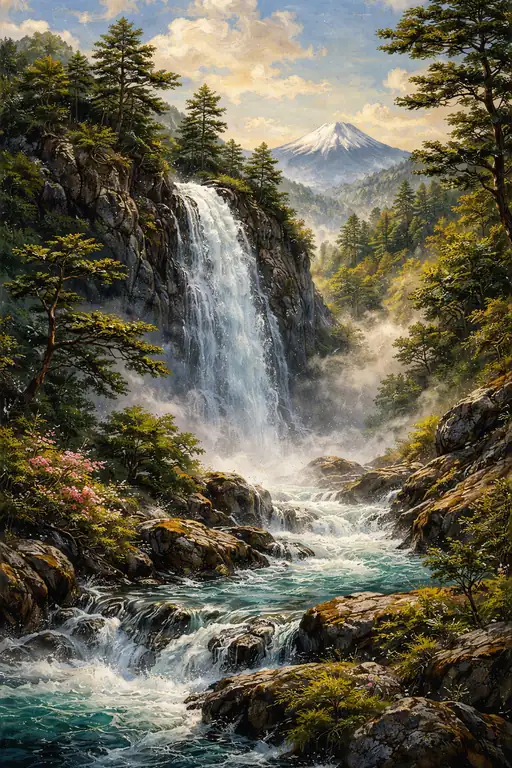 Echoes of the Eternal Peak
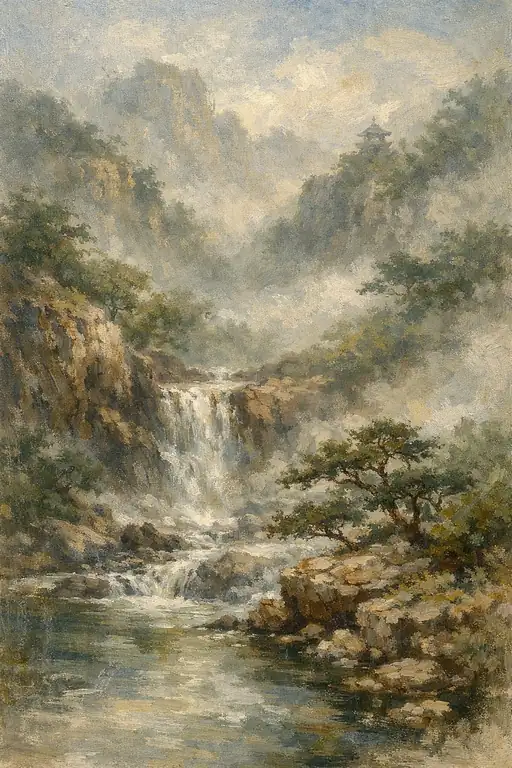 The Hidden Pagoda in the Mist
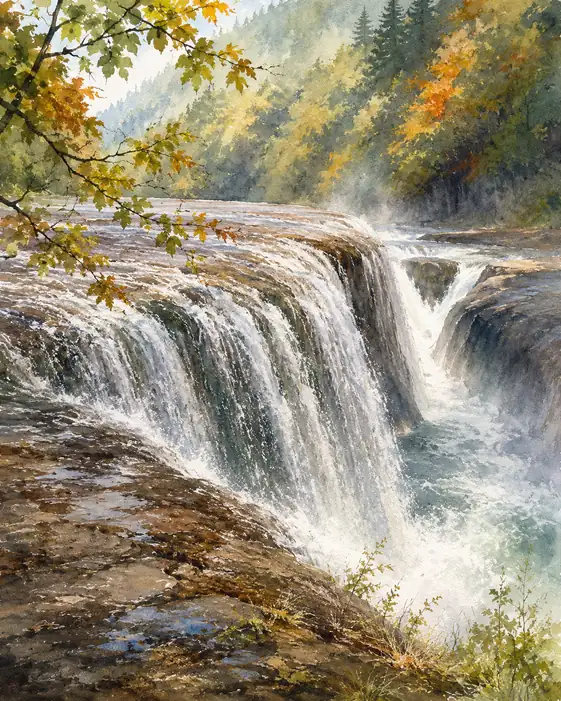 Cascade of Amber Memories: The Forest’s Silver Thread
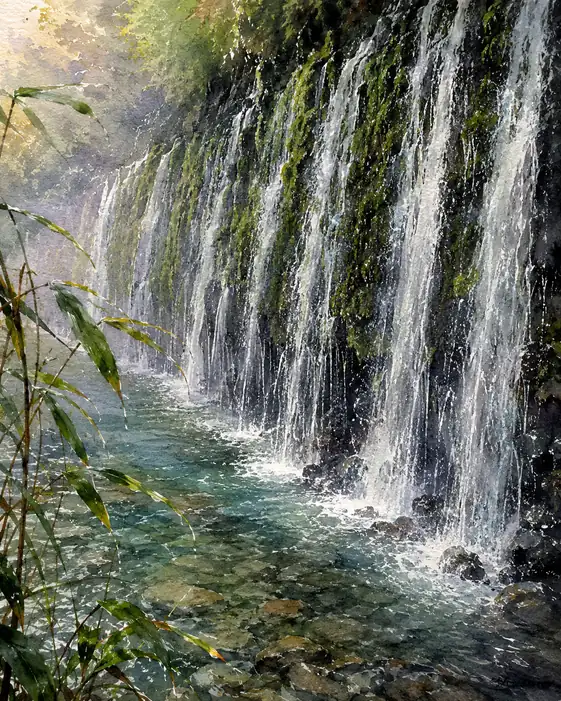 Echoes of the Mossy Cliff
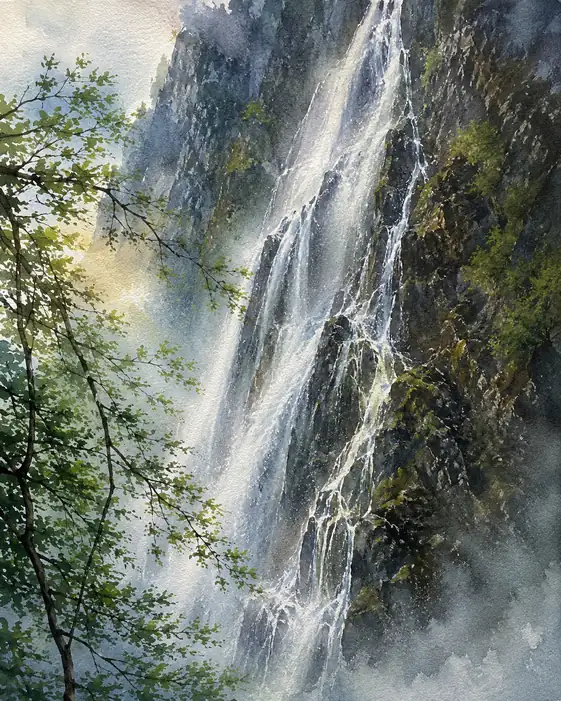 The Mountain's Silver Thread
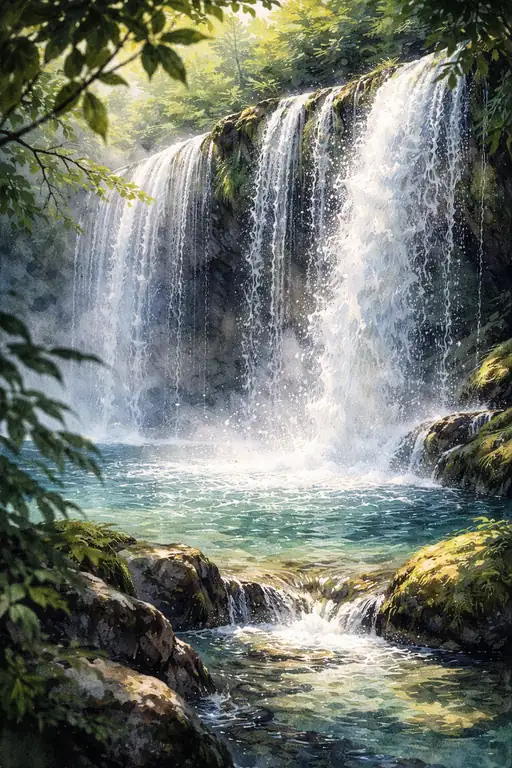 The Luminous Veil of the Forest Cascade
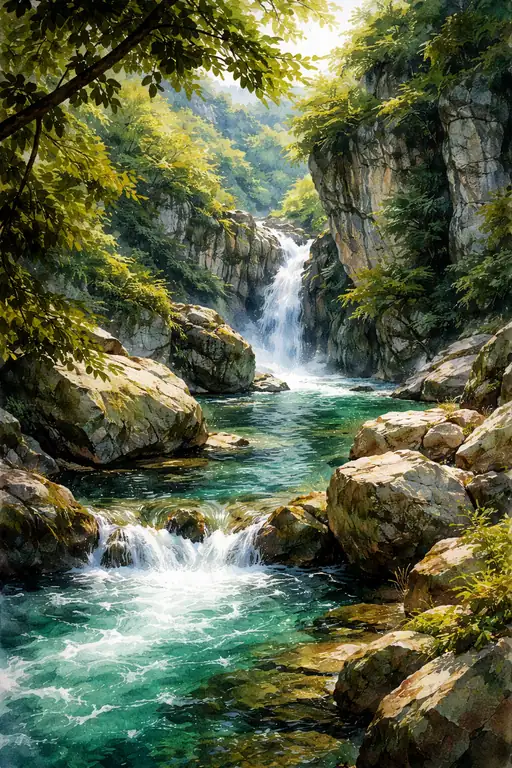 The Pristine Cascade of the Hidden Gorge