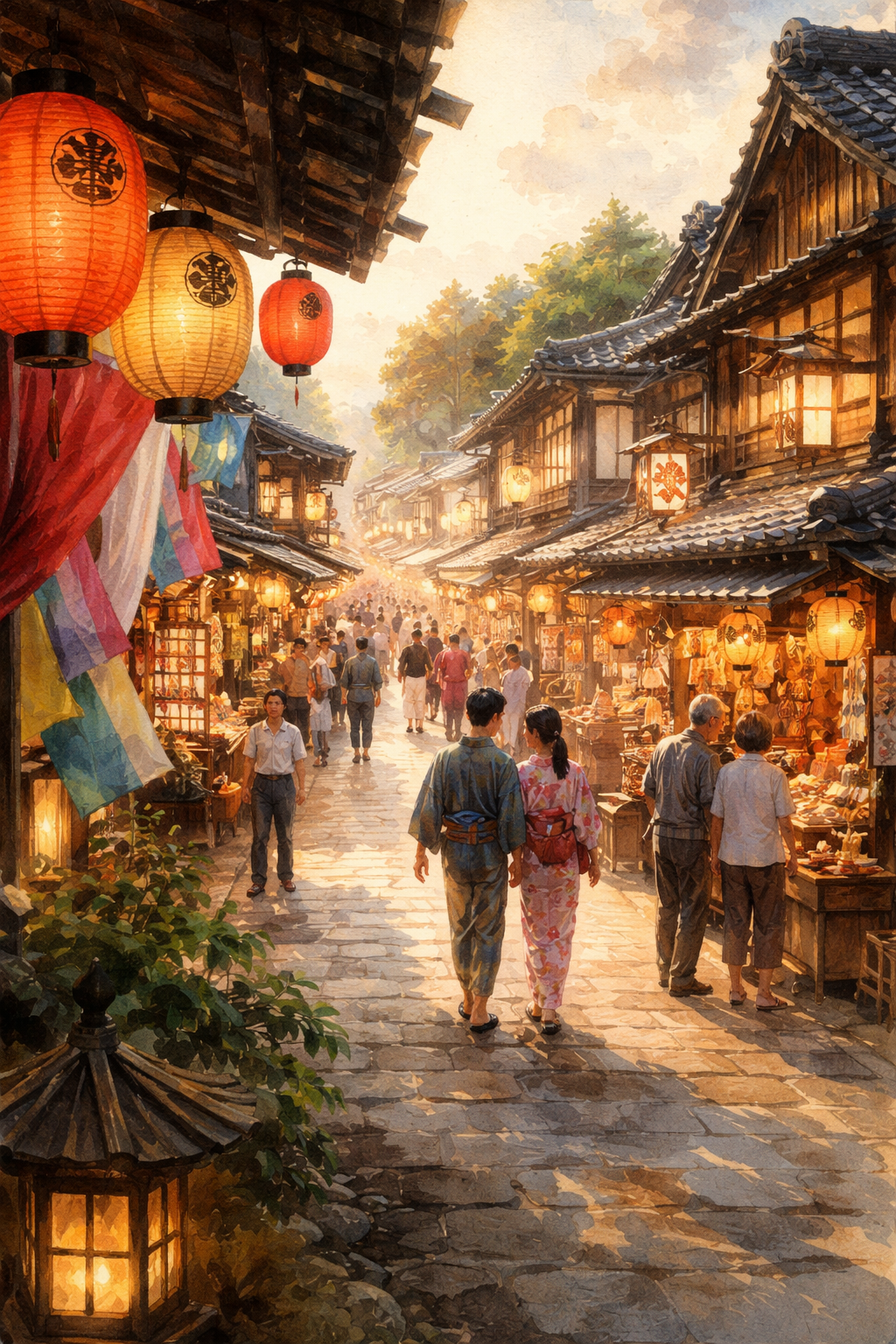
Lanterns at Twilight
Critique
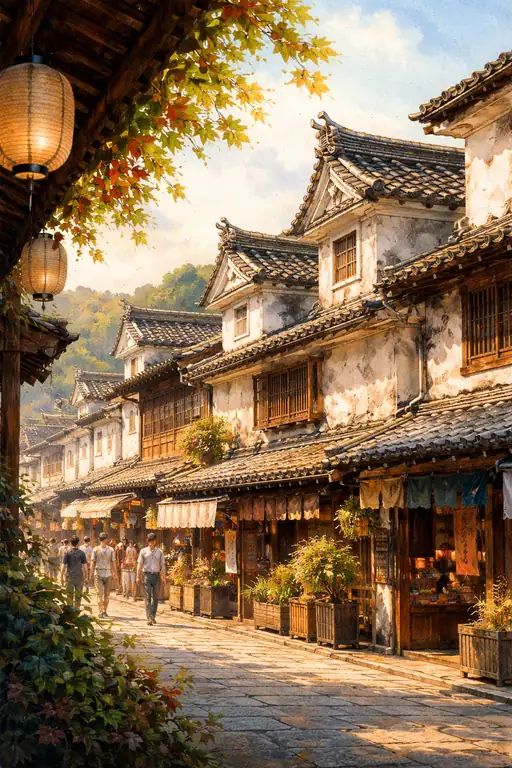
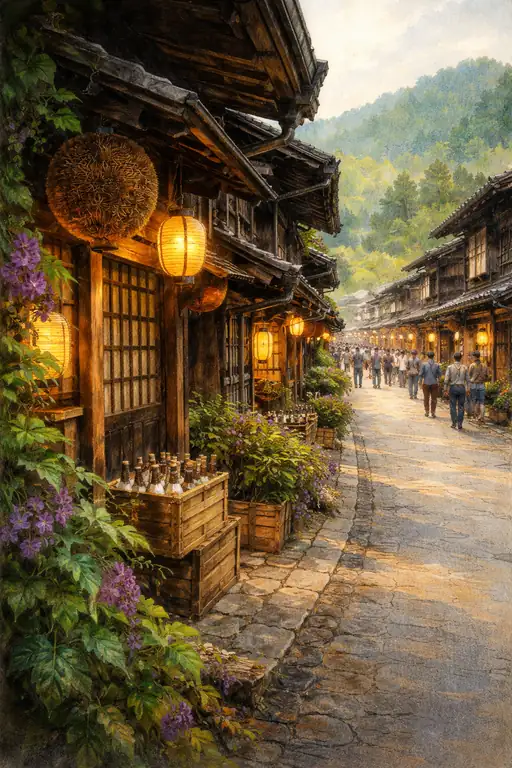
1. Introduction This watercolor painting depicts a bustling traditional Japanese street scene illuminated by the warm glow of sunset. Historic wooden buildings line a stone-paved path, while vibrant paper lanterns hang from the eaves, guiding the viewer’s eye deep into the composition. The artist masterfully captures the essence of a lively evening, blending cultural heritage with a sense of nostalgic charm. This work serves as an evocative window into a serene yet vibrant world. 2. Description The stone road recedes into the distance, creating a strong sense of perspective emphasized by the surrounding architecture. Figures in traditional dress and everyday attire populate the scene, adding vitality and movement to the thoroughfare. Large lanterns in the foreground provide a striking contrast of color and light against the darkening sky. Each element, from the weathered wood of the houses to the soft radiance of the windows, is rendered with delicate detail. 3. Analysis The work utilizes a harmonious color palette, contrasting warm oranges and yellows with cool blues in the shadows. Vertical lines from the buildings balance the horizontal recession of the street, establishing a stable yet dynamic structure. Transparency and layering techniques common to watercolor are employed to create depth and a palpable atmosphere. The distribution of light sources creates a rhythmic flow throughout the image, unifying the complex array of architectural and human elements. 4. Interpretation and Evaluation This painting succeeds in elevating a familiar landscape into a profound statement on community and continuity. The artist’s treatment of light is particularly impressive, imbuing the scene with a sense of warmth that transcends simple representation. There is a clear emotional resonance in the depiction of the anonymous crowds, suggesting a shared human connection within this historical setting. The technical execution is flawless, demonstrating both creative vision and a disciplined command of the watercolor medium. 5. Conclusion Overall, the piece achieves a remarkable balance between grand scale and intimate observation. While the initial impression is dominated by the lanterns' brilliance, the viewer eventually discovers the quiet beauty within the smaller details. The artist has created a timeless vision that invites prolonged contemplation and emotional engagement. This work stands as a beautiful tribute to the enduring spirit of traditional Japanese aesthetics and the quiet joy of communal life.
Same Subcategory
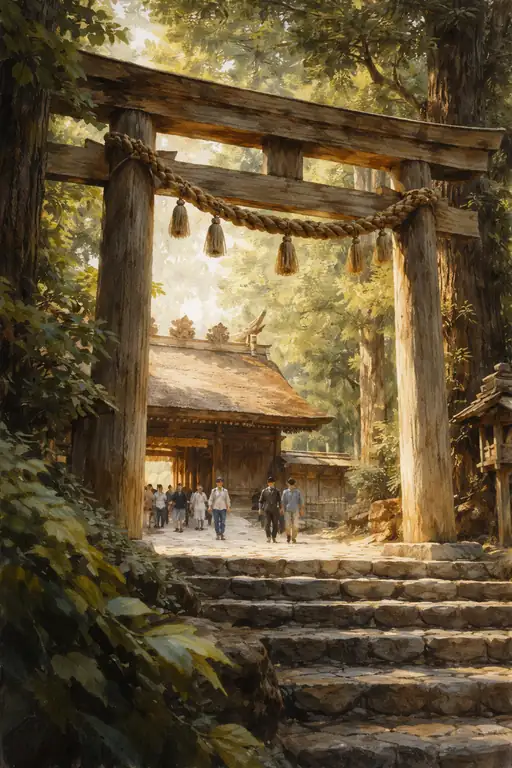 Passage to the Sacred Grove
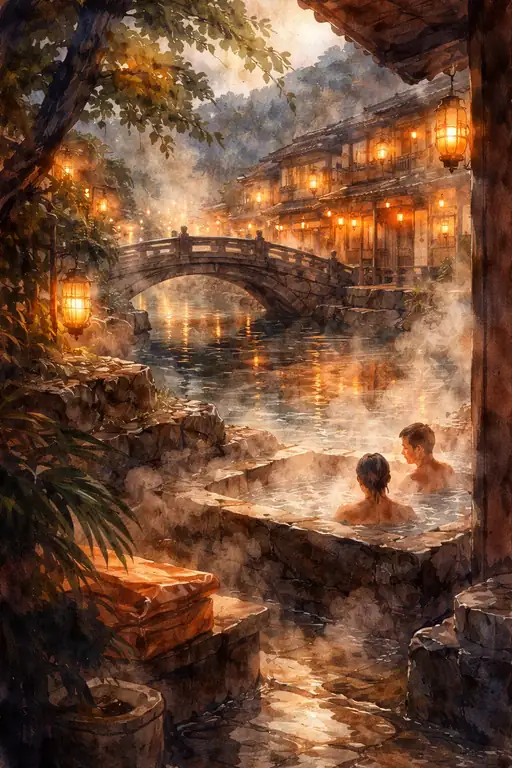 Warmth in the Quiet River Town
Similar Artworks
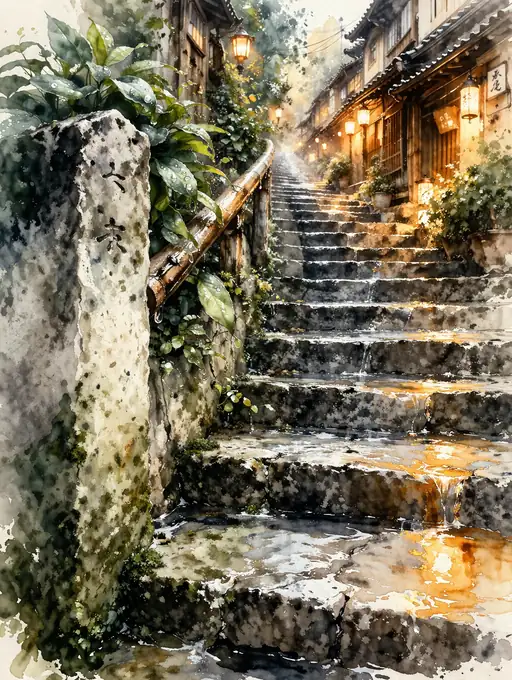 Reflections on the Wet Stone Path
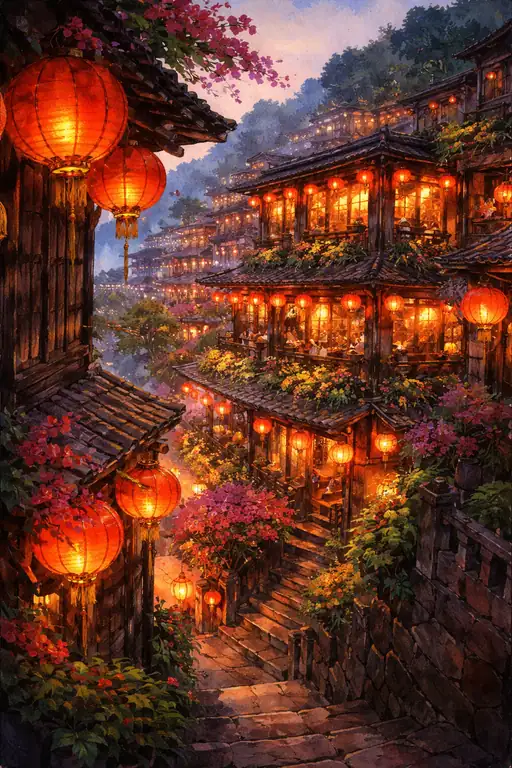 The Festive Glow of the Tiered Village
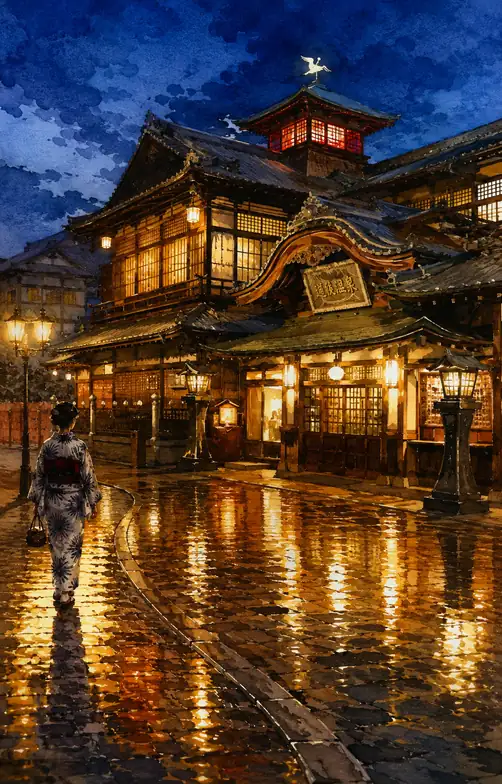 Her Footsteps Gather the Lanterns
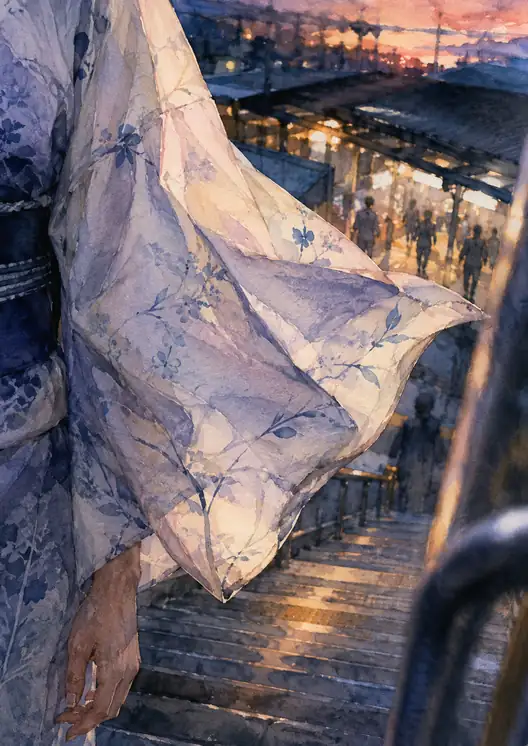 The Wind That Carries Summer Away
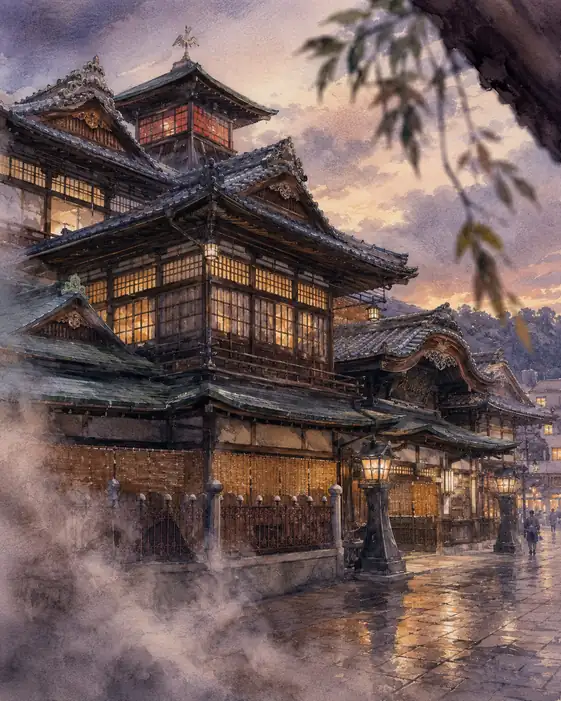 Whispers of the Twilight Spring
 Sun-Drenched Memories of the Old Street
 The Golden Hour in a Hidden Village
 Resonance of a Timeless Afternoon
 Sunset Glow on the Ancient Road
 Dusk Awakens the Lantern's Memory