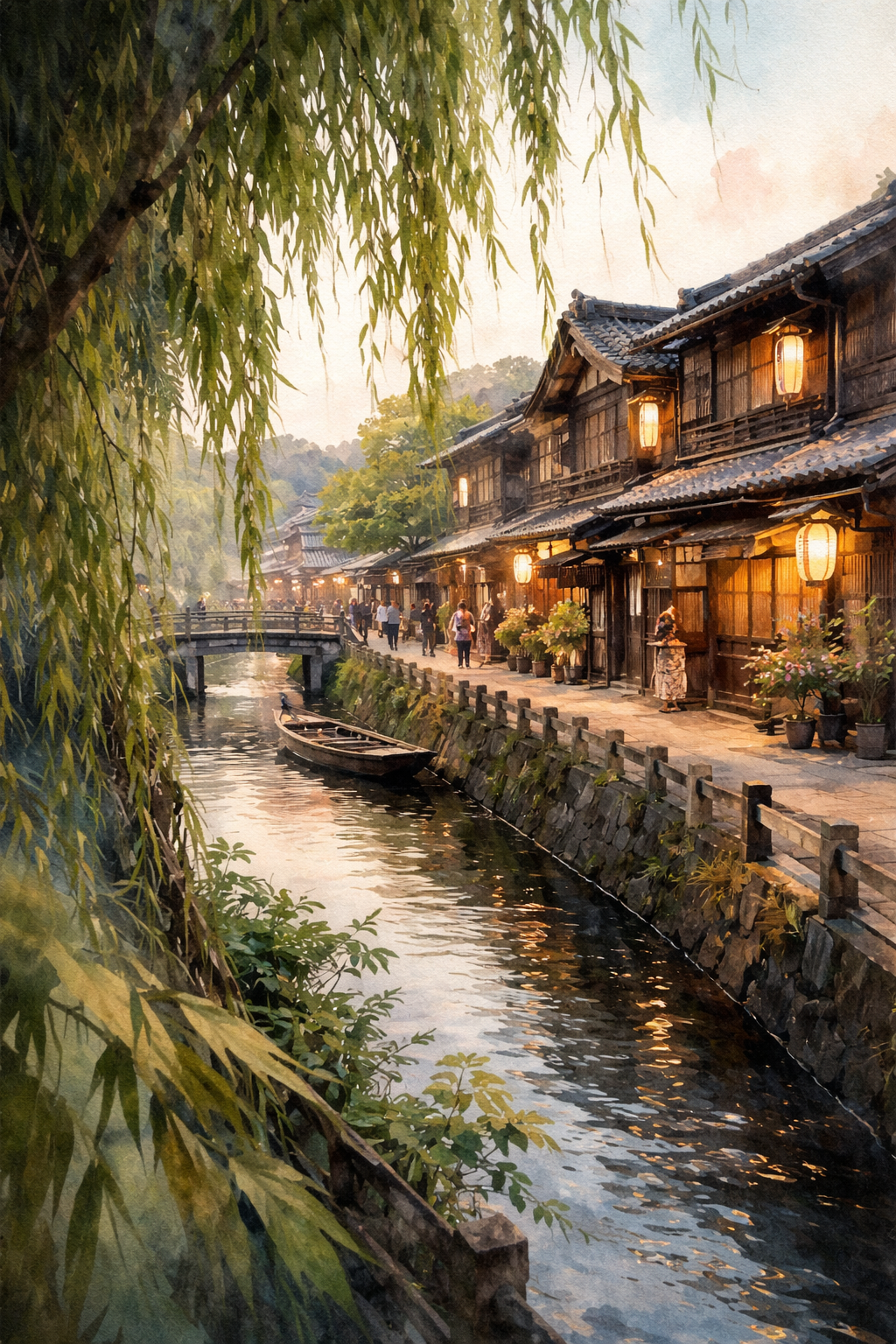
Dusk at the Old Waterway
Critique
1. Introduction This artwork is a poignant depiction of a traditional Japanese streetscape set along a tranquil canal, rendered in a delicate watercolor style. The piece captures a serene yet lively scene at dusk, where the fading natural light harmonizes with the warm, golden glow of paper lanterns. Visitors are immediately drawn into this evocative space, which masterfully balances historical charm with a sense of timeless tranquility. The overall atmosphere established by the soft color palette provides both a feeling of nostalgia and aesthetic comfort. 2. Description A calm canal flows through the center of the composition, carrying a single wooden boat that sits still on the shimmering water. On the right side, rows of traditional wooden buildings stand, their facades adorned with lanterns that cast brilliant orange reflections upon the stone embankments and walking paths. Overhead, long willow branches drape from the left foreground, their fine leaves creating a natural frame that adds depth and texture to the scene. In the distance, a small stone bridge crosses the water, with tiny figures of people crossing it under the twilight sky. 3. Analysis The artist utilizes a strong one-point perspective that guides the viewer's gaze along the canal towards the distant bridge, creating a profound sense of spatial recession. This movement is anchored by the diagonal lines of the willow branches and the architectural structures, which establish a balanced and stable composition. Coloristically, the vibrant contrast between the warm interior lights and the cool shadows of the exterior environment enhances the dramatic interplay of light and shadow. The brushwork combined with the transparency of the watercolor medium effectively produces a soft, atmospheric quality. 4. Interpretation and Evaluation This painting can be interpreted as an ode to the vanishing landscapes of old Japan and the inherent beauty of everyday human existence. The bright lanterns symbolize the warmth of the community, while the quiet water represents the slow passage of time, together presenting a world in perfect harmony. Technically, the detailed rendering of light reflections and the intricate wood textures demonstrate a high level of craftsmanship and dedication to detail. The unique framing and compositional choices elevate a standard landscape into a sophisticated artistic statement that is both original and visually compelling. 5. Conclusion Upon initial viewing, one might see a simple nostalgic scene, but further observation reveals the subtle nuances of light and the vibrant pulse of life within the architecture. This work goes beyond mere visual representation, tapping into a deeper sense of cultural memory and emotional resonance for the viewer. Ultimately, the painting stands as a significant achievement, successfully illustrating an idealized coexistence between nature, man-made structures, and the human spirit.
Same Subcategory
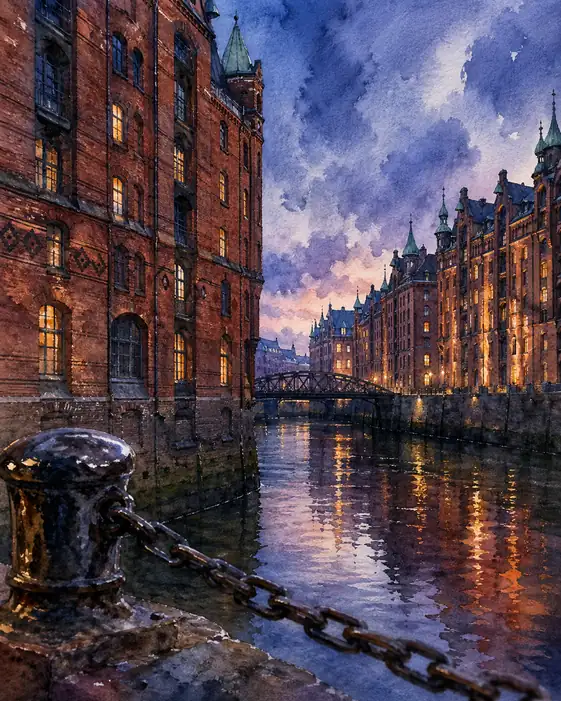 Twilight Reflections: The Canal's Glowing Secret
Similar Artworks
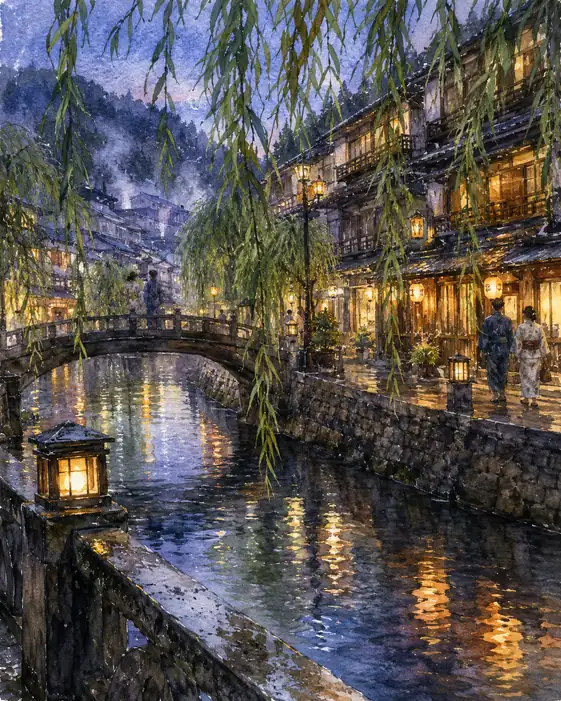 Whispers of the Rain-Washed Evening
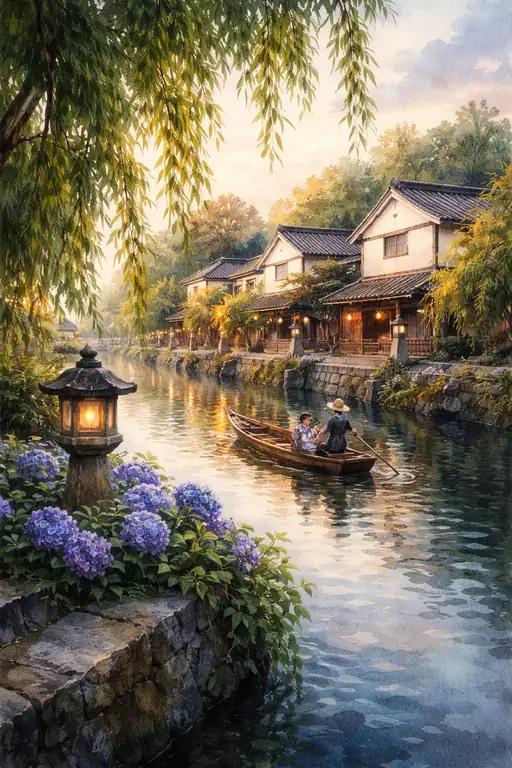 Twilight Drifting Along the Purple Bank
 Rowing Through the Corridor of Memory
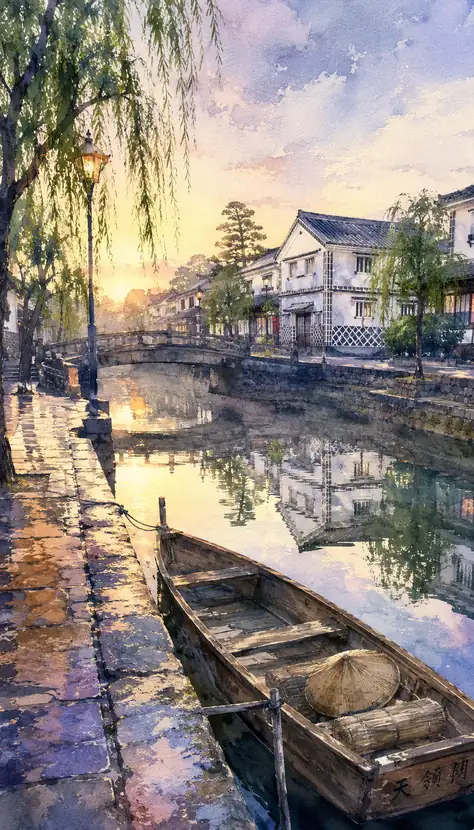 The Boat That Waited for Evening
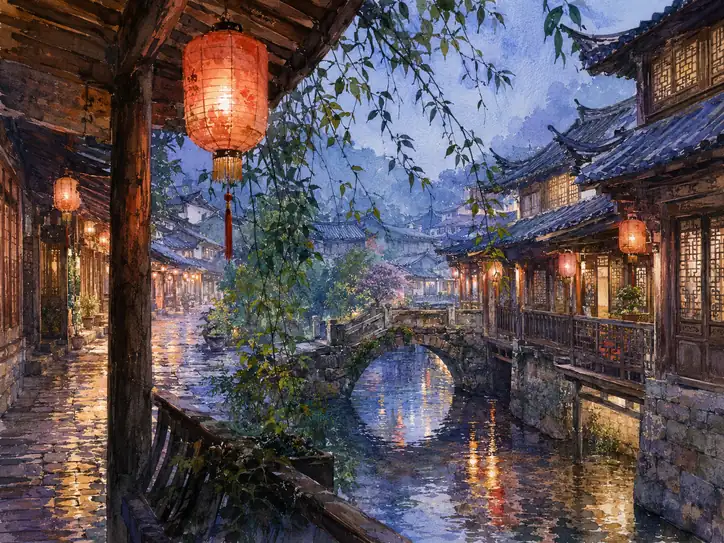 Whispers of the Scarlet Lantern
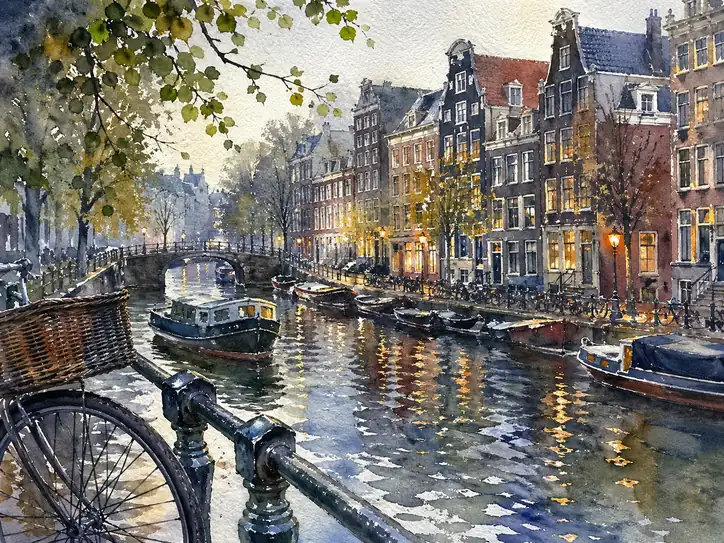 Twilight Echoes on the Canal
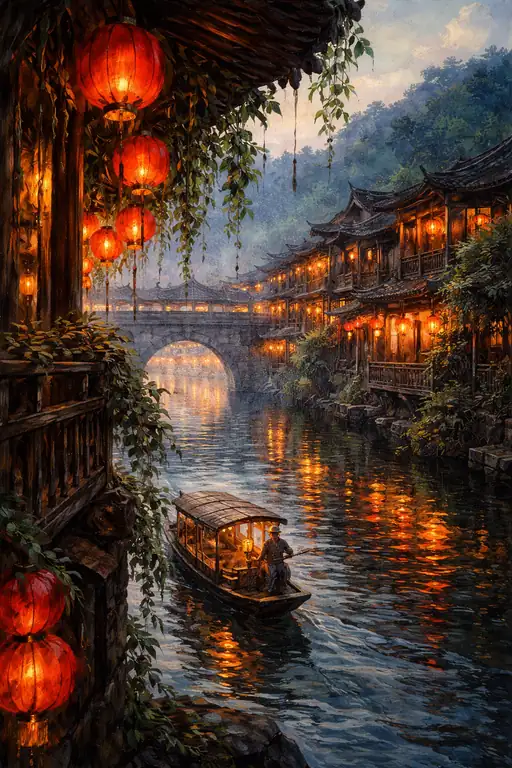 Luminous Echoes of the Canal
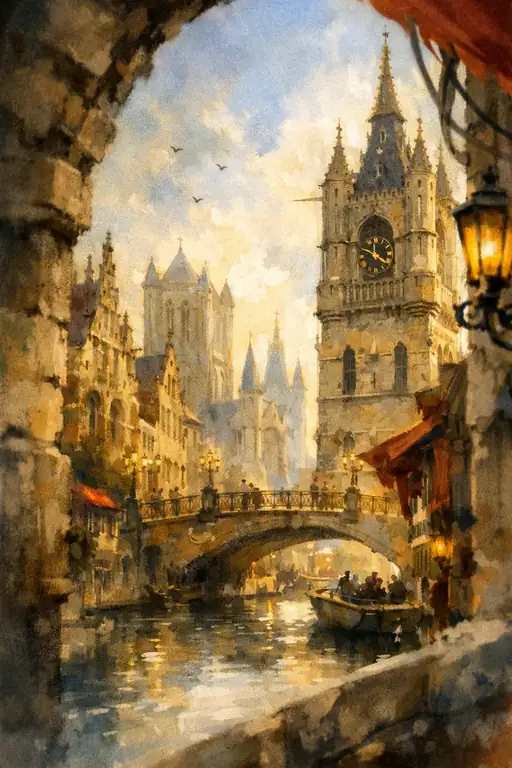 Serenade in the Shadows
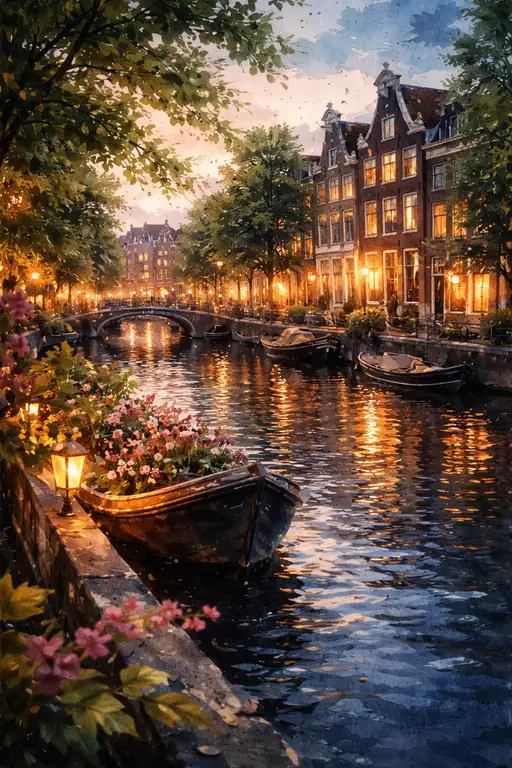 Embrace of the Evening
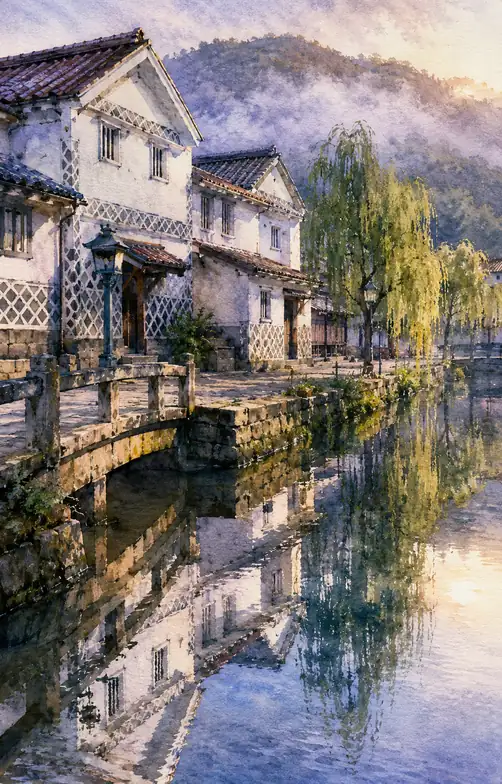 Willows Write the Morning Twice