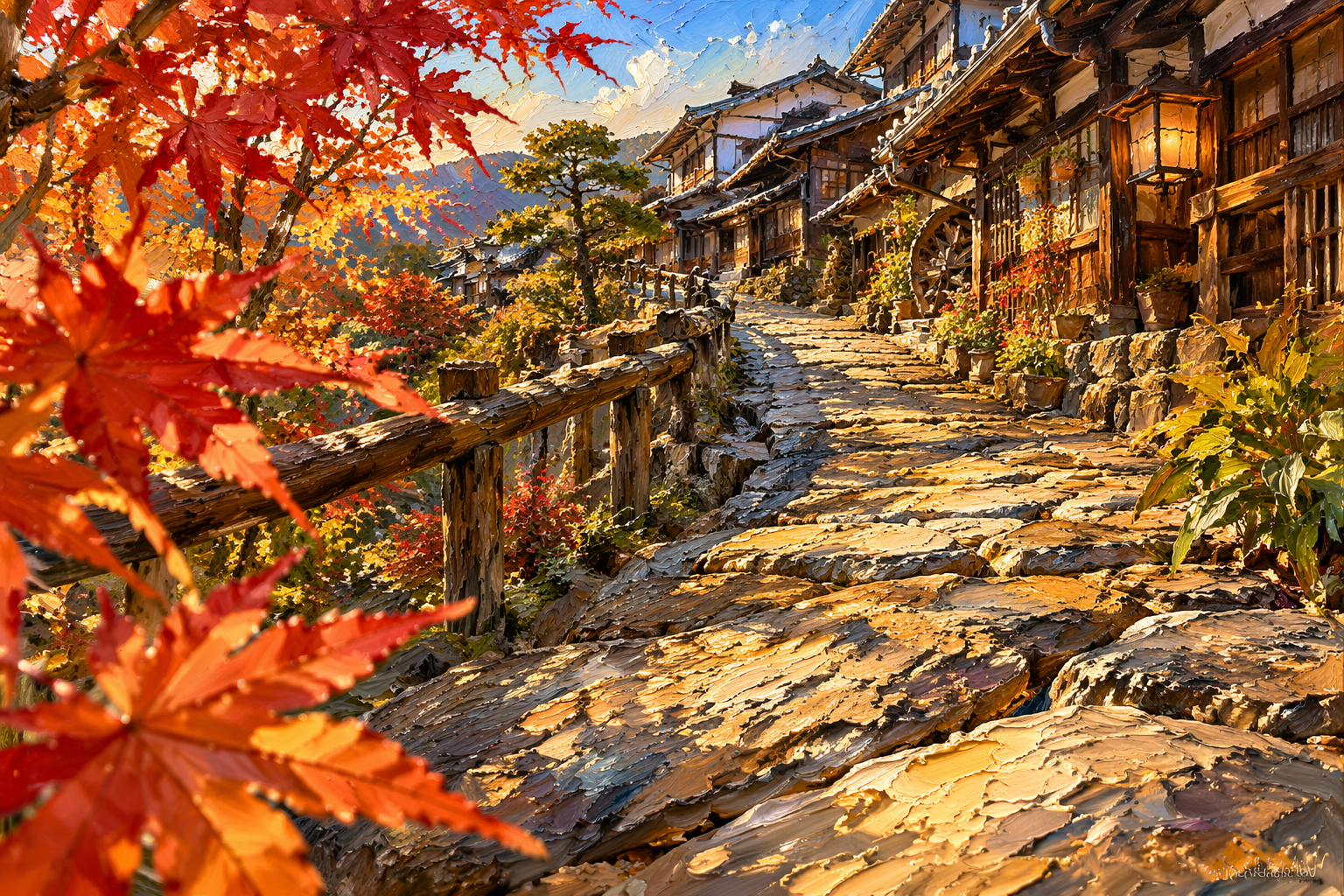
Ascent to the Autumn Skies
Critique
1. Introduction This digital artwork presents a vibrant, autumn-themed landscape depicting a traditional Japanese mountain village. Executed in a style that mimics heavy oil painting, the composition captures the brilliant transition of colors during the "Momiji" season. The work focuses on the intersection of seasonal natural beauty and historical rural architecture, creating a scene that feels both energetic and timeless through its expressive application of digital brushstrokes. 2. Description The left foreground is dominated by fiery red maple leaves, rendered with thick, impasto-like textures that give them a physical presence. A winding path made of large, weathered stones leads the viewer’s eye upward toward a collection of traditional wooden houses with white-plastered walls and tiled roofs. A simple wooden fence follows the curve of the path, separating it from the steep slope on the left. Bright sunlight from the right casts deep shadows across the uneven stones and illuminates the clear blue sky above. 3. Analysis The artist employs an expressive technique characterized by short, bold strokes and a rich layering of color. This tactile quality is most evident in the foreground foliage and the rough surfaces of the cobblestones, which appear sculpted rather than simply painted. The low-angle perspective enhances the sense of climbing a hill, while the strong diagonal lines of the fence and path create a dynamic movement through the composition. The color palette is high-contrast, pairing the warm oranges and reds of the autumn leaves with the cool, bright blues of the sky. 4. Interpretation and Evaluation This piece successfully captures the fleeting intensity of the autumn season in rural Japan. The heavy texture adds a sense of vitality and movement to an otherwise still architectural scene, suggesting the rustling of leaves and the warmth of the sun. Technically, the simulation of traditional oil painting techniques is highly effective, providing a depth of grain and texture that is often missing from digital works. The use of the maple tree as a framing device effectively creates a sense of immersion for the viewer. 5. Conclusion Ultimately, the work is a celebratory depiction of nature’s seasonal cycles and their harmony with human habitation. While the initial focus is drawn to the brilliant colors of the foliage, the structural integrity of the composition and the mastery of light become more apparent upon closer inspection. It stands as a compelling fusion of traditional subject matter and modern, expressive digital art that emphasizes texture and emotional impact.
Same Subcategory
 Refuge from the Mountain's Shadow
 Crisp Echoes of the Alpine Sanctuary
Similar Artworks
 Golden Echoes of the Peak
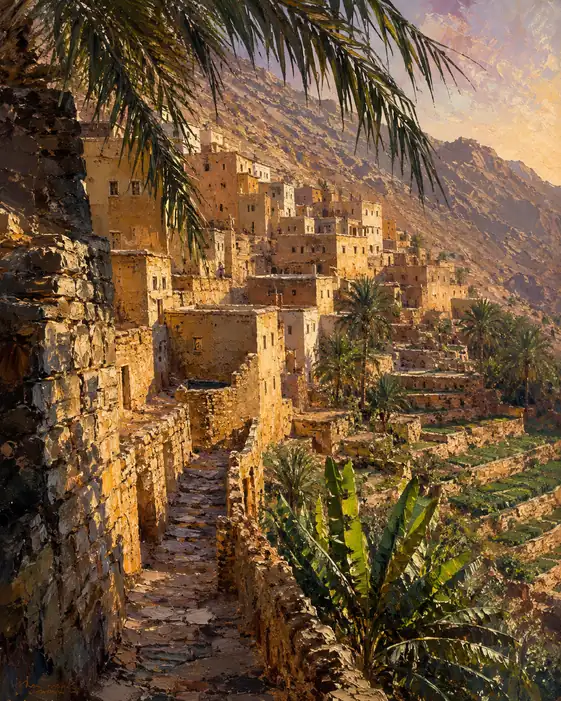 Cradled by the Golden Slopes
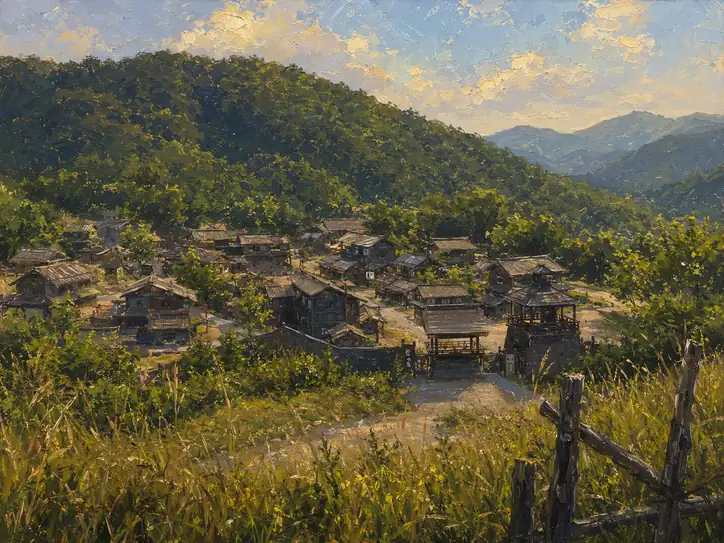 Mountain Village in the Golden Hour
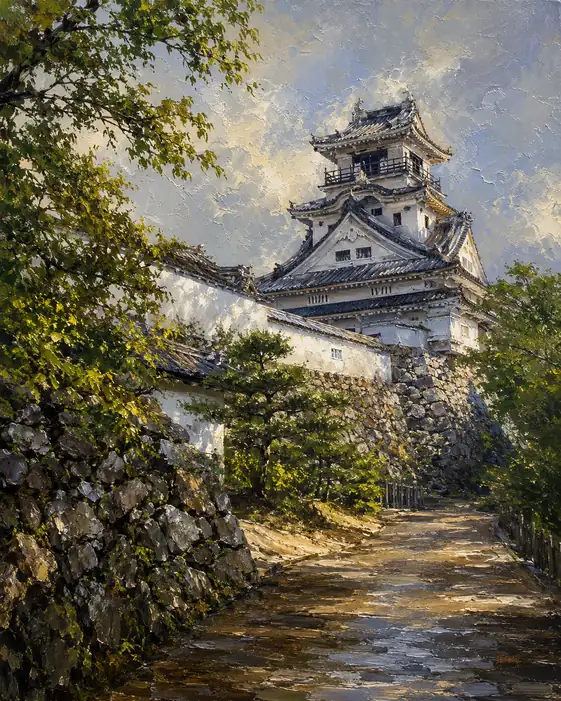 Eternal Fortress of the White Tower
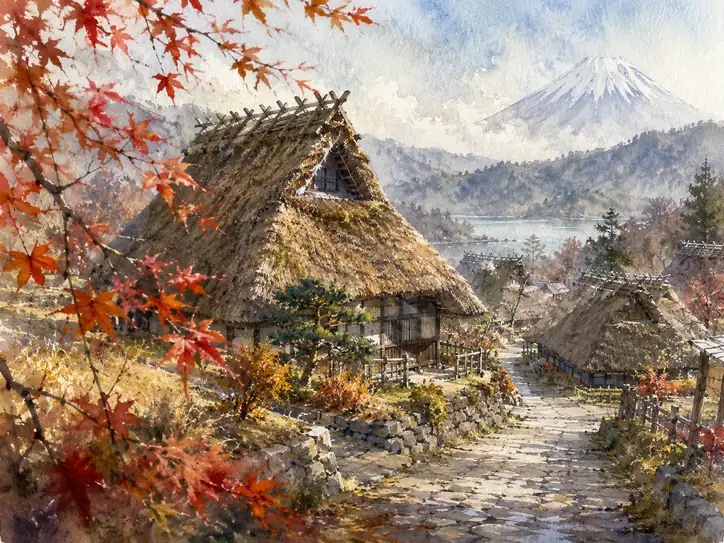 Sanctuary of the Eternal Mountain
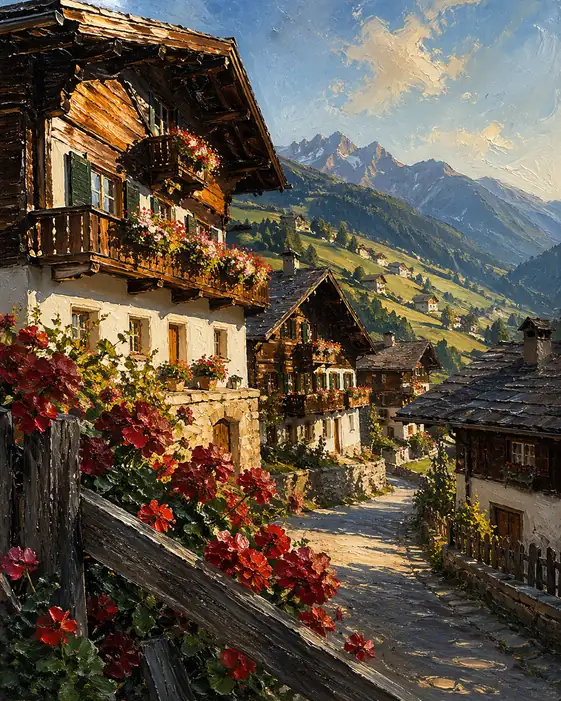 Alpine Chalet Bloom
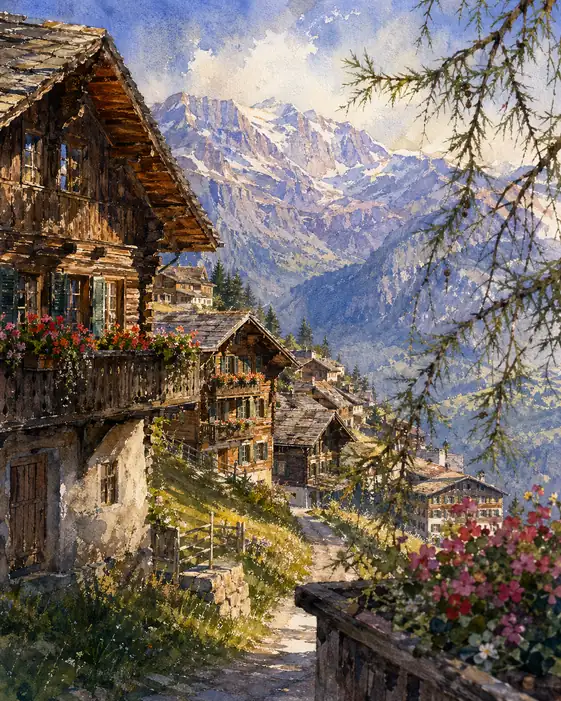 Luminous Alpine View with a Chalet Balcony
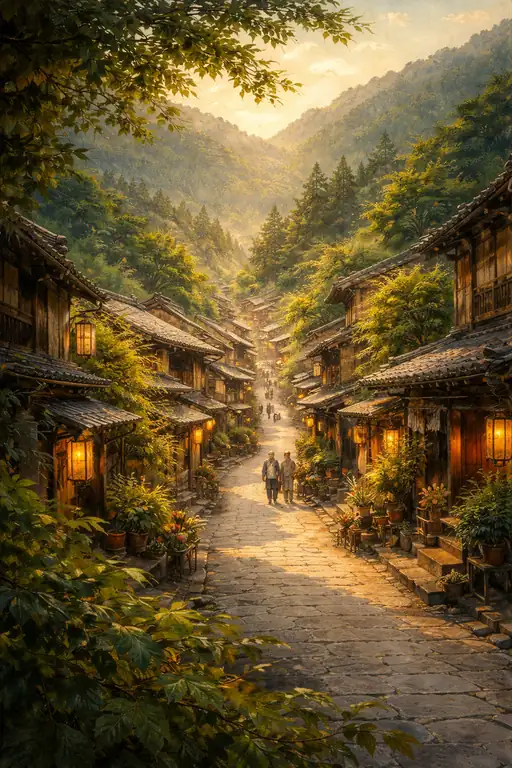 The Warm Embrace of Yesterday's Valley
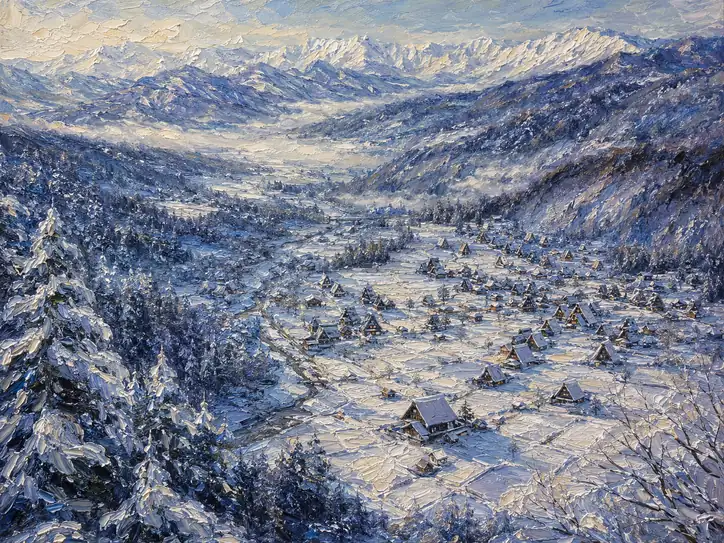 Warmth Beneath the Frozen Thatch
 Where the Mist Whispers