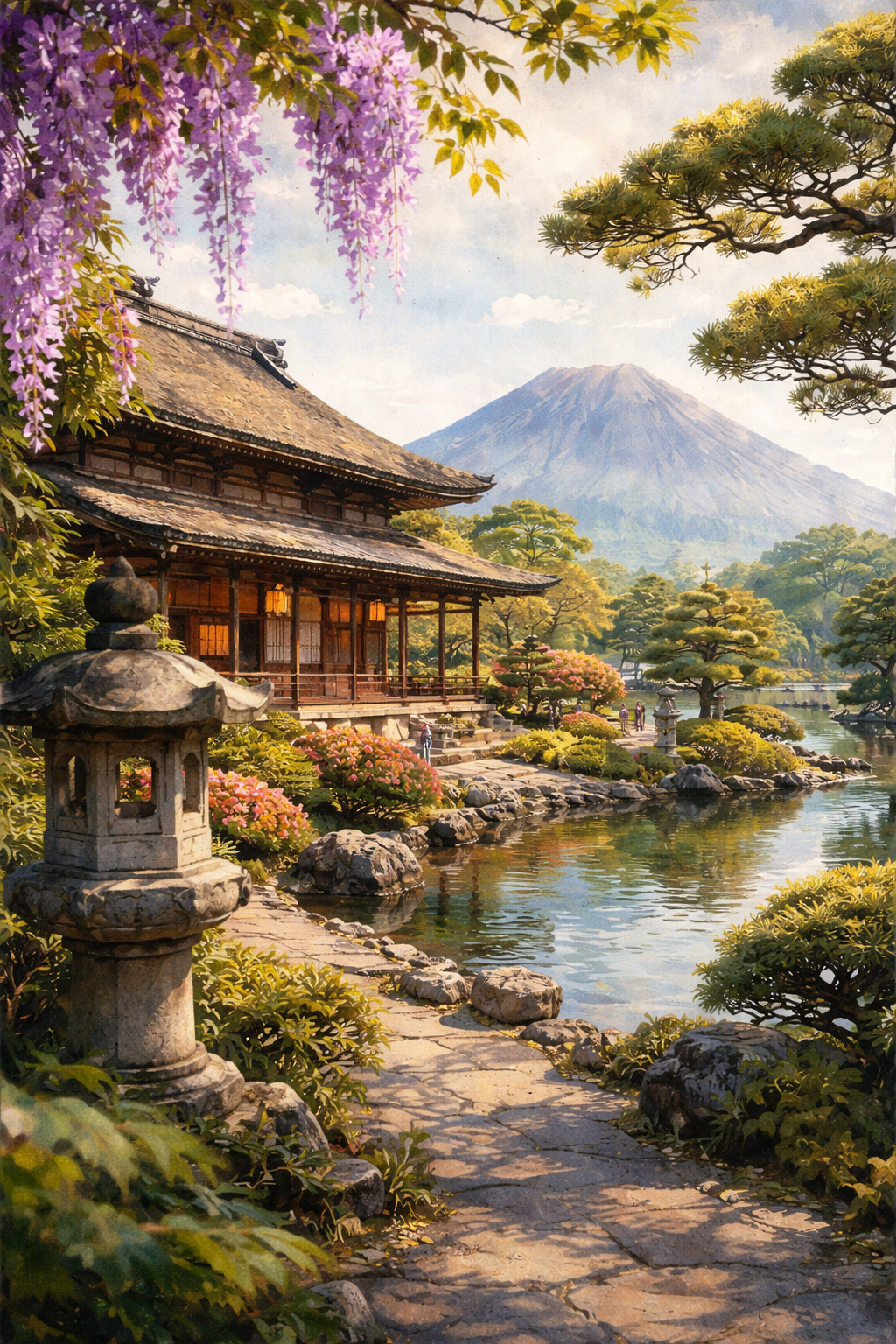
Fuji from the Wisteria Garden
Critique
1. Introduction This painting presents a serene landscape that captures the quintessence of traditional Japanese aesthetic beauty. The composition features a harmonious blend of architectural and natural elements, from a stone lantern in the foreground to Mount Fuji in the distance. Wisteria blossoms add a vibrant touch, establishing a refined atmosphere that celebrates tranquility. 2. Description On the left foreground, a stone lantern sits along a paved path, framed by cascading purple wisteria from above. The mid-ground features a traditional wooden pavilion with a thatched roof by a clear pond. Light glows from the building's interior, while trimmed pines line the water's edge. In the distance, Mount Fuji stands under a bright sky. 3. Analysis The artist employs a layered composition, using vertical forms on the left to balance the horizontal pond and the triangular mountain. The color palette is carefully orchestrated, creating a contrast between vivid violet flowers and lush greens. Lighting is rendered with precision, seen in the dappled sunlight on the stone walkway and the reflections on the water. 4. Interpretation and Evaluation This work conveys the Japanese concept of harmony between human-made structures and the natural world. The artist's attention to detail in the textures of stone and foliage demonstrates profound observational skill. The controlled use of saturation imbues the scene with dignity. By blending classical subject matter with modern light, the painting achieves a unique balance of tradition. 5. Conclusion Overall, this painting is a masterful realization of a classical landscape, executed with clarity. The initial impression of a picturesque courtyard evolves into a deeper appreciation for the spiritual stillness found within this environment. This depiction of nature and heritage serves as a testament to the enduring appeal of the Japanese landscape, offering a profound sense of peace.
Same Subcategory
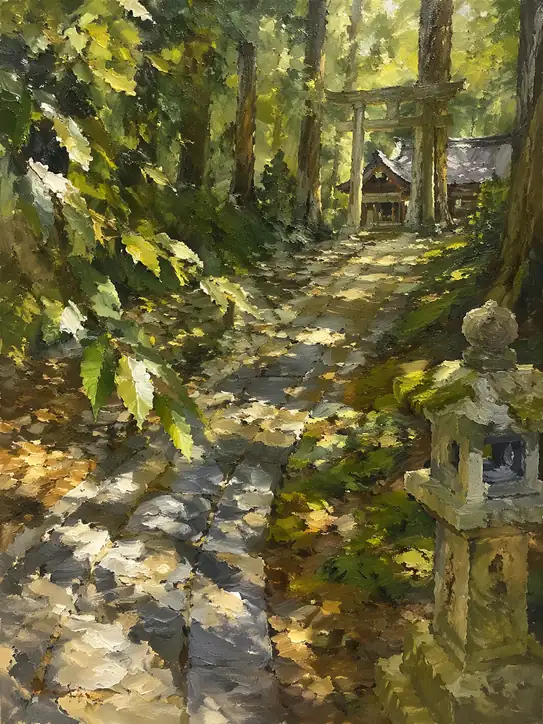 Sacred Light Through the Canopy
Similar Artworks
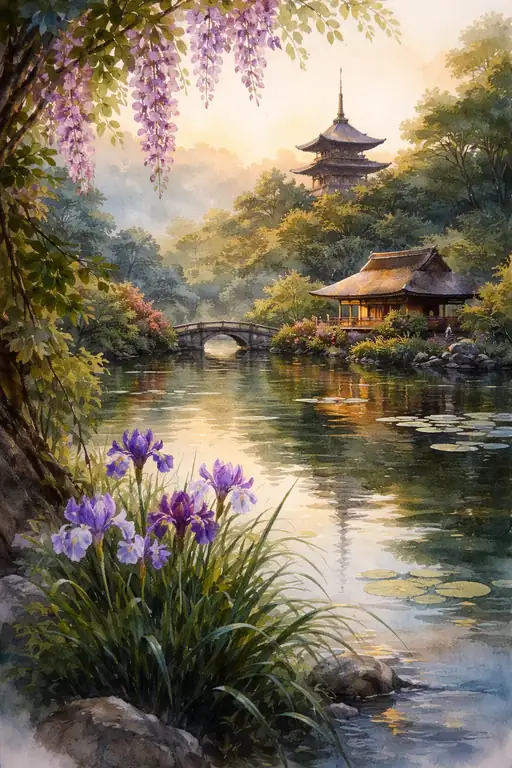 Sunset Harmony in the Temple Garden
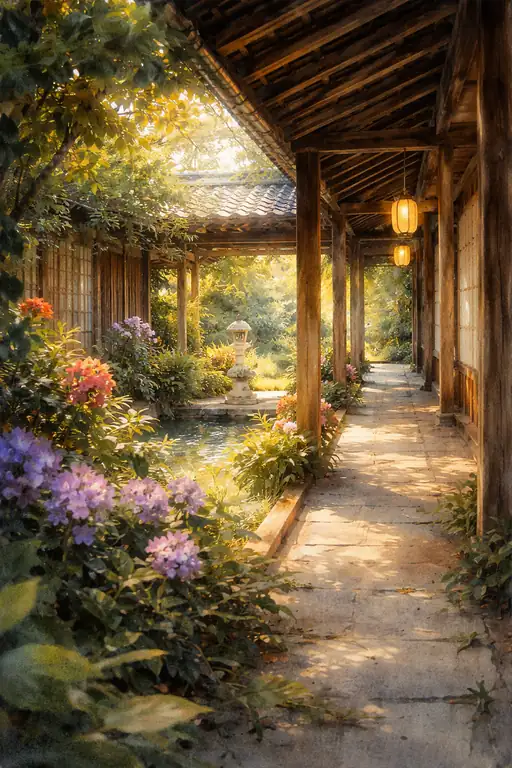 Sunlit Steps to the Sacred Pond
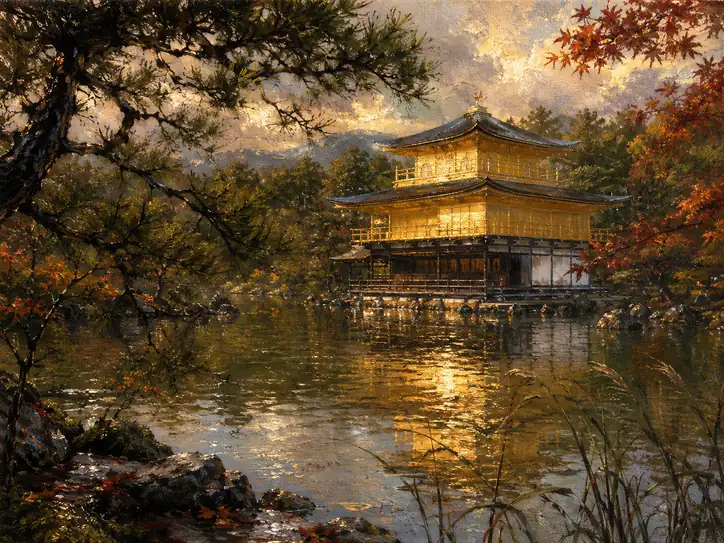 The Echo of Golden Stillness
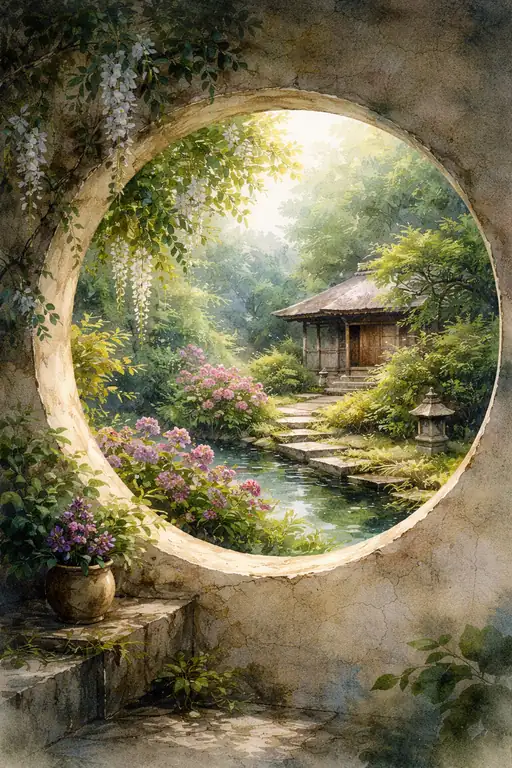 The Moon Window’s Quiet Embrace of the Sleeping Garden
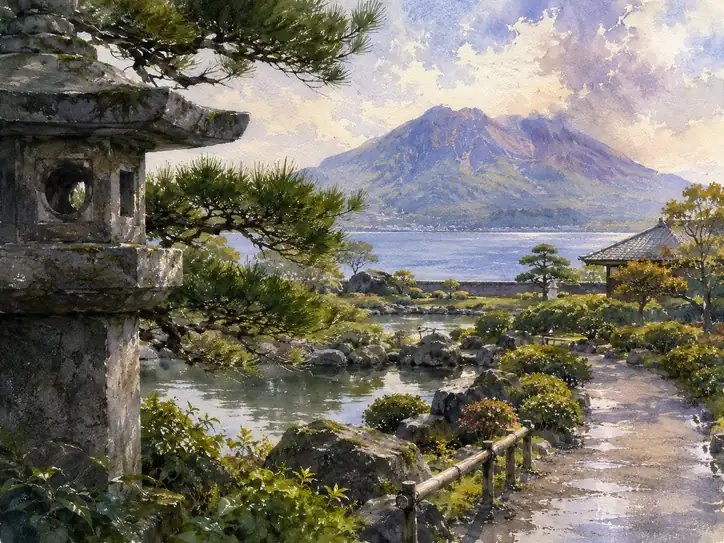 The Sleeping Giant across the Garden
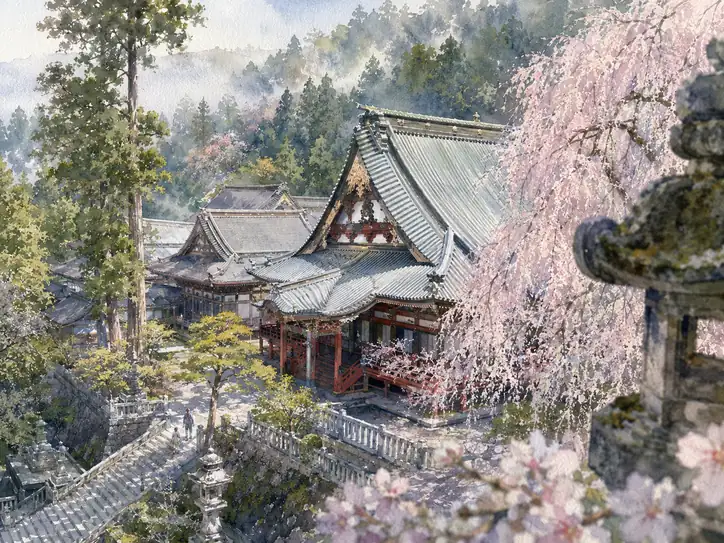 Whispers of the Weeping Sakura
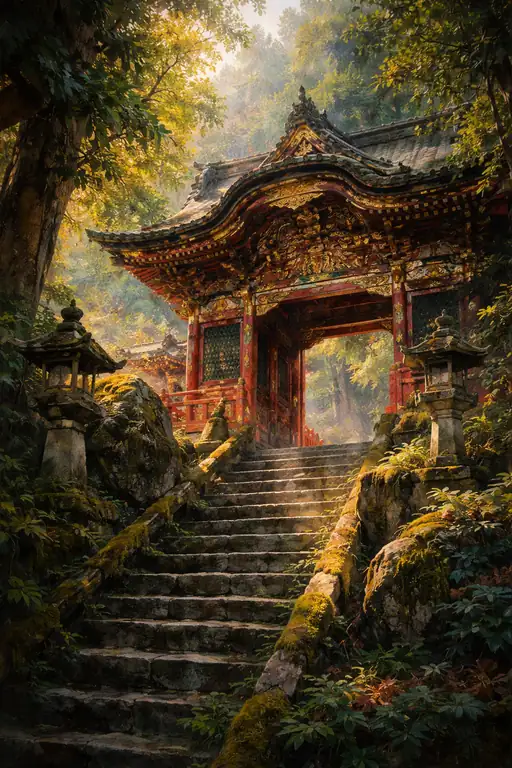 Passage to the Forgotten Sanctuary
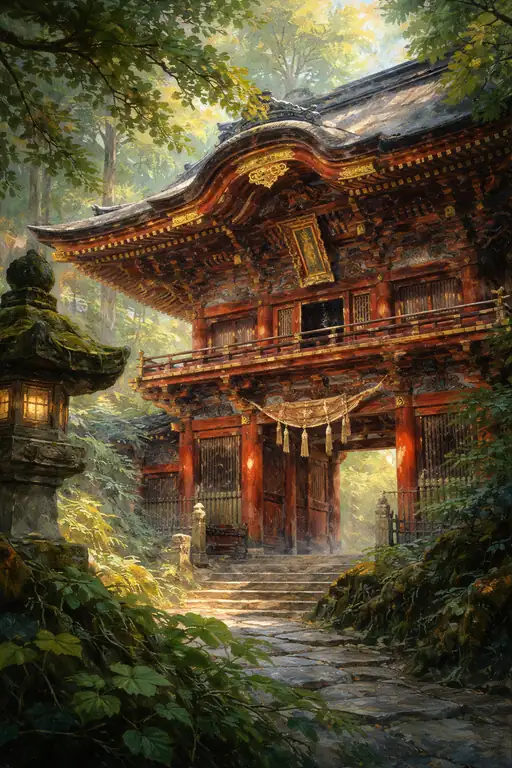 Sunlight on the Sacred Gateway
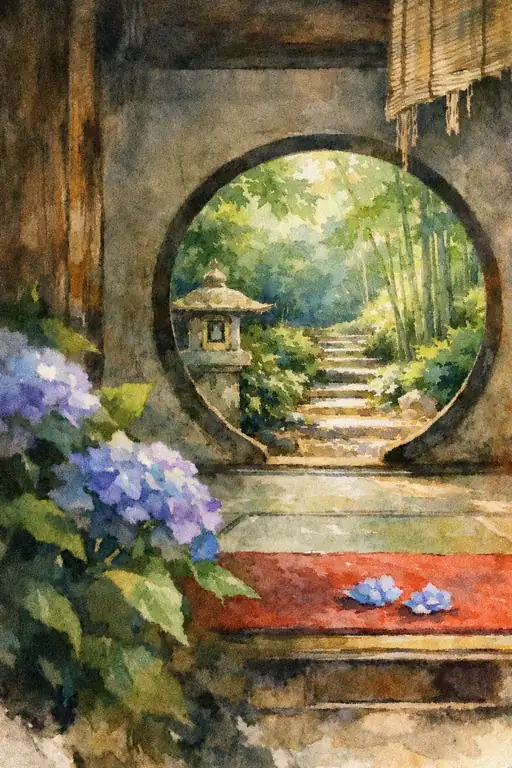 Glimpse of Rain-Kissed Hydrangeas
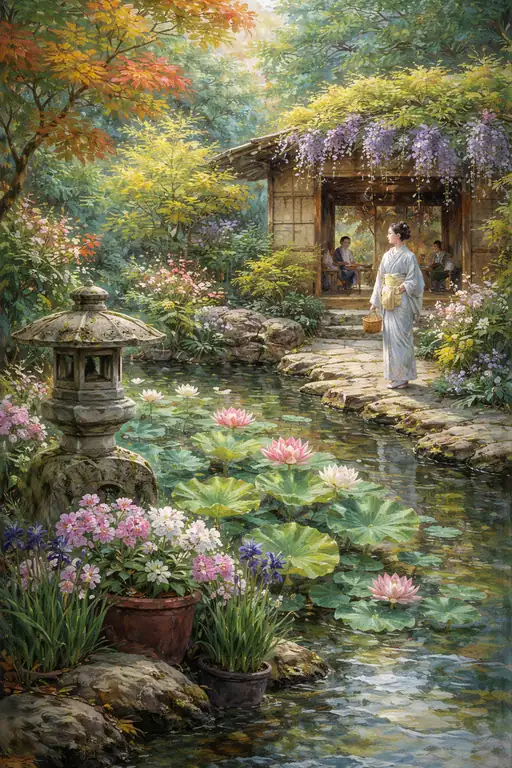 Kaleidoscope of the Forgotten Realm