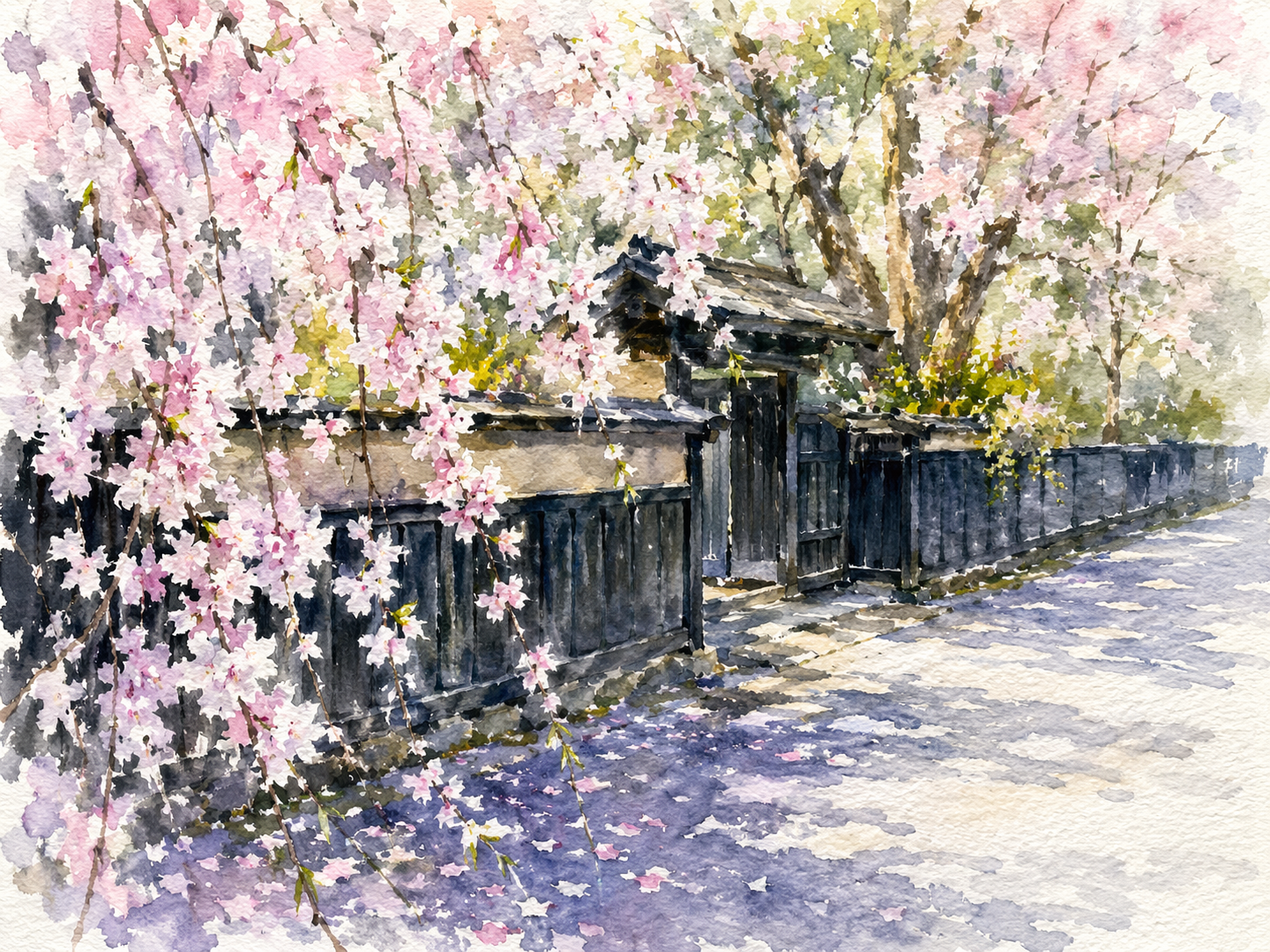
Whispers of the Weeping Spring
Critique
1. Introduction This watercolor painting depicts traditional Japanese earthen walls, a stately gate, and weeping cherry blossoms in full bloom. The scene is bathed in gentle spring sunlight, rendered through delicate and transparent colors. The work balances realistic representation with a lyrical atmosphere, capturing an iconic vista of the Japanese spring. 2. Description The left side features weeping branches laden with blossoms in a gradient of pale pink and white. These flowers contrast sharply against the dark vertical lattice of the wall, creating a clear focal point. In the background, a substantial wooden gate stands firmly amidst trees with fresh green foliage. The ground shows dappled shadows and scattered petals, adding depth and a sense of spring air to the composition. 3. Analysis Technical execution uses watercolor techniques like wet-in-wet and layering to distinguish soft blossoms from weathered wood. The treatment of shadows on the wall and ground realistically captures complex light reflections. Compositionally, the diagonal wall guides the viewer's eye into the depth of the scene. Furthermore, the vertical flow of the branches provides a musical rhythm that complements the static harmony of the architecture. 4. Interpretation and Evaluation The work captures the universal beauty of Japan’s seasons through a sensitive use of contrasting tones. Combining a motionless human structure with dynamic, wind-swept nature is a classic theme executed with skill. The portrayal of luminosity stimulates the viewer’s imagination. Meticulous brushwork used for the sunbeams filtered through leaves reveals the artist’s sharp observational skills and excellent control over spatial relationships. 5. Conclusion Achieving impressive detail, this painting serves as an outstanding piece that preserves a fleeting moment of spring brilliance. While initially appearing as a vibrant landscape, deeper engagement reveals the historical weight of the setting and the inherent transience of the season. This transition from visual splendor to a profound poetic sentiment marks the greatest strength of the composition.
Same Subcategory
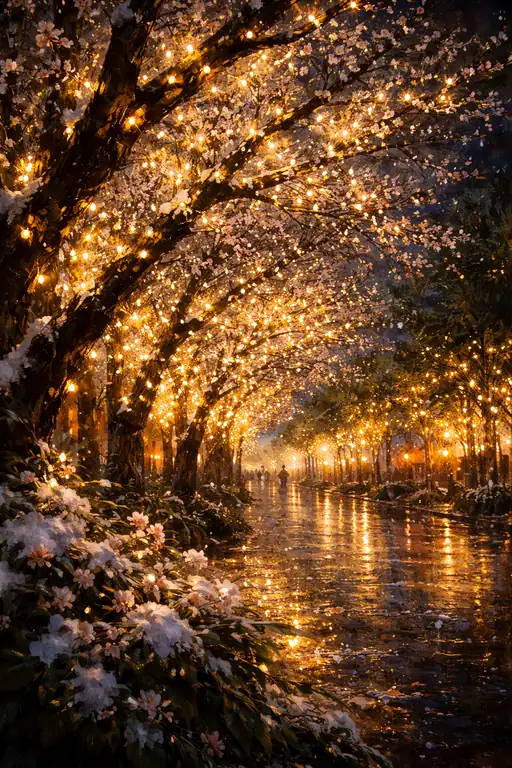 The Golden Path of Winter Blooms
Similar Artworks
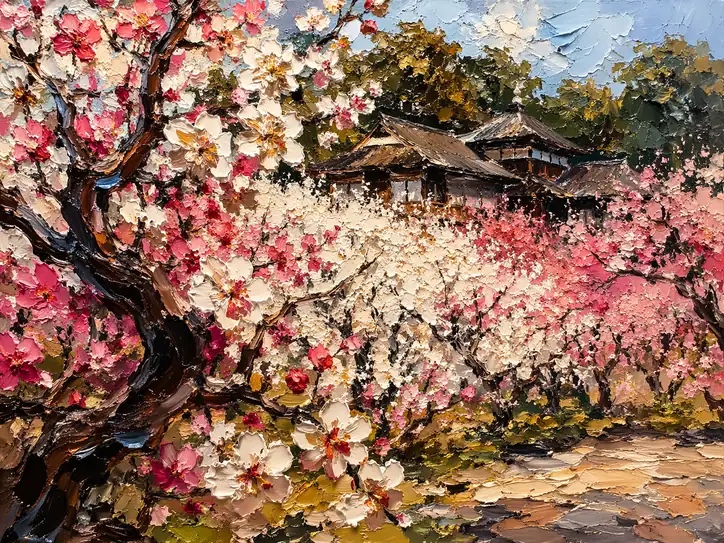 Eternal Bloom in a Fleeting Spring
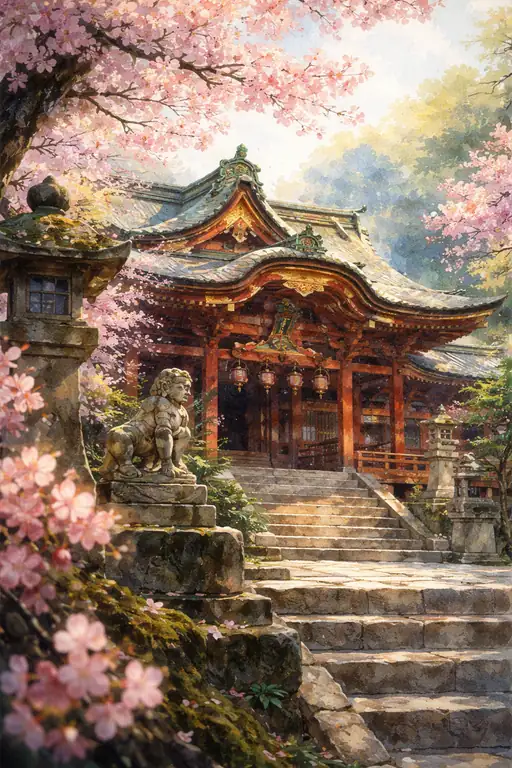 Whispers of the Spring Sanctuary
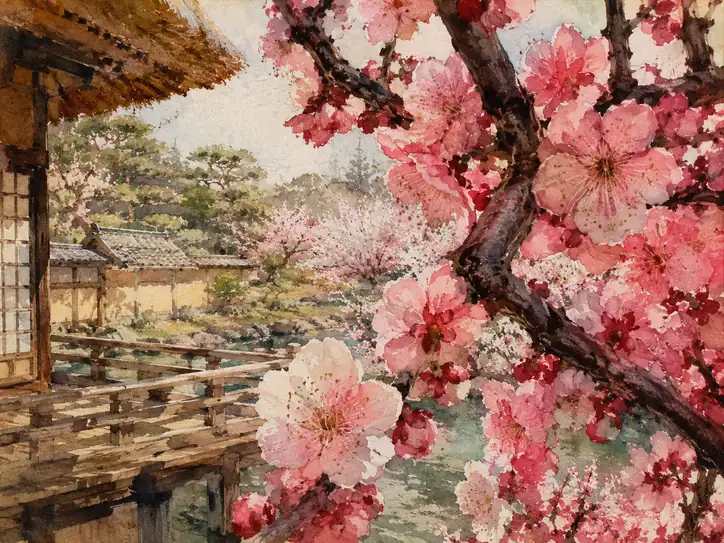 Where the Spring Wind Pauses
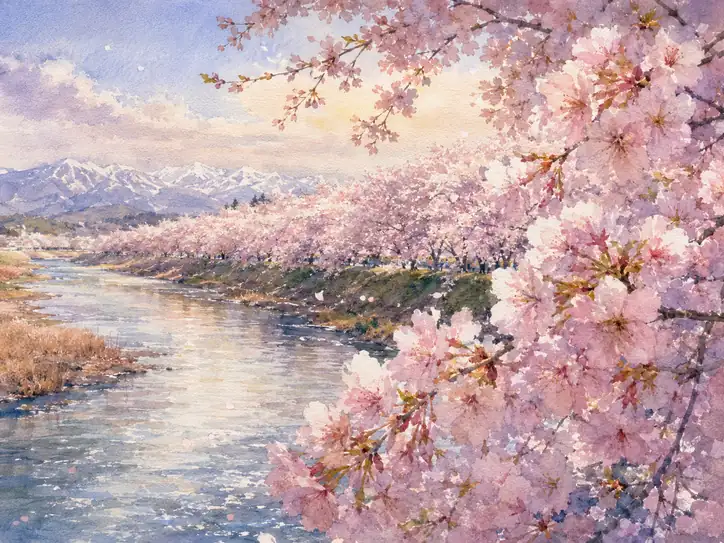 Spring Reflections by the Snowy Peaks
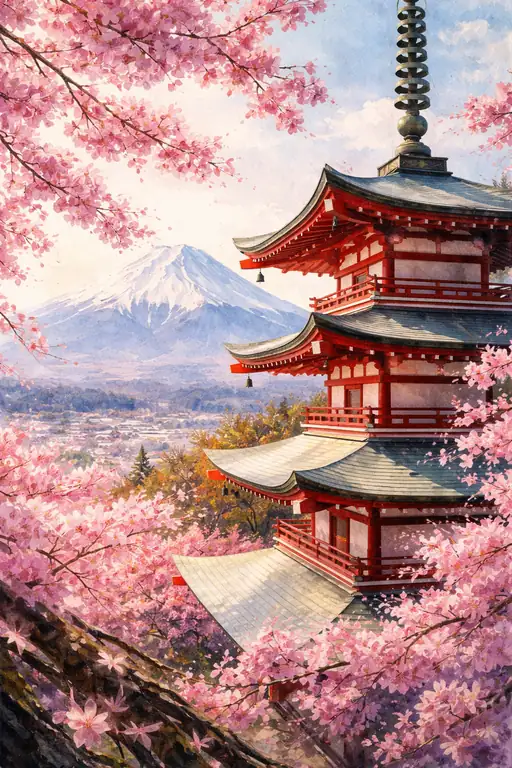 Spring Awakens the Sacred Peak
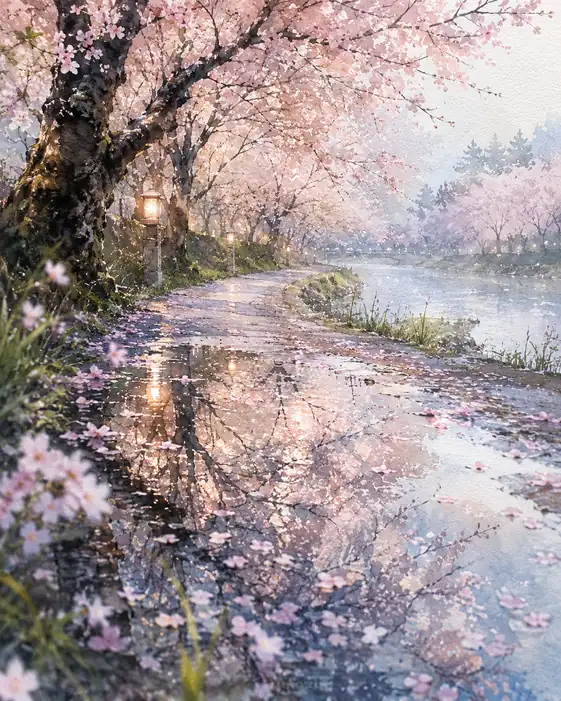 Morning Reflections Along the Cherry Path
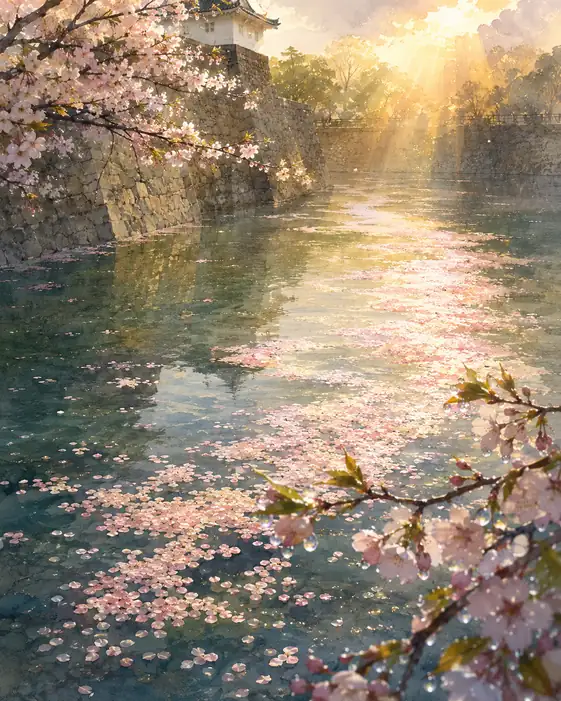 Whispering Dews at First Light
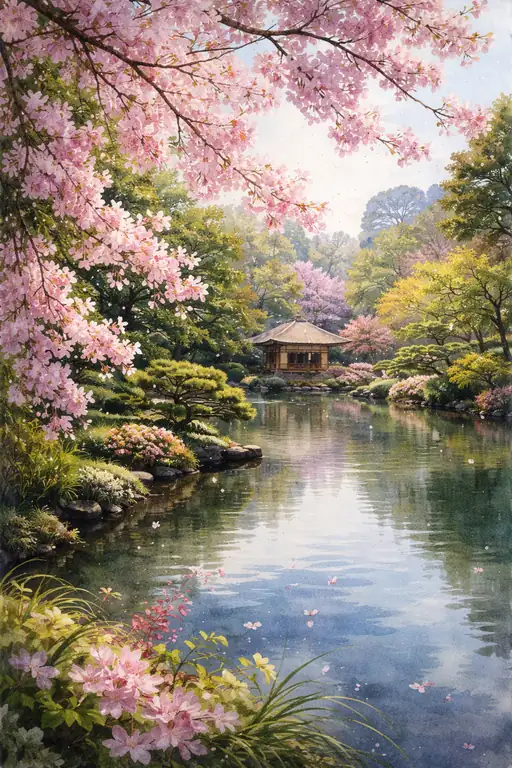 Sakura's Reflection in the Quiet Garden
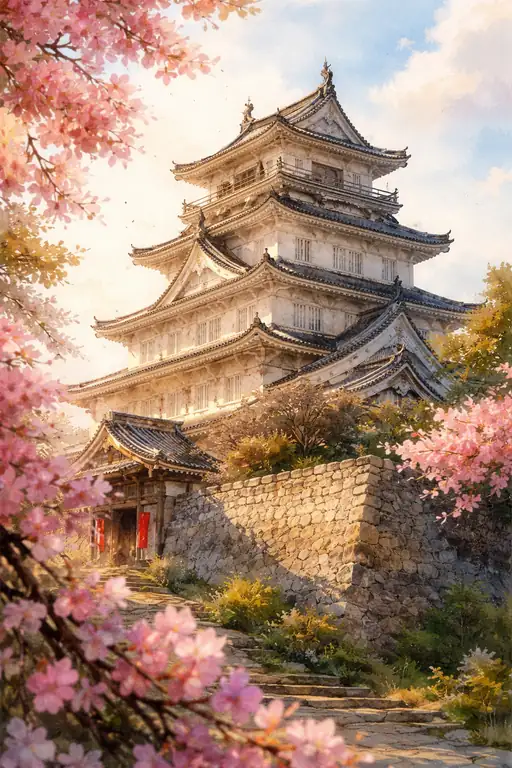 A Fortress of Petals: Harmony in Stone and Bloom
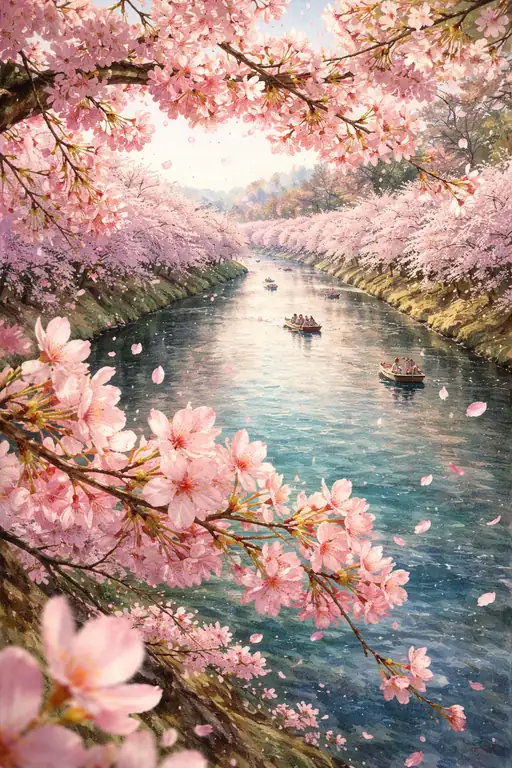 Drifting Through a World of Pink Mist