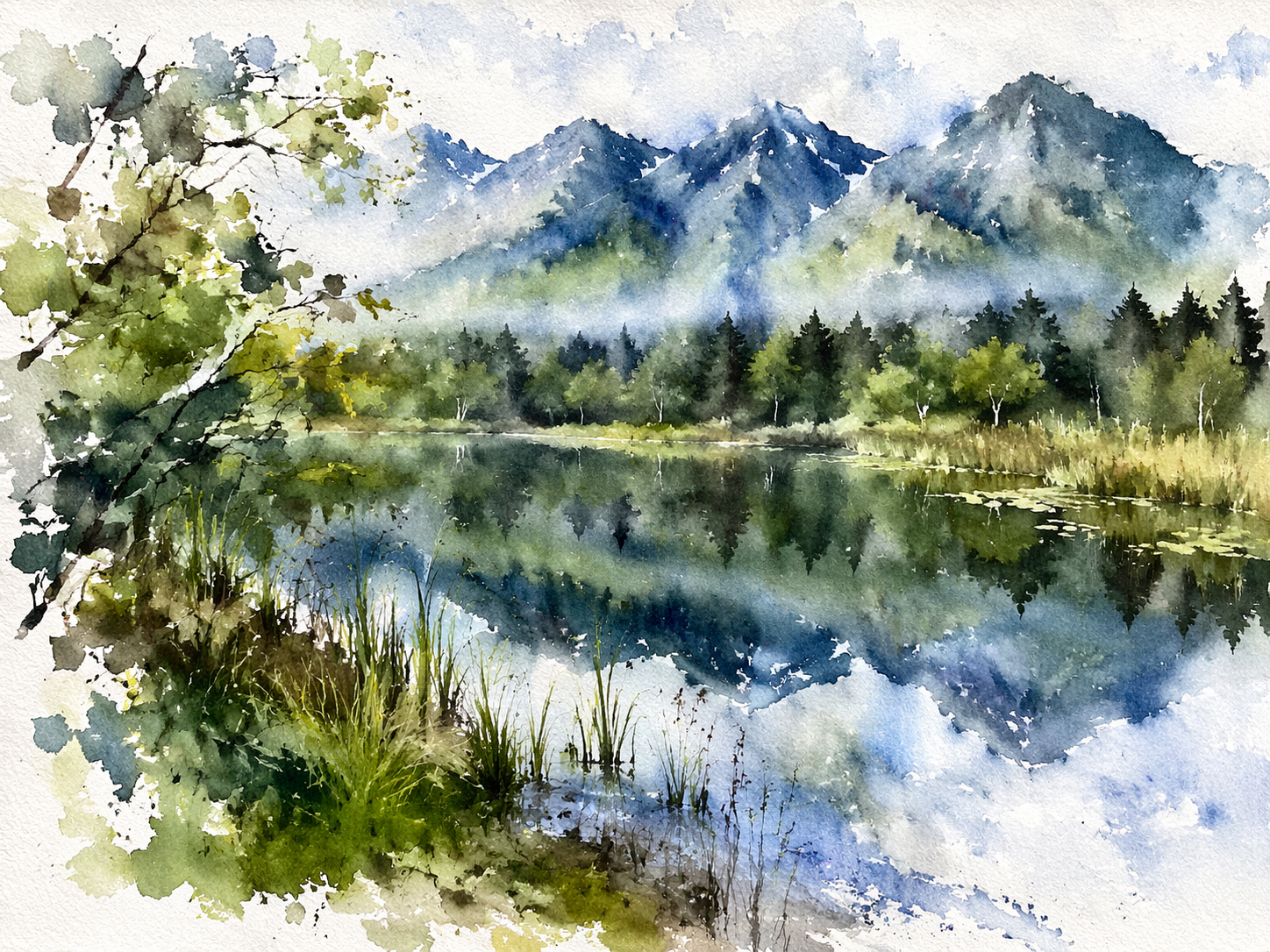
Whispers of Mist Upon the Alpine Mirror
Critique
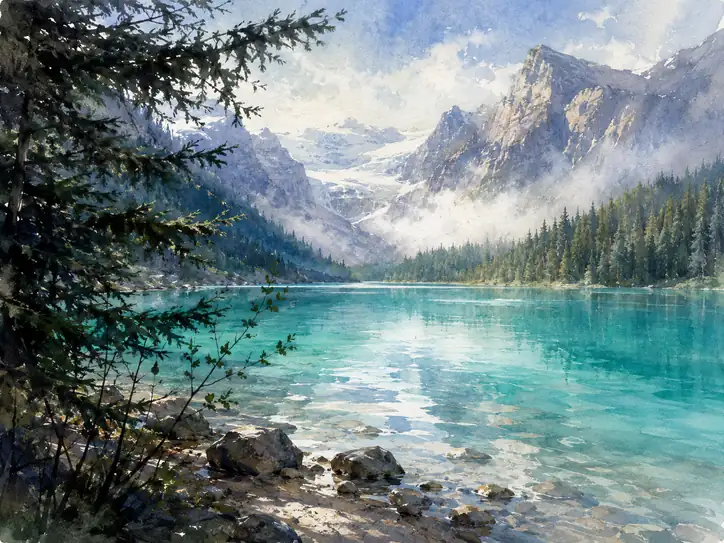
1. Introduction This work is a landscape painting executed in watercolor, emphasizing the fluid and expressive qualities of the medium. The composition focuses on a tranquil mountain lake surrounded by dense vegetation and rugged peaks. The artist utilizes atmospheric effects to capture a moment characterized by mist and soft light, creating a sense of natural serenity. 2. Description The foreground features a grassy lakebank with delicate reeds, while a leafy tree encroaches from the left margin. The middle ground is occupied by a dark forest of coniferous trees, whose silhouettes are perfectly mirrored in the still water of the lake. In the background, three prominent mountain peaks rise into a cloudy sky, their lower slopes partially obscured by a lingering fog. The transition between land, water, and sky is handled with soft, blended edges. 3. Analysis Technical mastery is evident in the use of wet-on-wet techniques, allowing colors to bleed and mingle naturally. The artist has also incorporated subtle splatters and blooms that add a feeling of spontaneity and organic texture to the foliage and sky. The color palette is restricted yet effective, relying on deep indigos and forest greens to create depth, while the unpainted white of the paper serves as both mist and brilliant light. 4. Interpretation and Evaluation The painting prioritizes emotional resonance and atmosphere over meticulous topographical detail. This approach yields a highly expressive result where the landscape feels almost ethereal, like a fading memory of a silent morning. The balance of heavy pigments in the reflections against the airy treatment of the sky demonstrates a sophisticated understanding of visual weight. The overall execution is both confident and delicate, showing a high degree of artistic sensitivity. 5. Conclusion Upon initial viewing, the piece captivates with its misty charm, but closer study reveals a deliberate control of the watercolor medium's unpredictable nature. It successfully transcends simple representation to evoke a profound sense of stillness and contemplation. This work stands as a poignant example of how atmospheric perspective can be used to imbue a classical subject with a modern, lyrical quality.
Same Subcategory
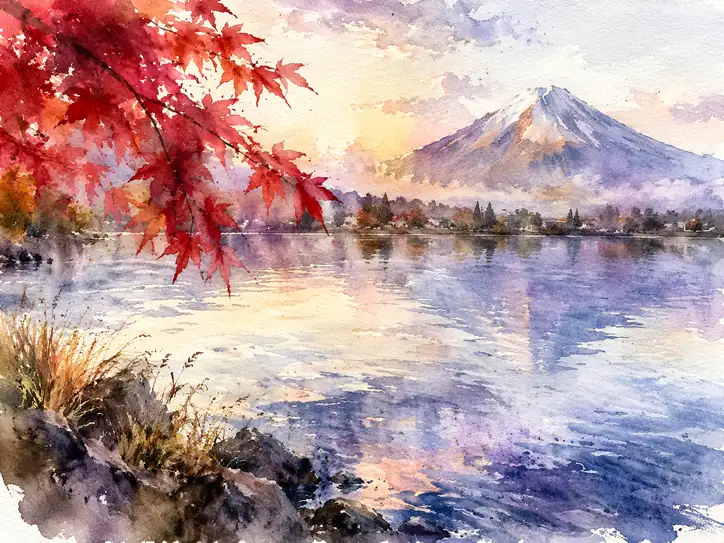 A Crimson Reverie at the Foot of Fuji
Similar Artworks
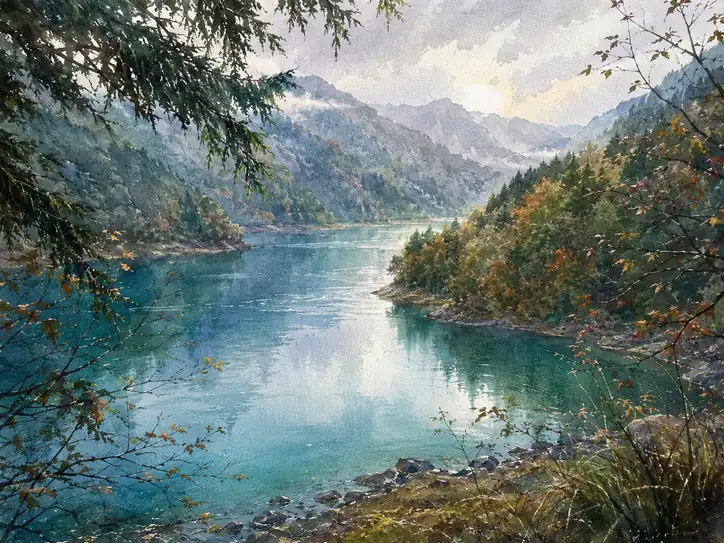 Echoes of Tranquility: The Sapphire Haven
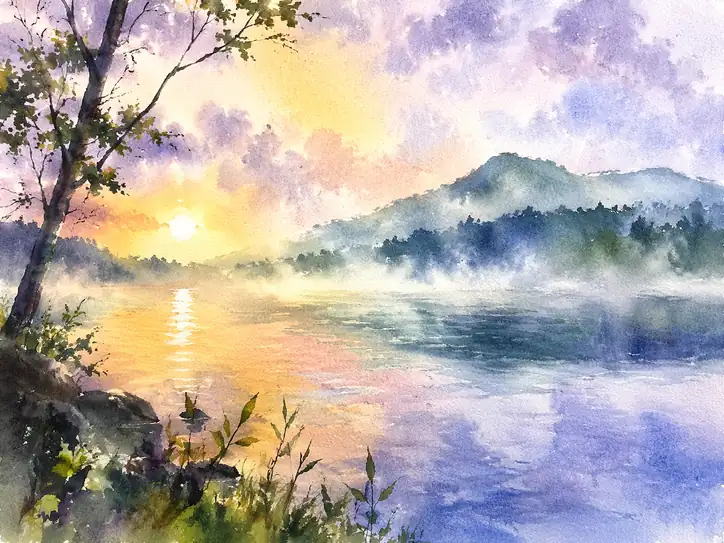 Golden Ripple in the Quiet Morning Mist
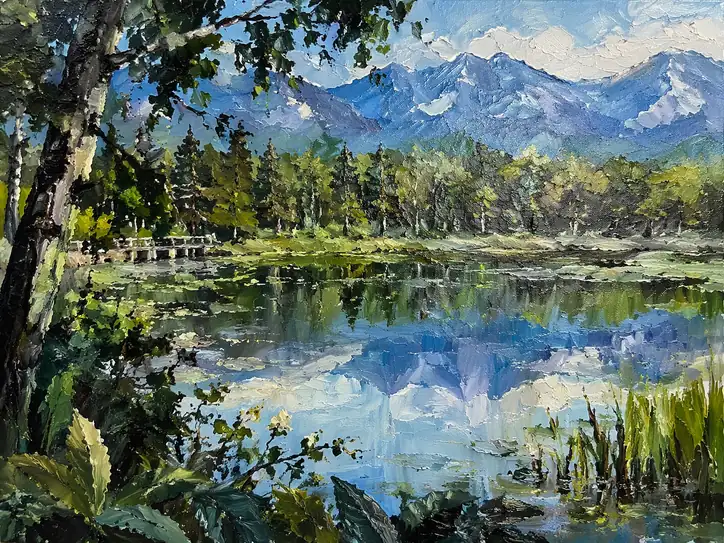 Vibrating Light Beneath the Majestic Peaks
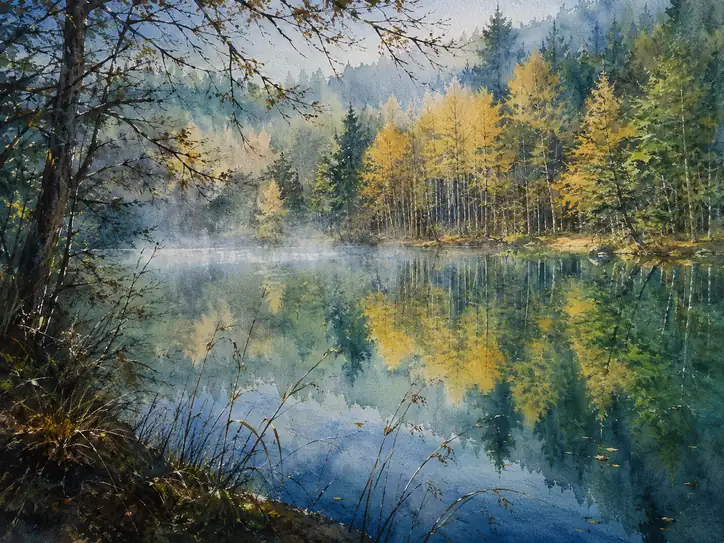 The Golden Mirror of My Soul
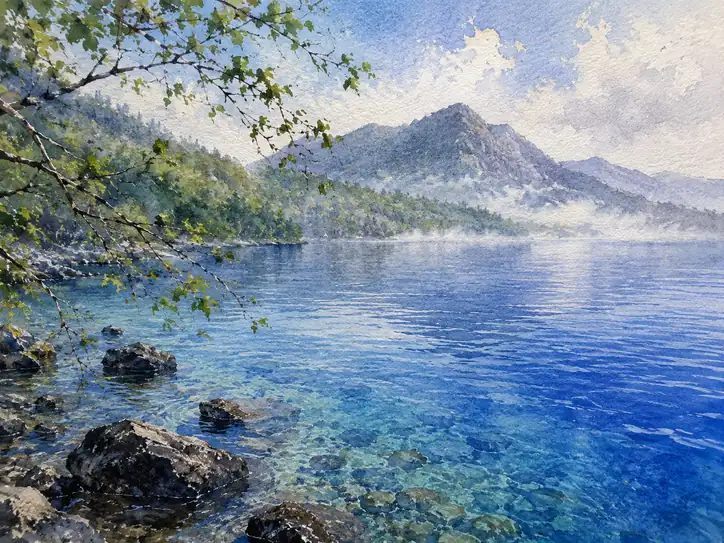 The Silence of Sapphire Depths
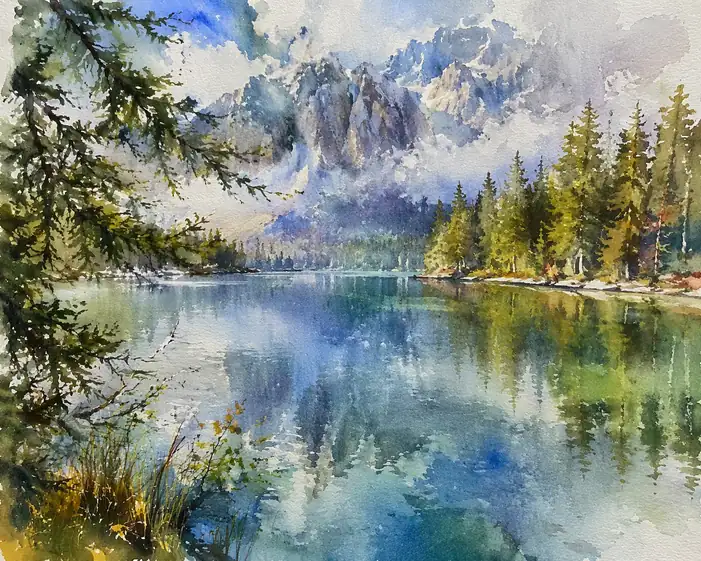 Emerald Depths: The Silent Mirror of the Pines
 The Mountain Dreams Twice
 Caldera Mist and Silent Waters
 Where Silence Breathes
 Serenity in the Emerald Mirror