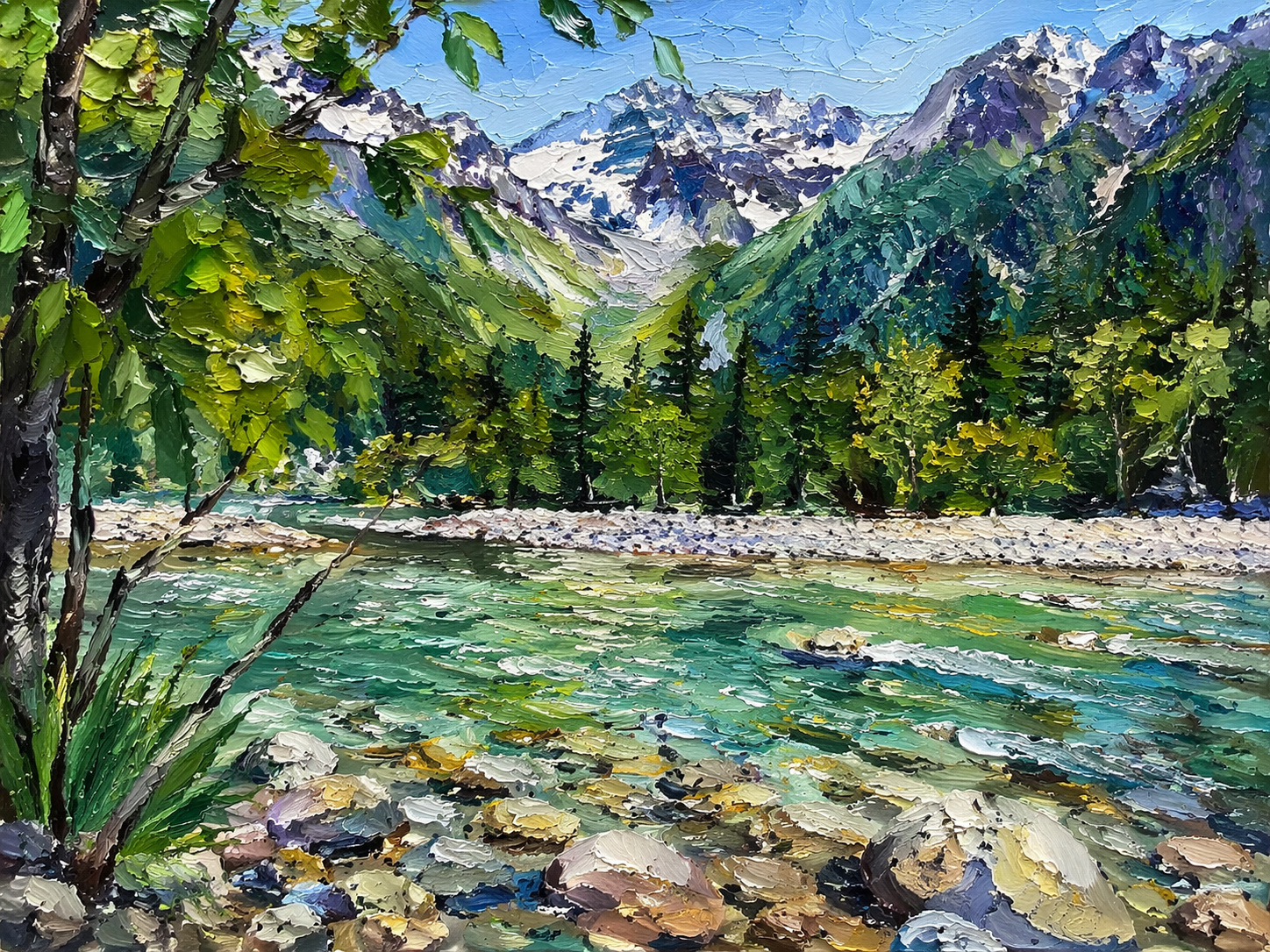
The Crystal Veins of the Mountain
Critique
1. Introduction This oil painting presents a dynamic and vibrant alpine landscape featuring a crystal-clear river flowing from majestic, snow-capped mountains. The work captures the pristine beauty of nature through a bold and expressive impasto technique. It emphasizes the vitality of the ecosystem, utilizing a rich varied palette to convey the complex interplay of light, water, and earth in a high-altitude setting. 2. Description The foreground is dominated by a clear, turquoise river that flows across the mid-ground, its surface filled with churning white water and reflected light. Beneath the water and along the banks, numerous rounded stones and pebbles are rendered in earthy tones of grey, ochre, and mauve. In the mid-ground, a dense line of conical evergreen trees stands against the base of massive, jagged peaks that rise into a bright blue sky. On the left, a leafy deciduous tree frames the scene, its branches reaching into the composition. 3. Analysis The artist uses a sophisticated color palette where the luminous greens and turquoises of the water contrast sharply with the deep greens of the forest and the stark whites of the mountain snow. The composition is structured around horizontal bands—the rocky riverbed, the flowing water, the forest, and the mountains—creating a sense of depth and scale. The heavy application of paint creates a tactile surface, where individual brushstrokes act as structural elements, particularly in the rendering of the turbulent water and textured rocks. 4. Interpretation and Evaluation This painting is a masterful celebration of the sublime in nature, portraying the mountains as both ancient and full of life. The choice of a high-key color scheme and thick texture suggests a sensory immersion into the landscape, where the sound of the river and the coolness of the air are almost felt. Technically, the work is impressive for its ability to maintain clarity and representative accuracy despite the aggressive and fragmented nature of the brushwork. 5. Conclusion In conclusion, the work is an evocative tribute to the enduring power and beauty of the natural world. The initial impression of a busy, textured surface eventually gives way to a balanced and deeply harmonious vista of a mountain sanctuary. It stands as a significant example of modern landscape painting, where traditional subject matter is revitalized through a contemporary and energetic application of medium.
Same Subcategory
 Whispers of the Damp Earth
 Jungle River: The Silent Flow of Paradise
Similar Artworks
 Where the Soul Meets the Stream
 Whispers of the Crystal Current
 The Crystalline Lyric of the Sunlit Stream
 The Vehement Rush of the Mountain Stream
 Breath of the Emerald Canyon
 Whispers of the Crystal Stream
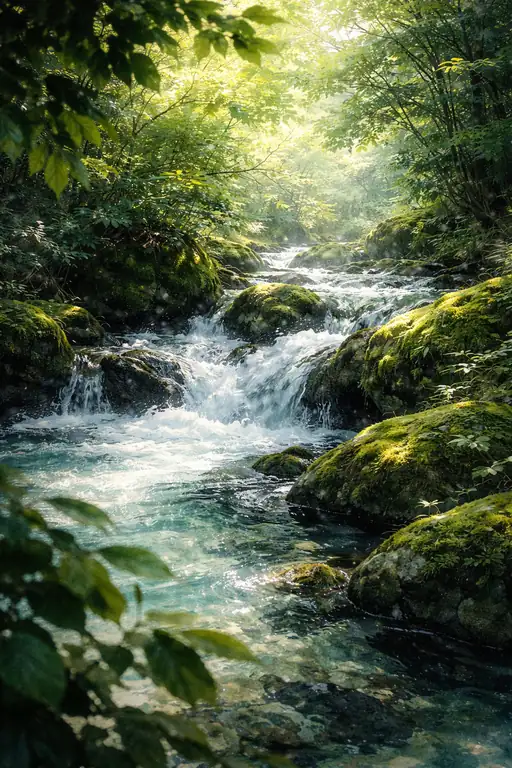 Sanctuary of the Emerald Stream
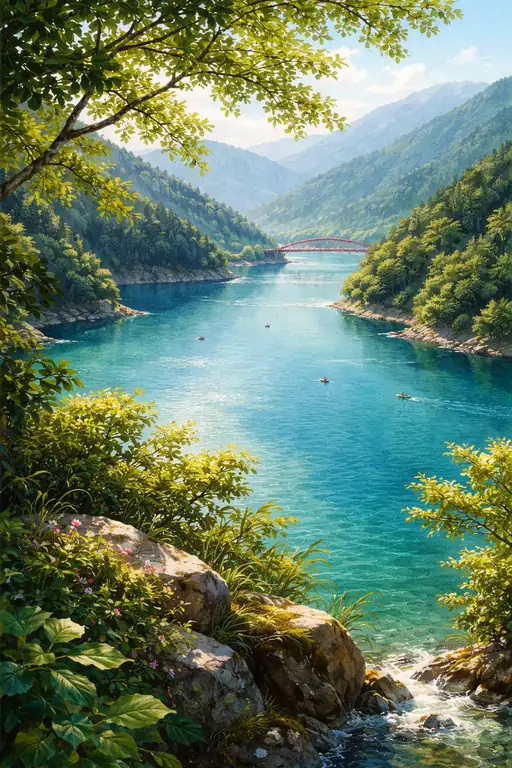 Serenity's Echo in the Emerald Valley
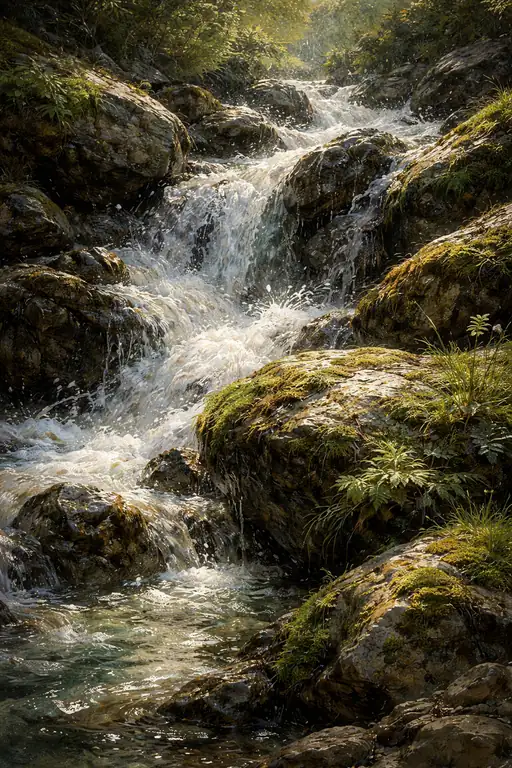 Jewels of the Morning Stream
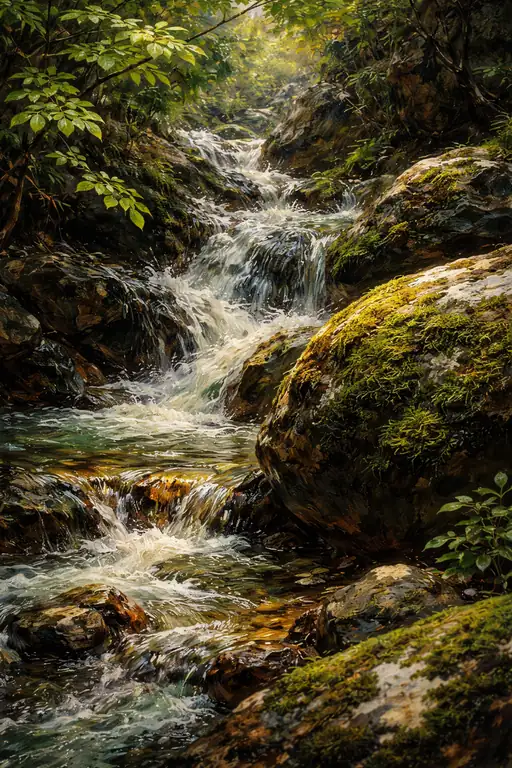 Vibrant Veins of the Woodland