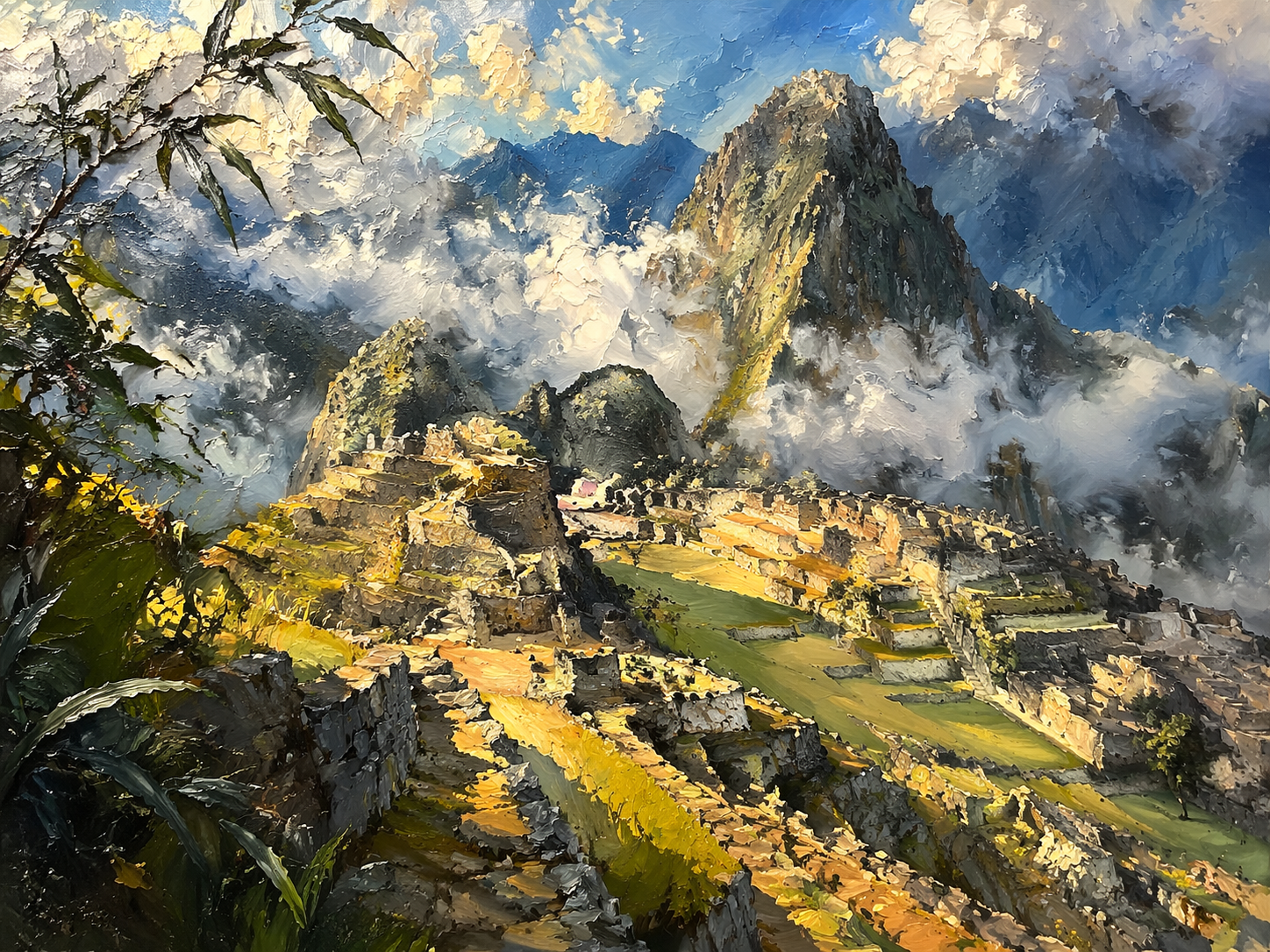
Echoes of the Ancients
Critique
1. Introduction This painting presents a grand panoramic view of an ancient mountain citadel, reminiscent of Machu Picchu. The scene captures the majestic integration of historical architecture with a rugged natural landscape. It immediately establishes a sense of timelessness through its monumental scale. The viewer is brought into a high-altitude world where stone and sky meet in a dramatic display of texture and light. 2. Description The composition features staggered stone terraces in the foreground and middle ground, leading toward a towering central peak. Billowing white clouds and mist partially obscure the distant blue mountains, creating a sense of immense depth. Sharp light illuminates the grassy pathways and stone remains, casting long shadows across the ruins. A dark, leafy branch frames the upper-left corner, adding a layer of intimacy to the vast vista. 3. Analysis The artist employs a heavy impasto technique, where thick layers of oil paint create a tactile surface across the canvas. Strong, rhythmic brushstrokes define the rocky textures of the mountains and the crumbling masonry of the structures. A palette of ochre, earthy browns, and deep greens is balanced by the brilliant blues and whites of the sky. The lighting is focused, highlighting the golden hues of the ancient site against the cool shadows. 4. Interpretation and Evaluation The work succeeds in conveying the spiritual and historical weight of the subject through its expressive handling of paint. The choice of thick texture suggests the enduring strength of the stone ruins against the fleeting elements of mist and cloud. The composition is balanced and leads the eye smoothly from the foreground details to the distant peaks. This approach demonstrates a strong understanding of both architectural form and atmospheric perspective. 5. Conclusion Through its vibrant execution, the painting transforms a well-known historical landmark into a dynamic and visceral experience. The heavy textures and bold colors effectively bridge the gap between realism and expressive abstraction. This piece leaves the audience with a profound sense of awe regarding the resilience of ancient civilizations. It serves as a powerful testament to the enduring majesty of high-altitude heritage.
Same Subcategory
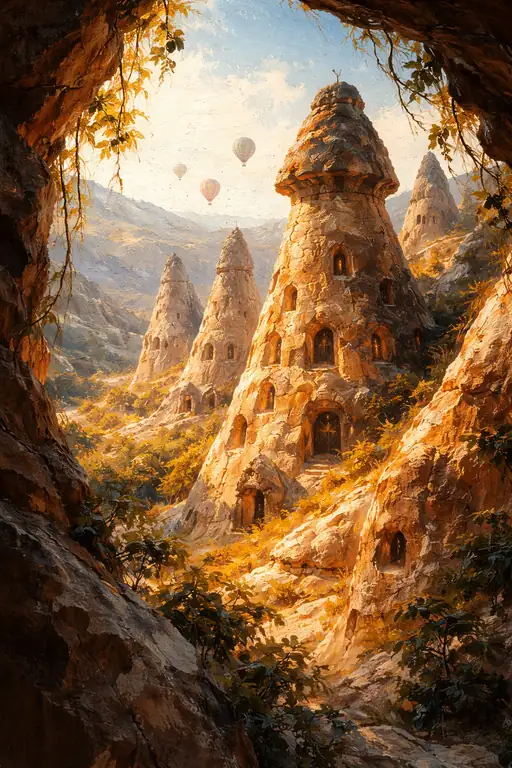 Gaze Upon the Golden Chimneys
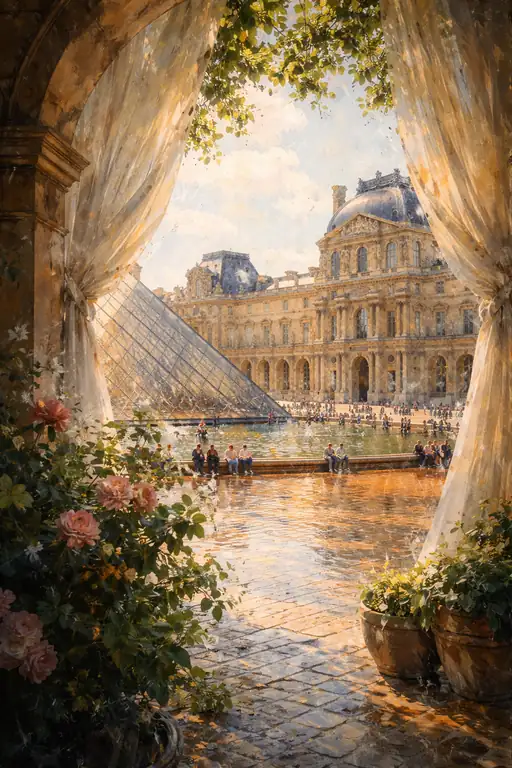 Louvre Courtyard Through the Arch
Similar Artworks
 Sanctuary in the Swirling Mist
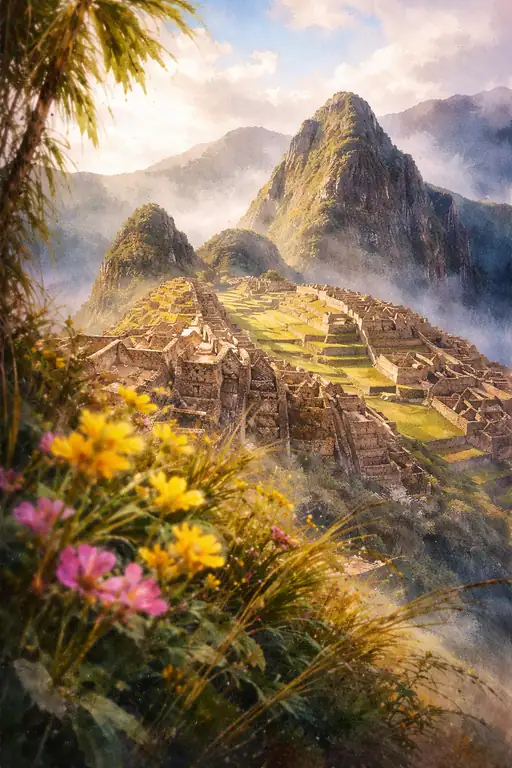 Crown of the Highland Whispers
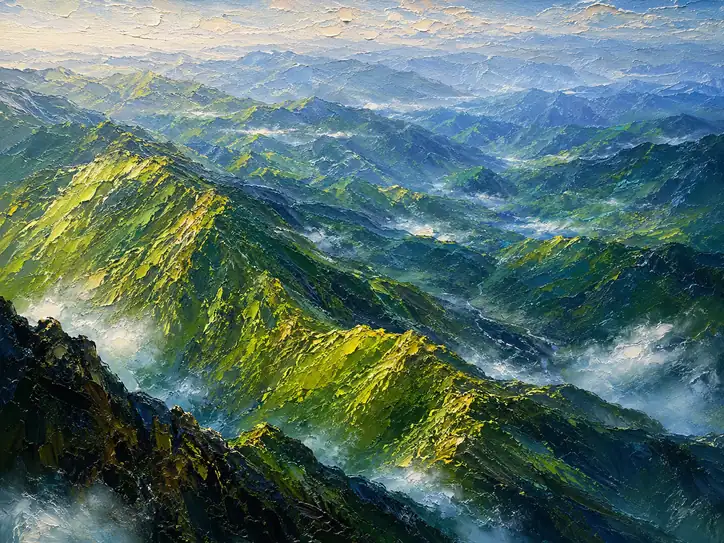 The Titan's Golden Crest
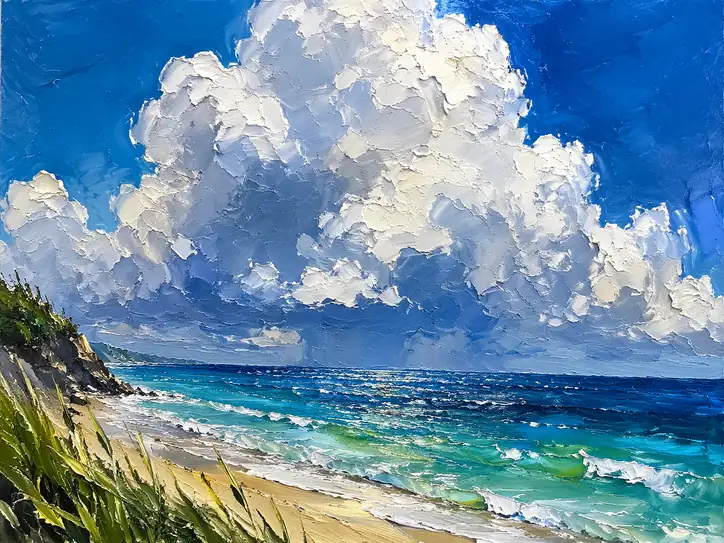 The Gathering Storm: Summer's Impasto Sky
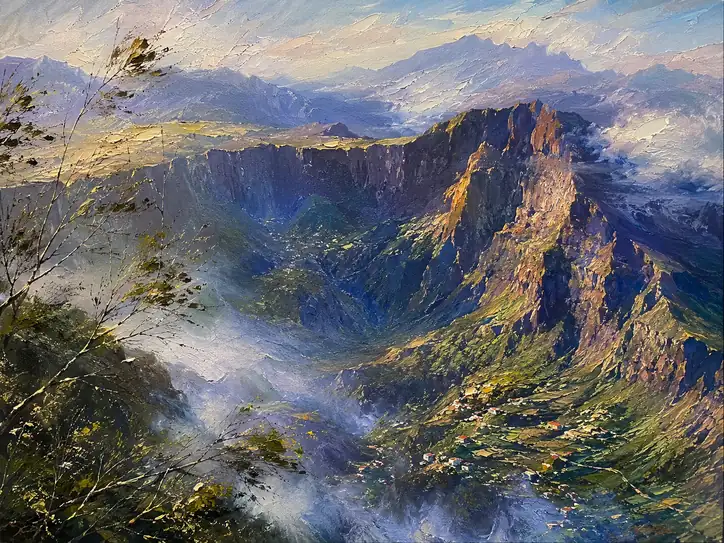 Watching the Mist Veil the Highlands
 A Rainbow Journey to the Horizon
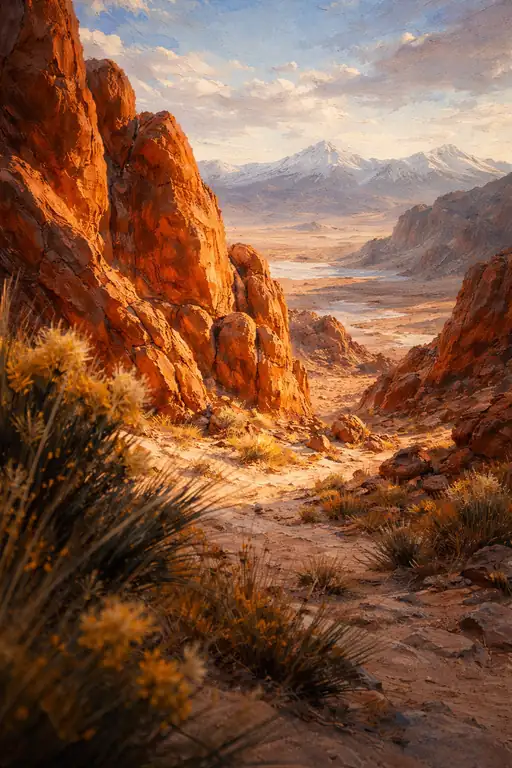 The Immutable Majesty of the Andes
 Bastion Floating in the Morning Mist
 Echoes of the Golden Empire
 From Shadowed Spire to Shining Sanctuary