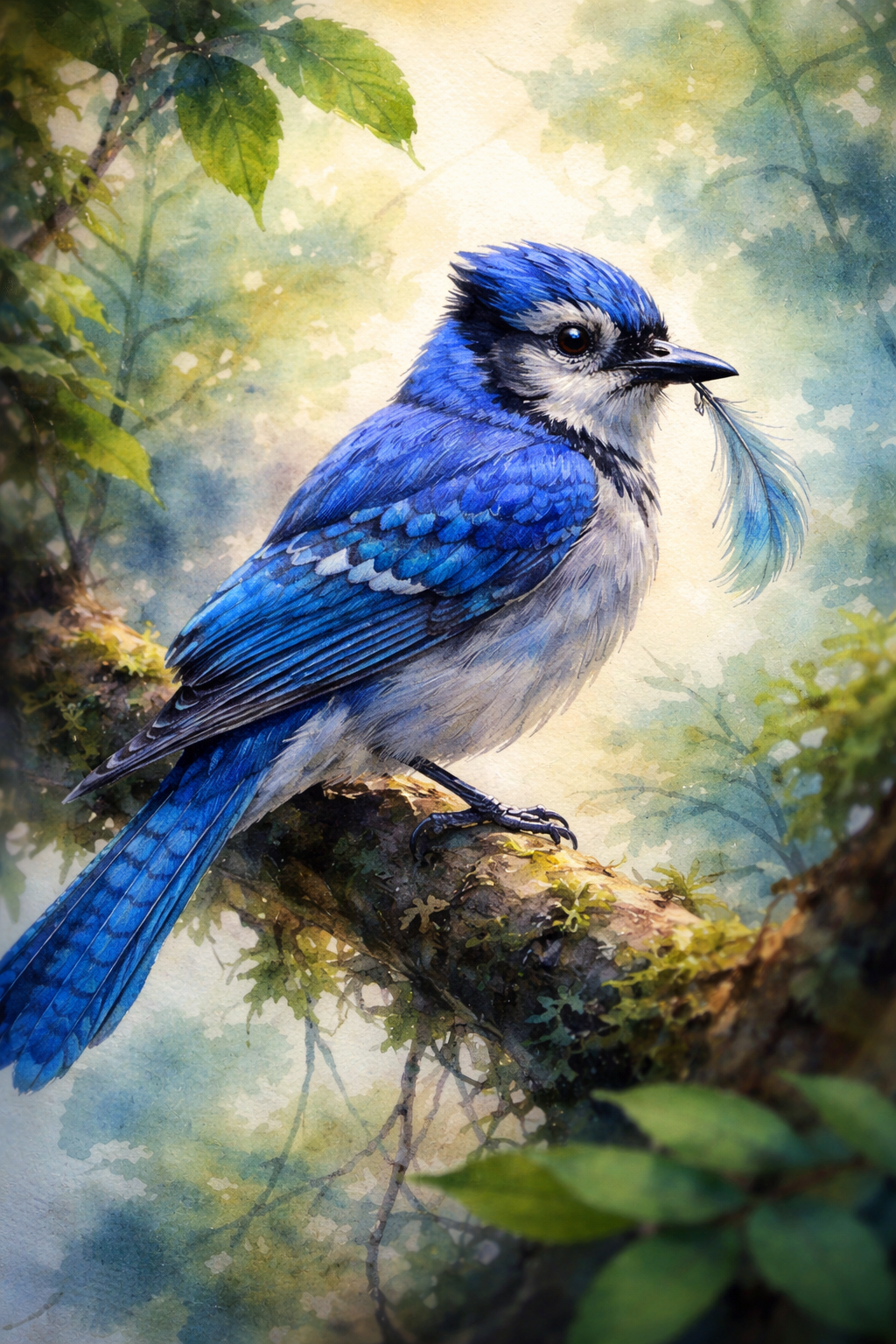
Whispers of the Azure Wing
Critique
1. Introduction This watercolor painting depicts a blue jay perched on a mossy tree branch within a lush forest. The piece captures a quiet moment in nature, focusing on the intricate details of the avian subject. The artist utilizes the transparency of the watercolor medium to create a sense of light and atmosphere. 2. Description The bird occupies the central space, its plumage rendered with fine brushstrokes that define individual feathers. A small, light-blue feather is held in its beak, suggesting nesting behavior. The background consists of soft-focus foliage and bright light, while the branch features textured moss and coarse bark. 3. Analysis The composition is dominated by the bird, whose diagonal posture creates a dynamic line. A sophisticated color palette contrasts the saturated blues with earthy greens and browns. The use of "wet-on-wet" techniques in the background produces a bokeh effect, effectively separating the sharp subject from its environment. 4. Interpretation and Evaluation The feather held in the beak suggest themes of preparation or the transient nature of wildlife. Technically, the artist demonstrates proficiency in balancing fluid watercolor with the precise detailing of bird anatomy. The work succeeds in conveying a serene mood, highlighting the beauty of nature through a refined lens. 5. Conclusion The initial impact of the vivid blue colors leads to an appreciation for the subtle textures. This painting is an excellent example of naturalistic art that combines traditional technique with a clear atmospheric sense. The viewer's understanding evolves from a biological study to a poetic interpretation of a forest encounter.
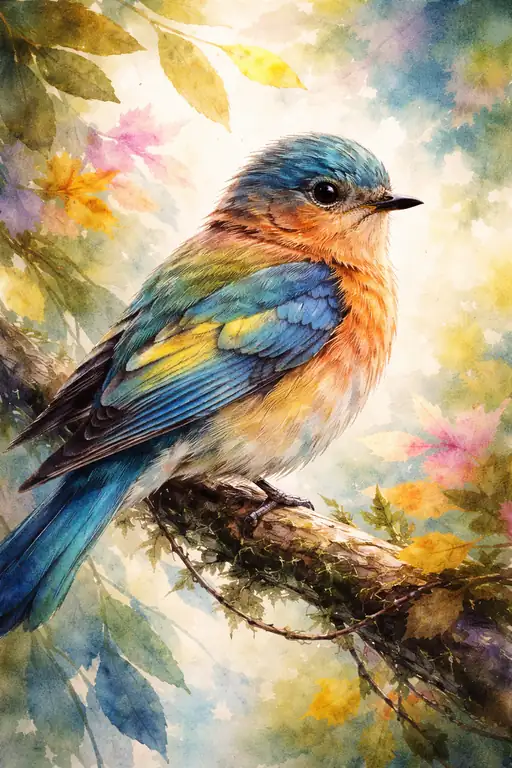 Autumn's Serenade
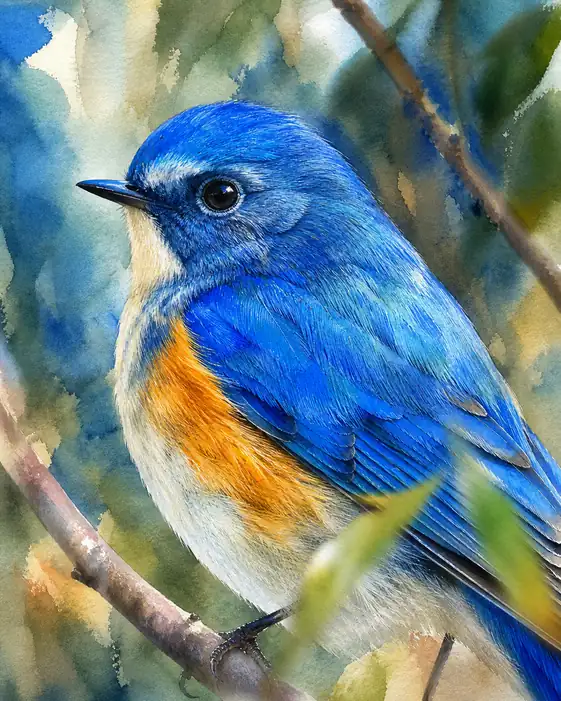 Azure Melody in the Sun-Dappled Forest
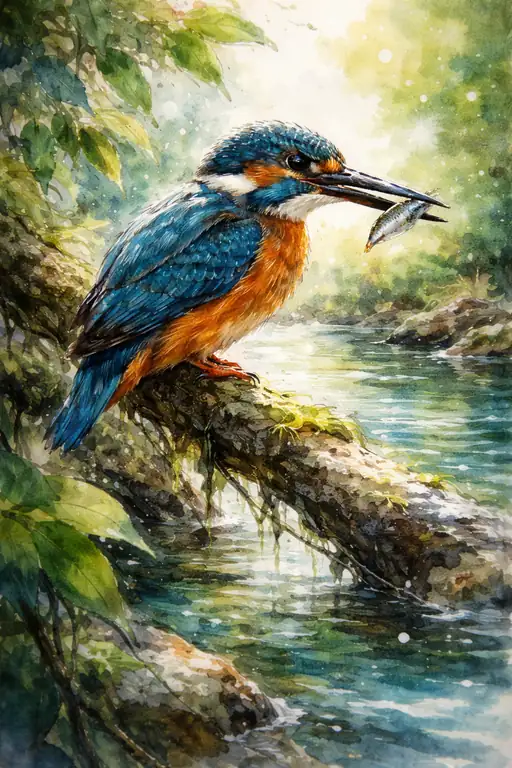 The Turquoise Hunter's Rest
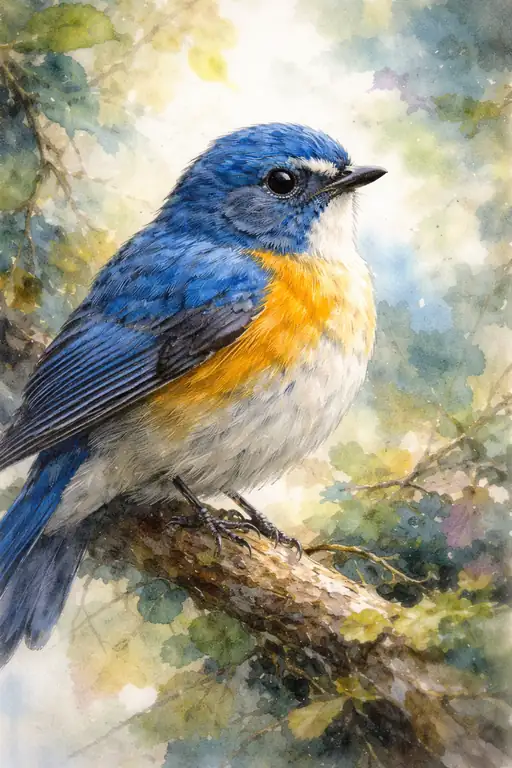 A Breath of Azure Spring
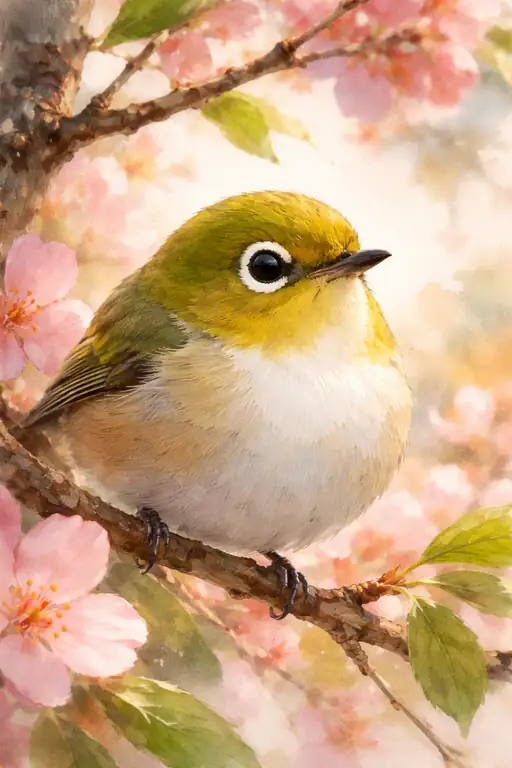 Serenading the Spring Sun
 Slumber in the Frostwood
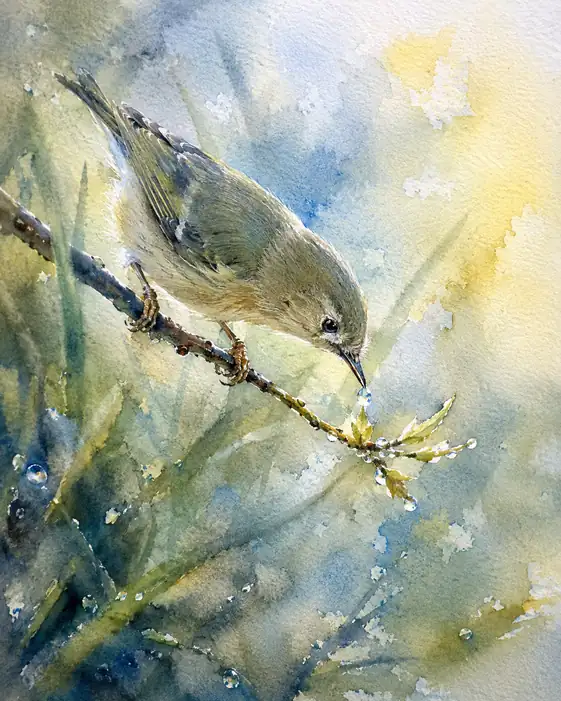 Kissing the Whisper of Morning Dew
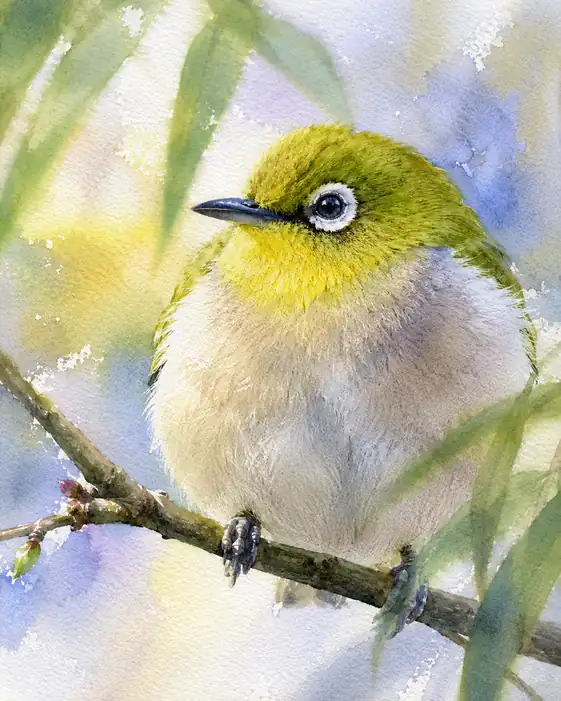 Spring's Quiet Breath
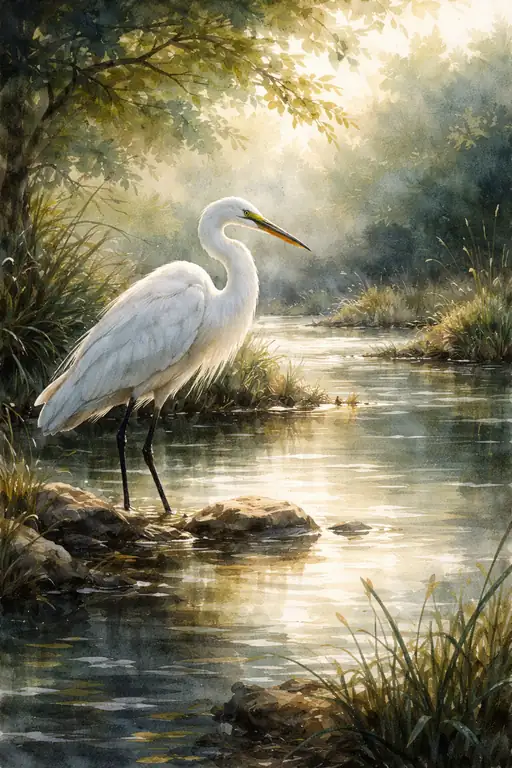 Solitude in the Whispering Shallows
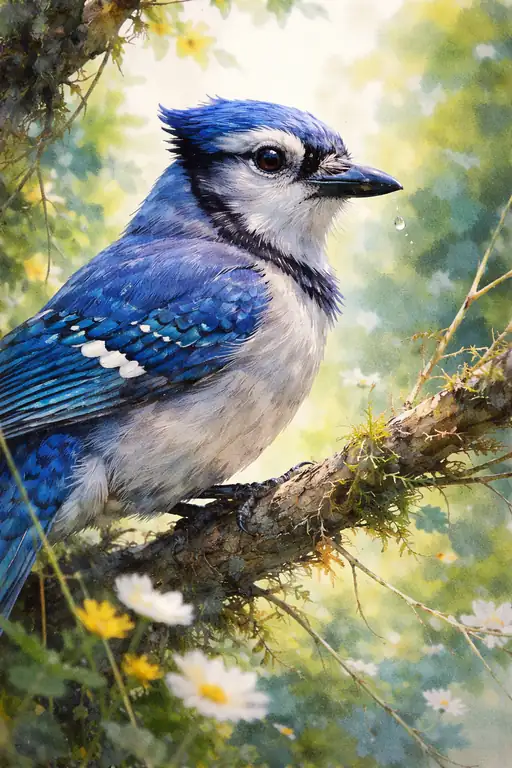 A Tiny Guardian of the Daisy Garden