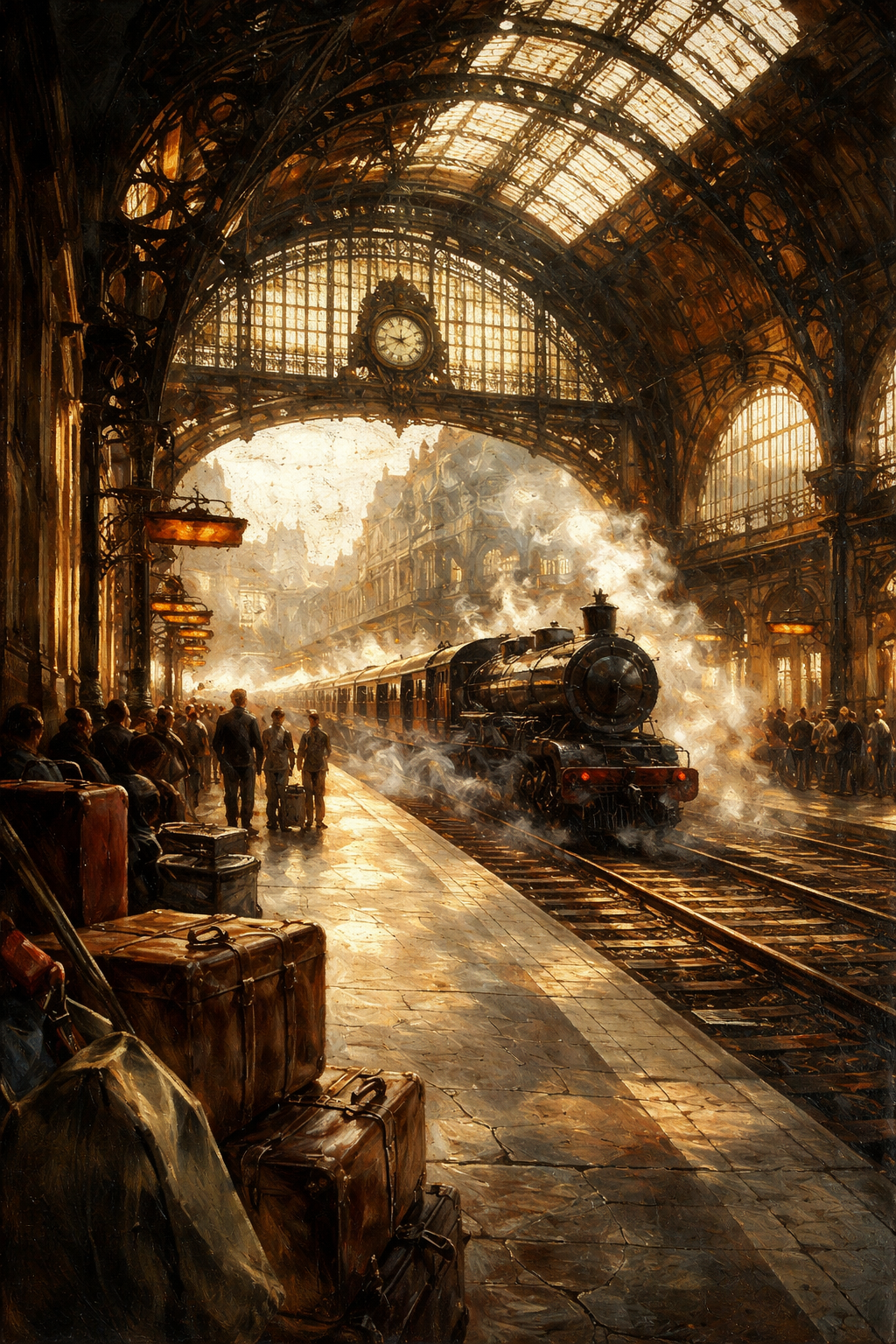
The Golden Age of Steam and Light
Critique
1. Introduction This vertical oil painting presents a majestic scene of a historic railway terminal. The composition captures the intersection of industrial might and atmospheric light, evoking the golden age of steam travel. It serves as a compelling exploration of transit and the passage of time through a romanticized lens. 2. Description In the center, a dark steam locomotive pulls into a vast station, surrounded by billowing white clouds of steam. Above it, a massive arched glass roof allows sunlight to filter through, illuminating the interior with a warm, golden glow. A prominent station clock hangs from the center of the arch, while groups of figures wait on the platform. In the immediate foreground, several weathered leather trunks are stacked, anchoring the viewer’s perspective. 3. Analysis The artist employs a warm, monochromatic palette dominated by ochre, burnt sienna, and golden yellow. This color choice unifies the industrial architectural elements with the natural qualities of the light. Strong diagonal lines created by the platform and the receding tracks lead the eye toward the locomotive, establishing a clear sense of depth. The brushwork alternates between detailed renderings of the metalwork and broader, impasto-like strokes for the steam and sunlight. 4. Interpretation and Evaluation The work successfully captures the nostalgia associated with early 20th-century travel. The interplay between the rigid iron structure and the ethereal steam creates a dynamic contrast between the permanent and the fleeting. The technical execution of the light—specifically how it catches the edges of the trunks and the locomotive—demonstrates a high level of skill in depicting complex textures and atmospheric conditions. 5. Conclusion While the subjects are traditional, the rendering provides a fresh sense of wonder. The work transforms a bustling hub into a cathedral of light. Ultimately, the piece offers an evocative reflection on the anticipation and movement inherent in human journeys.
Same Subcategory
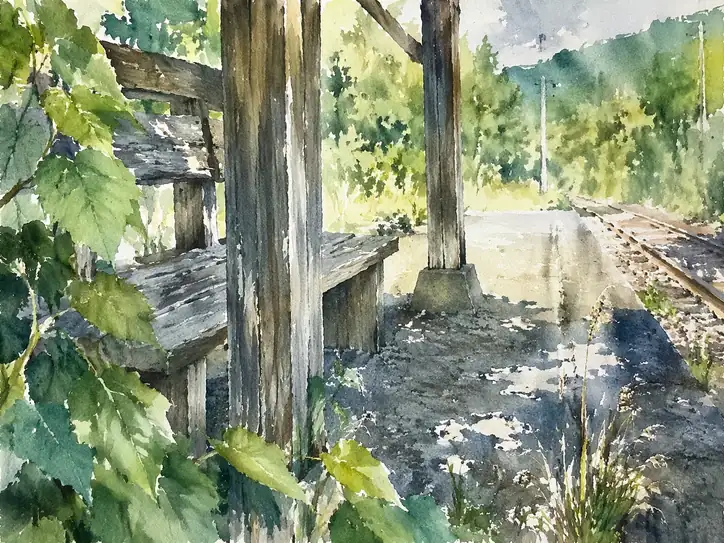 Summer's Slow Passage
Similar Artworks
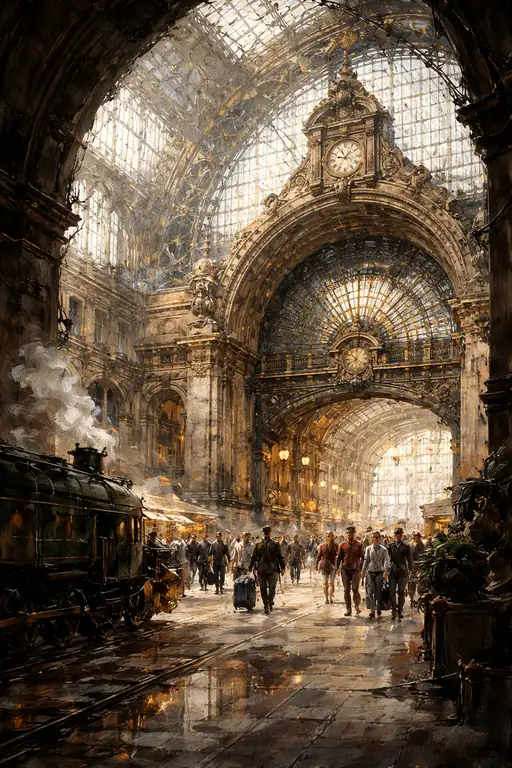 The Steam Engine's Breath: An Era of Departures
 Departure in Amber Solitude
 Platform Lit by the Parting Sun
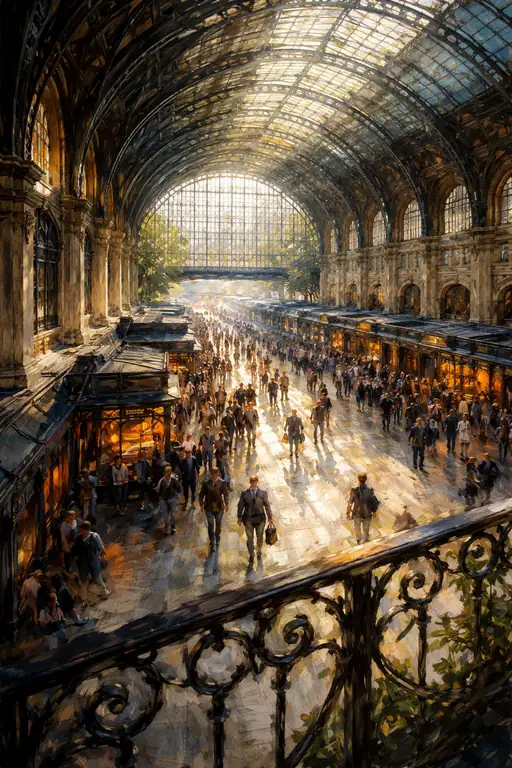 Eternal Departures in the Golden Light
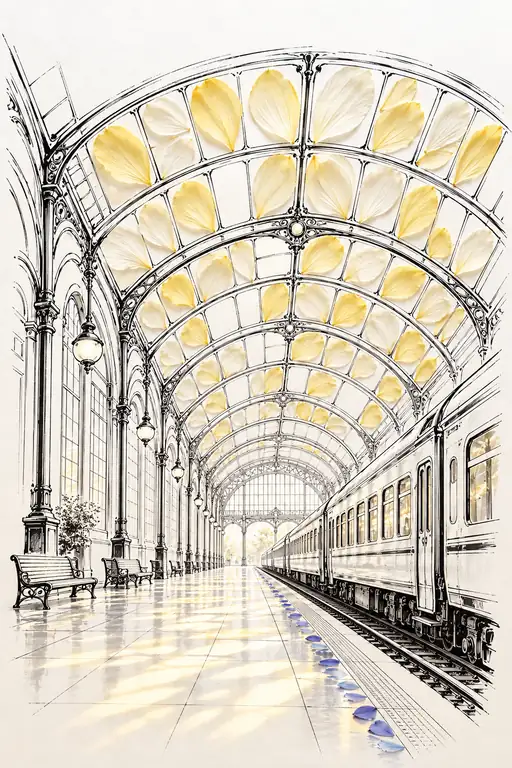 The Light Before Departure
 Golden Hour at the Terminal of Nostalgia
 Overture to Faraway Towns on a Sunlit Platform
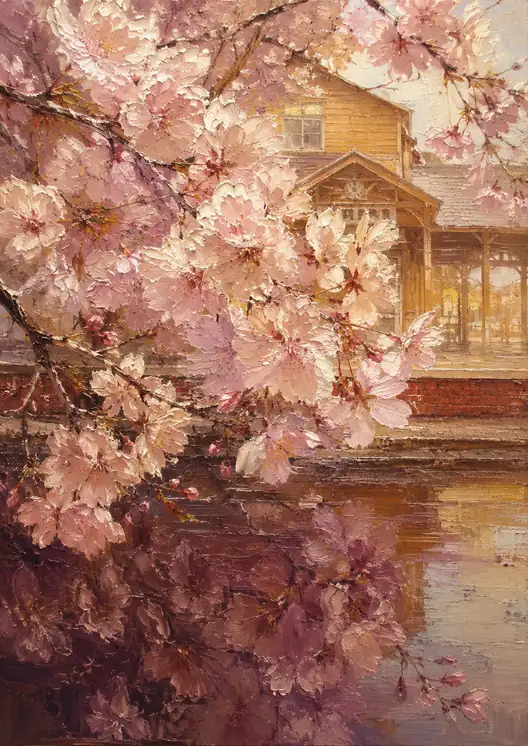 Station of Memories in Full Bloom
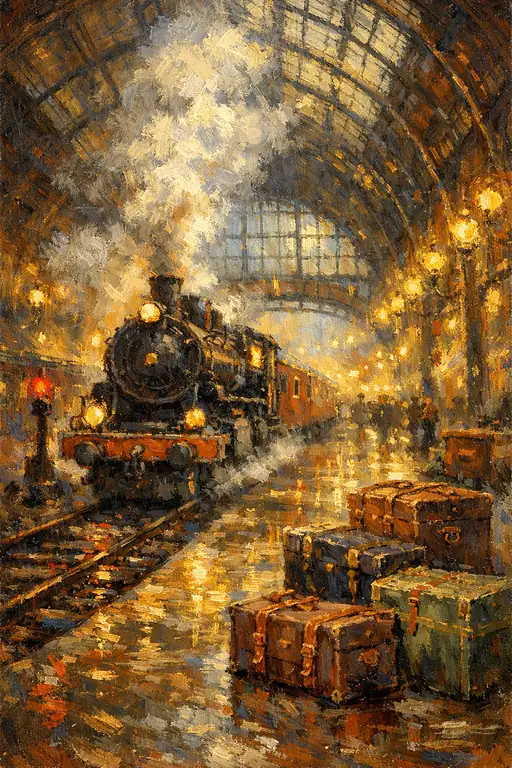 A Fleeting Farewell Amidst the Steam
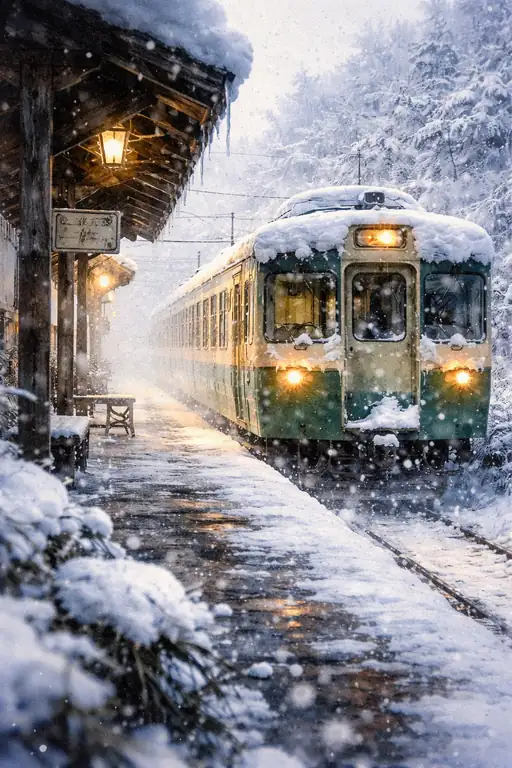 Memories Fading in the Winter Snow