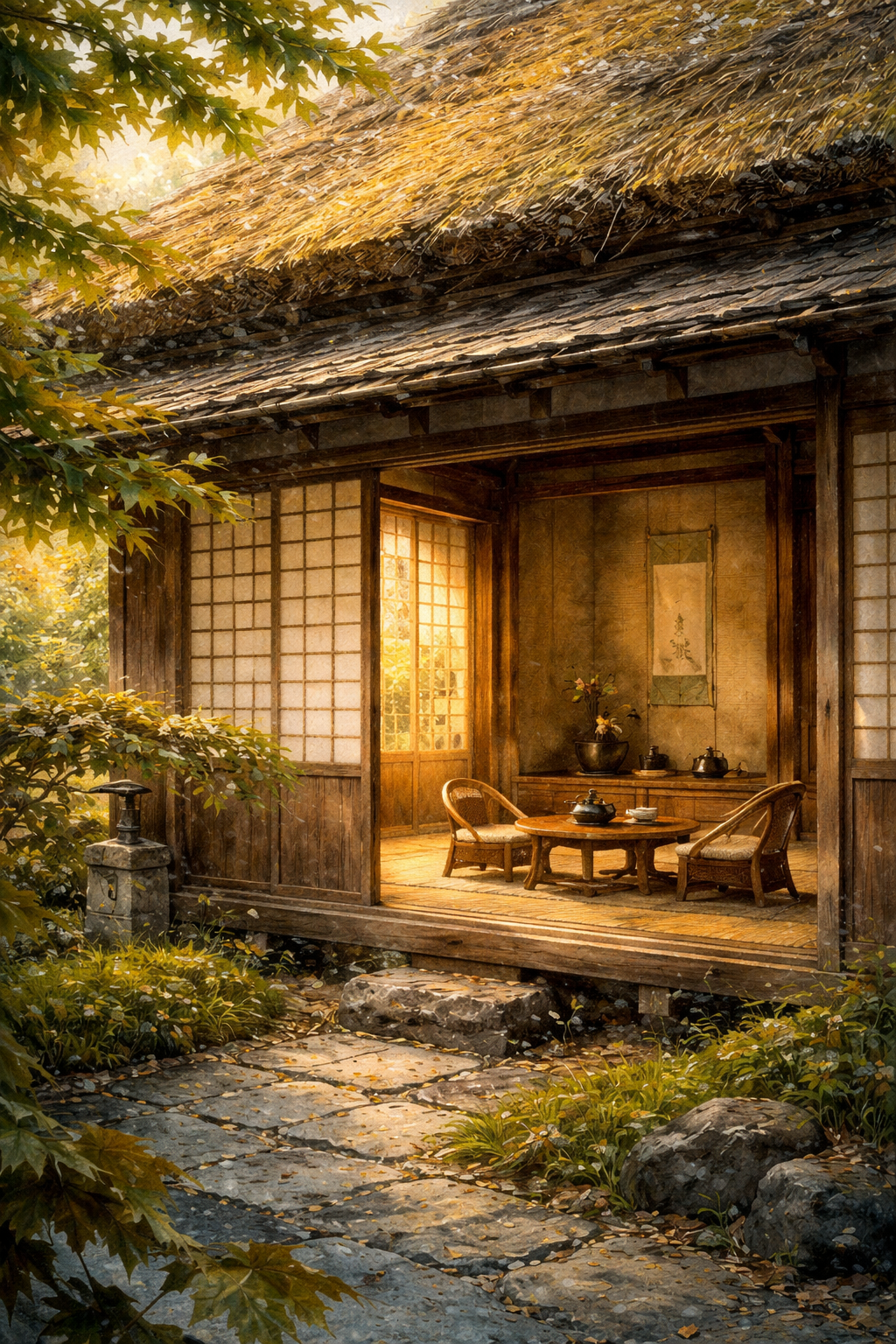
The Golden Silence of the Thatched Sanctuary
Critique
1. Introduction This painting presents a serene depiction of traditional Japanese architecture, centering on a rustic house with a meticulously detailed thatched roof. The scene is set within a lush, natural environment where the boundary between the interior and exterior is softened by open sliding doors. The work captures a profound sense of tranquility and nostalgia, evoking the timeless beauty of rural Japan through a harmonious blend of nature and human dwelling. 2. Description The foreground is framed by layers of foliage, including maple leaves that show a transition from green to warm autumn hues. A stone path composed of irregular slabs leads the eye toward the open veranda of the house. Inside the brightly lit room, a low circular table and two woven chairs are arranged on the tatami floor, suggesting a quiet moment of rest. A traditional hanging scroll adorns the rear wall, while various tea-related utensils sit upon a low cabinet in the background. 3. Analysis The artist employs a warm, golden lighting scheme that suggests the soft glow of an early morning or a late afternoon sun. This light effectively emphasizes the complex textures of the thatched roof and the weathered surface of the stone path. The composition uses the surrounding trees to frame the central dwelling, creating a deep perspective that invites the viewer into the space. The color palette is rich yet balanced, dominated by organic tones of ochre, moss green, and deep sienna. 4. Interpretation and Evaluation This work reflects a deep appreciation for the aesthetic of wabi-sabi, finding beauty in the simple and the weathered. The technical execution is notable for its balance between fine detail and broader, painterly strokes, particularly in the rendering of the sunlight filtering through the leaves. The perspective is handled with precision, maintaining a realistic spatial relationship between the garden and the interior. The piece successfully communicates a peaceful atmosphere that transcends mere architectural documentation. 5. Conclusion In summary, the painting is a masterful exploration of light and texture within a cultural context. It transforms a simple domestic scene into an immersive experience of quiet contemplation. The interplay between the structured lines of the building and the organic forms of the garden ensures a dynamic yet stable composition. The viewer is left with a lasting impression of harmony, as the light continues to illuminate the heart of this traditional sanctuary.
Same Subcategory
Similar Artworks
 Whispers of the Evening Sun on the Stone Path
 Rainwashed Sanctuary
 Where Silence Breathes
 Tranquil Shadows Along the Thatched Village Road
 Echoes of the Thatch: A Misty Autumn Memory
 Echoes of the Thatched Village
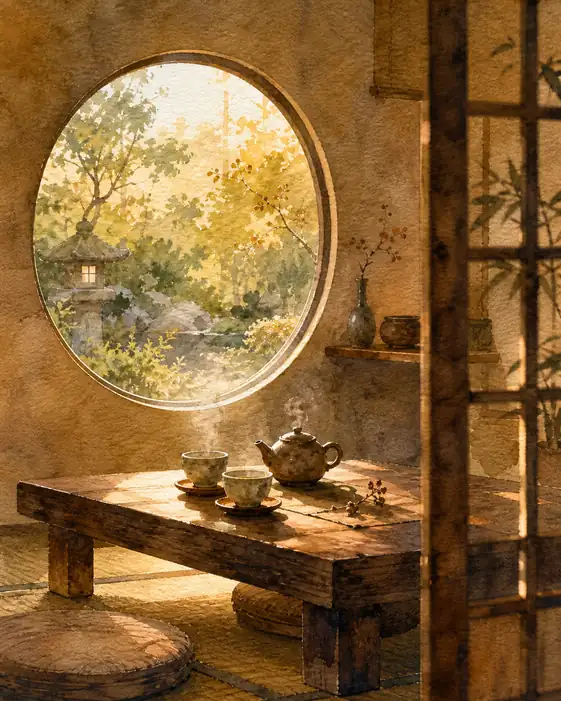 Whispers of the Golden Garden
 Whispers of Autumn: The Mossy Gate in the Mist
 A Warm Hearth in the Misty Valley
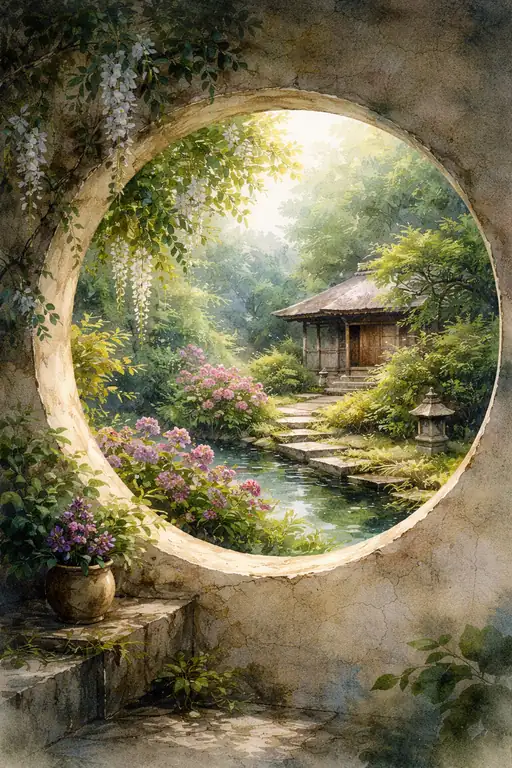 The Moon Window’s Quiet Embrace of the Sleeping Garden