
Monuments of Thought
Critique
1. Introduction This classical still life painting presents an opulent arrangement of antique books, rendered with a focus on rich materiality and dramatic lighting. The composition captures the quiet, scholarly atmosphere of a private library, utilizing a chiaroscuro effect to highlight the intricate details of the subjects. By elevating everyday objects of study to the level of monumental art, the work invites a deep appreciation for the physical beauty of intellectual heritage. 2. Description The primary subjects are several thick, leather-bound volumes stacked haphazardly on a textured surface. Each book features elaborate gold-embossed patterns on its cover and spine, showcasing hues of deep crimson, forest green, and weathered brown. A prominent silk ribbon, complete with a decorative gold tassel, drapes elegantly over the top volume. In the background, soft sunlight filters through an unseen window, illuminating floating dust particles and casting a warm glow on the scene. 3. Analysis The artist employs a strong diagonal composition that directs the viewer's eye from the lower left to the upper right, creating a sense of balanced movement. The color palette is characterized by warm tones and metallic lusters, which are underscored by deep, velvety shadows. There is a masterful contrast between the sharp, precise rendering of the gold leaf and the soft, painterly treatment of the background foliage and ambient light, which enhances the three-dimensionality of the books. 4. Interpretation and Evaluation The work functions as a meditation on the weight of knowledge and the passage of time. The tactile quality of the worn leather and the delicate sheen of the silk reflect a high level of technical proficiency, capturing the specific "aged" character of historical artifacts. The painting is highly successful in its ability to evoke nostalgia and reverence, transforming a simple collection of books into a symbol of enduring human thought and the sacredness of the written word. 5. Conclusion While the initial impression is one of mere decorative luxury, the painting ultimately reveals a profound narrative about the value of history and the preservation of ideas. This shift from observing surface ornaments to contemplating the depth of the contents within emphasizes the enduring power of literature. The artist has created a timeless vista that celebrates the intersections of craft, intellect, and the atmospheric beauty of a quiet, reflective life.
Same Subcategory
 Echoes of Yesteryear
 My Journey Starts with a Single Line
Similar Artworks
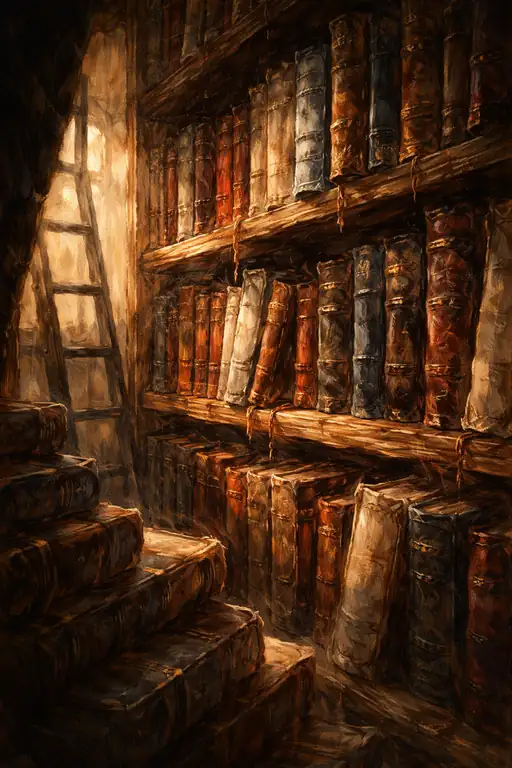 The Dynamic Grace of a Single Brushstroke
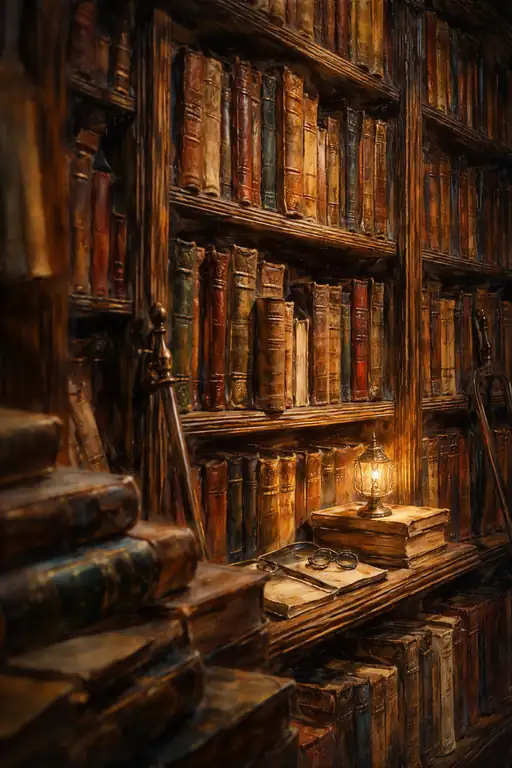 Sanctuary of Letters
 The Quiet Sanctity of Ancient Wisdom
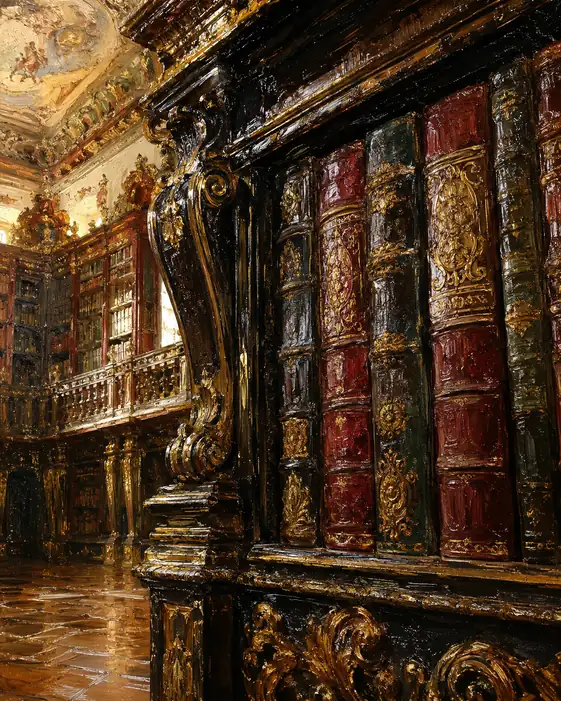 Cathedral of Whispered Wisdom
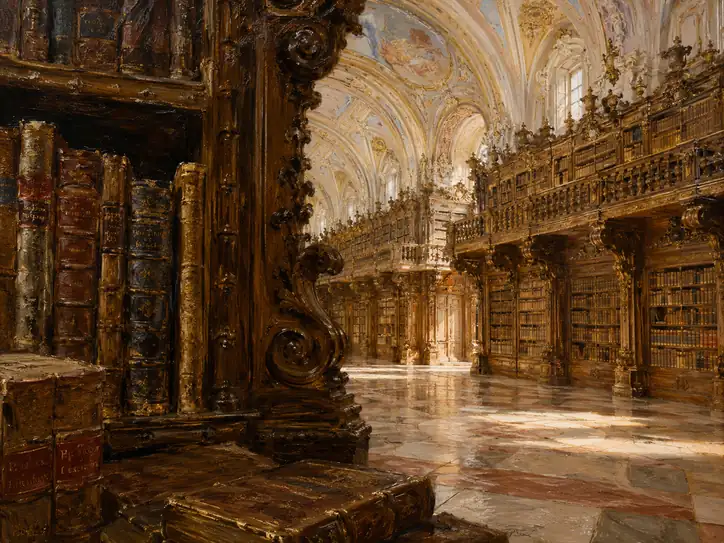 Labyrinth of Whispering Knowledge
 Echoes of Wisdom: The Golden Gallery of Time
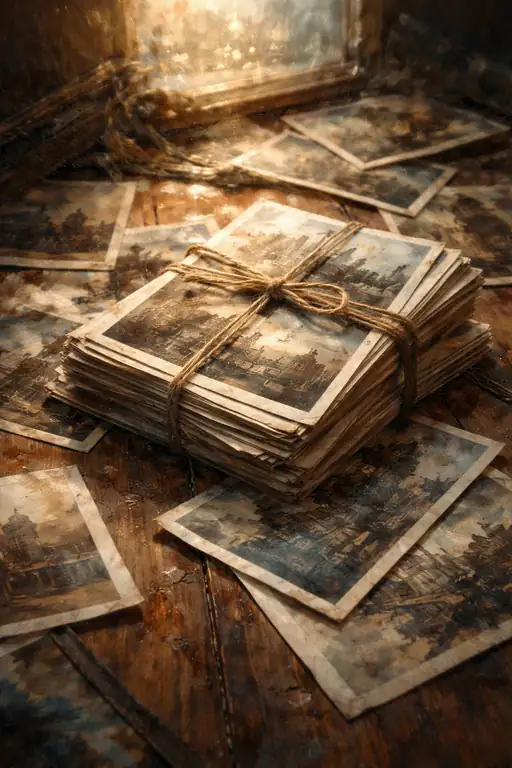 The Heavy Bundle of Yesterdays
 The Reverent Silence of Written History
 Where the Story Waits for Me
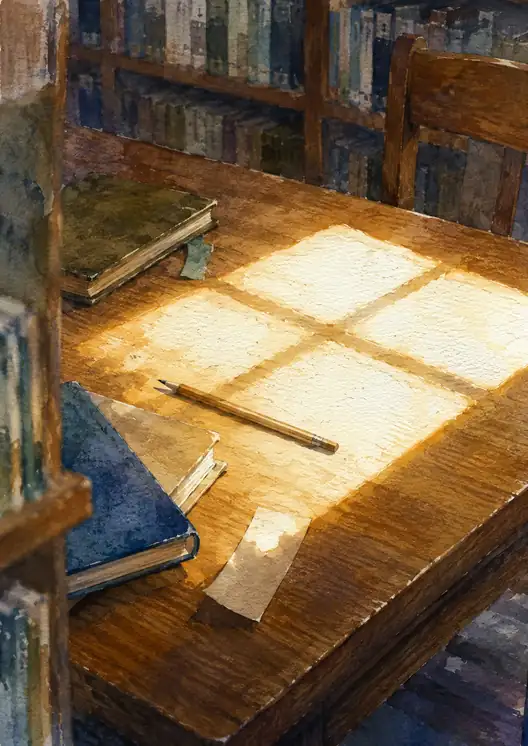 The Silent Dialogue