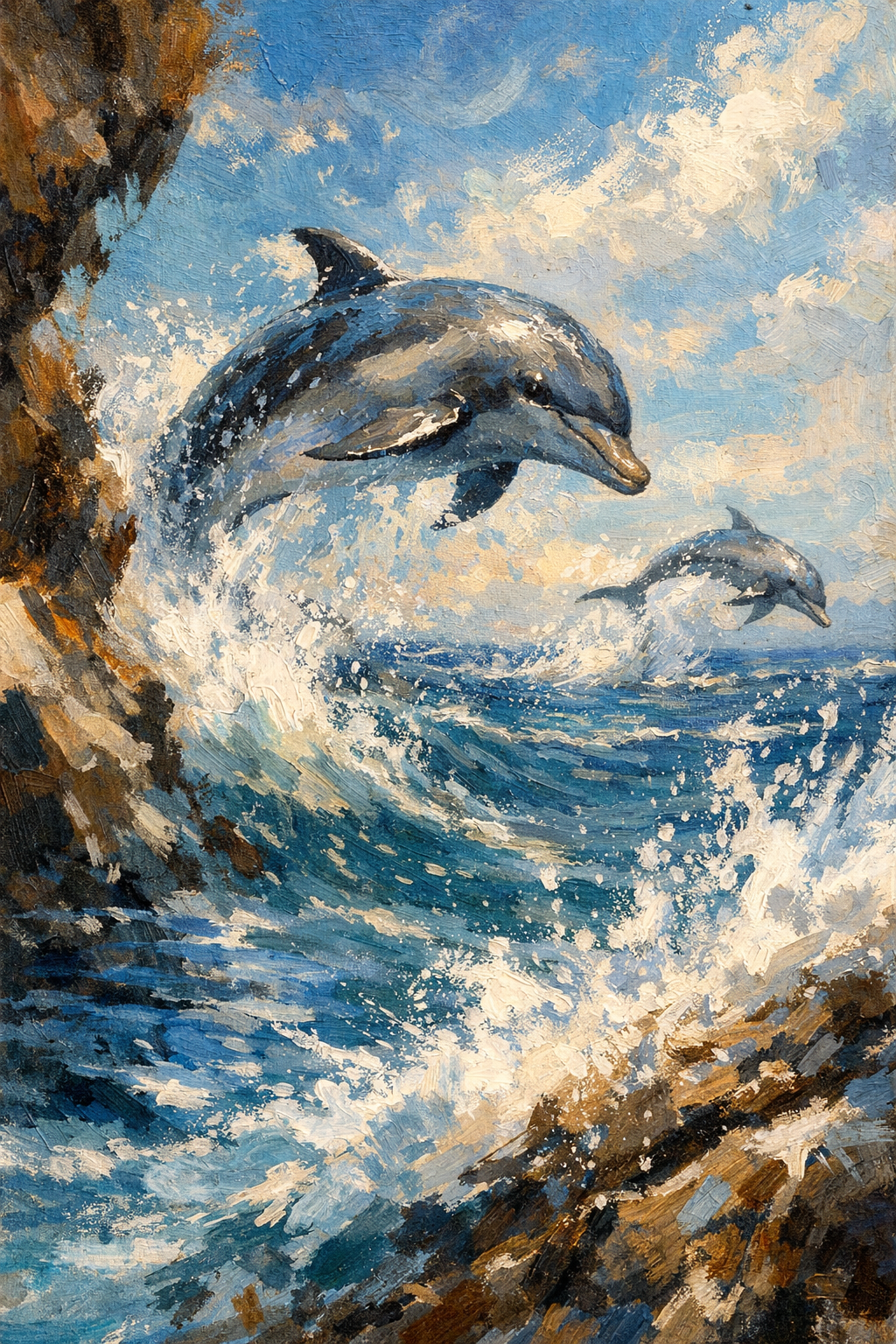
Exuberant Leap Through Churning Seas
Critique
1. Introduction This vibrant oil painting captures a dynamic moment at sea, featuring two dolphins leaping gracefully from the crests of turbulent waves. The artist employs a vigorous impasto technique, which gives the aquatic scene a sense of physical weight and exuberant energy. Set against a backdrop of rugged coastal rocks and a bright, expansive sky, the work celebrates the harmony and vitality of marine life. The vertical composition emphasizes the upward momentum of the dolphins, drawing the viewer’s eye through the spray and foam into a space defined by freedom and natural elegance. 2. Description In the foreground, a large bottlenose dolphin is depicted mid-leap, its sleek, grey body arched against the spray of a crashing wave. Thick applications of white and pale yellow paint represent the frothing water and sunlight reflecting off the sea’s surface. In the middle distance, a second, smaller dolphin echoes this movement, creating a sense of depth and community. The left margin is anchored by a dark, textured rock formation, while the ocean below is a churn of deep blues and brilliant whites. Above, the sky is filled with scudding clouds, rendered with expressive strokes that mirror the movement of the waves. 3. Analysis Technically, the painting is characterized by its heavy texture and rhythmic brushwork. The artist uses a palette knife and loaded brushes to build up the surface, creating a "low-relief" effect that catches the light differently from various angles. The color palette relies on a sophisticated interplay of cool blues and warm ochre tones, with the brilliant white of the foam providing a high-contrast focal point. The sharp, diagonal lines of the dolphins' bodies create a strong sense of directed energy, effectively countered by the irregular, vertical texture of the rocks and the horizontal swells of the ocean. 4. Interpretation and Evaluation This work can be interpreted as a joyful meditation on the spirit of nature and the effortless grace found within the animal kingdom. The choice of the impasto style is particularly effective in translating the fluid, ephemeral qualities of water and movement into a permanent, tactile medium. In terms of evaluation, the artist excels in capturing the physiological tension of a leap, conveying both the power and the agility of the dolphins. The composition is well-balanced, using the rocks to stabilize the energetic motion of the water and life. The painting successfully avoids sentimentality by grounding the subject in a raw, material presence. 5. Conclusion While the initial impact of the painting is one of bright color and vigorous action, a closer look reveals a careful coordination between the elements of water, air, and solid land. The interplay between the dolphins and their environment creates a compelling narrative of survival and exuberance in the wild. Ultimately, the work transcends simple representation through its masterful use of medium to simulate the energy of the natural world. It stands as a powerful testament to the beauty of marine life, leaving the viewer with a sense of wonder and a renewed appreciation for the vitality of the oceans.
Same Subcategory
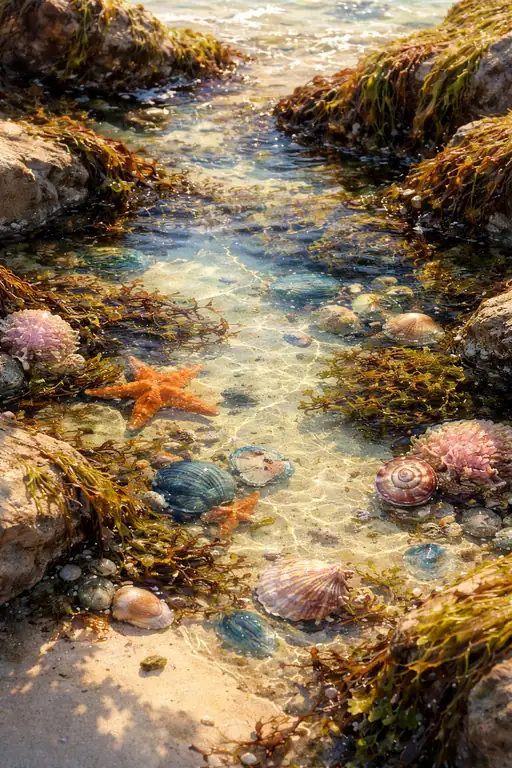 Glimpse into the Clear Shallow World
 Ethereal Ascent into the Sunlit Abyss
Similar Artworks
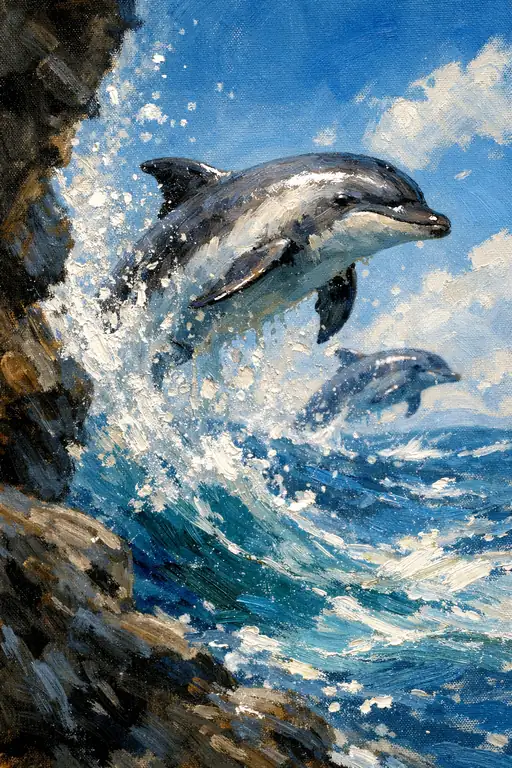 Symphony of the Silver Leap
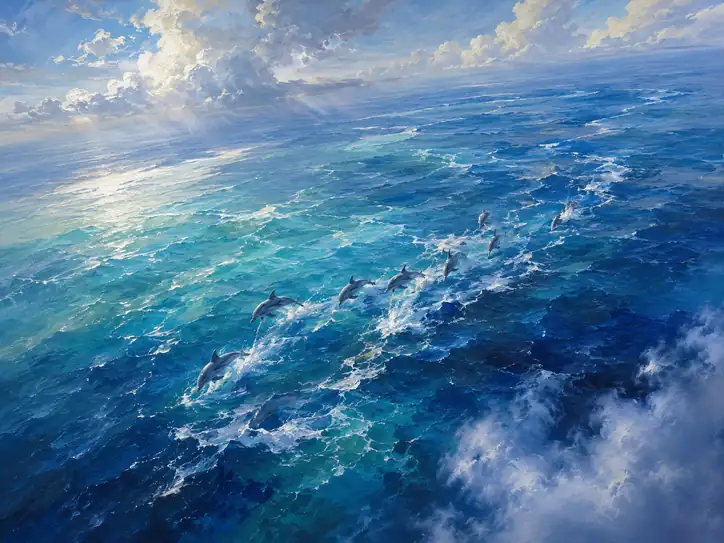 On the Way to a Freedom Bluer Than the Sea
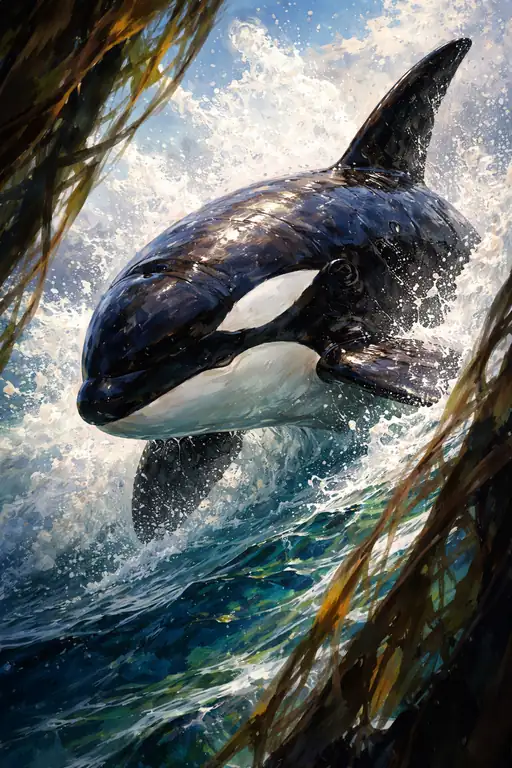 The Majestic Breach of the Wild
 Leap into the Sunset Glow
 The Blue Tempest of Life
 Unbridled Freedom: The Thunderous Charge of the White Horses
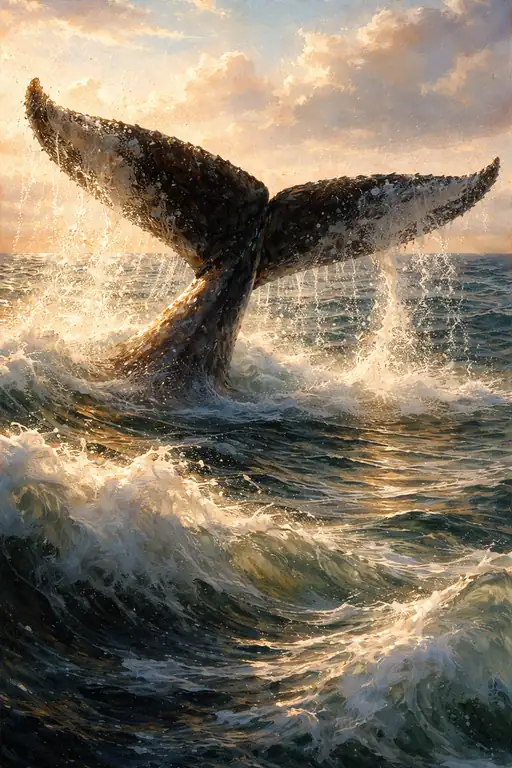 Golden Breach: The Whale's Ascent
 Untamed Spirits of the Tide
 Resilience on the Windswept Shore
 Into the Sunlit Surge