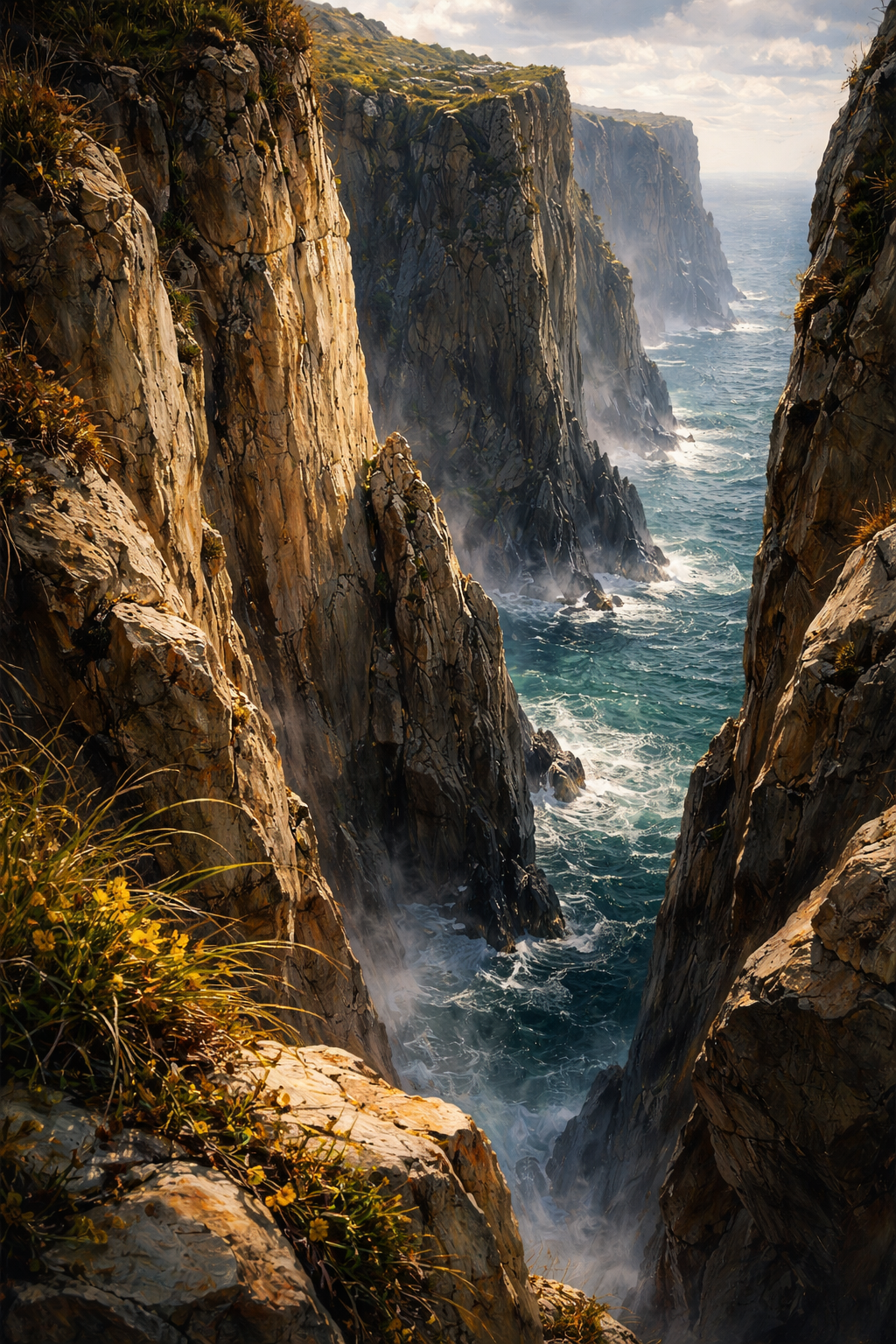
The Eternal Duel of Rock and Sea
Critique
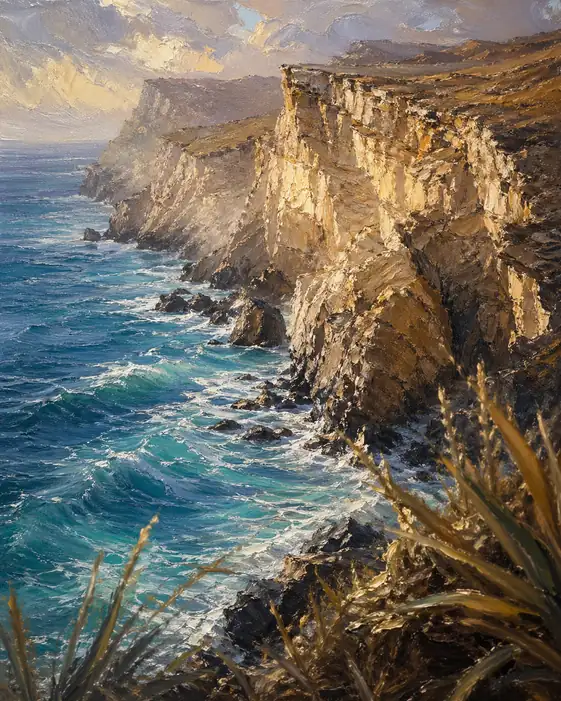
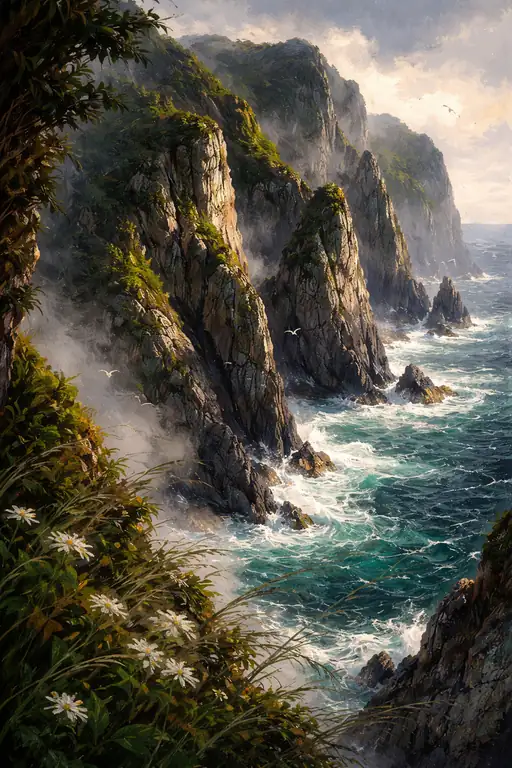
1. Introduction This work depicts a rugged coastline with a series of precipitous cliffs, captured on an overwhelming scale. The colossal rock walls, seemingly slicing vertically through the frame, possess a solemn power of natural formation and a sublime beauty that awes the viewer. The dramatic contrast between the crashing waves and the rock faces visually expresses a constant drama of erosion and creation. From an educational perspective, this is an outstanding landscape painting that elevates topographical dynamism into artistic sublimation, deserving of the highest evaluation. 2. Description On both sides of the frame, sheer cliffs composed of multiple geological layers tower high, with fine cracks and textures meticulously depicted. The brownish and grayish tones of the rock faces produce rich shadows under the sunlight, emphasizing the material weight and solidity of the stone. In the narrow inlet at the base, deep teal seawater flows in, breaking against the rocks into white foam and intense spray. On the rocky ledge in the lower foreground, sparse vegetation and small yellow flowers endure the harsh environment, suggesting the subtle breath of life within vast nature. 3. Analysis Regarding composition, an extreme high-angle perspective emphasizing verticality is adopted, dramatically highlighting the height of the cliffs and the depth of the sea. The treatment of light is highly effective; a light source from the upper left clearly carves out the irregularities of the rock walls, bringing intense three-dimensionality and depth to the entire scene. The color scheme is based on the complementary relationship between earthy tones and cool oceanic colors, providing the screen with both tension and harmony. The thorough brushwork accurately distinguishes the hardness of the rock from the floating sensation of the mist-like spray. 4. Interpretation and Evaluation This work succeeds in portraying the essence of harsh nature through a drama of light and shadow. The vertically rising cliffs hold a monumental presence symbolizing the accumulation of time and the fury of nature, evoking deep awe in the viewer. The rock textures reproduced through outstanding skill transcend mere realism, giving the impression of drawing out the inherent vitality of the material. Following the tradition of Romantic landscape painting while integrating modern realism, this piece is a masterpiece of very high artistic value. 5. Conclusion The visual impact felt upon first seeing this work transforms into deep emotion toward its meticulous composition and descriptive power upon closer inspection. The contrast between static cliffs and dynamic waves maintains a superb equilibrium within a single painting, symbolizing the eternal activities of nature. This steep landscape, far removed from our daily lives, paradoxically sharpens the viewer's inner senses and allows for a re-recognition of the world's vastness. This scene of cliffs, drawn with powerful brushstrokes, quietly speaks of truths in the natural world and will remain long in the viewer's heart.
Same Subcategory
 Golden Silence Over the Sea
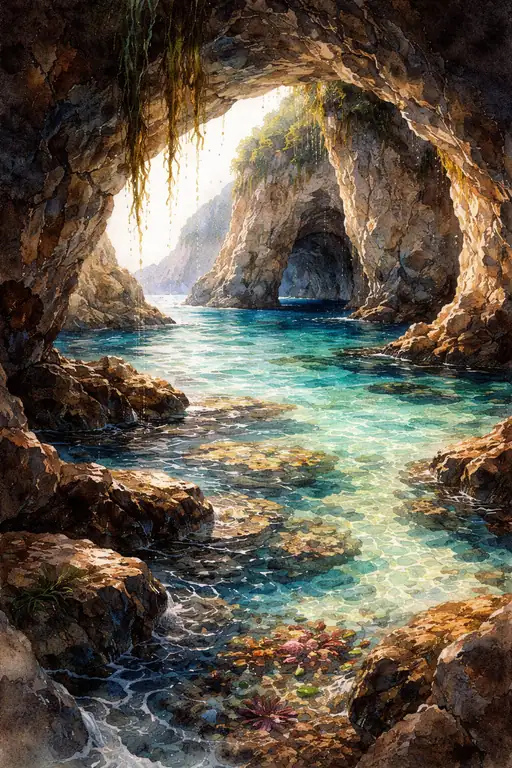 Invitation to the Silent Deep
Similar Artworks
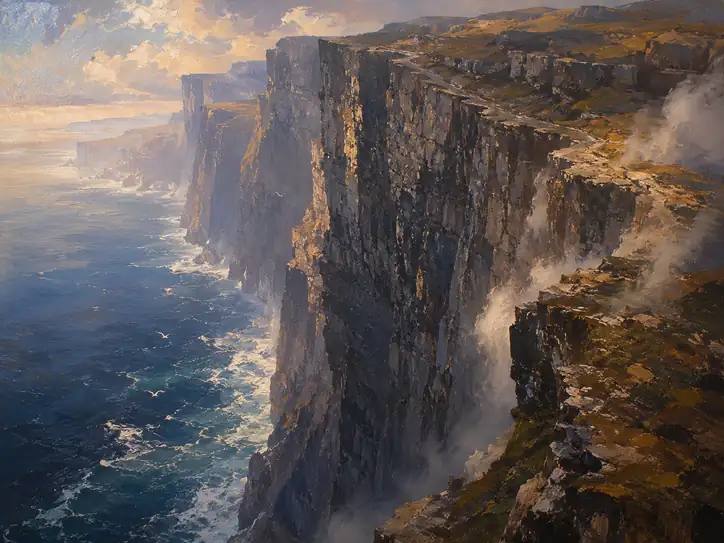 Where Seagulls Dance in the Golden Mist
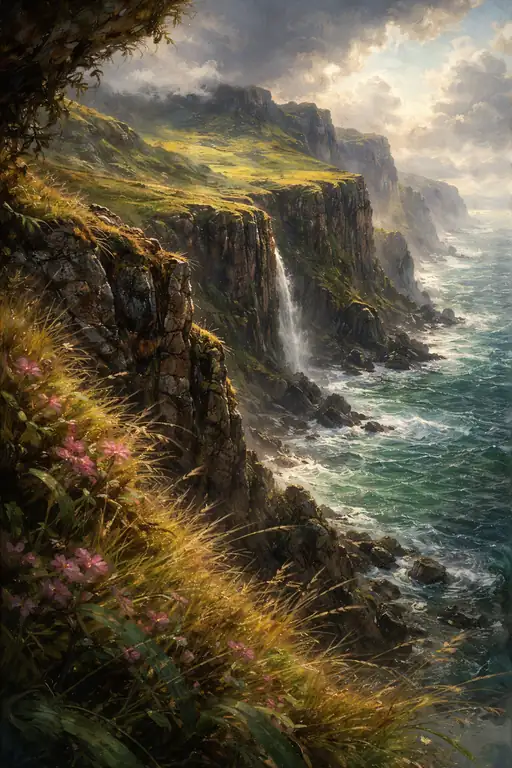 Where the Sea Meets the Sky\n
 Standing on the Wind's Edge
 The Shore's Golden Dream
 Collision of Earth and Ocean
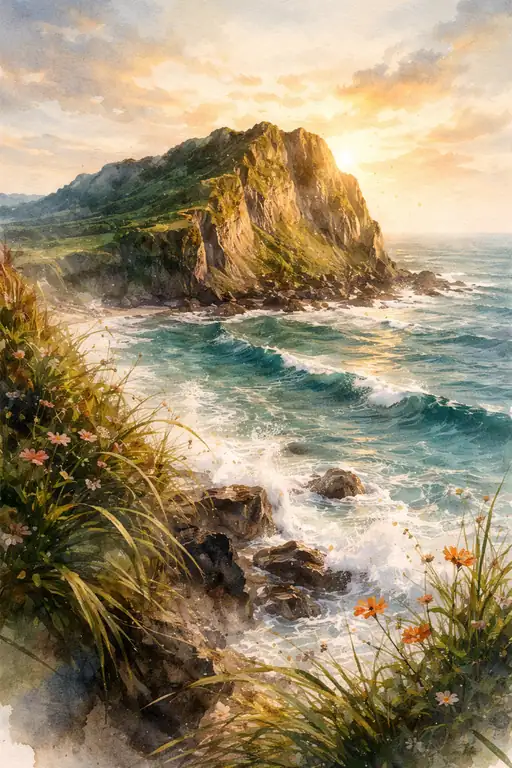 The Ocean's Awakening at the Verdant Cliff
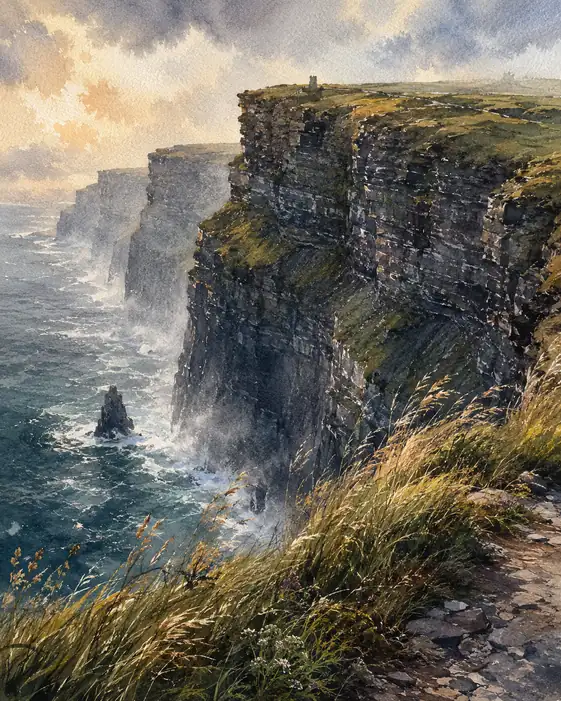 The Path Between Wind and Waves
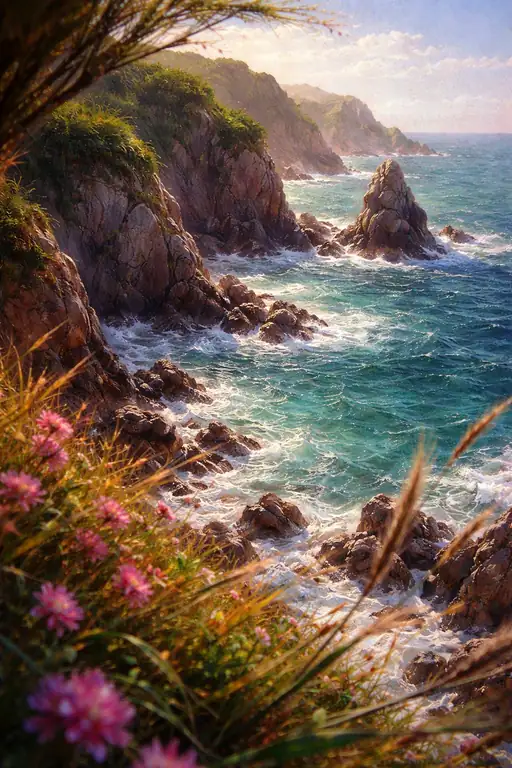 Blossoms at the World's Edge
 Sanctuary of the Sapphire Waters
 Sentinel Above the Blossoms