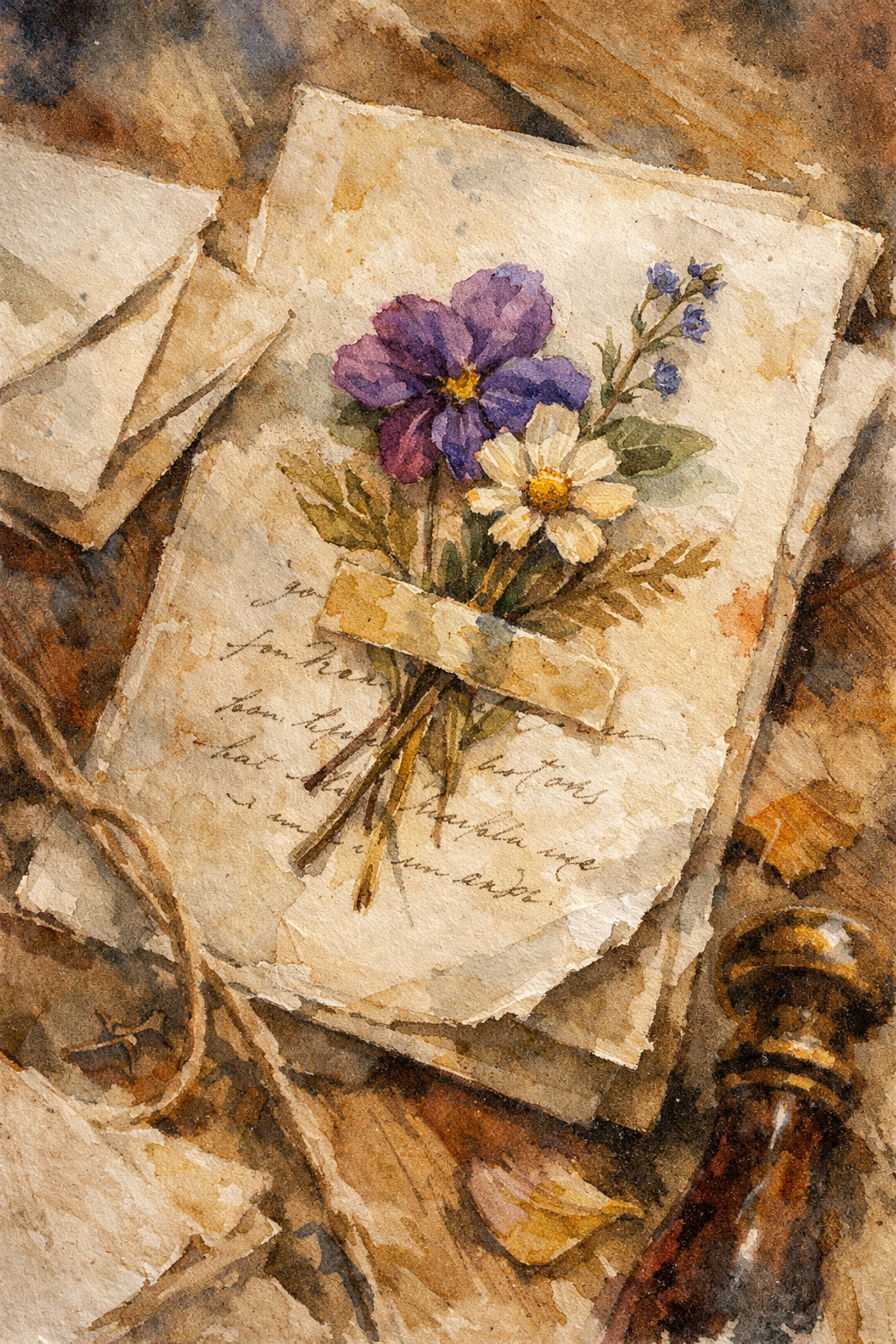
Echoes of Yesteryear
Critique
1. Introduction This vertical watercolor painting presents an intimate still life focused on a stack of aged letters and a modest floral bouquet. The composition evokes a sense of nostalgia and quiet contemplation, centering on objects that symbolize memory and preserved emotions. The delicate nature of the watercolor medium perfectly complements the fragile and sentimental subject matter of the artwork. 2. Description The primary focus is a small bouquet containing a large purple blossom, a white daisy-like flower, and tiny blue blossoms, along with several green leaves. These flowers are attached with a strip of yellowish tape to a pile of old, discolored papers featuring faint cursive handwriting. To the left, a piece of worn twine meanders across a rustic wooden surface, while the dark, polished handle of a vintage stamp or seal is visible in the bottom right corner. The overall color palette is dominated by warm sepias and earthy browns, with the floral colors providing vibrant focal points. 3. Analysis The artist uses soft washes and bleeding edges characteristic of watercolor to create a hazy, dreamlike quality. The lighting appears diffused, casting gentle shadows that give volume to the overlapping papers and the textured flowers. There is a clear hierarchy of detail, with the most precision applied to the floral heads, while the background and the handwriting are left suggestively blurred. The diagonal arrangement of the letters and the string creates a dynamic flow that guides the viewer's eye through the intimate details of the scene. 4. Interpretation and Evaluation The work successfully handles themes of time and remembrance by portraying objects that are deliberately aged and curated. The choice of watercolor allows for a transparency that mimics the fragility of old paper and the delicate petals of pressed flowers. Technically, the rendering of the different textures—parchment, wood, and organic flora—is highly skillful, demonstrating a sensitive touch. The composition is effective in its simplicity, managing to imbue everyday items with a profound sense of historical and emotional depth. 5. Conclusion Through its subtle use of light and color, the painting transforms a collection of simple objects into a poignant narrative of the past. The harmony between the medium and the subject matter results in a cohesive and evocative piece of art. Initial impressions of a simple still life grow into an awareness of the enduring power of human connection and the artifacts it leaves behind.
Same Subcategory
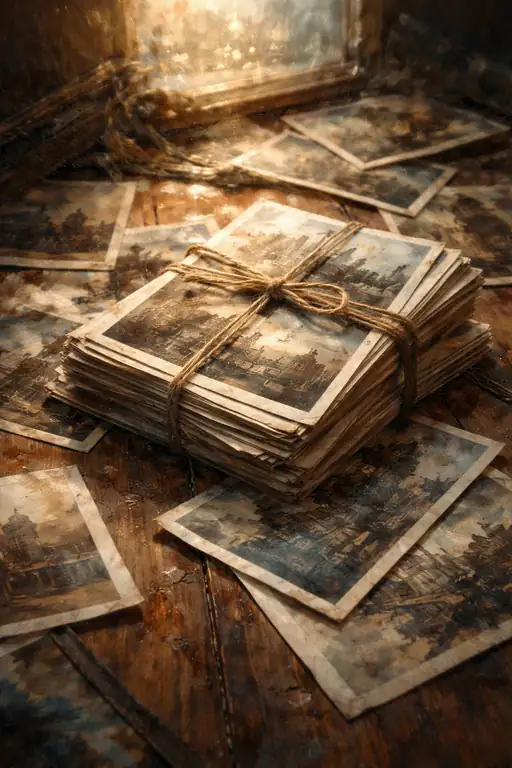 The Heavy Bundle of Yesterdays
 Monuments of Thought
Similar Artworks
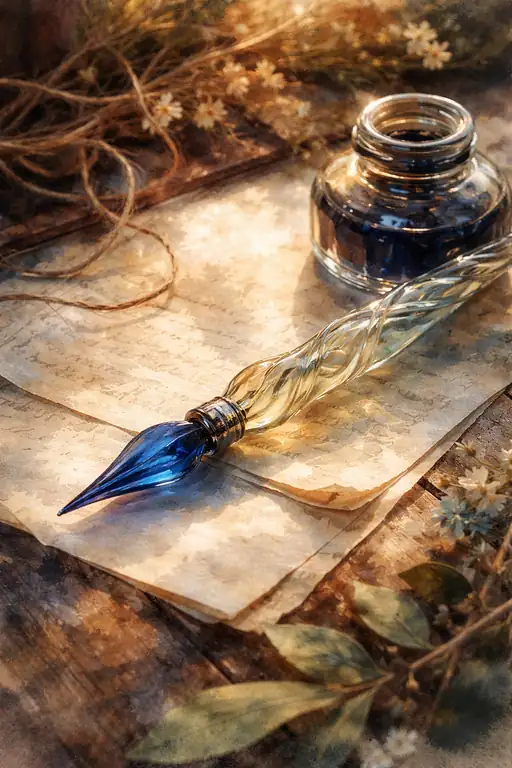 Azure Ink: Memories in Glass
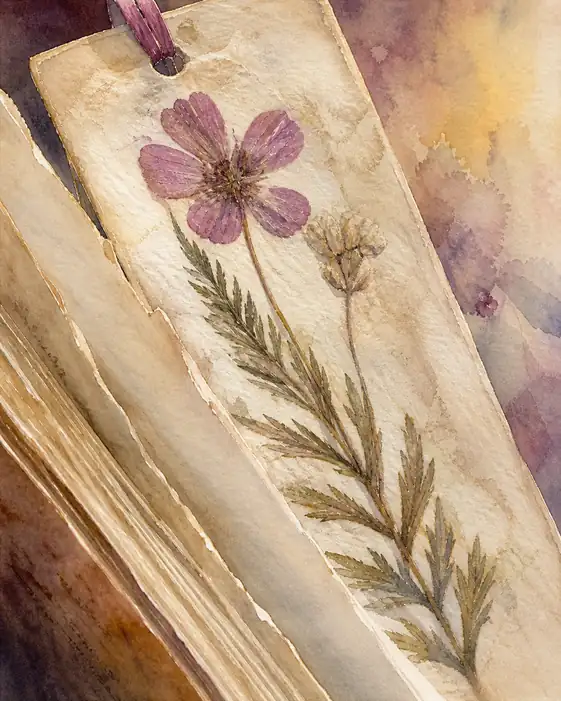 A Sanctuary for Fleeting Memories
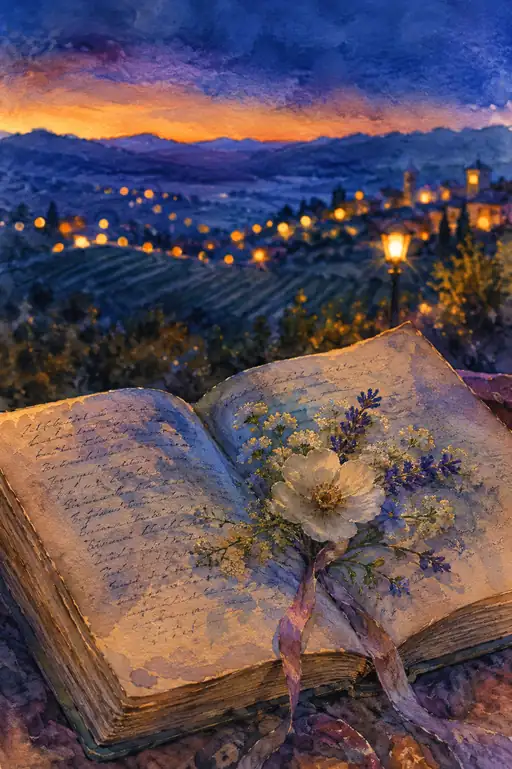 Pressed Blossoms Preserve the Valley's Afterglow
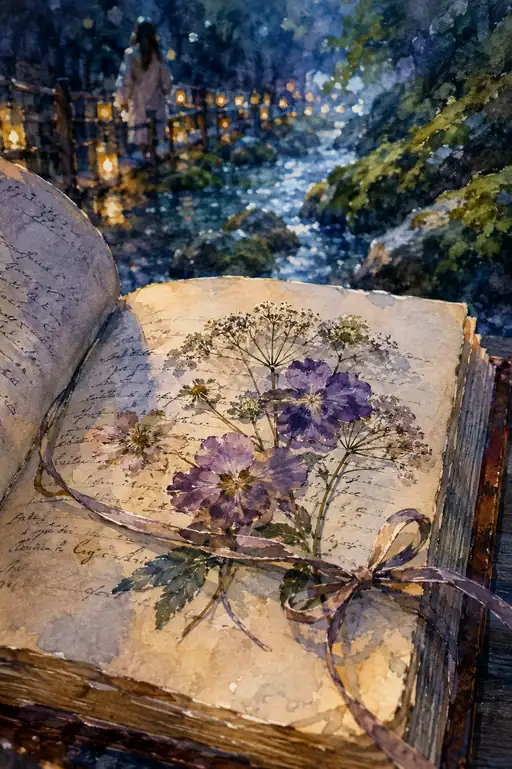 Pressed Flowers Keep the Night Walker's Story
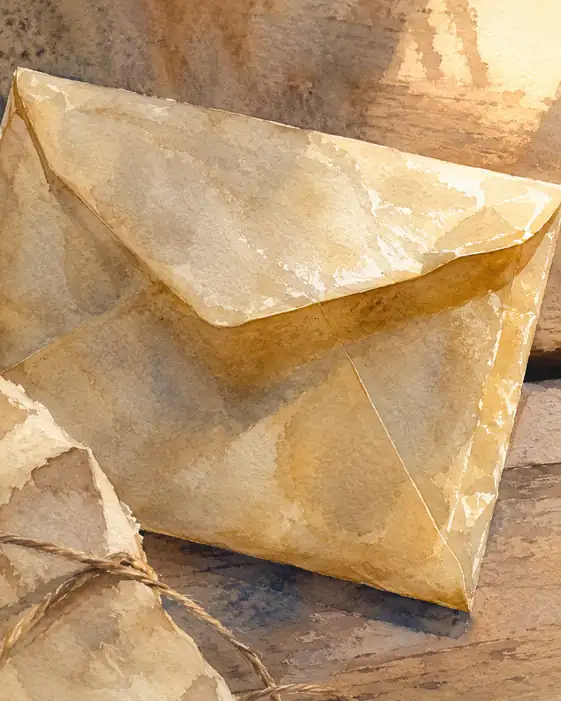 The Silence of Sealed Memories
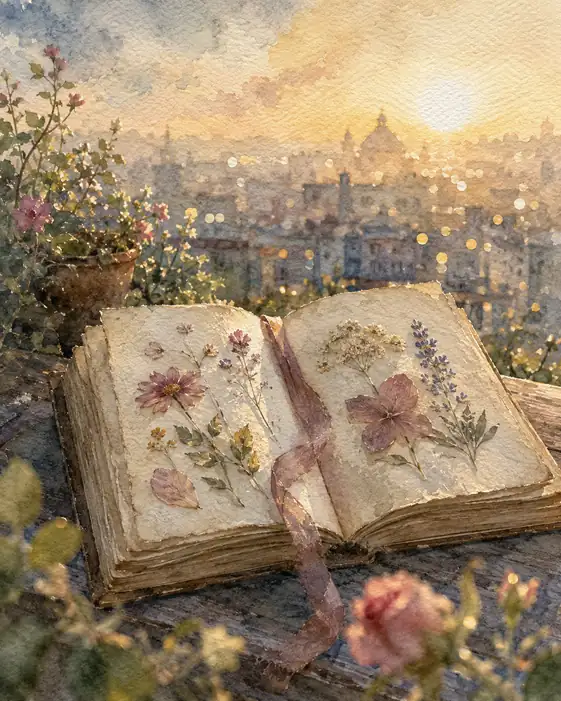 Pressed Flowers Dream beneath the Golden Dome
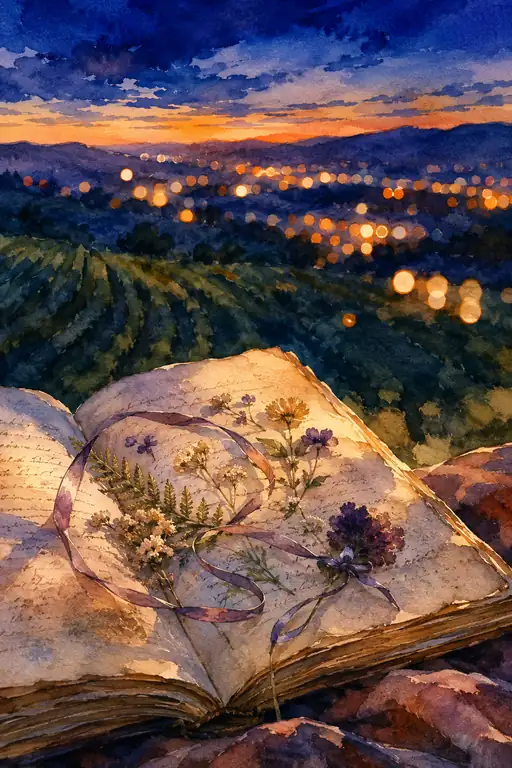 The Vineyard Evening Sleeps between Pressed Flowers
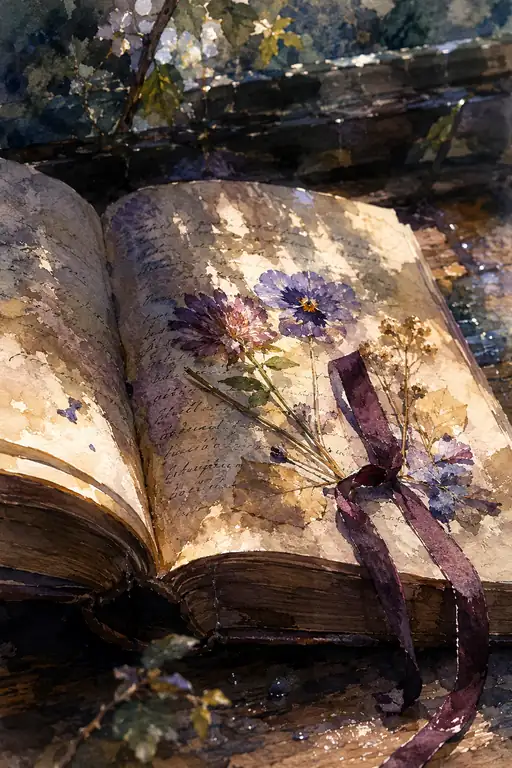 Time Bound in a Wine-Red Ribbon
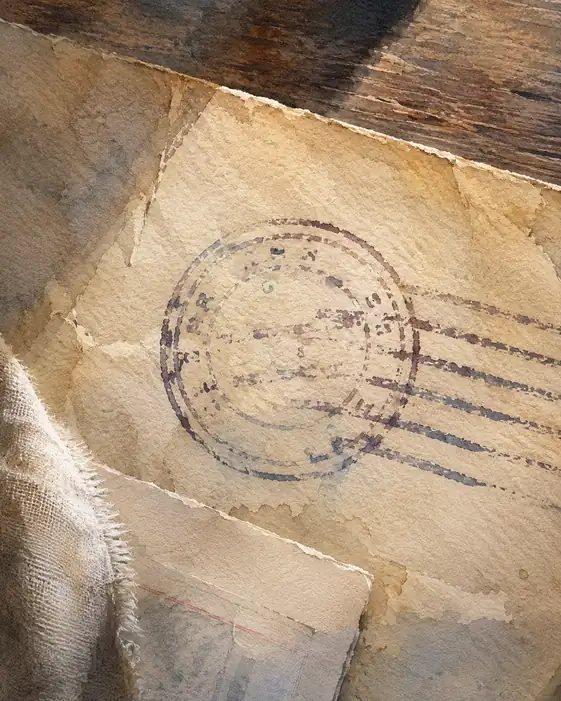 Echoes of a Forgotten Letter
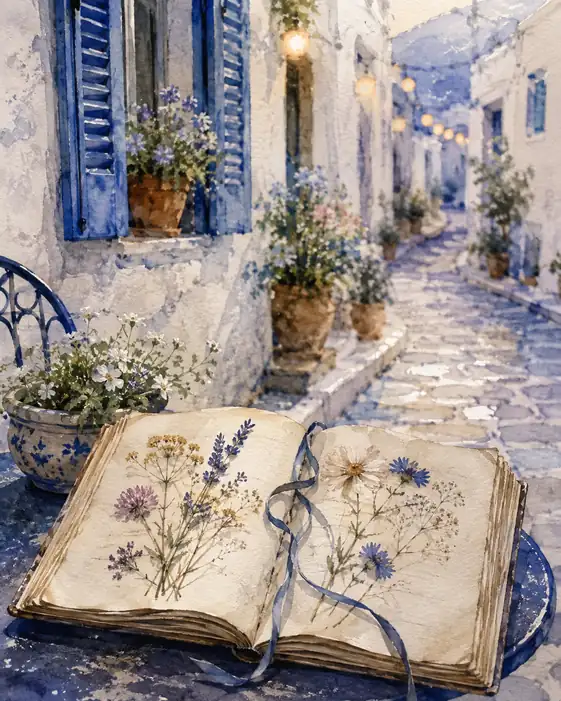 Memory Pressed in Petals and Sky