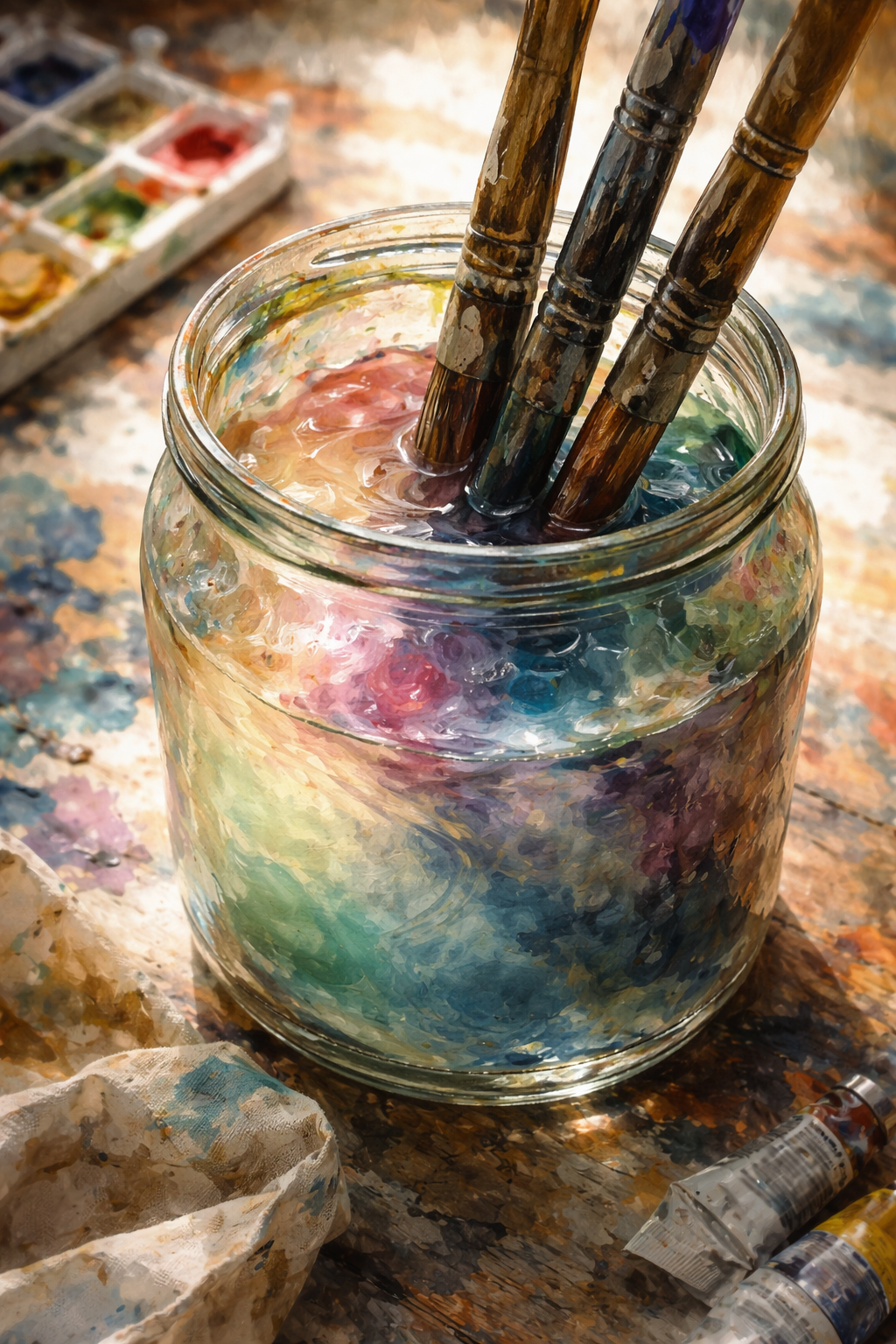
Where Dreams Dissolve and Bloom
Critique
1. Introduction This vibrant oil painting presents a close-up study of an artist's brush-washing jar. The vertical composition zooms in on the utilitarian aspect of the painting process, transforming a simple glass container into a centerpiece of complex color and light. The work captures a moment of transition where separate pigments merge within a single vessel. 2. Description The focal point is a heavy glass jar containing three large paintbrushes with weathered wooden handles. The water inside is a swirling mixture of blue, pink, and yellow pigments, creating a kaleidoscopic effect. In the soft-focus background, a well-used paint palette and discarded tubes of paint rest on a wooden surface stained with years of artistic activity. 3. Analysis The artist demonstrates a remarkable ability to depict the transparency and refractive qualities of glass and water. The interplay of light on the curved surface of the jar creates highlights that contrast with the dense, opaque colors of the paint-laden water. The brushwork is expressive and fluid, echoing the movement of the pigments as they dissolve and mingle within the liquid medium. 4. Interpretation and Evaluation The painting serves as a celebration of the raw materials of art. By elevating a tool of maintenance to a subject of high aesthetic value, the artist invites a contemplation of the beauty found in the "mess" of creation. The composition is balanced and energetic, using the diagonal lines of the brushes to create a dynamic sense of depth and focus within the tight frame. 5. Conclusion A detailed examination reveals that what initially seems to be a casual observation is actually a highly controlled exploration of optical phenomena. This work is a successful testament to the artist's keen eye for color and texture, offering a fresh and engaging perspective on the traditional still life genre.
Same Subcategory
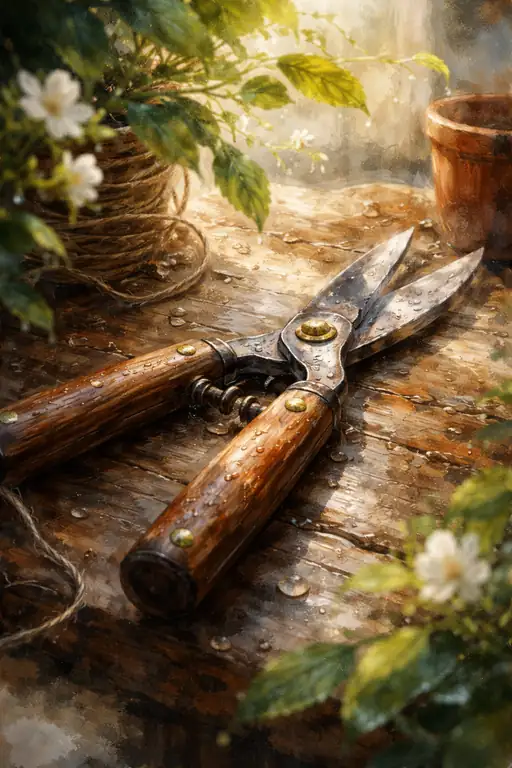 Rest After the Bloom
Similar Artworks
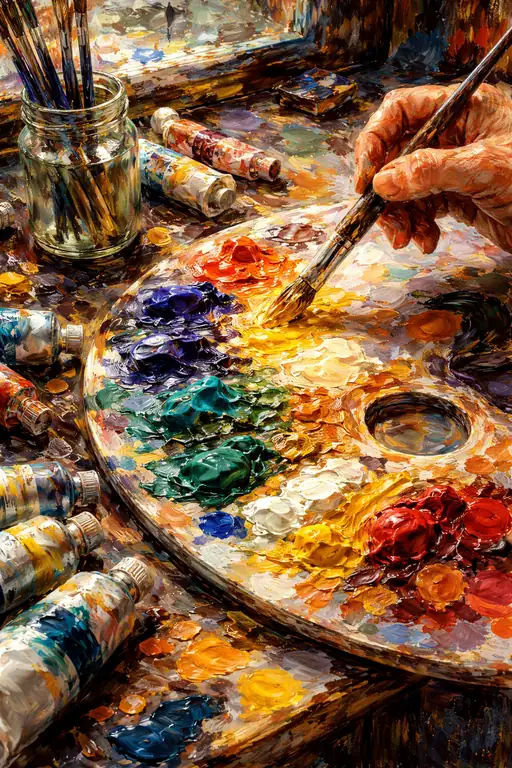 The Heartbeat of Creation
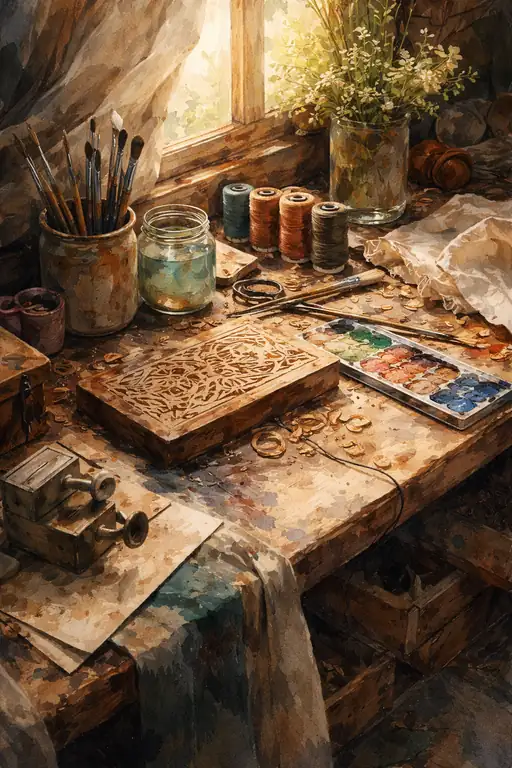 The Sanctuary of Light and Creation
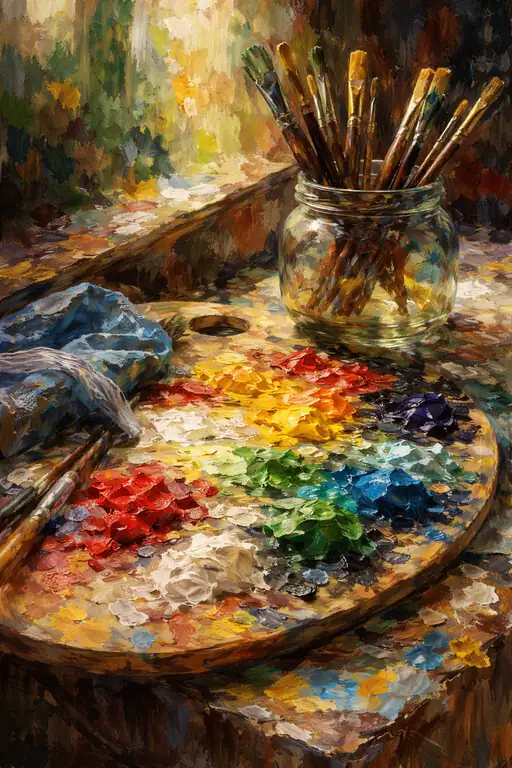 The Silent Heat of Creation
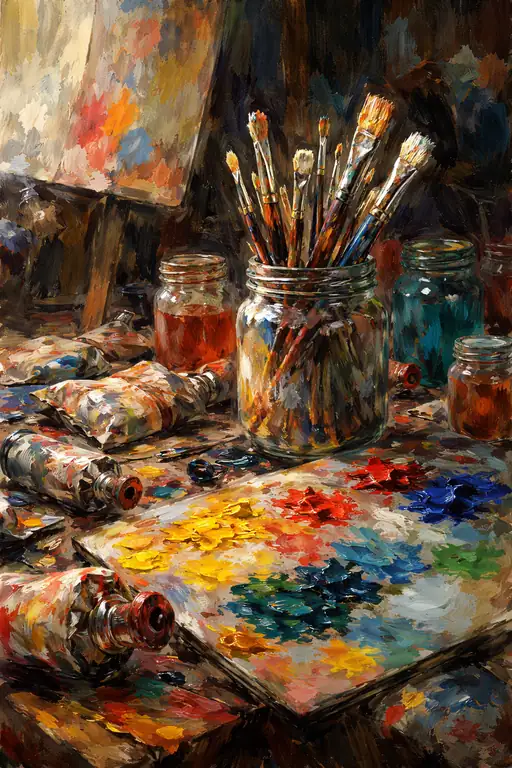 Silent Passion in the Studio
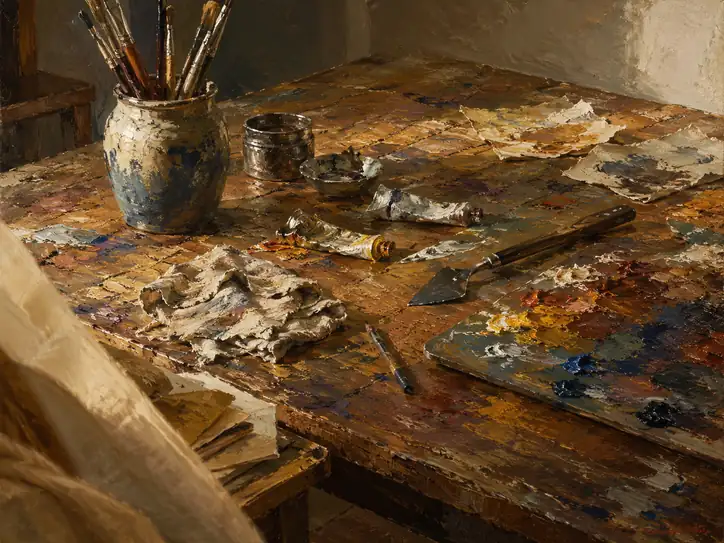 Echoes of the Creative Spirit
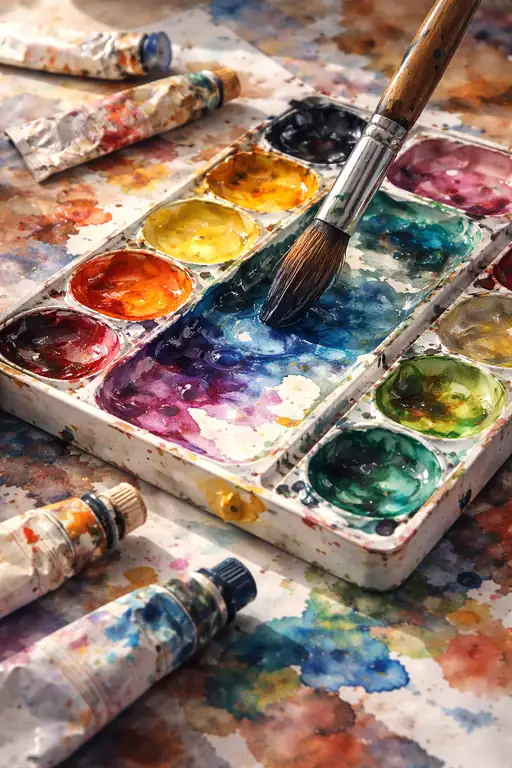 Palette of Chaos
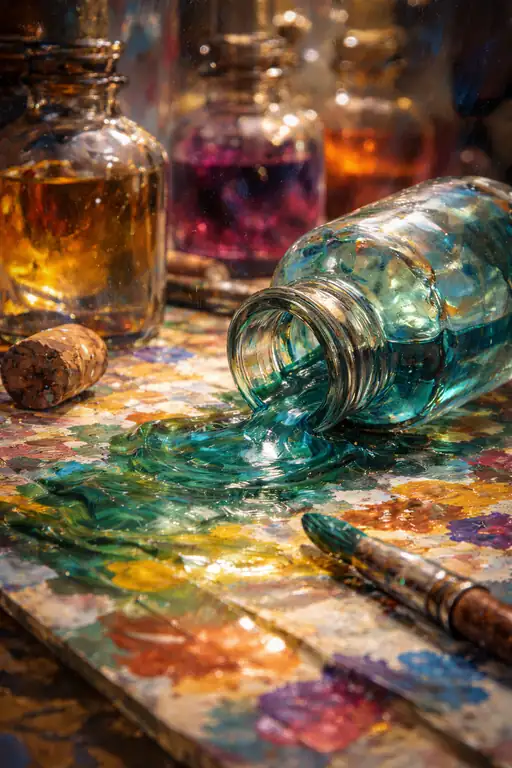 The Fluidity of Genius: Spilled Inspiration
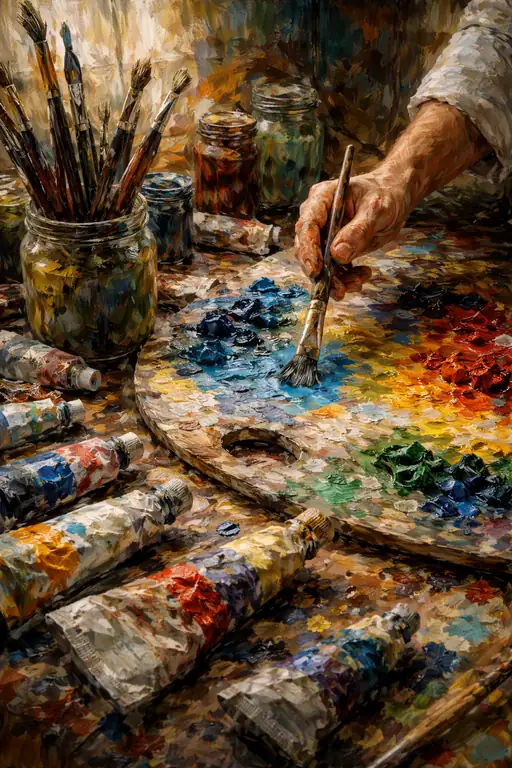 The Chaos of Radiant Hues
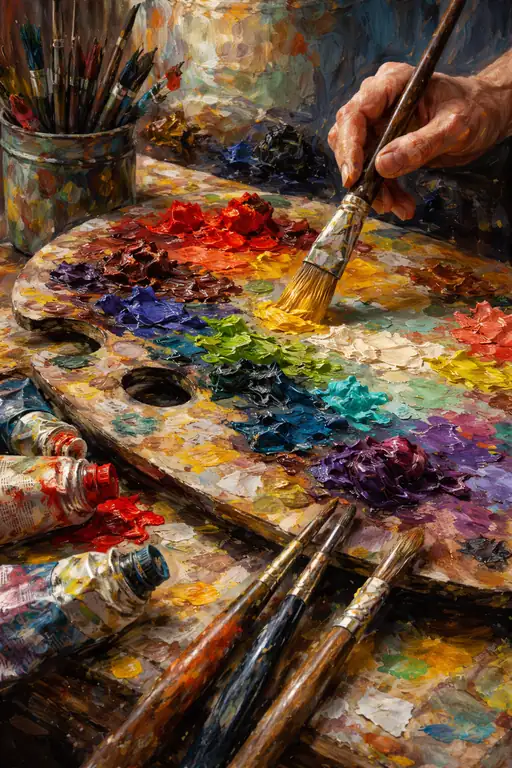 The Vibrant Pulse of the Artist's Soul
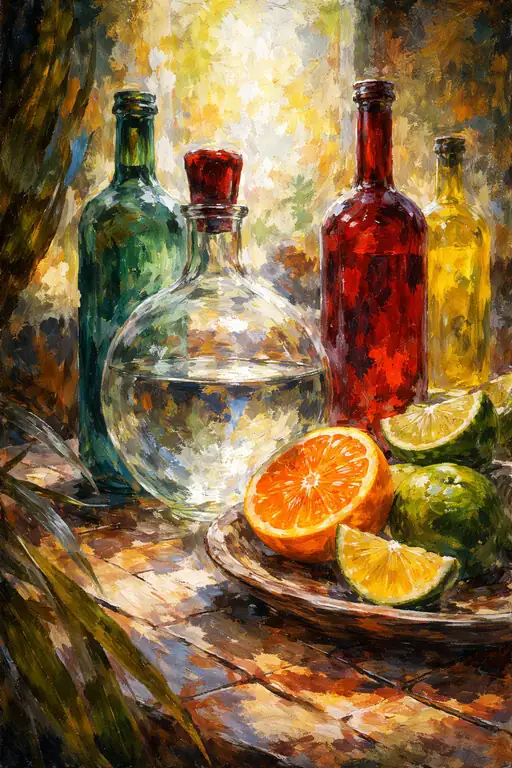 Luminous Whispers in Glass